
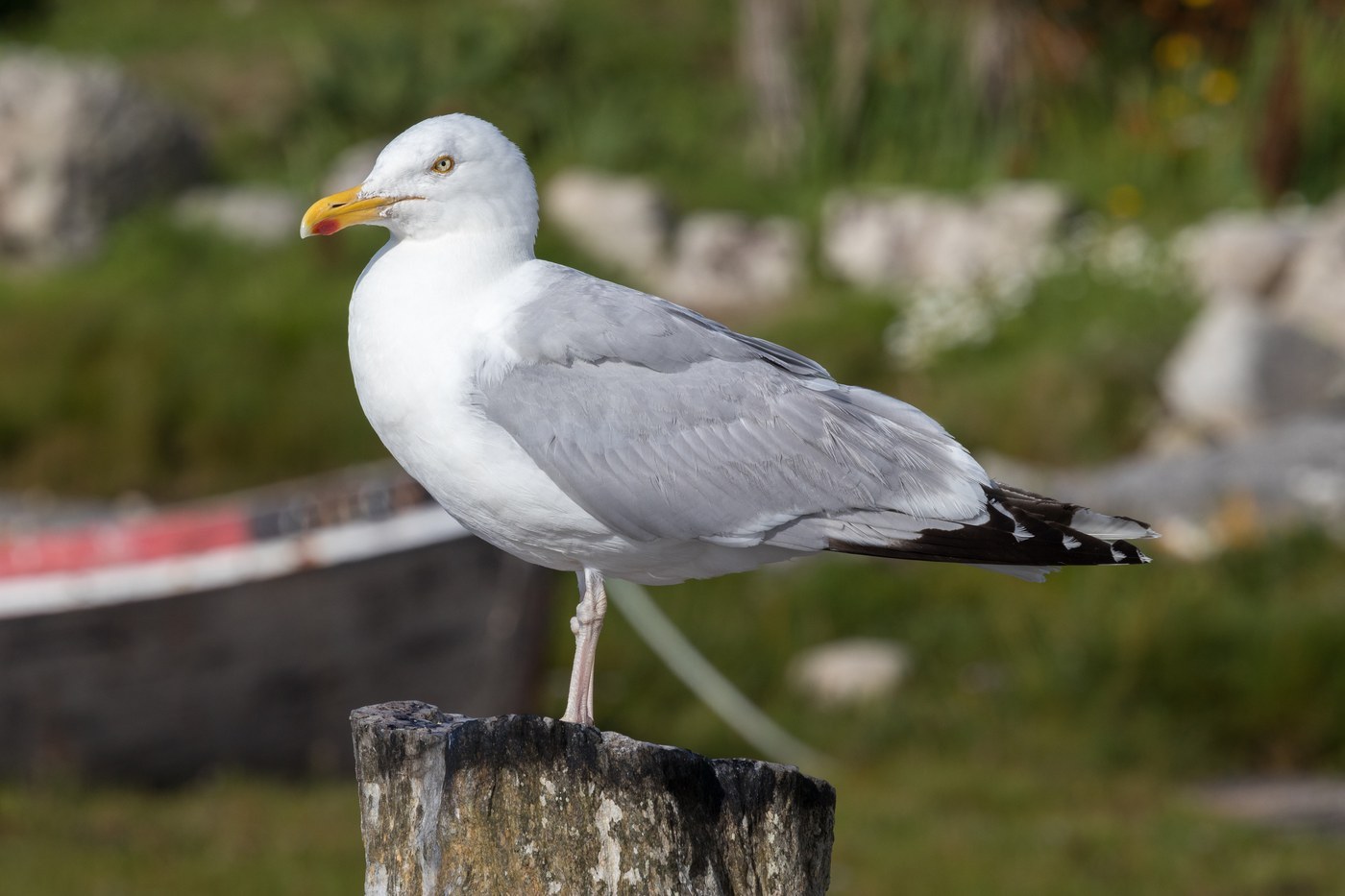
Herring Gull
Larus argentatus
A large, familiar gray-backed gull with pink legs and a yellow bill marked by a red spot, widespread and adaptable across coasts, lakes, and cities.
- Size
- 55-66 cm (22-26 in) long, 137-146 cm wingspan
- Habitat
- coastlines, lakes, landfills, and urban areas
- Type
- seabird
Spotted a bird like this?
Identify any bird from a photo, free.
Overview
The Herring Gull is one of the most familiar large gulls of the Northern Hemisphere, a bulky, adaptable bird equally at home on rocky coastlines, inland lakes, and busy urban landfills.
Adults have a pale gray back and upperwings (the "mantle"), black wingtips marked with small white spots ("mirrors"), a white head and body, pink legs, and a stout yellow bill with a distinctive red spot near the tip of the lower mandible — a target that chicks peck at to stimulate their parents to regurgitate food.
Herring Gulls take about four years to reach full adult plumage, passing through a series of increasingly pale mottled brown immature plumages that can make young birds challenging to identify.
How to identify it
Key field marks
- Pale gray back and upperwings with black wingtips showing small white spots
- Pink legs (distinguishing adults from yellow-legged large gulls)
- Yellow bill with a red spot near the tip of the lower mandible
- Large, bulky size among gulls
- Immatures take about four years to reach adult plumage, appearing mottled brown at first
Similar species
- Ring-billed Gull: smaller, with yellow (not pink) legs and a black ring around the bill rather than a red spot.
- Lesser Black-backed Gull: darker slate-gray mantle and yellow (not pink) legs.
- Great Black-backed Gull: much larger with a nearly black mantle.
Habitat & range
Habitat
Herring Gulls are highly adaptable, found along rocky and sandy coastlines, large lakes and rivers, harbors, landfills, parking lots, and urban areas, often far from open water.
Range and migration
They breed colonially across a broad range of the Northern Hemisphere, including much of North America, Europe, and parts of Asia, typically on coastal cliffs, islands, or inland lake colonies. Many populations are partially migratory, moving south in winter, while others remain resident in milder coastal areas year-round.
Behavior & voice
Behavior
Herring Gulls are highly opportunistic and intelligent, readily exploiting human food sources at landfills, fishing boats, and picnic areas, and are known to drop hard-shelled prey like mollusks from height onto rocks to break them open.
Voice
Calls include a loud, laughing "kyow-kyow-kyow" and a long, wailing territorial call given with the head thrown back, among the most recognizable sounds of many coastal towns.
Feeding
Their diet is broad and opportunistic, including fish, marine and terrestrial invertebrates, eggs and chicks of other birds, carrion, and a large amount of human refuse in urban and landfill settings.
Nesting and breeding
Herring Gulls nest colonially, often on coastal cliffs, offshore islands, or flat rooftops in urban areas; both parents build the nest, incubate the typically three-egg clutch, and feed the semi-precocial chicks, which are fed by regurgitation prompted by pecking at the adult's red bill spot.
Frequently asked questions
How can you identify a Herring Gull?
Look for a large gull with a pale gray back, black wingtips with white spots, pink legs, and a yellow bill with a red spot near the tip of the lower mandible.
Why do Herring Gull chicks peck at the red spot on the adult's bill?
Pecking at the red spot stimulates the parent to regurgitate food, a behavior famously studied by ethologist Niko Tinbergen.
How long does it take a Herring Gull to reach adult plumage?
About four years, passing through a series of progressively paler mottled brown immature plumages along the way.
How do you tell a Herring Gull from a Ring-billed Gull?
Herring Gull is larger with pink legs and a red bill spot, while Ring-billed Gull is smaller with yellow legs and a black ring around the bill.
What do Herring Gulls eat?
A broad, opportunistic diet including fish, invertebrates, eggs, carrion, and human food scraps at landfills and urban areas.
Herring Gull guides
In-depth guides for identifying, finding, and understanding Herring Gull.
Other birds you may enjoy
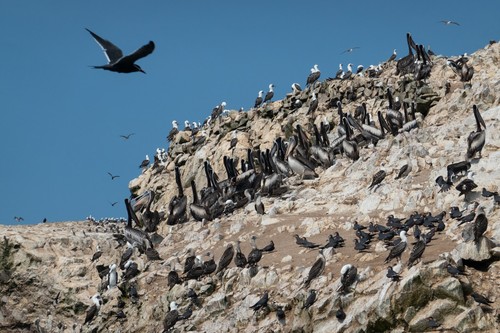
Peruvian Pelican
137-152 cm (54-60 in) long, up to 228 cm wingspan
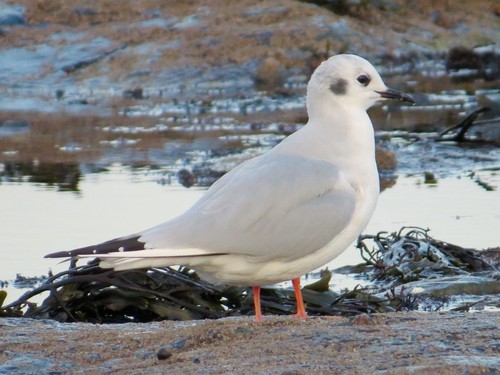
Bonaparte's Gull
28-33 cm (11-13 in) long, 76-84 cm wingspan
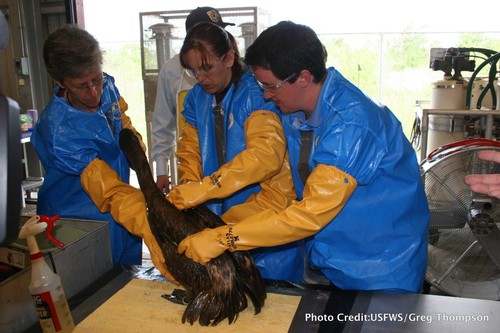
Brown Pelican
106-137 cm (42-54 in) long, 200-230 cm wingspan
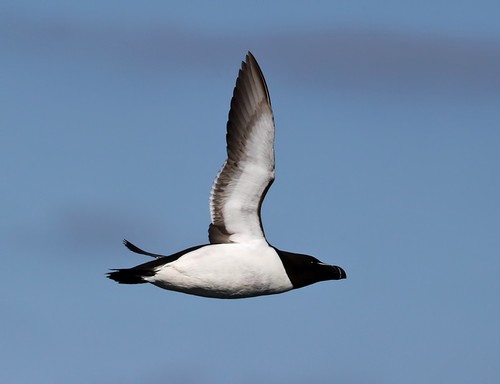
Razorbill
37-39 cm (15-15.5 in) long, 63-68 cm wingspan
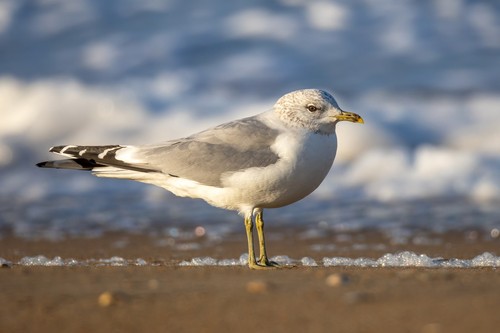
Common Gull
40-46 cm (16-18 in) long, 110-130 cm wingspan
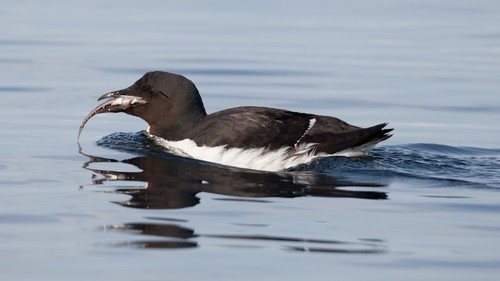
Thick-billed Murre
40-48 cm (16-19 in) long, 65-75 cm wingspan
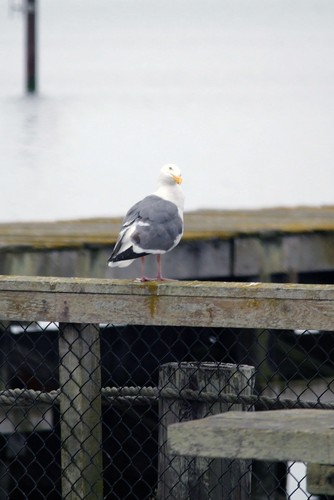
Western Gull
55-68 cm (22-27 in) long, 130-144 cm wingspan
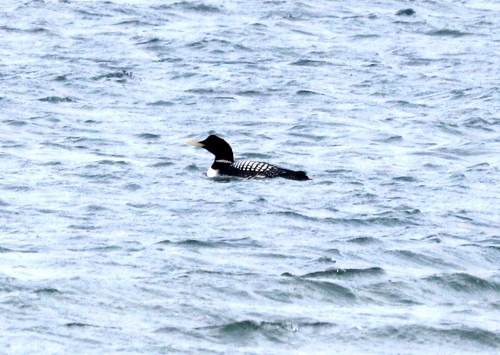
Yellow-billed Loon
76-97 cm (30-38 in) long, 135-152 cm wingspan
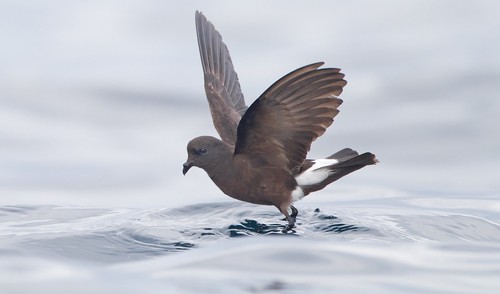
Wilson's Storm-Petrel
15-19 cm (6-7.5 in) long, wingspan 38-42 cm (15-16.5 in)
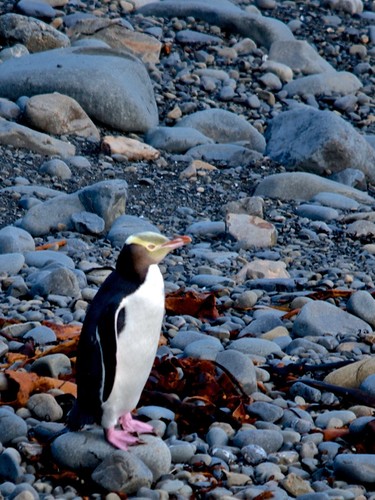
Yellow-eyed Penguin
62-79 cm (24-31 in) tall, 3-8.5 kg (6.6-18.7 lb)
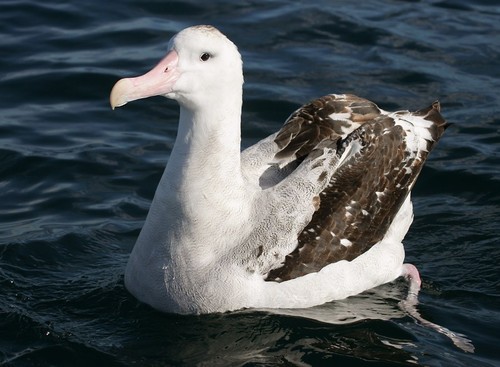
Wandering Albatross
107-135 cm (42-53 in) long, wingspan up to 3.5 m (11.5 ft)
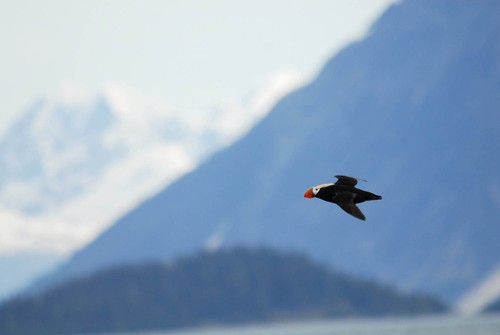
Tufted Puffin
35-41 cm (14-16 in) long, about 63-70 cm wingspan