
Heermann's Gull
Larus heermanni
A strikingly uniform slate-gray gull with a bright red bill, breeding almost entirely on a single island in Mexico's Gulf of California before dispersing north along the Pacific coast.
- Size
- 43-51 cm (17-20 in) long, 127 cm wingspan
- Habitat
- sandy beaches, rocky shores, and harbors along the Pacific coast
- Type
- seabird
Spotted a bird like this?
Identify any bird from a photo, free.
Overview
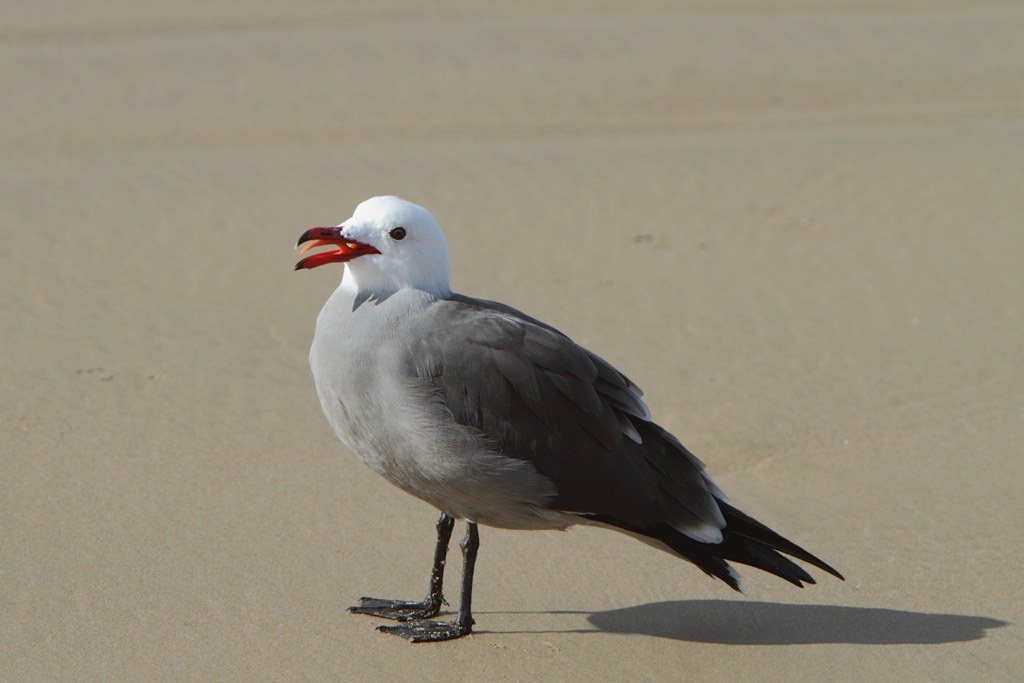
Heermann's Gull is one of the most distinctive and unmistakable gulls in the world, with a sooty gray body found in no other North American gull species. Breeding adults have a crisp white head, a dark gray body and wings, and a striking red bill tipped with black, paired with black legs.
Outside the breeding season, the white head becomes streaked with gray. Juveniles are dark chocolate-brown overall, gradually lightening with age. This unusual coloration makes Heermann's Gull easy to pick out even at a distance among mixed flocks of paler gulls.
Remarkably, almost the entire world population breeds at a single site: Isla Rasa, a small island in Mexico's Gulf of California. After breeding, the birds disperse widely northward along the Pacific coast, reaching as far as British Columbia before returning south.
How to identify it
Key field marks
- Uniform dark slate-gray body, unique among North American gulls
- White head (breeding) becoming streaked gray in winter
- Bright red bill with a black tip
- Black legs
- Dark chocolate-brown juveniles
Similar species
- No other North American gull shares this combination of overall gray body and red bill, making Heermann's Gull essentially unmistakable once seen well; distant or backlit birds might suggest a dark immature gull of another species, but the red bill and uniform tone are diagnostic.
Habitat & range
Habitat
A coastal species found on sandy beaches, rocky shorelines, harbors, and piers, rarely straying from the immediate coastline.
Range and migration
Nearly the entire breeding population nests on Isla Rasa in the Gulf of California, Mexico. After breeding, birds disperse north along the Pacific coast of North America, reaching British Columbia, before returning south to Mexico for the winter and following breeding season.
Behavior & voice
Behavior
Heermann's Gulls are notorious kleptoparasites, frequently harassing Brown Pelicans to steal fish as the pelicans surface from a plunge-dive, and also stealing food from other seabirds.
Voice
Calls include a distinctive, nasal, bugling note quite different from the calls of typical large gulls.
Feeding
Feeds on small fish, often obtained by piracy from pelicans, as well as by direct foraging and scavenging along beaches and harbors.
Nesting and breeding
Breeds in dense colonies, overwhelmingly concentrated at Isla Rasa, nesting on open ground among sparse vegetation. Clutches typically contain two to three eggs, incubated by both parents.
Frequently asked questions
Why is Heermann's Gull's conservation status a concern?
Because nearly the entire world population breeds at a single site, Isla Rasa in Mexico, the species is considered Near Threatened despite being locally common, as any disturbance to that one colony could affect the whole population.
How do you identify Heermann's Gull?
Look for its unmistakable uniform dark gray body, white head, and bright red bill with a black tip, unlike any other North American gull.
Does Heermann's Gull steal food from other birds?
Yes, it is a frequent kleptoparasite, chasing Brown Pelicans to steal fish as they surface from dives.
Where does Heermann's Gull breed?
Almost the entire world population nests on Isla Rasa, a small island in Mexico's Gulf of California.
Heermann's Gull guides
In-depth guides for identifying, finding, and understanding Heermann's Gull.
Other birds you may enjoy
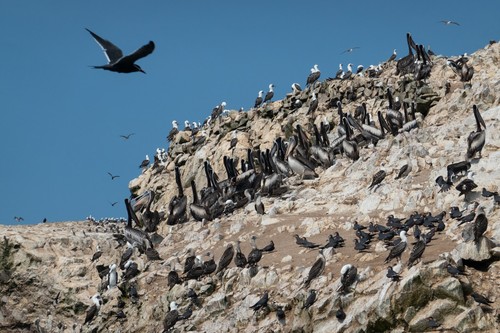
Peruvian Pelican
137-152 cm (54-60 in) long, up to 228 cm wingspan
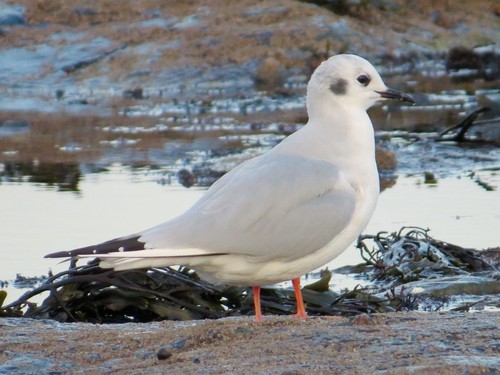
Bonaparte's Gull
28-33 cm (11-13 in) long, 76-84 cm wingspan
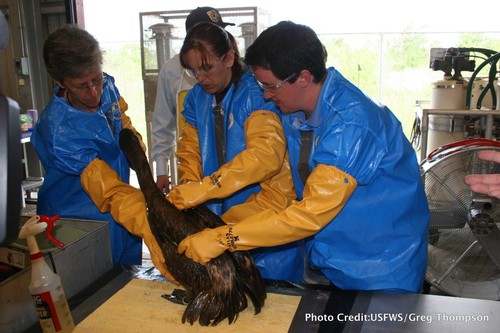
Brown Pelican
106-137 cm (42-54 in) long, 200-230 cm wingspan
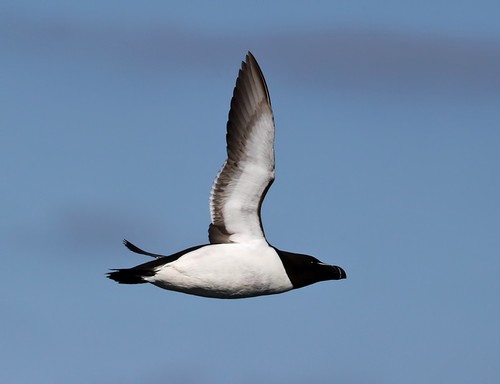
Razorbill
37-39 cm (15-15.5 in) long, 63-68 cm wingspan
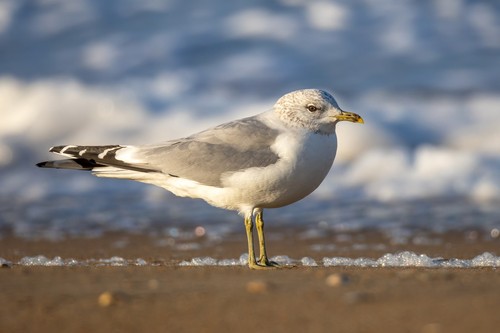
Common Gull
40-46 cm (16-18 in) long, 110-130 cm wingspan
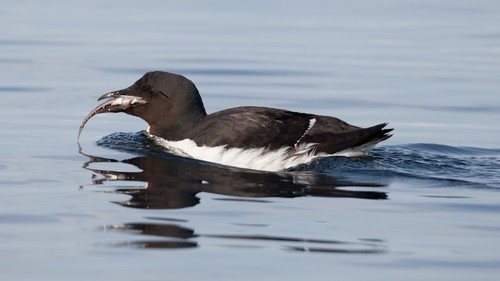
Thick-billed Murre
40-48 cm (16-19 in) long, 65-75 cm wingspan
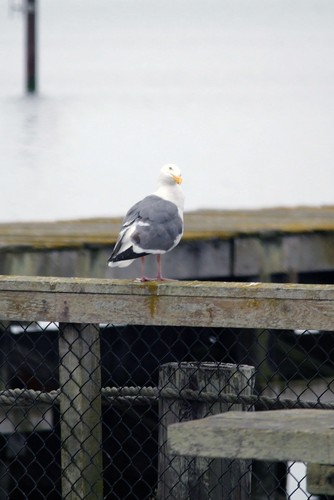
Western Gull
55-68 cm (22-27 in) long, 130-144 cm wingspan
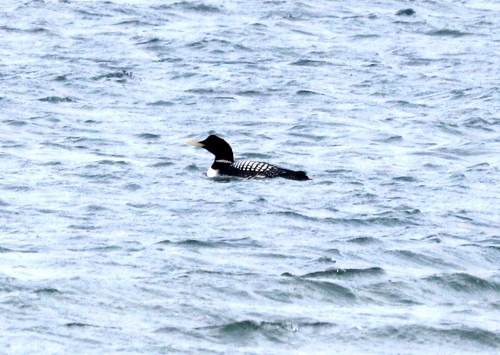
Yellow-billed Loon
76-97 cm (30-38 in) long, 135-152 cm wingspan
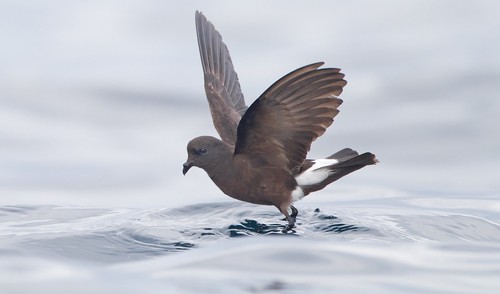
Wilson's Storm-Petrel
15-19 cm (6-7.5 in) long, wingspan 38-42 cm (15-16.5 in)
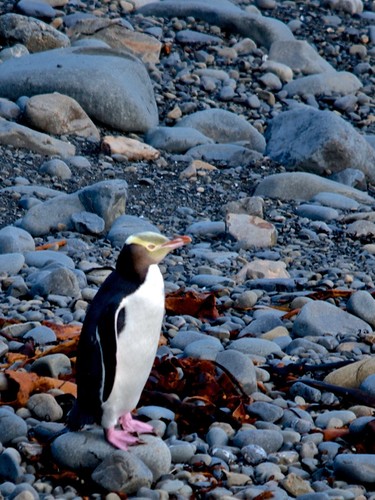
Yellow-eyed Penguin
62-79 cm (24-31 in) tall, 3-8.5 kg (6.6-18.7 lb)
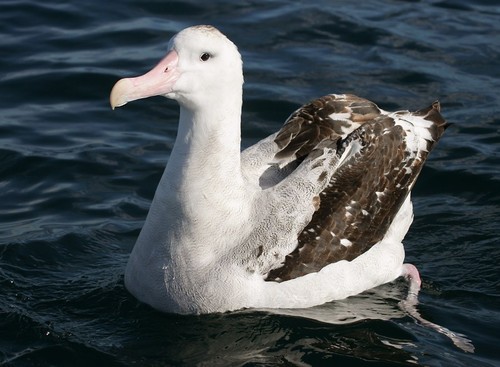
Wandering Albatross
107-135 cm (42-53 in) long, wingspan up to 3.5 m (11.5 ft)
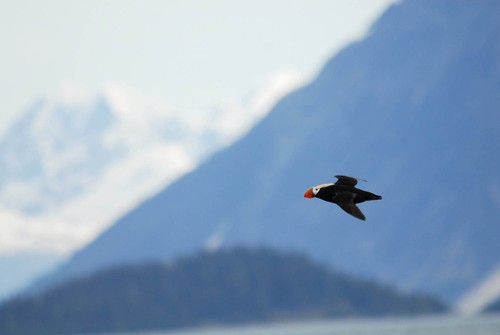
Tufted Puffin
35-41 cm (14-16 in) long, about 63-70 cm wingspan