
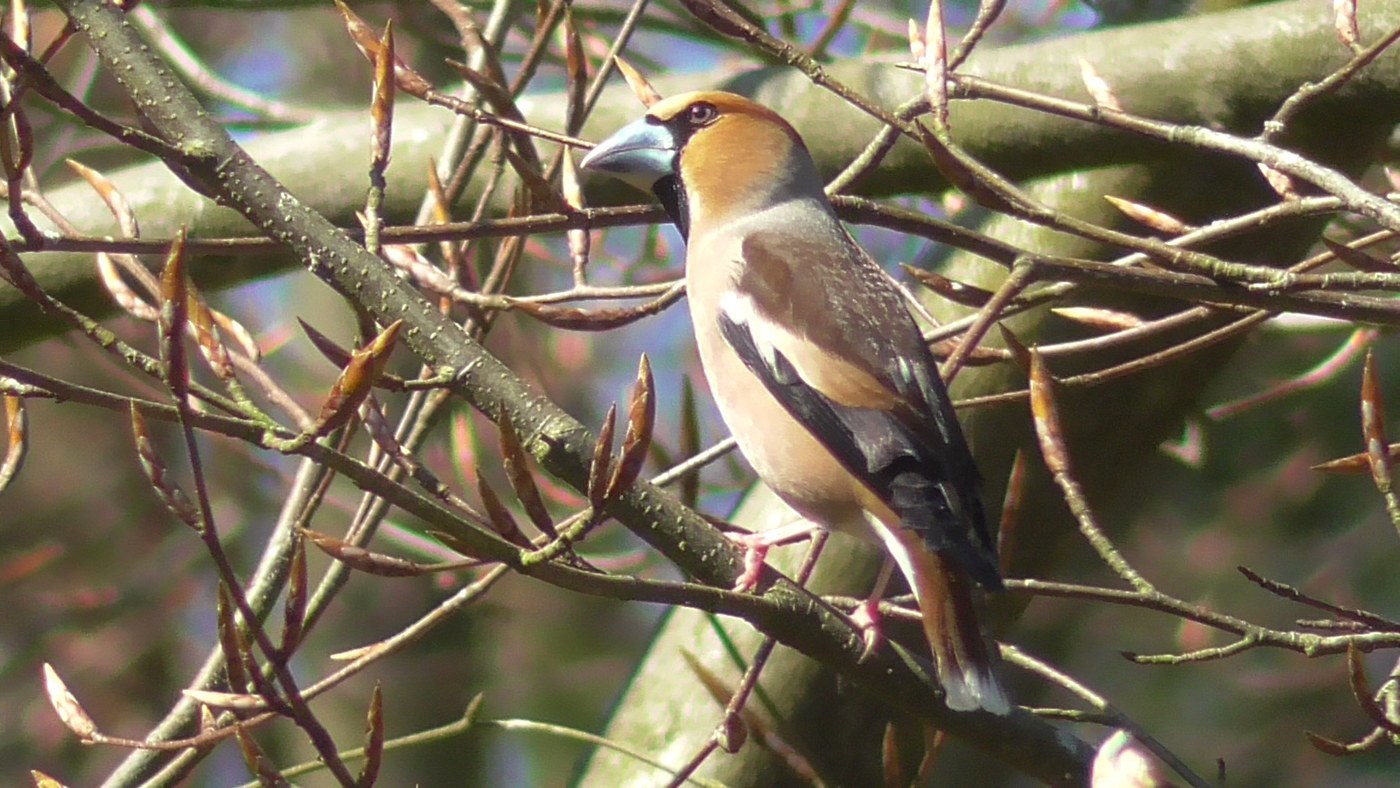
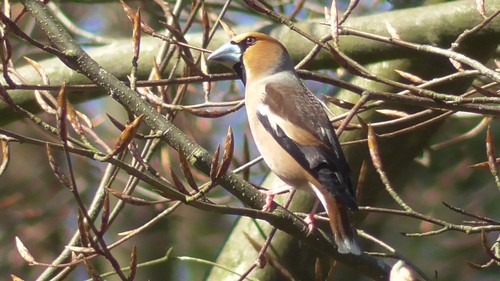
Hawfinch
Coccothraustes coccothraustes
Europe's largest finch, a stocky, shy woodland bird with an enormous, powerful bill built for cracking cherry stones.
- Size
- 16.5-18 cm (6.5-7 in) long, 29-33 cm wingspan
- Habitat
- mature deciduous woodland, orchards, and parkland with large hornbeam, cherry, or beech trees
- Type
- songbird
Spotted a bird like this?
Identify any bird from a photo, free.
Overview
The Hawfinch is a big-headed, bull-necked finch, unmistakable once seen well thanks to its massive, steel-grey to silvery conical bill — proportionally one of the most powerful bills of any songbird, capable of exerting tremendous force to crack open cherry and olive stones.
Appearance
Plumage is a rich combination of orange-buff, chestnut-brown, and black, with a black mask around the base of the bill and throat, a grey nape band, and a short tail tipped white. In flight, broad, white-barred wings with oddly shaped, glossy blue-black primaries are diagnostic, along with a short tail and heavy, direct flight.
How to identify it
Key Field Marks
- Massive, pale conical bill (bluish-grey in summer, more horn-colored in winter)
- Orange-buff body with chestnut mantle and black facial mask/throat
- Broad white wing bar and unusually shaped, glossy black primary feathers
- Short tail with white terminal band
- Bull-necked, large-headed silhouette
Similar Species
No other European finch approaches its bulk or bill size. In flight, its short-tailed, broad-winged silhouette and undulating flight can suggest a small thrush or a Starling at a distance, but the pale wing bars and heavy head shape distinguish it once seen clearly.
Habitat & range
Habitat
Hawfinches favor mature, undisturbed deciduous and mixed woodland with a canopy of large seed- or fruit-bearing trees such as hornbeam, wild cherry, beech, and occasionally orchards. They are notoriously shy and typically stay high in the canopy, making them easy to overlook despite their size.
Range and Migration
The species breeds across much of temperate Europe and Asia, including scattered, localized populations in Britain. Most populations are resident or make only short-distance movements, though northern and eastern birds may move south in hard winters, sometimes leading to influxes into new areas.
Behavior & voice
Behavior
Hawfinches are elusive and wary, spending much of their time quietly feeding high in tree canopies or on the ground beneath fruiting trees, where they can crack open cherry stones and other hard seeds that are inaccessible to most other birds.
Voice
The song is quiet and unremarkable — a thin, halting series of creaky notes rarely heard well. The most frequent contact call is a sharp, explosive "tzik" or "ptik," often the first clue to a bird's presence overhead.
Nesting and Breeding
Nests are built well up in the fork of a tree branch, a shallow platform of twigs and lichen lined with fine roots and hair. The female lays 4-5 pale blue-green eggs with dark scrawling marks, incubating them for around 12-13 days while fed by the male.
Frequently asked questions
Why does the Hawfinch have such a huge bill?
Its oversized, powerful bill is specialized for cracking open extremely hard seed coats and fruit stones, such as cherry pits and hornbeam nutlets, that other finches cannot open.
Why are Hawfinches so hard to see?
They are naturally shy and tend to stay hidden high in the leafy canopy of tall trees, only occasionally coming to the ground, which makes them one of the least frequently observed European finches.
What time of year are Hawfinches easiest to spot?
Late autumn and winter, when leaves have fallen and birds sometimes gather to feed on fallen seeds beneath fruiting trees, offer the best chances for good views.
Do Hawfinches migrate?
Most populations are largely resident, though birds from colder northern and eastern parts of the range may shift southward in severe winters.
Hawfinch guides
In-depth guides for identifying, finding, and understanding Hawfinch.
Other birds you may enjoy
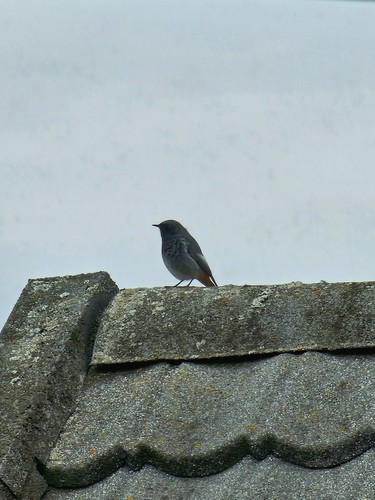
Black Redstart
13-14.5 cm (5.1-5.7 in) long, 23-26 cm wingspan
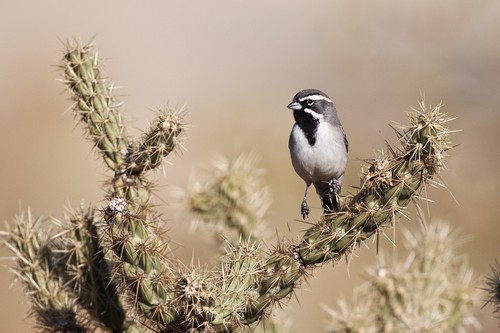
Black-throated Sparrow
12-14 cm (4.7-5.5 in) long, about 19-20 cm (7.5-8 in) wingspan
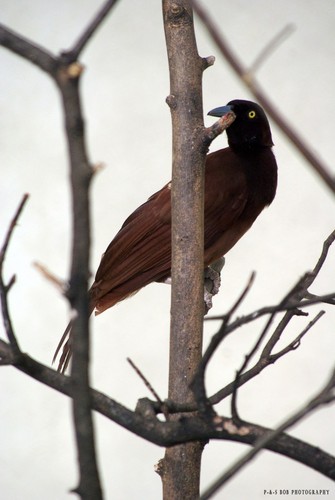
Greater Bird-of-paradise
Body about 43 cm; males with additional flank plumes up to 50 cm and long tail wires
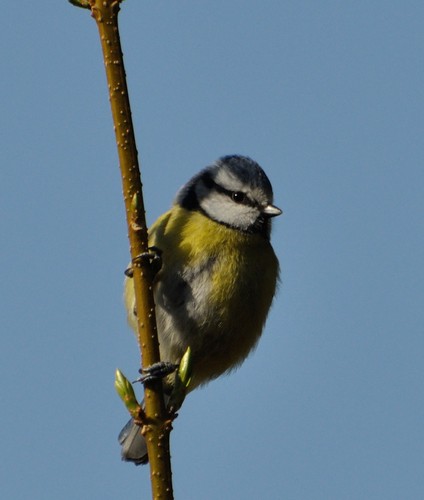
Blue Tit
11-12 cm (4.3-4.7 in) long, 17-20 cm wingspan
Red-billed Quelea
11.5–13 cm long, wingspan about 20–22 cm
White-plumed Antbird
13-14 cm (5-5.5 in) long
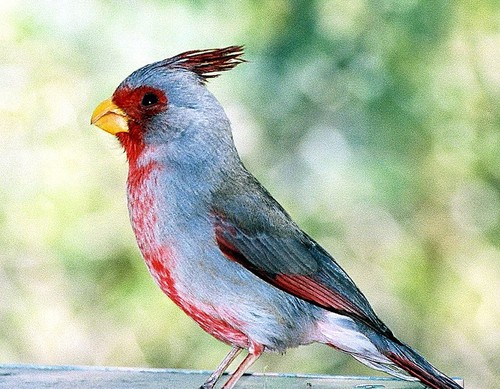
Pyrrhuloxia
19-22 cm (7.5-8.7 in) long, 30 cm wingspan
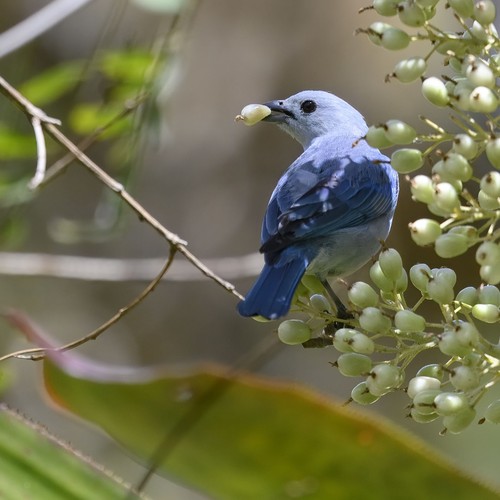
Blue-gray Tanager
16-18 cm (6-7 in) long
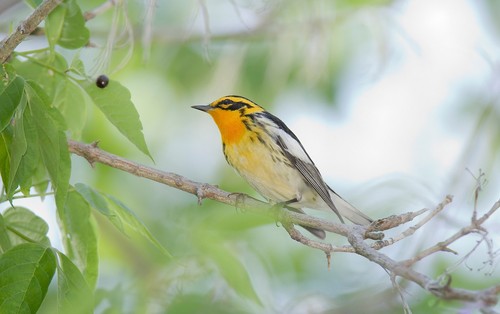
Blackburnian Warbler
11-13 cm (4.3-5.1 in) long, 20-22 cm wingspan
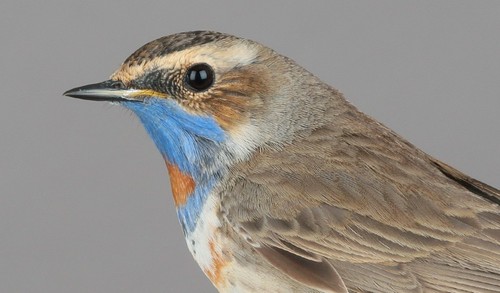
Bluethroat
13-14 cm (5.1-5.5 in) long, 20-22 cm wingspan
Eurasian Nuthatch
12-14.5 cm (4.7-5.7 in) long, 22.5-27 cm wingspan
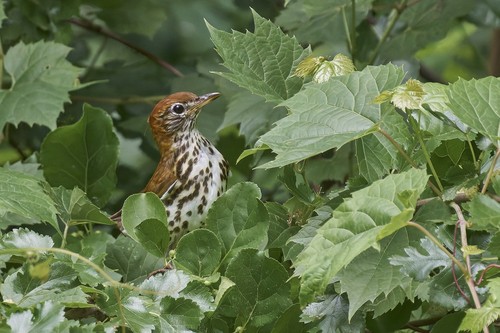
Wood Thrush
19-21 cm (7.5-8.3 in) long, about 33 cm (13 in) wingspan