
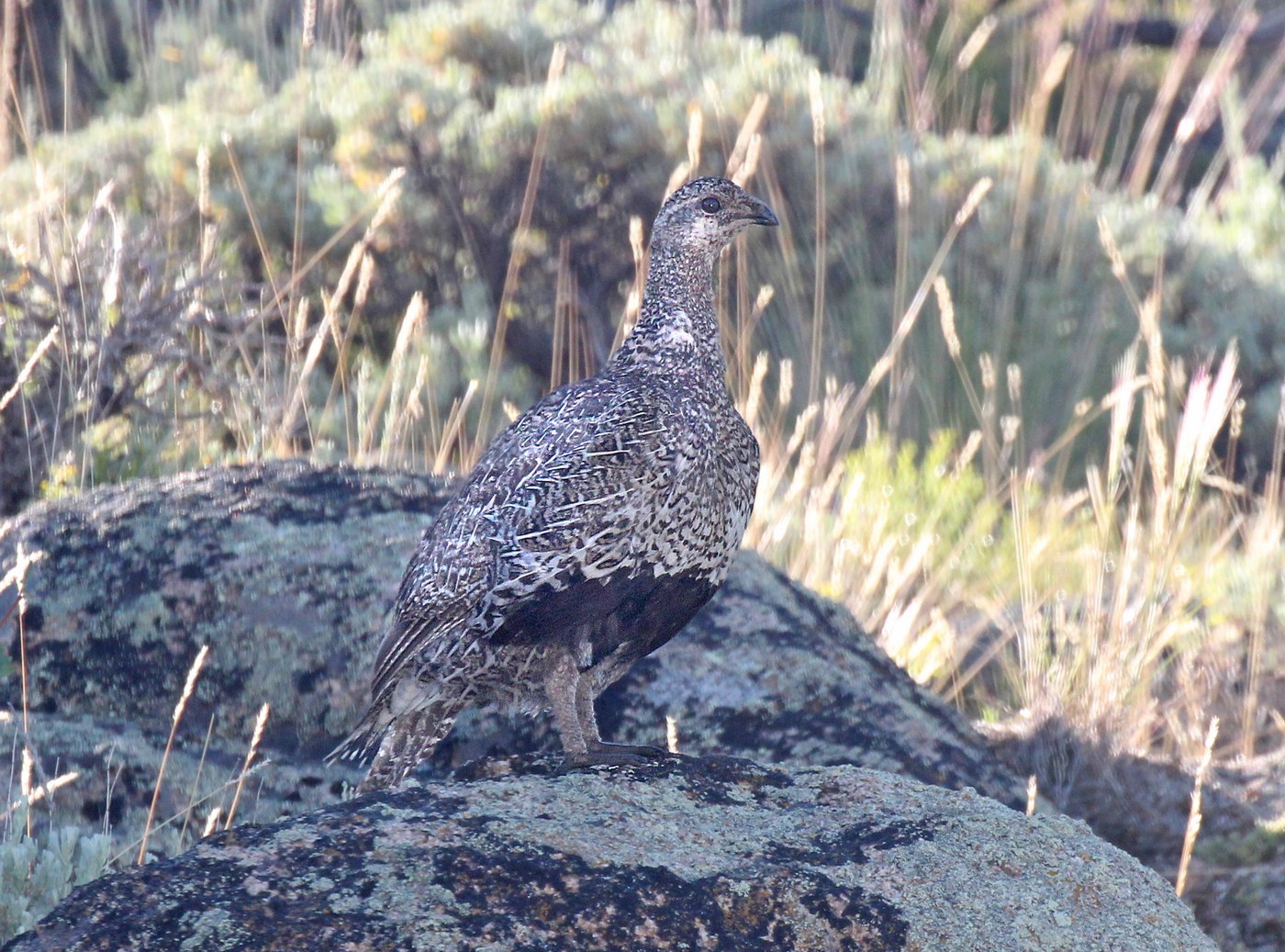
Gunnison Sage-Grouse
Centrocercus minimus
A rare, range-restricted sage-grouse confined to a handful of sites in southwestern Colorado and adjacent Utah, distinguished from its larger relative by longer, showier display plumes.
- Size
- smaller than Greater Sage-Grouse; males around 51-58 cm (20-23 in) long
- Habitat
- sagebrush steppe of the Gunnison Basin and a few nearby areas of Colorado and Utah
- Type
- gamebird
Spotted a bird like this?
Identify any bird from a photo, free.
Overview
The Gunnison Sage-Grouse is a smaller, geographically isolated relative of the Greater Sage-Grouse, formally recognized as a distinct species in 2000. It shares the same overall mottled gray-brown, black-bellied body plan and spiky pointed tail, but is smaller-bodied, and displaying males show noticeably longer, thicker white filoplumes on the neck along with more strongly barred tail feathers.
The species is one of the most range-restricted gamebirds in North America, with the vast majority of the world population concentrated in the Gunnison Basin of southwestern Colorado, and it is a species of high conservation concern.
How to identify it
Key field marks
- Smaller and more compact than Greater Sage-Grouse
- Longer, thicker white neck filoplumes on displaying males
- More boldly barred, contrasting tail feathers than Greater Sage-Grouse
- Faster-paced, more elaborate strutting display
Similar species
Greater Sage-Grouse is the only real look-alike, but the two species' ranges are essentially non-overlapping (Gunnison Sage-Grouse is restricted to a small area of southwestern Colorado and adjacent Utah), so location is often the most reliable clue.
Habitat & range
Habitat and Range
Gunnison Sage-Grouse require large, unfragmented expanses of sagebrush steppe, similar to Greater Sage-Grouse, but their entire global range is confined to about seven small, isolated populations in the Gunnison Basin and a few satellite areas of southwestern Colorado and adjacent southeastern Utah.
Migration
Most populations are largely resident, with only short seasonal movements between summer and winter range within their small occupied area.
Behavior & voice
Behavior
Like its larger relative, the Gunnison Sage-Grouse gathers at traditional leks each spring where males perform a rapid, elaborate strutting display to attract mates.
Voice
Display sounds include popping notes from the inflated air sacs, delivered in a faster cadence than Greater Sage-Grouse, along with a distinctive tail-feather swish from the long filoplumes.
Feeding
Sagebrush leaves dominate the diet, especially in winter, supplemented by forbs and insects in the growing season.
Nesting and breeding
Females nest on the ground under sagebrush cover near the lek and raise broods alone; low nest success and small, isolated population size are major conservation concerns for the species.
Frequently asked questions
Why is the Gunnison Sage-Grouse endangered?
Its entire population is confined to a handful of small, isolated sagebrush areas in southwestern Colorado and adjacent Utah, making it highly vulnerable to habitat loss, fragmentation, and genetic isolation.
Where can you find Gunnison Sage-Grouse?
Nearly the entire world population occurs in the Gunnison Basin of southwestern Colorado, with a few smaller satellite populations nearby in Colorado and Utah.
How is it different from the Greater Sage-Grouse?
It is smaller, has longer and thicker white neck filoplumes, more boldly barred tail feathers, and performs a faster, more elaborate strutting display.
When was Gunnison Sage-Grouse recognized as its own species?
It was formally described and split from the Greater Sage-Grouse as a distinct species in 2000.
Gunnison Sage-Grouse guides
In-depth guides for identifying, finding, and understanding Gunnison Sage-Grouse.
Other birds you may enjoy
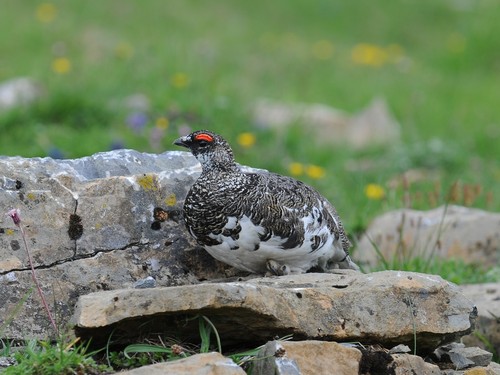
Rock Ptarmigan
34-36 cm (13-14 in) long
Congo Peafowl
Males about 64-70 cm long; females slightly smaller; no elaborate train
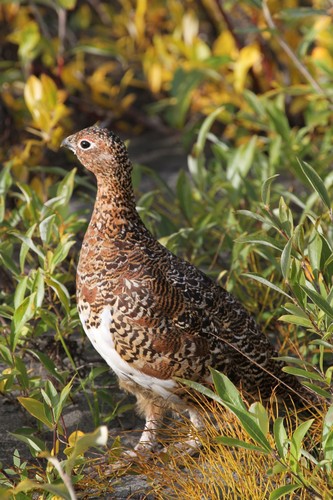
Willow Ptarmigan
37-42 cm (15-16.5 in) long
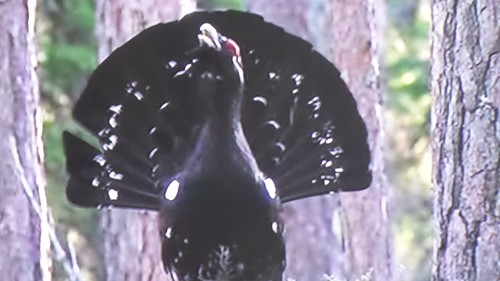
Western Capercaillie
male 74-90 cm (29-35 in), female 54-64 cm; male wingspan up to 125-130 cm
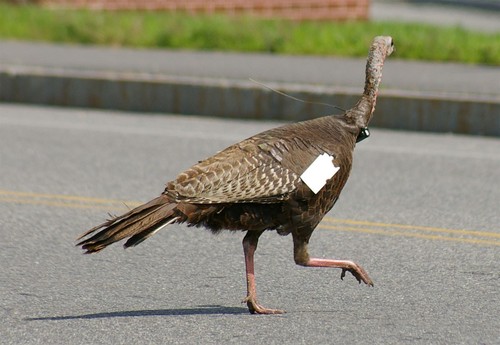
Wild Turkey
males 100-125 cm (39-49 in) long; females smaller, around 76-95 cm (30-37 in)
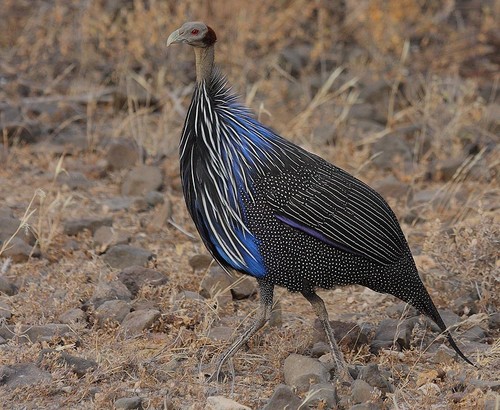
Vulturine Guineafowl
Length 61-71 cm, the largest guineafowl species, with a notably long neck and tail
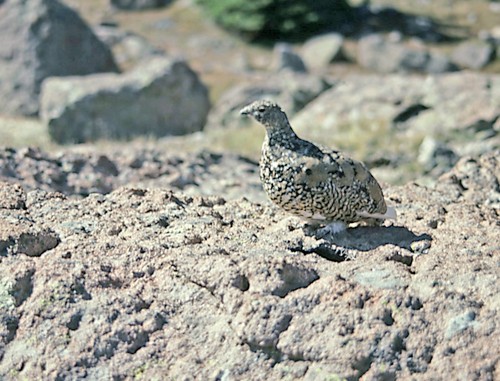
White-tailed Ptarmigan
30-33 cm (12-13 in) long; the smallest ptarmigan species
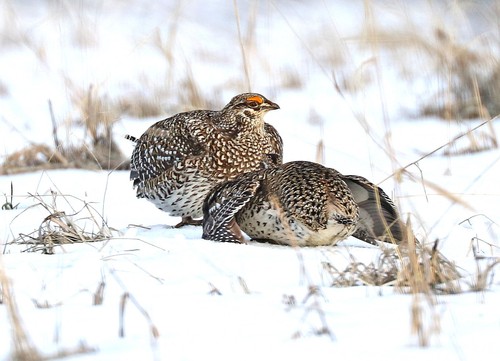
Sharp-tailed Grouse
38-48 cm (15-19 in) long
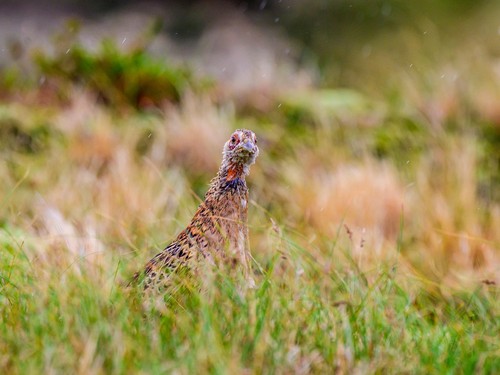
Ring-necked Pheasant
males 76-90 cm (30-35 in) long including a long tail; females smaller, 55-65 cm (22-26 in)
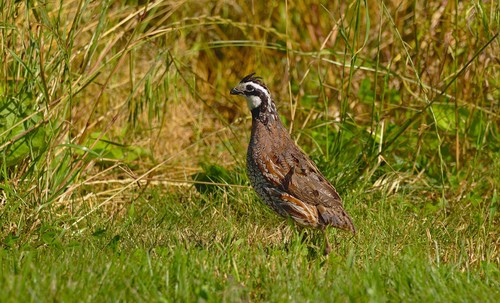
Northern Bobwhite
24-28 cm (9.5-11 in) long, 33-38 cm wingspan
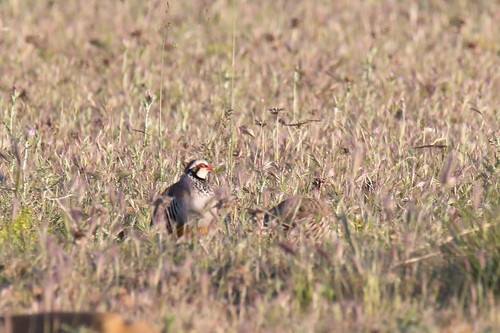
Red-legged Partridge
32-34 cm (13 in) long, 47-50 cm wingspan
Sooty Grouse
43-48 cm (17-19 in) long; males larger than females