
Gunnison Sage-Grouse Identification Guide
A small, range-restricted sage-grouse of southwestern Colorado and southeastern Utah, best known for the males' elaborate strutting displays on sagebrush leks.
Read the full Gunnison Sage-Grouse encyclopedia entry →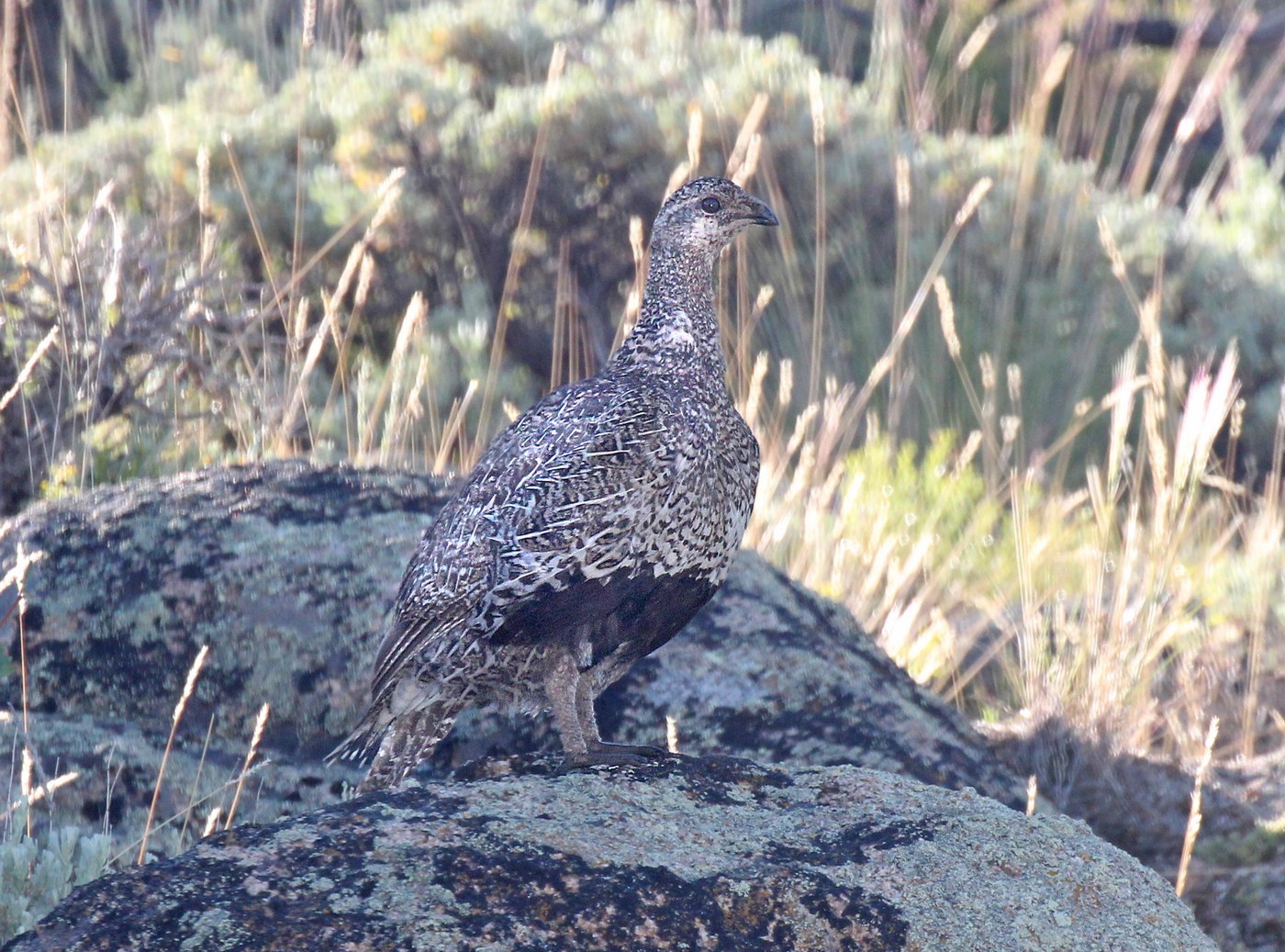
Overview
The Gunnison Sage-Grouse (Centrocercus minimus) is a rare, geographically restricted grouse split from the more widespread Greater Sage-Grouse in 2000. It survives in a handful of isolated populations centered on the Gunnison Basin of Colorado, entirely dependent on sagebrush habitat.
Key Field Marks
- Size and shape: Noticeably smaller than Greater Sage-Grouse, with males about 51-64 cm (20-25 in) long — roughly two-thirds the bulk of their larger cousin — and a plump, chicken-like body with a long, pointed, spiky tail.
- Plumage: Mottled gray-brown, black, and white cryptic plumage overall, with a black belly patch and black throat bordered by white.
- Display features: Breeding males show exaggerated, long, filamentous nape plumes ("ponytail") that are noticeably longer and thicker than in Greater Sage-Grouse, and inflate bright yellow-green air sacs on the breast during strutting displays, producing distinctive popping sounds.
- Behavior: Highly dependent on sagebrush for food, cover, and nesting; males gather at communal leks in open areas within or adjacent to sagebrush stands to perform elaborate strutting displays each spring.
Separating It from Similar Species
- Greater Sage-Grouse: The primary confusion species — larger overall, with shorter and thinner nape plumes and a different, less elaborate strut. Range is the most reliable separator, as Gunnison Sage-Grouse occupies a very limited area in southwestern Colorado and adjacent Utah, disjunct from Greater Sage-Grouse range.
- Sharp-tailed Grouse: Lacks the black belly patch and long spiky tail feathers of sage-grouse, and does not depend so exclusively on sagebrush.
- No other grouse overlaps within the Gunnison Sage-Grouse's tiny range, so location is often the quickest confirmation.
Habitat, Range, and Season
Resident year-round in sagebrush shrublands of the Gunnison Basin and a few small satellite populations in southwestern Colorado and adjacent southeastern Utah — one of the most geographically restricted grouse in North America and federally listed as threatened. It does not migrate long distances but may shift locally between summer and winter sagebrush habitats. Lek displays peak from March through May at dawn.
Voice
Males produce a series of popping, gurgling, and swishing sounds during strut displays, generated largely by air sac inflation and deflation rather than true vocalizations; overall quieter and with a different acoustic quality than the deeper booms of Greater Sage-Grouse.
Frequently asked questions
How do I tell Gunnison Sage-Grouse from Greater Sage-Grouse in the field?
Gunnison Sage-Grouse is noticeably smaller, has longer and thicker filamentous nape plumes, and occupies a very restricted range in the Gunnison Basin of Colorado and adjacent Utah, disjunct from Greater Sage-Grouse.
Where is the best place to see Gunnison Sage-Grouse?
The Gunnison Basin of southwestern Colorado hosts the largest population; managed lek viewing sites there offer the most reliable spring viewing opportunities.
When is the best time to see lek displays?
Peak strutting display activity occurs at dawn from March through May, when males gather on traditional lek grounds.
Why is the Gunnison Sage-Grouse considered threatened?
Its total range and population are extremely small and fragmented due to sagebrush habitat loss, making it far more vulnerable than the more widespread Greater Sage-Grouse.