
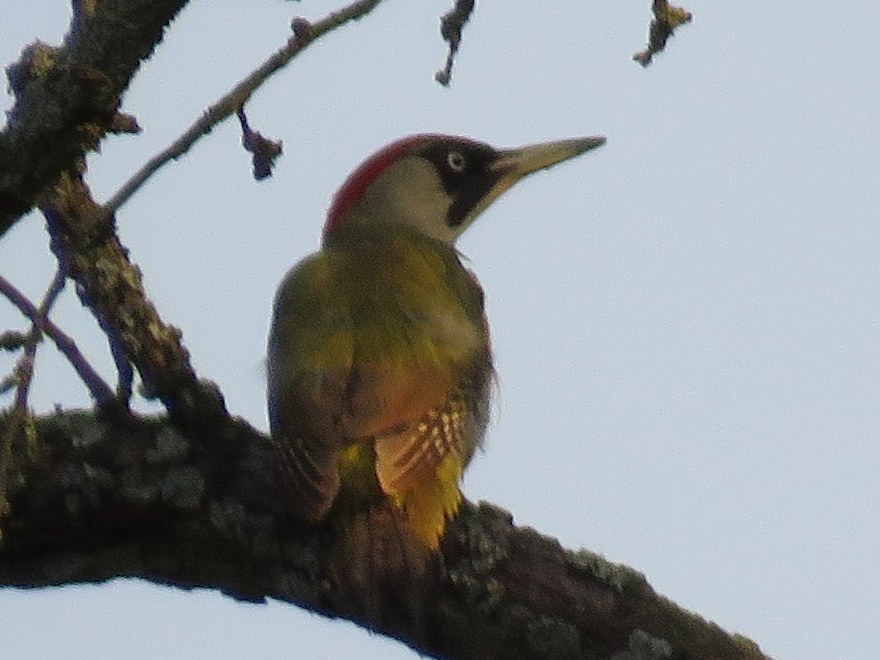
Green Woodpecker
Picus viridis
A large, ground-feeding woodpecker with vivid green plumage, a red crown, and a loud laughing call known as the "yaffle".
- Size
- 30-36 cm (12-14 in) long, 45-51 cm wingspan
- Habitat
- open woodland, parkland, grassland, and lawns with abundant ant colonies
- Type
- woodpecker
Spotted a bird like this?
Identify any bird from a photo, free.
Overview
The Green Woodpecker is a large, distinctively colored woodpecker with olive-green upperparts, a bright yellow rump visible in flight, pale greenish-yellow underparts, and a vivid red crown. Both sexes show a black "moustache" stripe, red-centered in males and all-black in females.
Unlike most woodpeckers, it spends much of its time feeding on the ground rather than on tree trunks, probing lawns, pastures, and heathland for ants with its long, sticky tongue.
How to identify it
Key field marks
- Large size with olive-green upperparts and bright yellow rump
- Red crown and black face mask with a moustache stripe
- Pale greenish-yellow underparts
- Undulating flight low over the ground
- Loud, laughing "yaffle" call
Similar species
- Grey-headed Woodpecker (where ranges overlap) has a grey head and lacks the strong black face mask.
- No other European woodpecker shares this combination of green body and yellow rump.
Its ground-feeding habit, loud laughing call, and unmistakable green-and-yellow coloring make this species easy to identify once seen well.
Habitat & range
Habitat
Favors open habitats with short grass for ant-hunting alongside mature trees for nesting and roosting, including parkland, orchards, golf courses, large gardens, and grazed pasture.
Range
Widespread across most of Europe, from Britain and Iberia east to the Caucasus, though absent from Ireland, Scandinavia's far north, and much of the Mediterranean islands.
Migration
Resident and sedentary, rarely moving far from established territories.
Behavior & voice
Behavior
Spends much of the day on the ground probing anthills, hopping awkwardly compared to its confident tree-climbing relatives, and retreating to trees when disturbed with a bounding, undulating flight.
Voice
The famous "yaffle" call is a loud, ringing laugh of 10-20 notes, ringing across open country and giving the bird its old country name.
Feeding
Highly specialized on ants, extracting them from nests and mounds with a very long, sticky, barbed tongue; also takes other ground invertebrates, especially in winter when ants are less active.
Nesting and breeding
Excavates a nest hole in a tree trunk, often reusing or renewing the same site over years. Females lay 5-7 white eggs, incubated by both parents for about 19-20 days.
Frequently asked questions
Why is the Green Woodpecker called a "yaffle"?
This old country name comes from its loud, laughing call, a ringing series of notes heard across open country.
Does the Green Woodpecker feed on trees like other woodpeckers?
Less so than most; it spends much of its time feeding on the ground, probing lawns and pastures for ants.
What does the Green Woodpecker eat?
Mostly ants and their larvae, extracted with a very long, sticky tongue, along with other ground insects.
How can you tell a male from a female Green Woodpecker?
Males have a red center to the black moustache stripe, while females show an all-black moustache.
Green Woodpecker guides
In-depth guides for identifying, finding, and understanding Green Woodpecker.
Other birds you may enjoy
Williamson's Sapsucker
21-25 cm (8-10 in) long, 40-42 cm wingspan
Yellow-bellied Sapsucker
18-21 cm (7-8.3 in) long, 34-40 cm wingspan
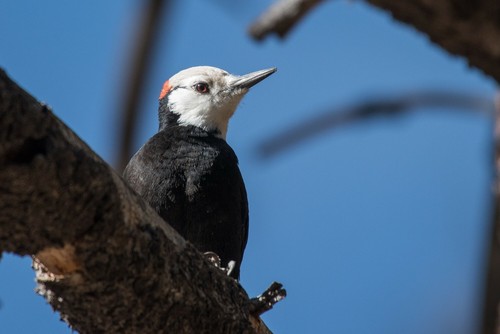
White-headed Woodpecker
20-23 cm (8-9 in) long, 38-41 cm wingspan
Red-headed Woodpecker
19-23 cm (7.5-9 in) long, 42-46 cm wingspan
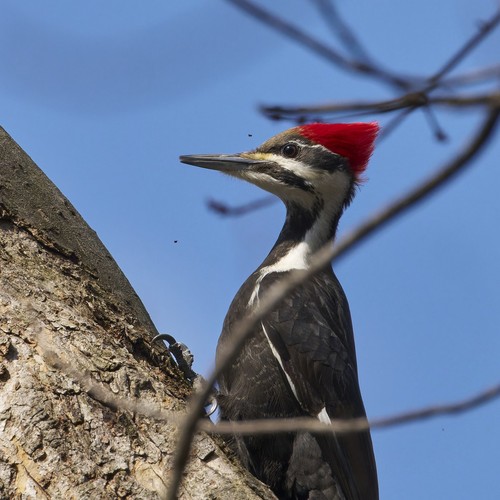
Pileated Woodpecker
40-49 cm (16-19 in) long, 66-75 cm wingspan
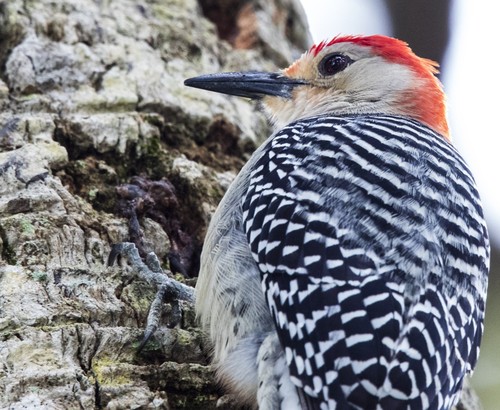
Red-bellied Woodpecker
22-27 cm (9-10.5 in) long, 38-46 cm wingspan
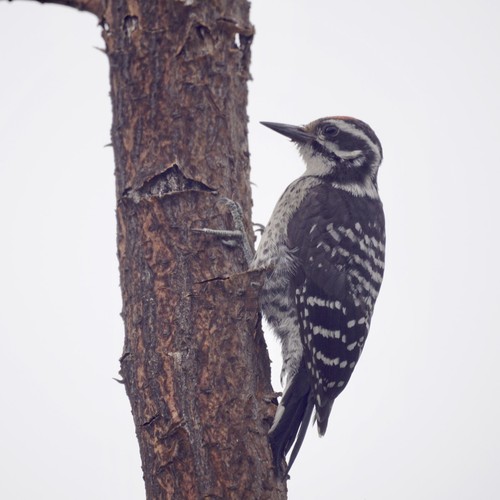
Nuttall's Woodpecker
18-20 cm (7-8 in) long, 34-38 cm wingspan
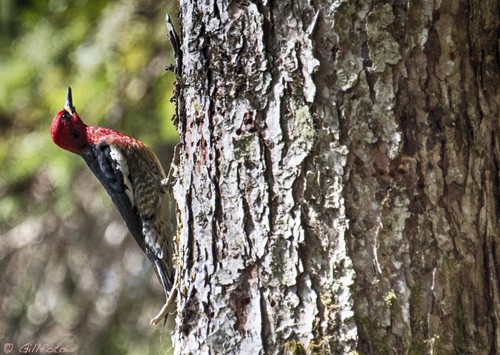
Red-breasted Sapsucker
20-23 cm (8-9 in) long, 34-40 cm wingspan
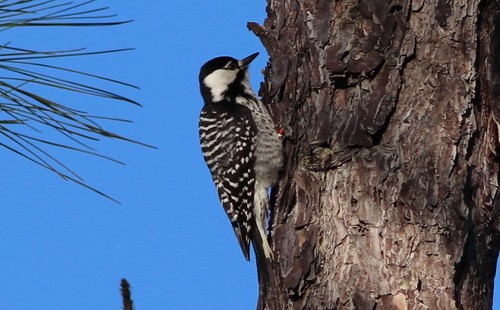
Red-cockaded Woodpecker
20-23 cm (8-9 in) long, 35-38 cm wingspan
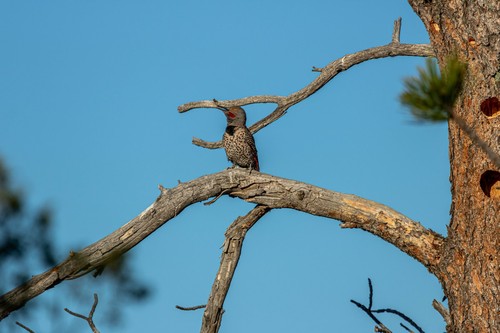
Northern Flicker
28-36 cm (11-14 in) long, 42-51 cm wingspan
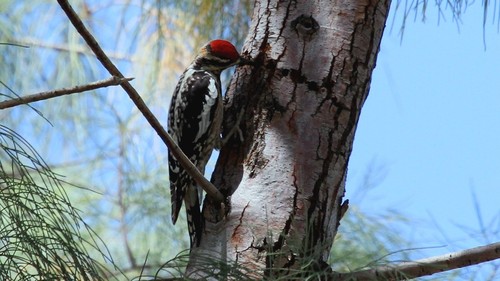
Red-naped Sapsucker
19-21 cm (7.5-8.3 in) long, 34-40 cm wingspan
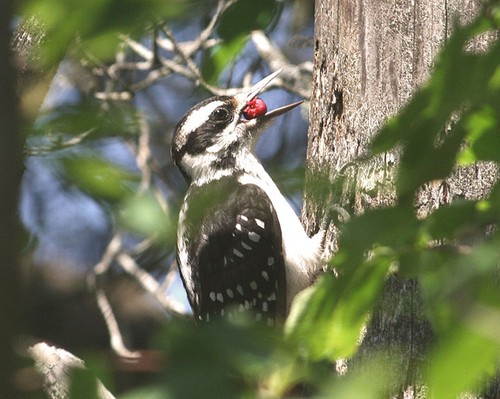
Hairy Woodpecker
23-26 cm (9-10 in) long, 33-41 cm wingspan