
Green Peafowl
Pavo muticus
A large, iridescent Southeast Asian peafowl with scaly green-and-bronze body plumage and a tall wire-like crest, now endangered from hunting and habitat loss.
- Size
- Males up to 3 m including train; females about 1.1 m; wingspan roughly 1.1-1.3 m
- Habitat
- Riverine forest, forest edge, and grassland-forest mosaics in Southeast Asia
- Type
- gamebird
Spotted a bird like this?
Identify any bird from a photo, free.
Overview
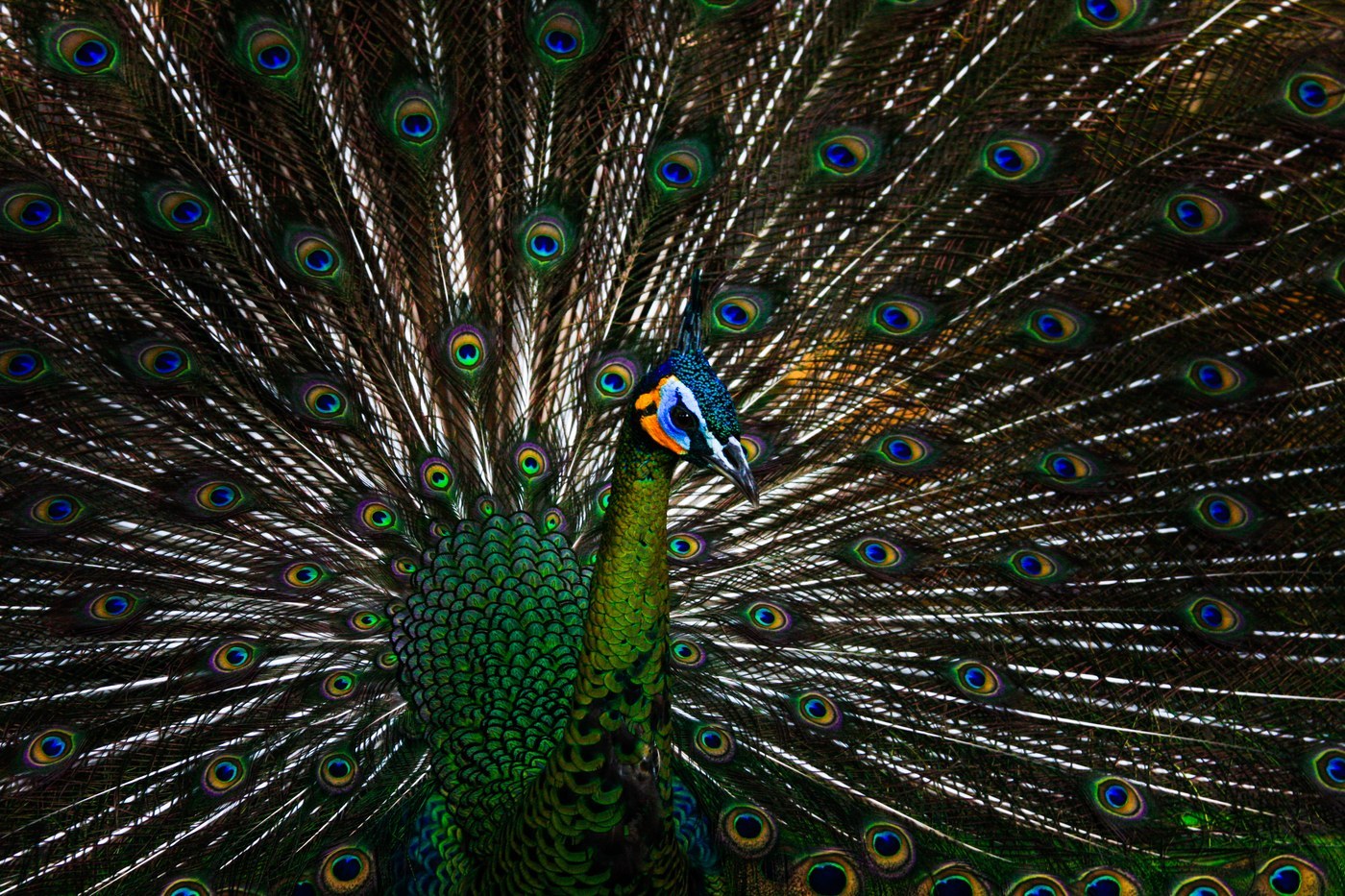
The Green Peafowl is a spectacular, large member of the pheasant family found across mainland Southeast Asia and historically Java. Unlike the familiar Indian Peafowl, both sexes of the Green Peafowl show striking iridescent plumage, though males are considerably more ornamented.
Males have a metallic green and bronze body covered in scale-like feathers, a blue-green neck, and an enormous train of upper tail coverts marked with iridescent blue-green "eye" ocelli, which is raised and fanned in courtship display. Females are smaller with shorter trains but share much of the male's iridescent green coloring, making them far showier than the drab brown hens of the Indian Peafowl.
How to identify it
Key field marks
- Tall, narrow, wire-like crest of upright feathers (versus the fan-shaped crest of the Indian Peafowl)
- Scaly green and bronze body plumage in both sexes
- Bare facial skin patched blue and yellow
- Long train with blue-green eye-spot ocelli in adult males
Similar species
- Indian Peafowl (Pavo cristatus): has a fan-shaped crest, blue neck and breast, and dull brown females; ranges do not naturally overlap (Indian Peafowl is native to South Asia).
- Female and immature Green Peafowl can be told from Indian Peafowl hens by their green, iridescent (not plain brown) plumage.
Habitat & range
Habitat
Green Peafowl favor open forest near rivers and streams, dry deciduous and semi-evergreen forest, and grassland-forest mosaics where they can forage on the ground while roosting in tall trees at night.
Range
Historically distributed from northeastern India through Myanmar, Thailand, Laos, Cambodia, Vietnam, southern China (Yunnan), and Java, but the species has been extirpated from much of this range.
Migration
Green Peafowl are largely non-migratory, though they may make local movements tied to water availability and food supply, especially in the dry season.
Behavior & voice
Behavior
Green Peafowl are wary and largely terrestrial, walking through forest and grassland in search of food and flying up into tall trees to roost communally at night.
Voice
The call is a loud, far-carrying series of trumpet-like or wailing notes, often given at dawn and dusk; males also produce a rattling sound from vibrating train feathers during display.
Feeding
They forage on the ground for seeds, grain, fruit, invertebrates, and small vertebrates such as frogs, lizards, and snakes.
Nesting and breeding
Males display their trains in a polygynous system, fanning and shivering the ocellated feathers to attract females. Nests are shallow ground scrapes, typically holding 3-6 eggs incubated solely by the female.
Frequently asked questions
How is the Green Peafowl different from the Indian Peafowl?
Green Peafowl have iridescent green, scaly body plumage in both sexes and a tall wire-like crest, while Indian Peafowl males are blue-necked with a fan-shaped crest and females are plain brown.
Where does the Green Peafowl live?
It is native to mainland Southeast Asia, including Myanmar, Thailand, Indochina, and Yunnan (China), with a historically distinct population on Java; it has vanished from much of its former range.
Is the Green Peafowl endangered?
Yes, it is classified as Endangered due to hunting, egg collection, and habitat loss.
What does the Green Peafowl eat?
It is omnivorous, eating seeds, grain, fruit, invertebrates, and small vertebrates like frogs and snakes.
Do female Green Peafowl have trains?
Females have shorter, less elaborate trains than males but are still iridescent green, unlike the dull brown hens of the Indian Peafowl.
Green Peafowl guides
In-depth guides for identifying, finding, and understanding Green Peafowl.
Other birds you may enjoy
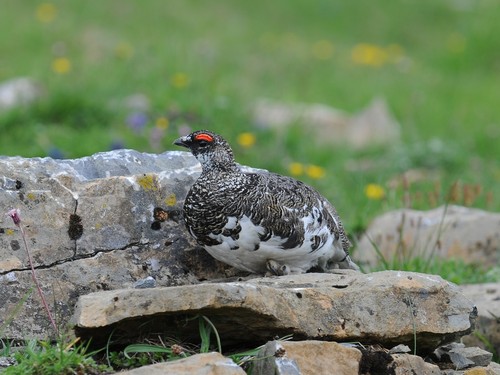
Rock Ptarmigan
34-36 cm (13-14 in) long
Congo Peafowl
Males about 64-70 cm long; females slightly smaller; no elaborate train
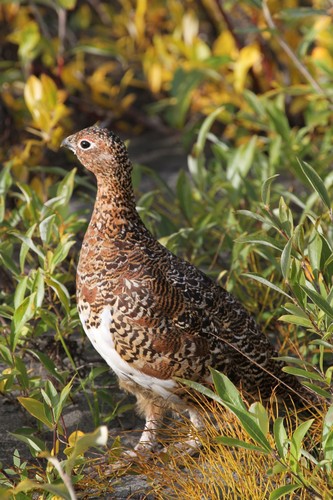
Willow Ptarmigan
37-42 cm (15-16.5 in) long
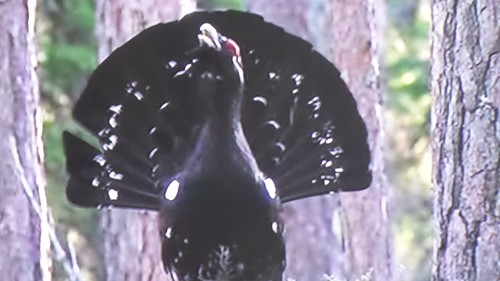
Western Capercaillie
male 74-90 cm (29-35 in), female 54-64 cm; male wingspan up to 125-130 cm
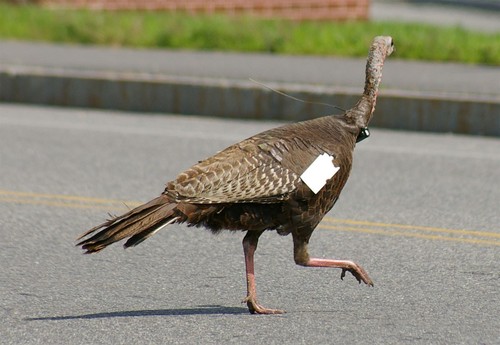
Wild Turkey
males 100-125 cm (39-49 in) long; females smaller, around 76-95 cm (30-37 in)
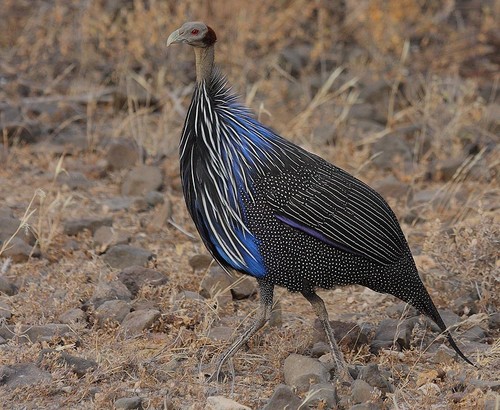
Vulturine Guineafowl
Length 61-71 cm, the largest guineafowl species, with a notably long neck and tail
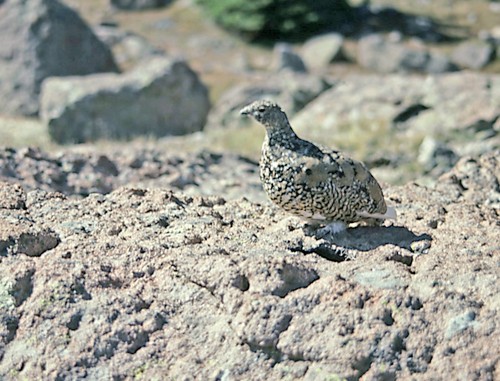
White-tailed Ptarmigan
30-33 cm (12-13 in) long; the smallest ptarmigan species
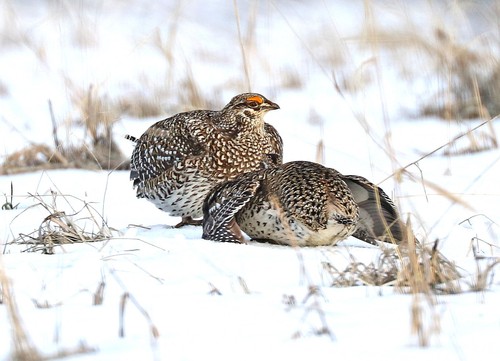
Sharp-tailed Grouse
38-48 cm (15-19 in) long
Ring-necked Pheasant
males 76-90 cm (30-35 in) long including a long tail; females smaller, 55-65 cm (22-26 in)
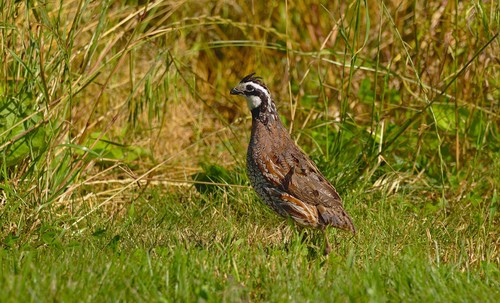
Northern Bobwhite
24-28 cm (9.5-11 in) long, 33-38 cm wingspan
Red-legged Partridge
32-34 cm (13 in) long, 47-50 cm wingspan
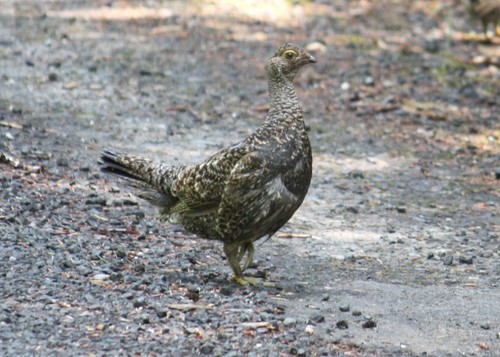
Sooty Grouse
43-48 cm (17-19 in) long; males larger than females