
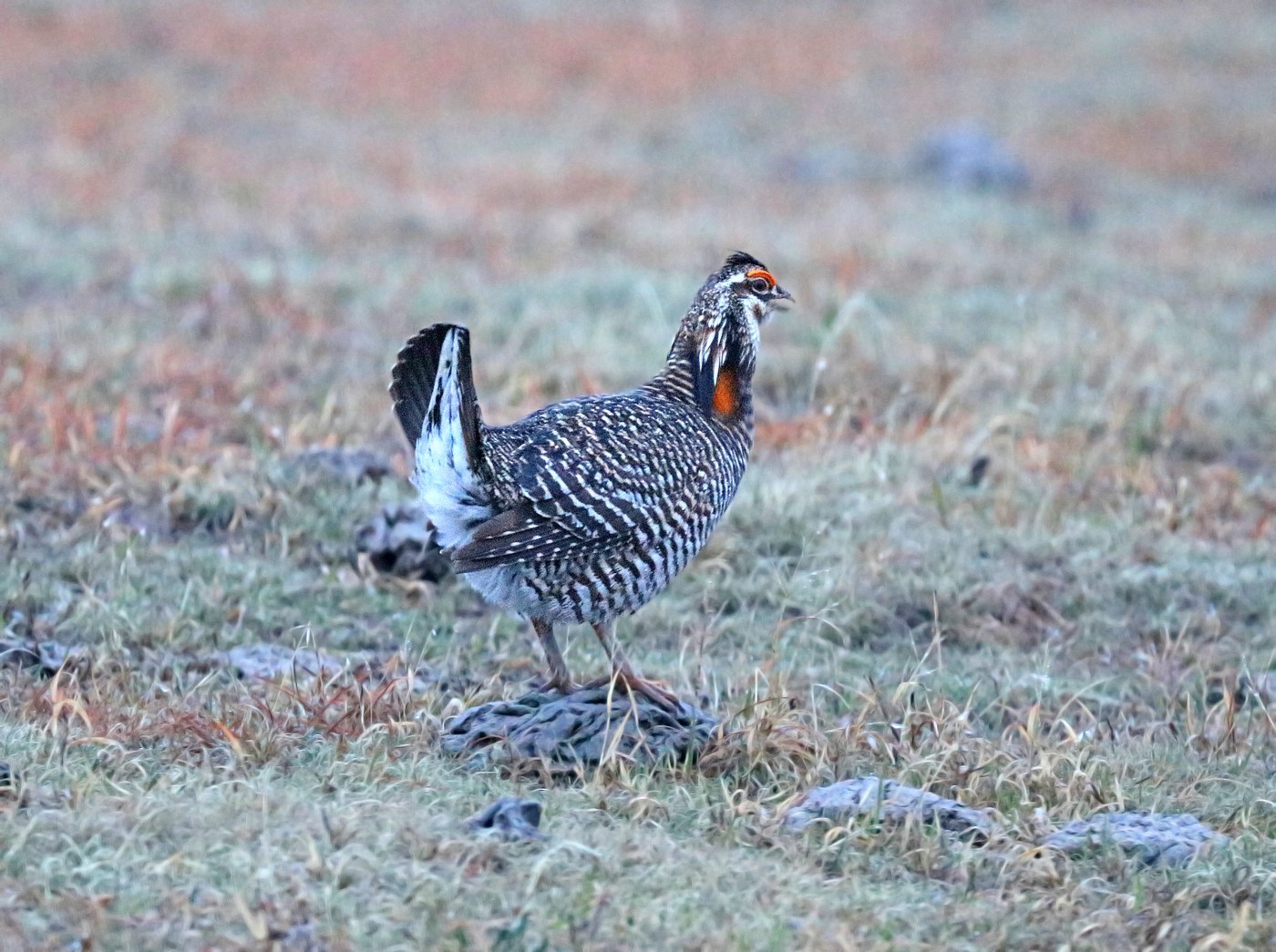
Greater Prairie-Chicken
Tympanuchus cupido
A heavily barred prairie grouse famous for the male's booming courtship display, featuring orange air sacs and erect pinnae feathers on communal leks.
- Size
- 43-47 cm (17-18.5 in) long
- Habitat
- native and restored tallgrass prairie and grassland
- Type
- gamebird
Spotted a bird like this?
Identify any bird from a photo, free.
Overview
The Greater Prairie-Chicken is a medium-large grouse of the North American tallgrass prairie, historically abundant across the Midwest but now much reduced by the conversion of native grassland to cropland. Both sexes are boldly barred overall in brown, buff, and white, giving a distinctly striped appearance unlike the more mottled pattern of forest grouse. Males have prominent elongated neck feathers called pinnae, which are raised like small "horns" during display, along with bare, orange-yellow air sacs on the sides of the neck.
How to identify it
Key field marks
- Strongly barred brown, buff, and white plumage overall (unlike mottled forest grouse)
- Short, rounded, dark tail (blackish in males, barred in females)
- Males show erect pinnae feathers and orange-yellow neck air sacs during display
Similar species
Lesser Prairie-Chicken is smaller and paler overall with more reddish-orange neck sacs, and its range is limited to the southern Great Plains with essentially no overlap with the Greater Prairie-Chicken. Sharp-tailed Grouse has a pointed tail and V-marked (not barred) underparts.
Habitat & range
Habitat and Range
Greater Prairie-Chickens require large, contiguous expanses of native or high-quality restored tallgrass and mixed-grass prairie for nesting, feeding, and lekking, and are highly sensitive to habitat fragmentation.
Range
Historically found across the tallgrass prairie region from the Great Lakes states to the central and southern Great Plains, the species now survives in scattered, often isolated populations in states such as Kansas, Nebraska, Oklahoma, Minnesota, and Illinois, having disappeared from much of its former eastern range; the extinct Heath Hen of the Atlantic coast was a former subspecies.
Migration
Greater Prairie-Chickens are largely non-migratory, though some populations make modest seasonal movements in response to snow cover and food availability.
Behavior & voice
Behavior
Males gather each spring on traditional leks known as "booming grounds," where they compete through synchronized foot-stamping, wing displays, and inflation of their orange neck air sacs.
Voice
The display produces a deep, resonant, three-syllable "booming" sound from the inflated air sacs, audible over a mile on a still morning, along with cackles and whines during territorial disputes.
Feeding
Diet shifts seasonally, with leaves, buds, and waste grain important in fall and winter and insects and seeds more prominent in spring and summer, especially for growing chicks.
Nesting and breeding
Females nest on the ground in dense grass cover, often a mile or more from the lek, laying about 10-12 eggs and raising the brood alone.
Frequently asked questions
Why is the Greater Prairie-Chicken declining?
The conversion of native tallgrass prairie to cropland and habitat fragmentation have eliminated much of the large, contiguous grassland the species needs, causing significant range-wide population declines.
What is the 'booming' sound Prairie-Chickens make?
Displaying males inflate bright orange-yellow air sacs on their necks and release the air to produce a deep, resonant, hollow booming sound as part of their courtship display on communal leks.
What is the difference between Greater and Lesser Prairie-Chicken?
Greater Prairie-Chicken is larger and darker with orange-yellow neck sacs, while Lesser Prairie-Chicken is smaller, paler, and has more reddish-orange neck sacs; their ranges do not overlap, with Lesser confined to the southern Great Plains.
Is the Heath Hen related to the Greater Prairie-Chicken?
Yes, the extinct Heath Hen of the Atlantic coastal plain was a former subspecies of the Greater Prairie-Chicken that went extinct in 1932.
Greater Prairie-Chicken guides
In-depth guides for identifying, finding, and understanding Greater Prairie-Chicken.
Other birds you may enjoy
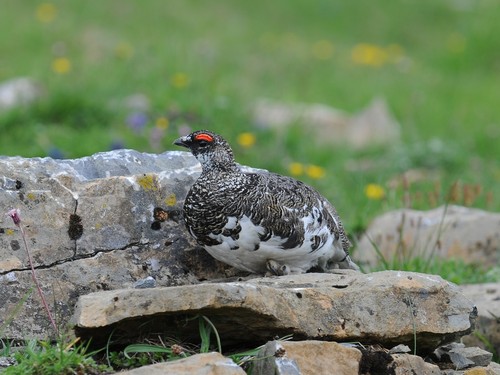
Rock Ptarmigan
34-36 cm (13-14 in) long
Congo Peafowl
Males about 64-70 cm long; females slightly smaller; no elaborate train
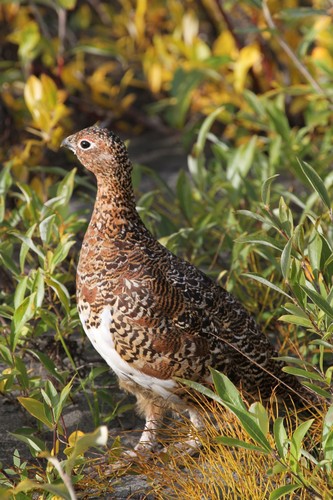
Willow Ptarmigan
37-42 cm (15-16.5 in) long
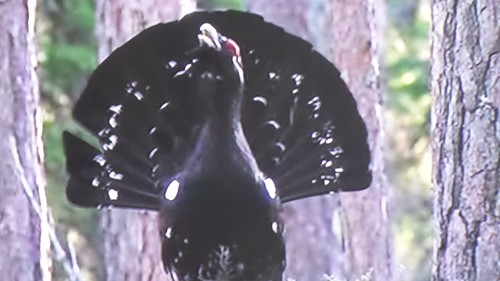
Western Capercaillie
male 74-90 cm (29-35 in), female 54-64 cm; male wingspan up to 125-130 cm
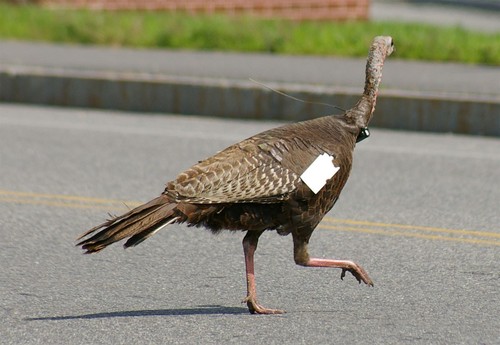
Wild Turkey
males 100-125 cm (39-49 in) long; females smaller, around 76-95 cm (30-37 in)
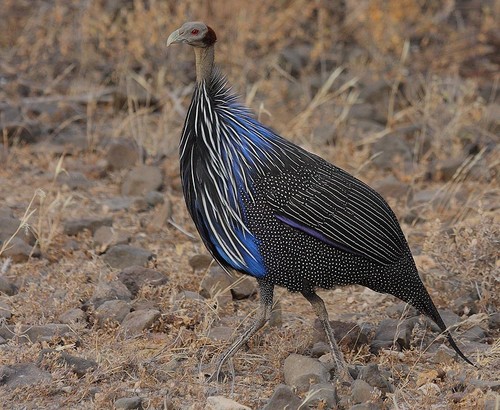
Vulturine Guineafowl
Length 61-71 cm, the largest guineafowl species, with a notably long neck and tail
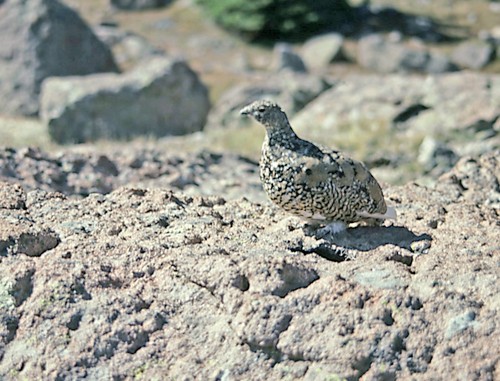
White-tailed Ptarmigan
30-33 cm (12-13 in) long; the smallest ptarmigan species
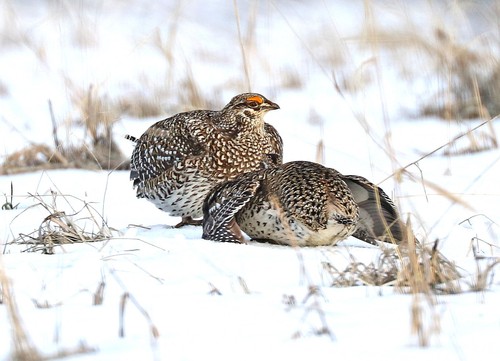
Sharp-tailed Grouse
38-48 cm (15-19 in) long
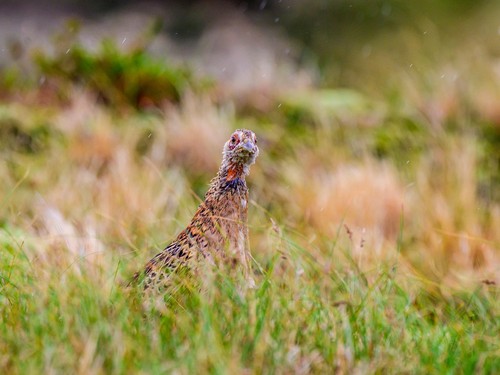
Ring-necked Pheasant
males 76-90 cm (30-35 in) long including a long tail; females smaller, 55-65 cm (22-26 in)
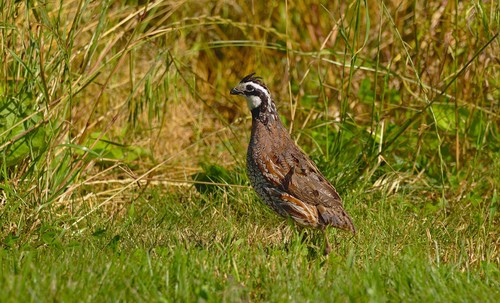
Northern Bobwhite
24-28 cm (9.5-11 in) long, 33-38 cm wingspan
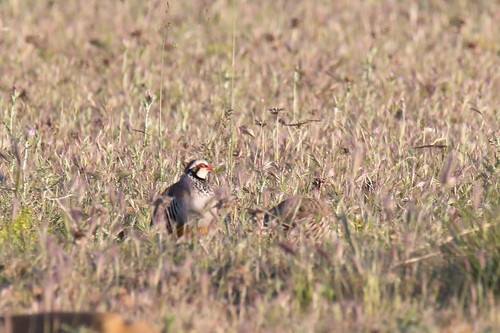
Red-legged Partridge
32-34 cm (13 in) long, 47-50 cm wingspan
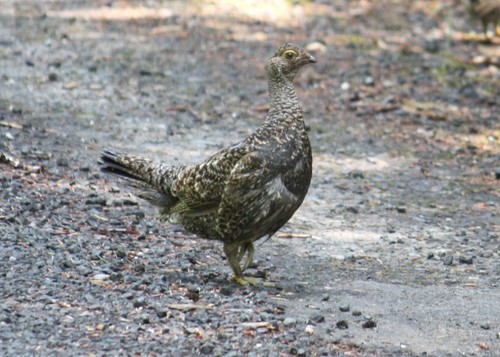
Sooty Grouse
43-48 cm (17-19 in) long; males larger than females