
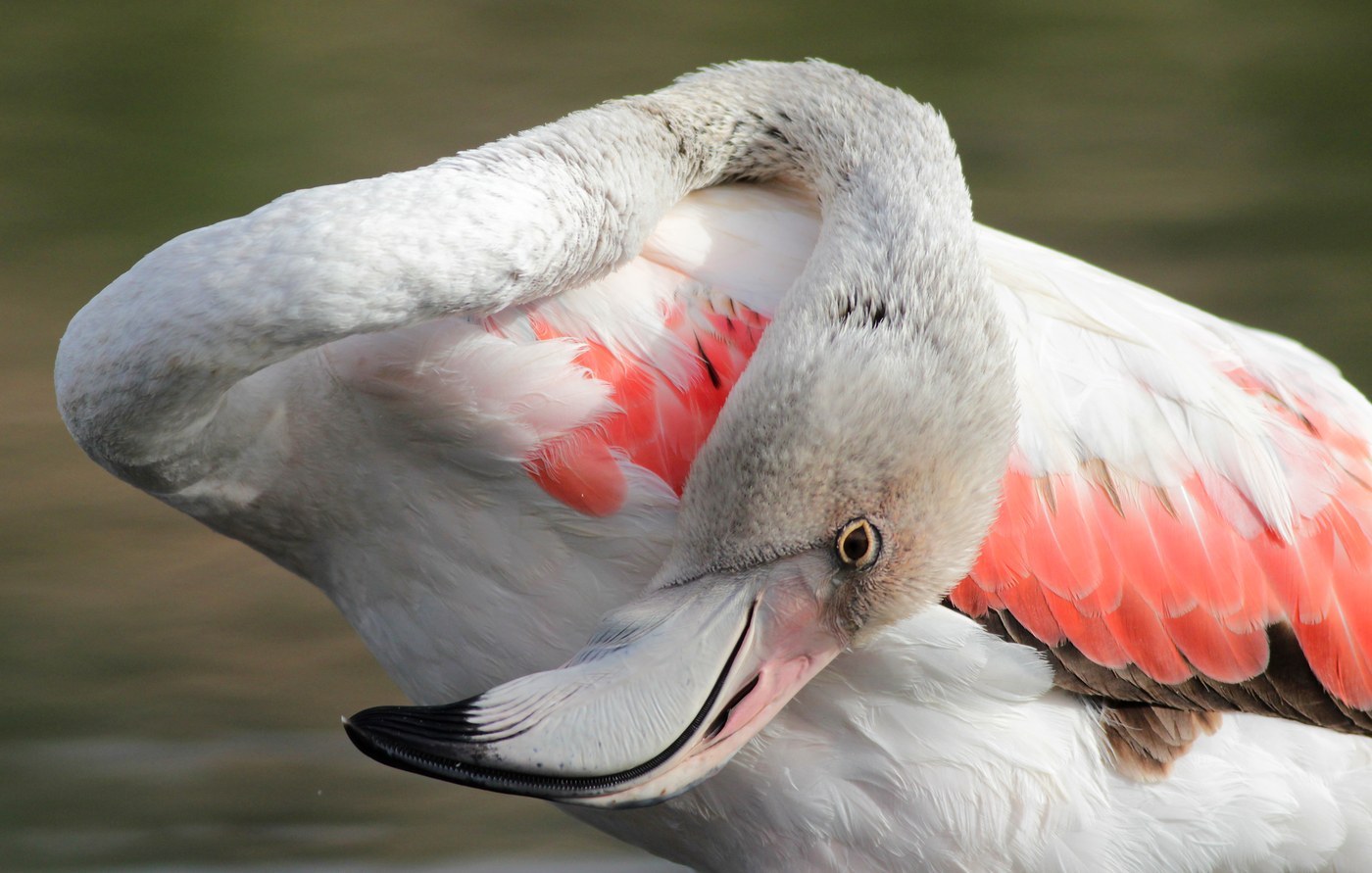
Greater Flamingo
Phoenicopterus roseus
The largest and palest flamingo species, widespread across Africa, southern Europe, and Asia.
- Size
- 120-150 cm (47-59 in) tall, 140-165 cm wingspan
- Habitat
- saline lagoons, salt pans, estuaries, and alkaline lakes
- Type
- wading-bird
Spotted a bird like this?
Identify any bird from a photo, free.
Overview
The Greater Flamingo is the largest flamingo species and the most widely distributed, occurring across parts of Africa, southern Europe, the Middle East, and South and Central Asia. It is generally the palest of the flamingos, with mostly whitish-pink plumage, deep pink wing coverts, and black flight feathers. Its bill is pale pink with a sharply demarcated black tip, and its legs are entirely pink.
Often seen in large flocks wading through shallow saline lagoons, the Greater Flamingo is an iconic bird of Mediterranean wetlands such as the Camargue in France, as well as major waterbodies across Africa and Asia.
How to identify it
Key field marks
- Largest flamingo species, tallest standing height
- Pale pinkish-white overall plumage with deeper pink wing coverts
- Bicolored bill: pink base, black tip
- Uniformly pink legs
Similar species
- Lesser Flamingo is smaller and deeper pink with a mostly dark bill.
- American Flamingo is much more saturated scarlet-pink.
- Chilean Flamingo has gray legs with pink joints.
Habitat & range
Habitat
Inhabits shallow saline lagoons, coastal estuaries, salt pans, and alkaline inland lakes.
Range
Widespread from the Mediterranean (southern Europe, North Africa) through the Middle East and sub-Saharan Africa to South and Central Asia.
Migration
Some populations are partially migratory, moving seasonally between breeding and wintering wetlands, while others are largely resident.
Behavior & voice
Behavior
Forages in large flocks, wading through shallow water while sweeping its inverted bill from side to side to filter food; frequently stands on one leg while resting.
Voice
Loud, goose-like honking calls, particularly vocal in flight and at breeding colonies.
Feeding
Filters algae, small crustaceans, mollusks, and other invertebrates from mud and water using comb-like lamellae in the bill.
Nesting
Breeds colonially, building mud mound nests on open flats or shallow water; lays a single white egg.
Frequently asked questions
Is the Greater Flamingo the largest flamingo species?
Yes, it is the tallest and largest of all flamingo species, standing up to about 150 cm (59 in).
Where do Greater Flamingos live?
Across the Mediterranean region, the Middle East, sub-Saharan Africa, and South and Central Asia, in saline lagoons and alkaline lakes.
How does the Greater Flamingo differ from the American Flamingo?
The Greater Flamingo is paler pink overall, while the American Flamingo is a much deeper, more saturated scarlet-pink.
What do Greater Flamingos eat?
Algae, small crustaceans, mollusks, and other aquatic invertebrates filtered from shallow water and mud.
Greater Flamingo guides
In-depth guides for identifying, finding, and understanding Greater Flamingo.
Other birds you may enjoy
Demoiselle Crane
85-100 cm (33-39 in) long, 155-180 cm wingspan
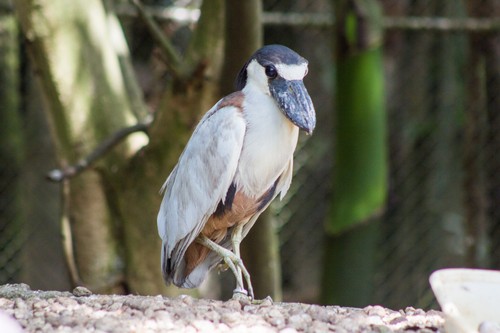
Boat-billed Heron
41-56 cm (16-22 in) long
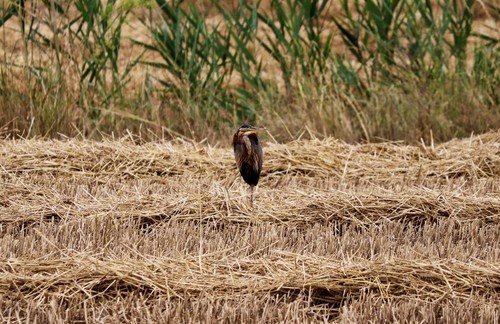
Purple Heron
78-90 cm (31-35 in) long, 120-152 cm wingspan
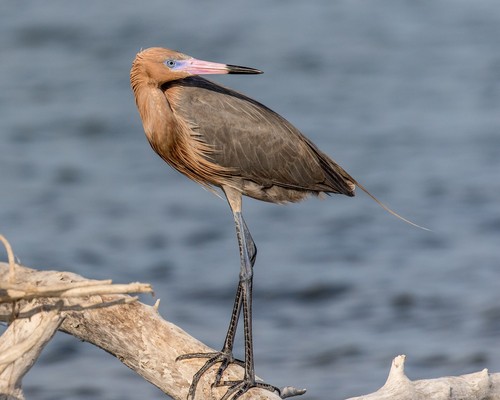
Reddish Egret
68-82 cm (27-32 in) long, 116-125 cm wingspan
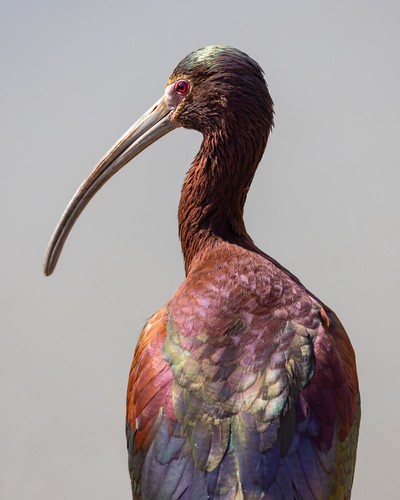
White-faced Ibis
46-56 cm (18-22 in) long, 88-93 cm wingspan
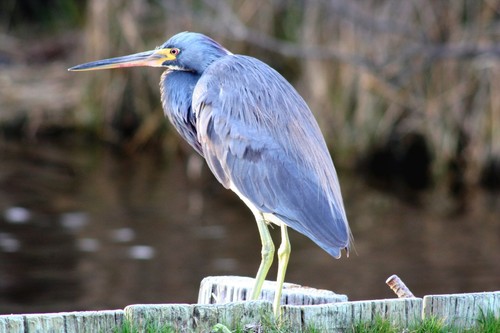
Tricolored Heron
61-76 cm (24-30 in) long, about 96 cm wingspan
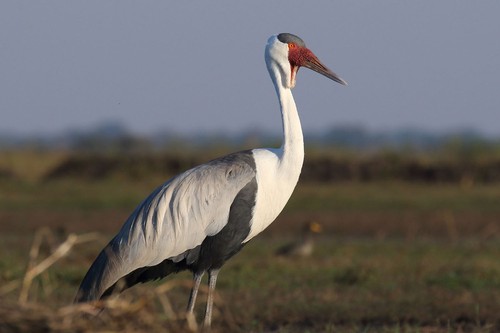
Wattled Crane
120-175 cm (47-69 in) tall, one of the tallest cranes, wingspan up to about 230 cm (7.5 ft)
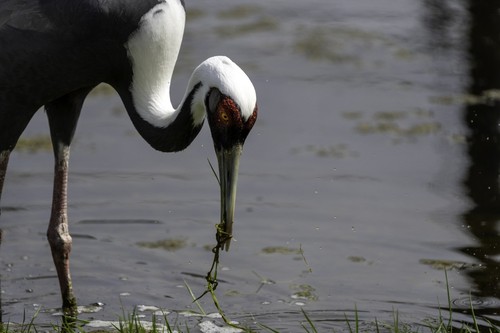
White-naped Crane
112-125 cm (44-49 in) long, 195-210 cm wingspan
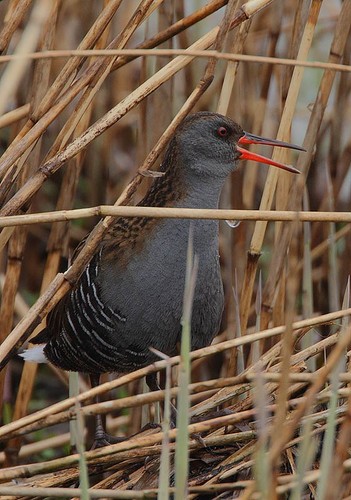
Water Rail
23-28 cm (9-11 in) long, wingspan 38-45 cm
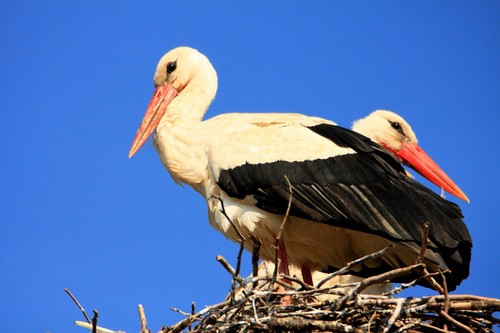
White Stork
100-125 cm (39-49 in) long, 155-215 cm wingspan
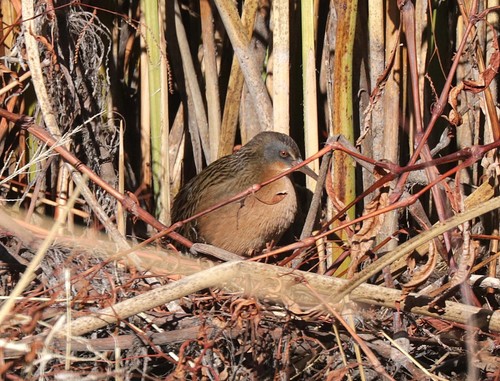
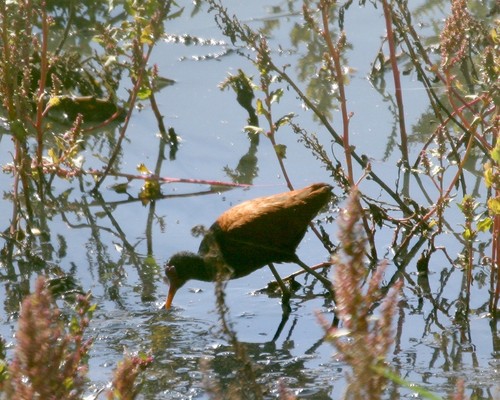
Virginia Rail
20-27 cm (8-11 in) long, wingspan 32-38 cm
Wattled Jacana
17-23 cm (7-9 in) long