
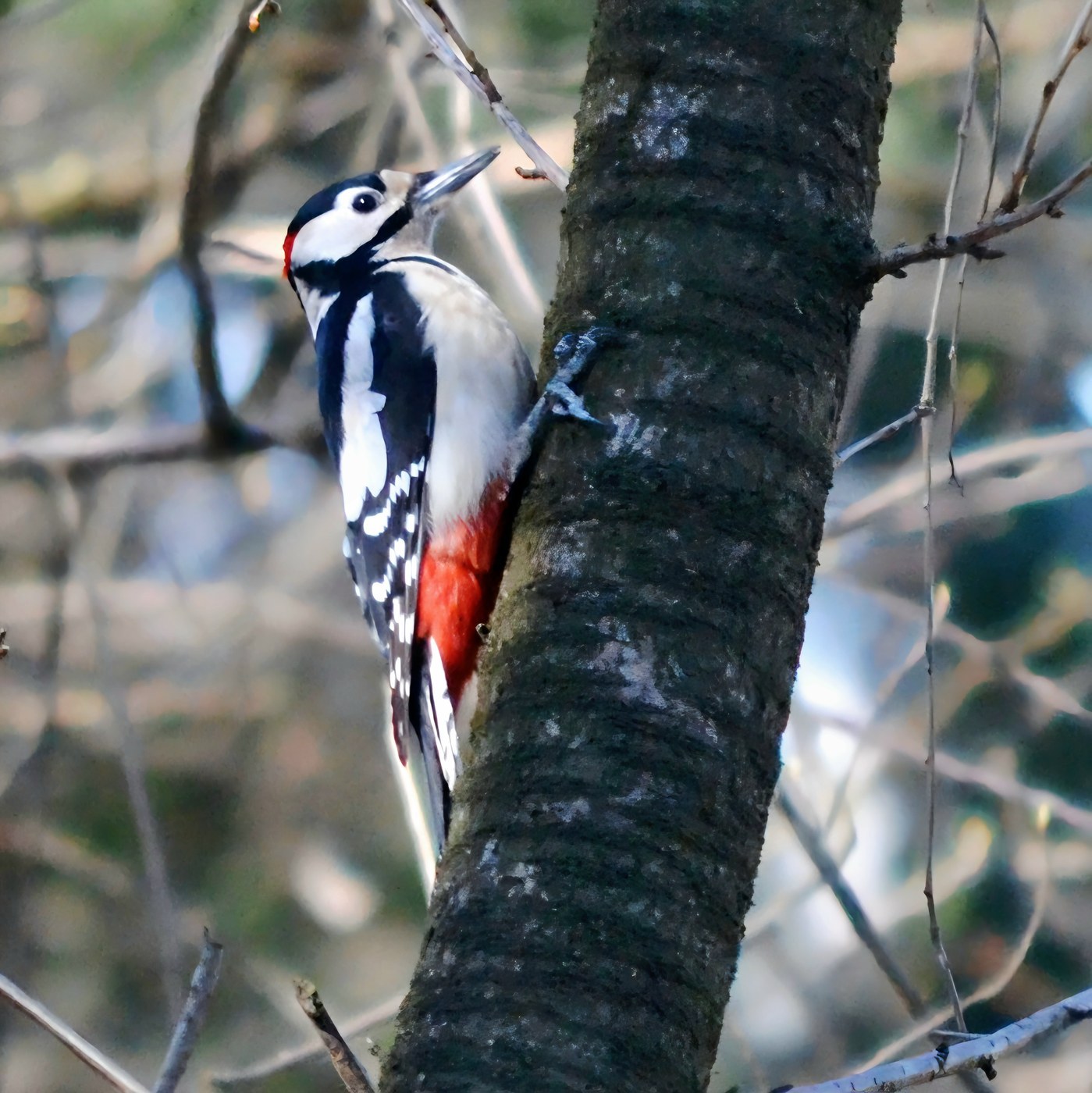
Great Spotted Woodpecker
Dendrocopos major
A striking black-and-white woodpecker with a bold red vent patch, the most widespread and familiar woodpecker across Europe.
- Size
- 22-24 cm (9 in) long, 34-39 cm wingspan
- Habitat
- woodlands, parks, orchards, and wooded gardens
- Type
- woodpecker
Spotted a bird like this?
Identify any bird from a photo, free.
Overview
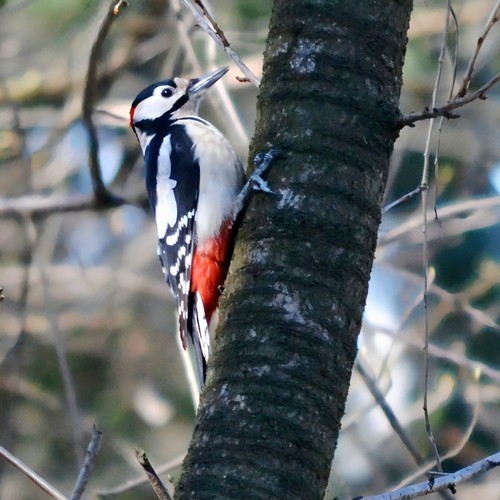
The Great Spotted Woodpecker is a boldly patterned bird in black and white, with large white shoulder patches, black upperparts and cap, and a crimson-red patch under the tail. Males show an additional red patch on the nape, which females lack, while juveniles have a red crown.
It is the most common and widespread woodpecker across much of Europe, equally at home in extensive forest and in wooded parks and gardens, where it readily visits bird feeders.
How to identify it
Key field marks
- Bold black-and-white plumage with large white oval shoulder patches
- Crimson-red patch under the tail
- Males have a red patch on the back of the head; females do not
- Juveniles show a red crown
- Loud "chik" call and rapid, resonant spring drumming
Similar species
- Lesser Spotted Woodpecker is much smaller and lacks the red vent, showing a barred (not solid white) back.
- Middle Spotted Woodpecker has a red crown in both sexes and paler, streakier underparts.
- Syrian Woodpecker (where ranges overlap) is very similar but lacks the black bar separating the red vent from the white outer tail.
The combination of large size, bold white shoulder patches, and red vent makes this the default "pied" woodpecker across most of its range.
Habitat & range
Habitat
Occupies a wide range of wooded habitats, from extensive broadleaf and coniferous forest to parks, orchards, hedgerows, and large gardens with mature trees.
Range
Widespread across almost all of Europe and temperate Asia to Japan, plus parts of North Africa; absent only from Ireland and the far north.
Migration
Mostly resident and sedentary, though northern and eastern populations occasionally show irruptive movements in years of poor seed crops.
Behavior & voice
Behavior
An active, agile climber, moving up tree trunks and along branches in short hops, bracing itself with stiff tail feathers while excavating for food. It readily visits garden feeders, especially for peanuts and suet.
Voice
Gives a sharp, explosive "chik" or "kick" call, and in late winter and spring produces a fast, resonant drumming roll on dead branches to proclaim territory, distinct from its slower feeding taps.
Feeding
Primarily wood-boring beetle larvae extracted from bark and dead wood, plus seeds, nuts, and in spring sometimes the eggs or chicks of smaller hole-nesting birds.
Nesting and breeding
Excavates a new nest hole most years in a dead or decaying tree trunk. Females lay 4-7 white eggs, incubated by both parents for about 10-13 days, with young fledging after roughly three weeks.
Frequently asked questions
How do you tell a male from a female Great Spotted Woodpecker?
Males have a red patch on the back of the head (nape), which females lack; juveniles instead show a red crown.
Why do woodpeckers drum on trees?
Drumming is a territorial and courtship signal, produced by rapid pecking on resonant dead wood rather than for feeding.
What does the Great Spotted Woodpecker eat?
Mainly wood-boring insect larvae, along with seeds, nuts, and occasionally the eggs or nestlings of other birds.
How is it different from the Lesser Spotted Woodpecker?
The Great Spotted Woodpecker is much larger, with solid white shoulder patches and a red vent patch, both absent in the smaller Lesser Spotted Woodpecker.
Do Great Spotted Woodpeckers visit gardens?
Yes, they commonly visit garden feeders, especially for peanuts and suet, particularly where mature trees are nearby.
Great Spotted Woodpecker guides
In-depth guides for identifying, finding, and understanding Great Spotted Woodpecker.
Other birds you may enjoy
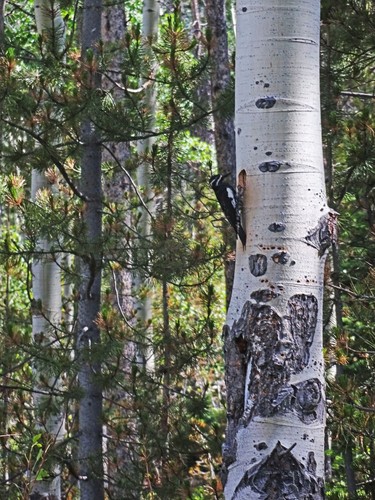
Williamson's Sapsucker
21-25 cm (8-10 in) long, 40-42 cm wingspan
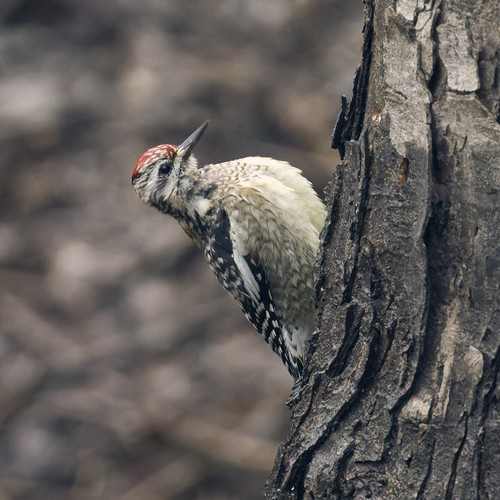
Yellow-bellied Sapsucker
18-21 cm (7-8.3 in) long, 34-40 cm wingspan
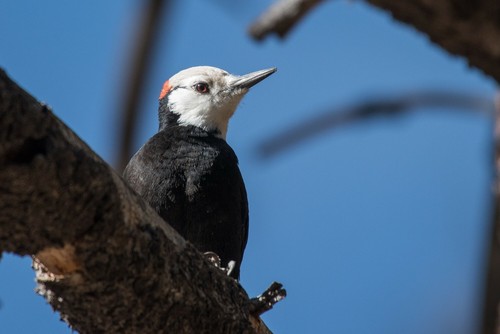
White-headed Woodpecker
20-23 cm (8-9 in) long, 38-41 cm wingspan
Red-headed Woodpecker
19-23 cm (7.5-9 in) long, 42-46 cm wingspan
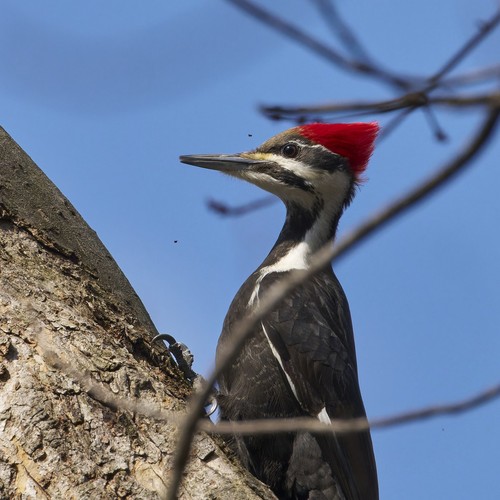
Pileated Woodpecker
40-49 cm (16-19 in) long, 66-75 cm wingspan
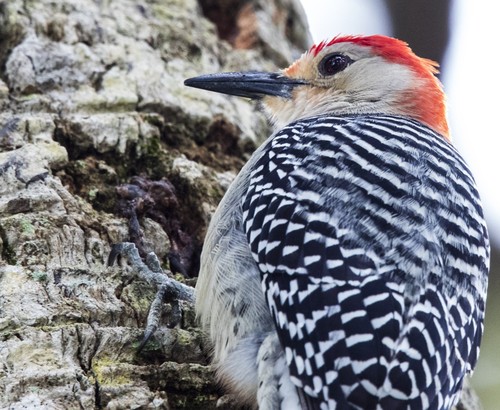
Red-bellied Woodpecker
22-27 cm (9-10.5 in) long, 38-46 cm wingspan
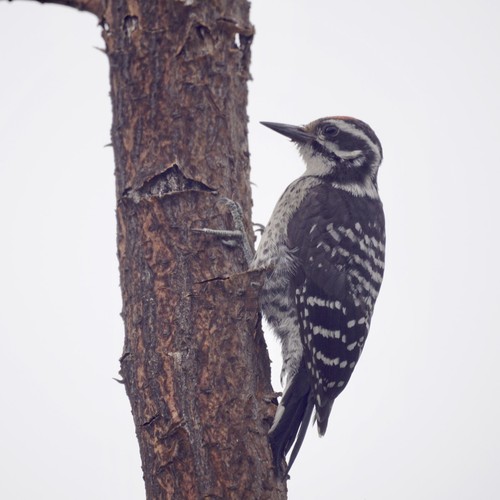
Nuttall's Woodpecker
18-20 cm (7-8 in) long, 34-38 cm wingspan
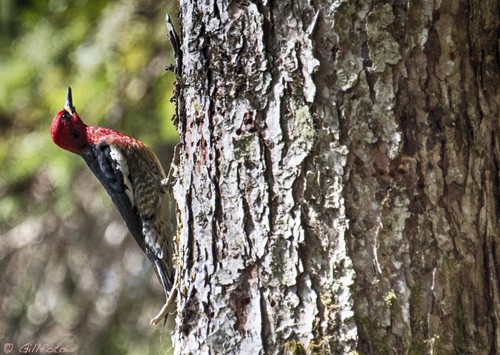
Red-breasted Sapsucker
20-23 cm (8-9 in) long, 34-40 cm wingspan
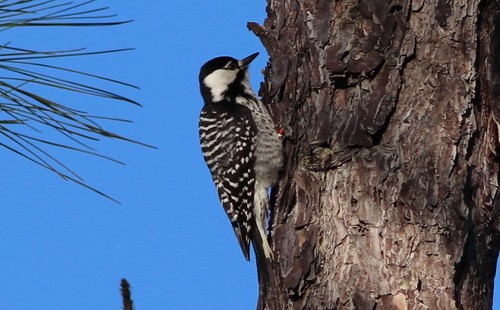
Red-cockaded Woodpecker
20-23 cm (8-9 in) long, 35-38 cm wingspan
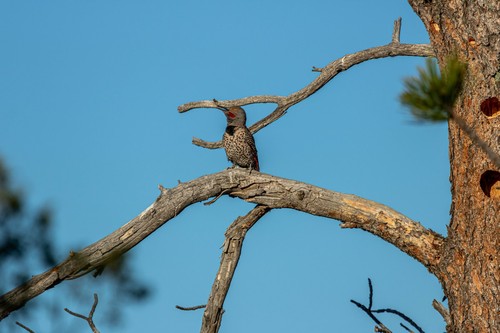
Northern Flicker
28-36 cm (11-14 in) long, 42-51 cm wingspan
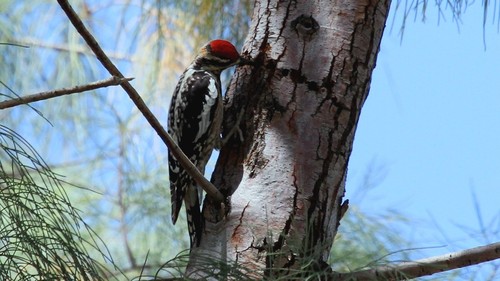
Red-naped Sapsucker
19-21 cm (7.5-8.3 in) long, 34-40 cm wingspan
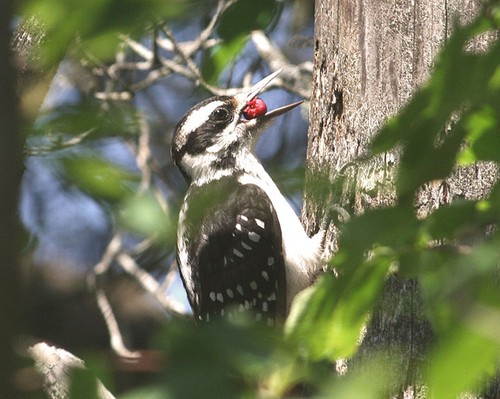
Hairy Woodpecker
23-26 cm (9-10 in) long, 33-41 cm wingspan