
Great Spotted Woodpecker Identification Guide
A crisply patterned black-and-white woodpecker of Eurasian woodlands, told from relatives by its size, bold white shoulder patches, and red vent.
Read the full Great Spotted Woodpecker encyclopedia entry →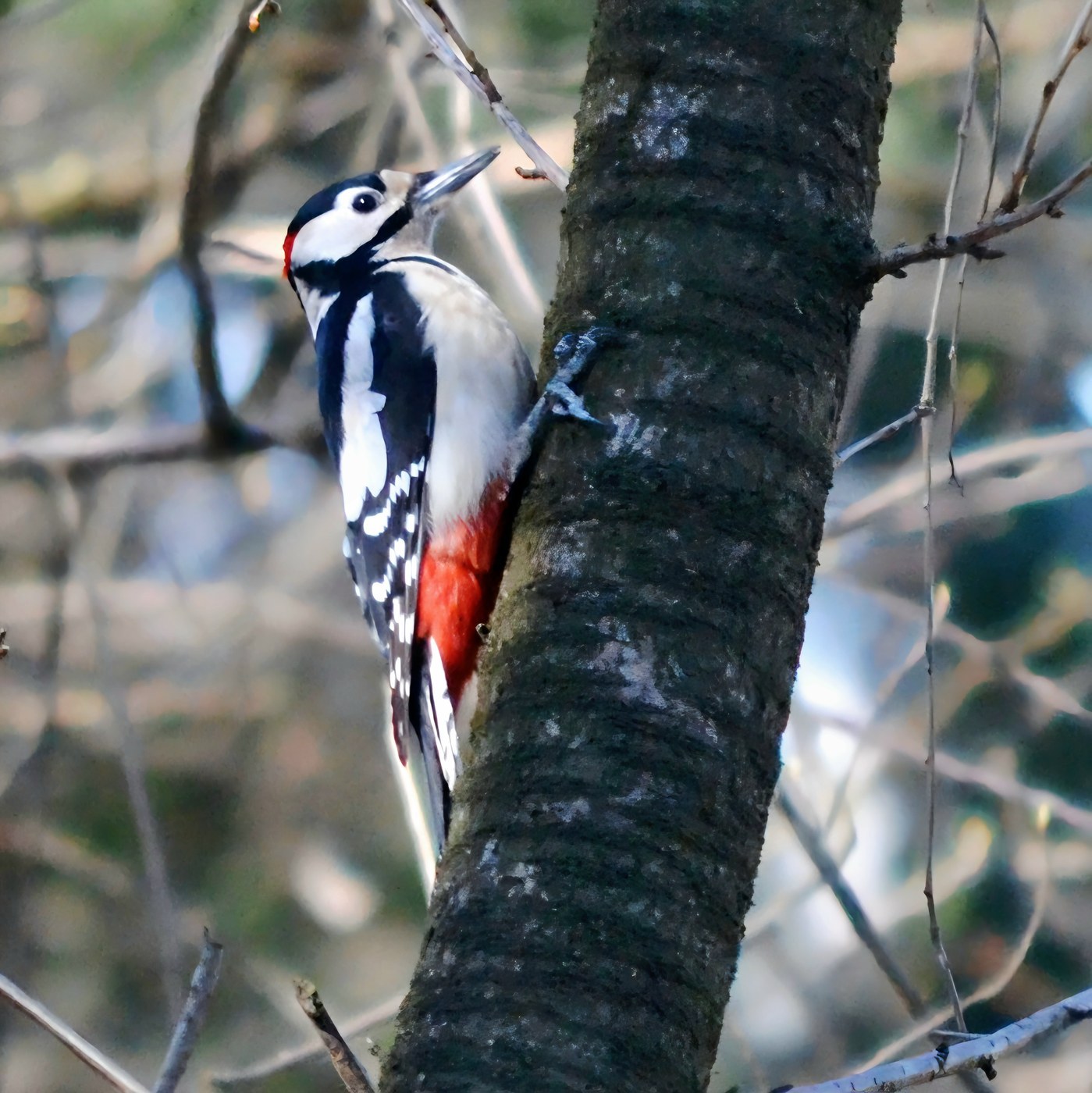
Key Field Marks
- Size & shape: A medium-sized woodpecker, roughly starling-sized, with a stiff upright posture on tree trunks and a straight, chisel-like gray-black bill.
- Plumage: Bold black-and-white pattern — glossy black upperparts, large white patches on the shoulders/wing coverts, white underparts, and barred black-and-white flight feathers.
- Vent: A bright red patch under the tail (undertail coverts) present in both sexes, useful year-round.
- Sex/age differences: Adult males show a small red patch on the back of the nape; females lack it entirely; juveniles of both sexes show a red crown patch instead.
- Flight: Strongly undulating, bounding flight typical of woodpeckers.
Separating It From Similar Species
- Middle Spotted Woodpecker: Smaller and softer-plumaged, with a pale pinkish-red cap present in both sexes (not just males) and streakier flanks.
- Lesser Spotted Woodpecker: Considerably smaller (sparrow-sized), with a barred black-and-white back rather than solid white shoulder patches, and no red vent.
- Syrian Woodpecker: Very similar overall but shows less black behind the eye and a paler pink (not bright red) undertail in some populations; ranges overlap mainly in southeastern Europe.
- White-backed Woodpecker: Larger, with a solidly white lower back and heavily barred flanks, lacking the great spotted's clean white shoulder patches.
Where and When to See One
- Range: Widespread across Europe and temperate Asia, from Britain and Iberia east to Japan.
- Habitat: Deciduous and mixed woodland, parks, large gardens with mature trees, and forest edges; readily visits garden feeders, especially for peanuts and suet.
- Season: Resident year-round across most of its range; most conspicuous in late winter and early spring during drumming season.
Voice Cues
- A sharp, explosive "kick" or "tchick" call, often given in flight or when alarmed.
- The signature rapid drumming — a burst of roughly 10–16 strikes delivered in under a second — is used to declare territory and is most frequent from late winter into spring, distinguishing it acoustically from the slower, softer drumming of smaller spotted woodpeckers.
Frequently asked questions
How do you tell a male from a female great spotted woodpecker?
Males have a small red patch on the nape (back of the head); females have an all-black head with no red nape patch.
What's the difference between a great spotted and lesser spotted woodpecker?
The great spotted is much larger with solid white shoulder patches and a red vent, while the lesser spotted is tiny, has a barred back, and lacks red undertail coverts.
Does the great spotted woodpecker visit garden feeders?
Yes, it readily comes to feeders stocked with peanuts, suet, or sunflower hearts, especially in winter.
How can I identify a great spotted woodpecker by sound?
Listen for a sharp "kick" call and a fast, loud drum roll of about 10-16 beats lasting under a second.
How is a juvenile great spotted woodpecker different from an adult?
Juveniles of both sexes show a red crown on top of the head, which is replaced by the adult pattern (red nape in males, none in females) after the first molt.