
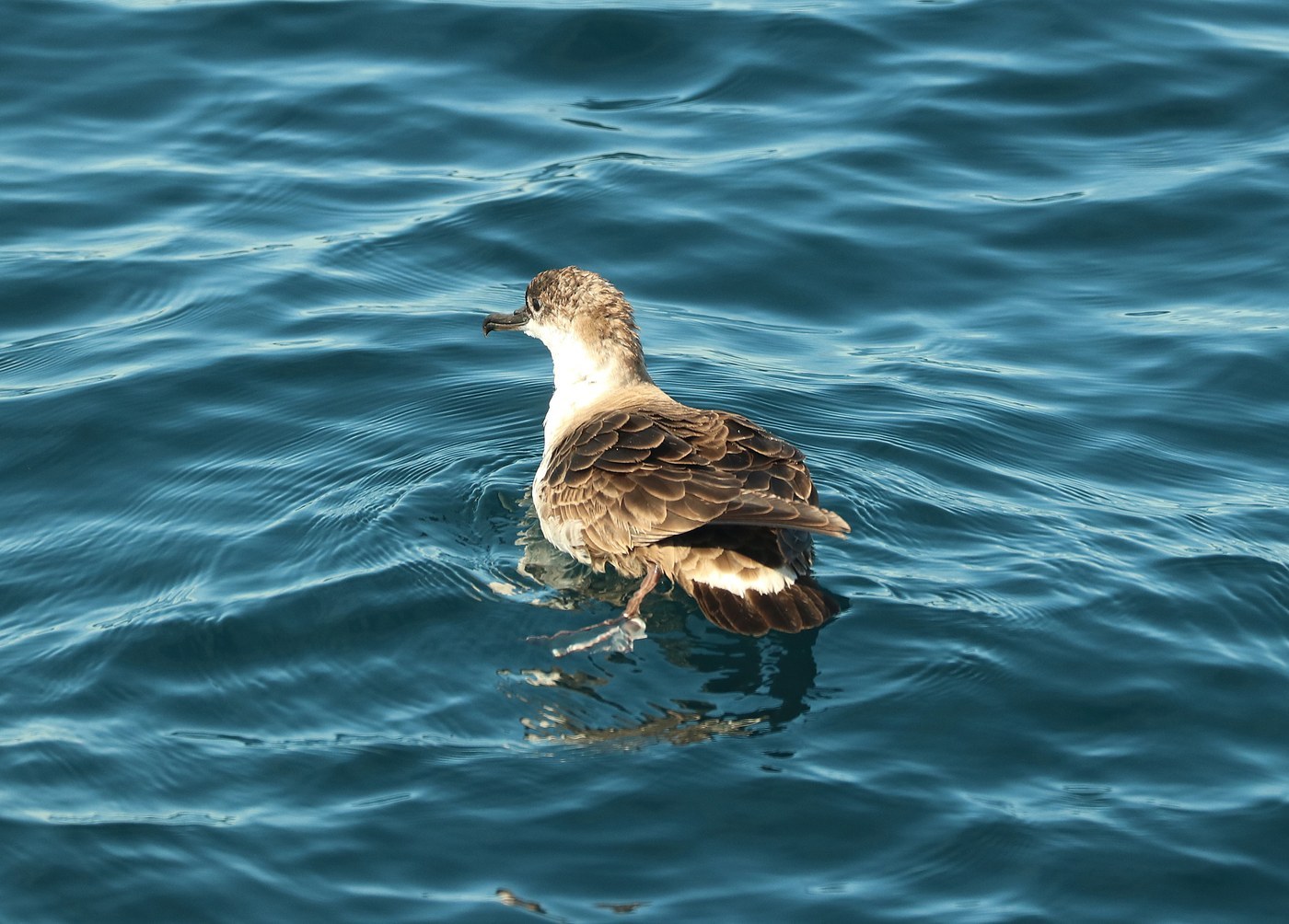
Great Shearwater
Ardenna gravis
A trans-equatorial migrant shearwater with a sharply defined dark cap and white collar, breeding on remote South Atlantic islands and wintering across the North Atlantic.
- Size
- 43-51 cm (17-20 in) long, wingspan 105-122 cm (41-48 in)
- Habitat
- open Atlantic Ocean, breeding on remote South Atlantic islands
- Type
- seabird
Spotted a bird like this?
Identify any bird from a photo, free.
Overview
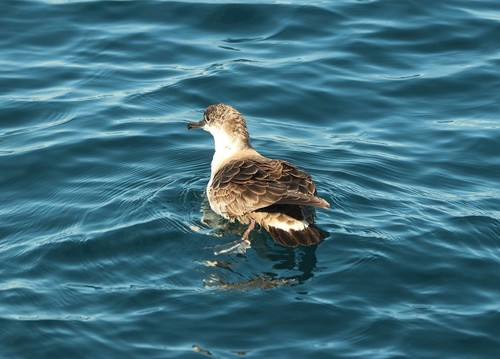
The Great Shearwater is a medium-large shearwater notable for its crisp, well-defined plumage pattern: a dark blackish-brown cap sharply set off from a white collar around the neck, dark grey-brown upperparts often showing a pale, scaly-looking pattern, and white underparts with a distinctive dark smudgy patch on the belly.
This species undertakes one of the more remarkable migrations among shearwaters, breeding almost entirely on a handful of remote islands in the Tristan da Cunha group in the South Atlantic, then migrating across the entire Atlantic Ocean to spend the non-breeding season in the productive waters off eastern North America and Europe.
Great Shearwaters are often seen in large, mixed feeding flocks with other shearwaters, gulls, and marine mammals, drawn to concentrations of small fish near the surface.
How to identify it
Key field marks
- Sharply defined dark cap contrasting with a white collar
- Dark grey-brown upperparts with a scaly pattern, often a pale U on the uppertail coverts
- White underparts with a dark smudge on the belly
Similar species
- Cory's Shearwater has a more uniformly grey-brown head without the sharp cap-and-collar contrast, and a pale bill rather than dark.
- Sooty Shearwater is much darker overall, lacking the white collar and pale underparts of the Great Shearwater.
Habitat & range
Great Shearwaters breed almost exclusively on islands of the Tristan da Cunha group and nearby Gough Island in the remote South Atlantic. Nests are dug as burrows in soft soil on grassy or tussock-covered slopes.
After breeding, the species undertakes a long trans-equatorial migration northward across the Atlantic, spending the non-breeding season in productive waters off the eastern coasts of North America and, in smaller numbers, Europe, before returning south to breed.
Behavior & voice
Voice
Great Shearwaters are largely silent at sea but give harsh, cackling calls at night around breeding burrows during the courtship and nesting period.
Feeding
They feed on fish, squid, and crustaceans, often gathering in large, active flocks alongside other seabirds and marine mammals over schools of small fish, using surface-seizing and shallow diving to catch prey.
Nesting and breeding
Pairs nest in burrows dug into soft soil, visiting the colony mainly at night to avoid predators. A single egg is laid, and both parents share incubation duties before the long return migration north.
Frequently asked questions
Where does the Great Shearwater breed?
It breeds almost entirely on remote islands of the Tristan da Cunha group and Gough Island in the South Atlantic.
How can you identify a Great Shearwater?
Look for its sharply defined dark cap, white collar around the neck, and a dark smudgy patch on an otherwise white belly.
Why does the Great Shearwater migrate so far?
After breeding in the South Atlantic, it migrates across the entire Atlantic Ocean to feed in productive waters off North America and Europe during the non-breeding season.
How is the Great Shearwater different from Cory's Shearwater?
The Great Shearwater has a sharply contrasting dark cap and white collar, while Cory's Shearwater has a more uniform grey-brown head and a pale rather than dark bill.
What does the Great Shearwater eat?
It eats fish, squid, and crustaceans, often feeding in large mixed flocks with other seabirds.
Great Shearwater guides
In-depth guides for identifying, finding, and understanding Great Shearwater.
Other birds you may enjoy
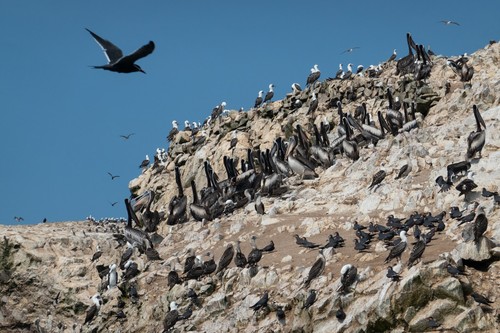
Peruvian Pelican
137-152 cm (54-60 in) long, up to 228 cm wingspan
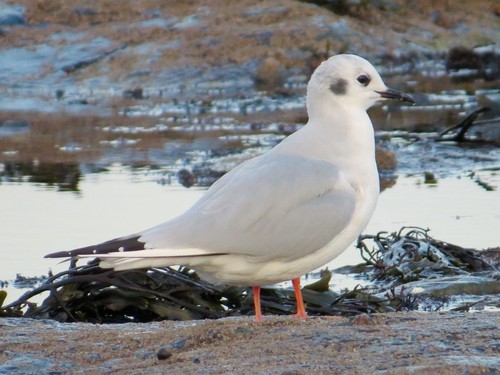
Bonaparte's Gull
28-33 cm (11-13 in) long, 76-84 cm wingspan
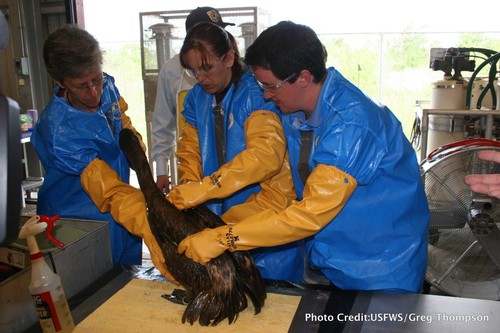
Brown Pelican
106-137 cm (42-54 in) long, 200-230 cm wingspan
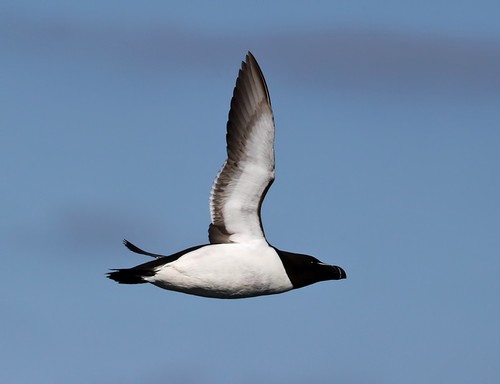
Razorbill
37-39 cm (15-15.5 in) long, 63-68 cm wingspan
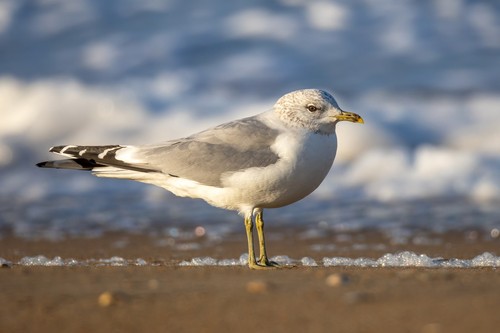
Common Gull
40-46 cm (16-18 in) long, 110-130 cm wingspan
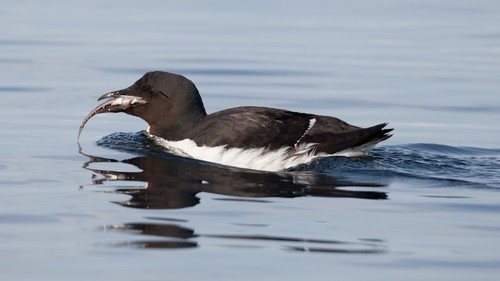
Thick-billed Murre
40-48 cm (16-19 in) long, 65-75 cm wingspan
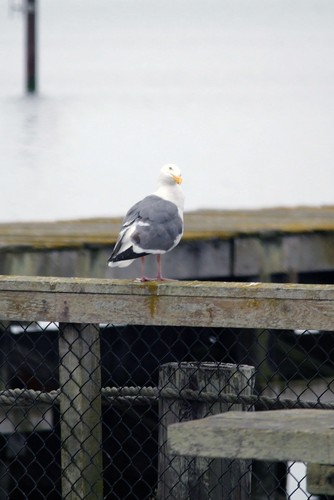
Western Gull
55-68 cm (22-27 in) long, 130-144 cm wingspan
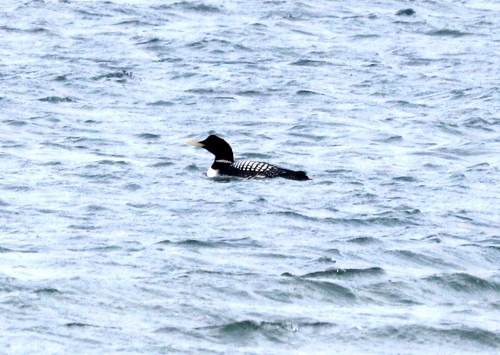
Yellow-billed Loon
76-97 cm (30-38 in) long, 135-152 cm wingspan
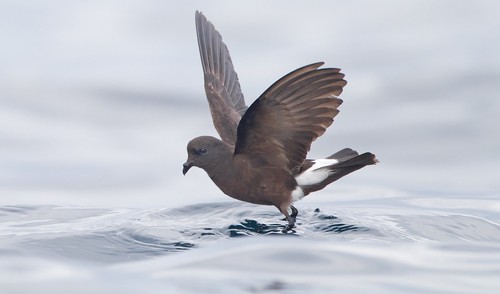
Wilson's Storm-Petrel
15-19 cm (6-7.5 in) long, wingspan 38-42 cm (15-16.5 in)
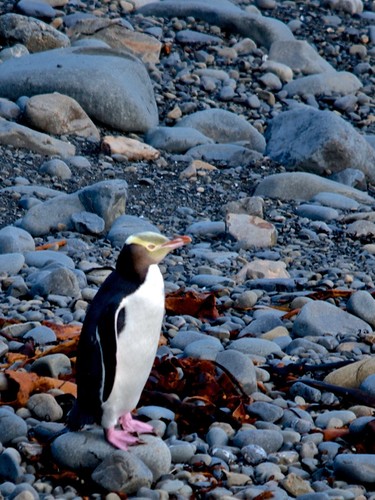
Yellow-eyed Penguin
62-79 cm (24-31 in) tall, 3-8.5 kg (6.6-18.7 lb)
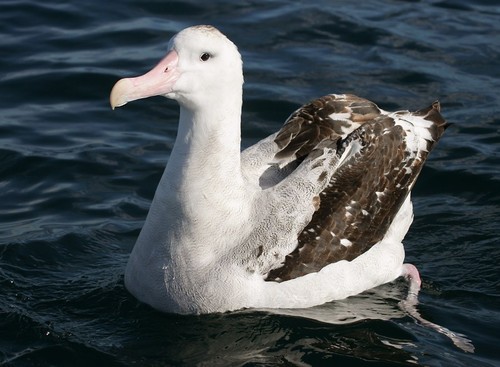
Wandering Albatross
107-135 cm (42-53 in) long, wingspan up to 3.5 m (11.5 ft)
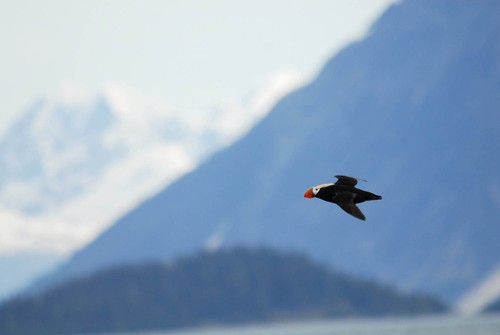
Tufted Puffin
35-41 cm (14-16 in) long, about 63-70 cm wingspan