
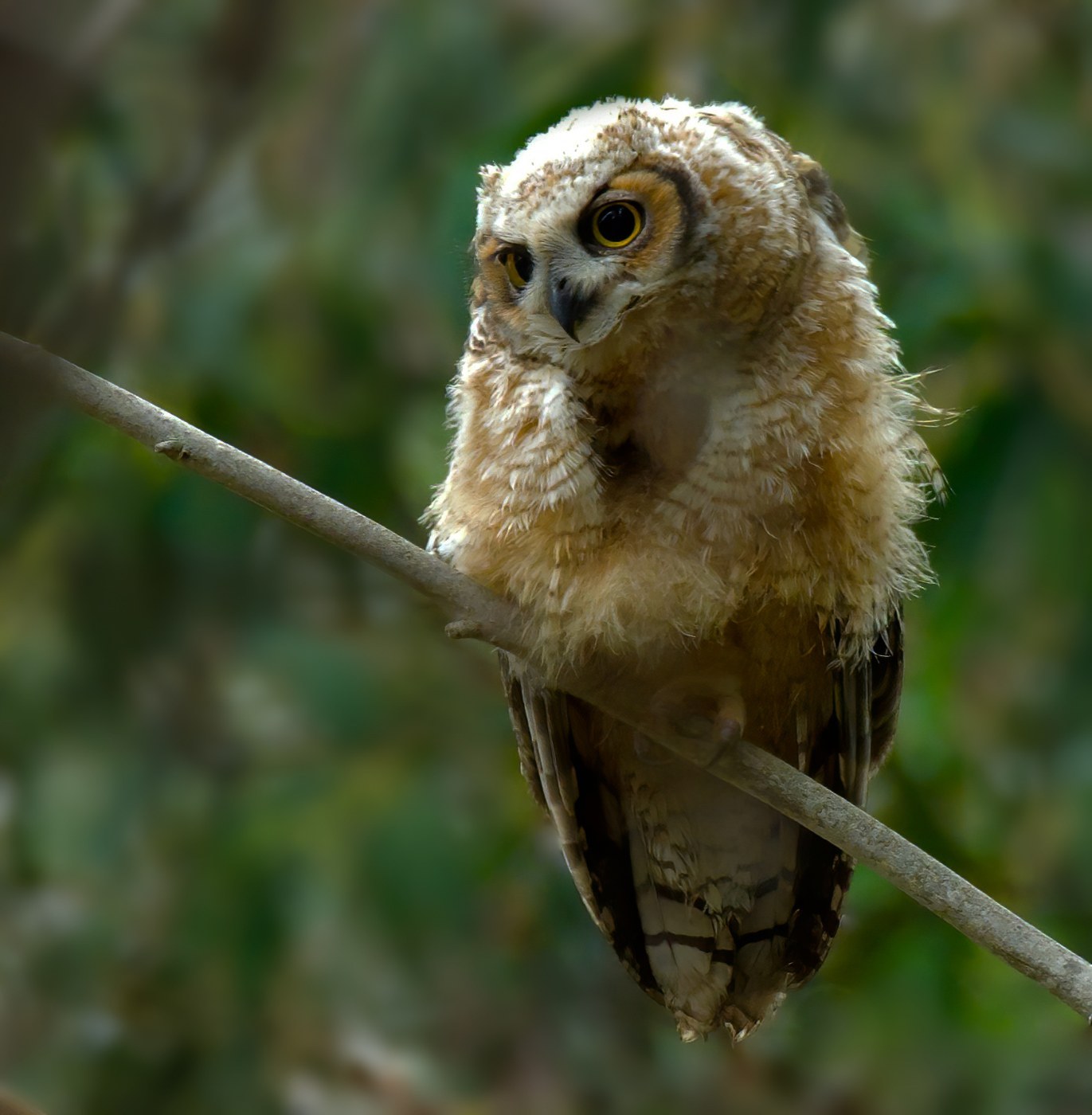
Great Horned Owl
Bubo virginianus
A powerful, large-eared owl found across nearly every habitat in the Americas, capable of taking prey larger than itself.
- Size
- 46-63 cm (18-25 in) long, 100-150 cm (39-59 in) wingspan
- Habitat
- forests, deserts, wetlands, and urban parks across the Americas
- Type
- owl
Spotted a bird like this?
Identify any bird from a photo, free.
Overview
The Great Horned Owl is one of the largest and most powerful owls in North America, instantly recognizable by its prominent ear tufts ("horns"), large yellow eyes, and a mottled brown-and-gray body with fine barring below and a bold white throat patch. Its heavily feathered legs and feet end in powerful talons capable of exerting tremendous crushing force, allowing it to take prey much larger than itself.
Few North American predators are as broadly adaptable, and the Great Horned Owl thrives in an enormous range of habitats, from dense forest to open desert to city parks, making it one of the most widespread and successful owls on the continent.
How to identify it
Key Field Marks
- Prominent ear tufts set well apart on the head
- Large yellow eyes surrounded by a rusty-to-grayish facial disk
- Mottled gray-brown plumage with fine horizontal barring on the underparts
- Bold white throat patch, visible especially when calling
Similar Species
- Long-eared Owl: smaller and slimmer with ear tufts set closer together and vertical (not horizontal) streaking below.
- Great Gray Owl: much larger-headed with no ear tufts and a distinctive concentric facial disk pattern.
Habitat & range
Range
Great Horned Owls are found throughout nearly all of North and South America, from the subarctic boreal forests of Canada and Alaska south to the tip of South America.
Habitat
This species occupies an extraordinarily broad range of habitats, including deciduous and coniferous forests, deserts, wetlands, grasslands, and urban and suburban parks, making it one of the most habitat-generalist owls in the Americas. It is non-migratory, remaining on territory year-round.
Behavior & voice
Hunting
Great Horned Owls are powerful, opportunistic predators that take an unusually broad range of prey, from small rodents to skunks, rabbits, and even other raptors, striking with exceptionally strong talons and largely silent flight thanks to specialized wing feathers.
Voice
The classic call is a deep, resonant series of hoots, often rendered as "hoo-h'HOO-hoo-hoo," used in territorial defense and pair communication; pairs often duet, with the female's voice typically higher-pitched than the male's.
Nesting
Great Horned Owls do not build their own nests, instead taking over old nests built by hawks, herons, or squirrels, or using tree cavities, cliff ledges, or human structures. They are among the earliest nesting birds in North America, often laying eggs in the depths of winter.
Frequently asked questions
What are the 'horns' on a Great Horned Owl?
They are simply tufts of feathers, not true horns or ears, and their exact function is debated but may relate to camouflage and communication.
How strong is a Great Horned Owl's grip?
Its talons can exert an exceptionally powerful crushing force, allowing it to subdue prey considerably larger than itself, including skunks and other owls.
When do Great Horned Owls nest?
They are among the earliest nesting birds in North America, often beginning incubation in the middle of winter while snow is still on the ground.
Do Great Horned Owls build their own nests?
No, they typically use abandoned nests built by hawks, herons, crows, or squirrels, or nest in tree cavities and on cliff ledges.
Great Horned Owl guides
In-depth guides for identifying, finding, and understanding Great Horned Owl.
Other birds you may enjoy
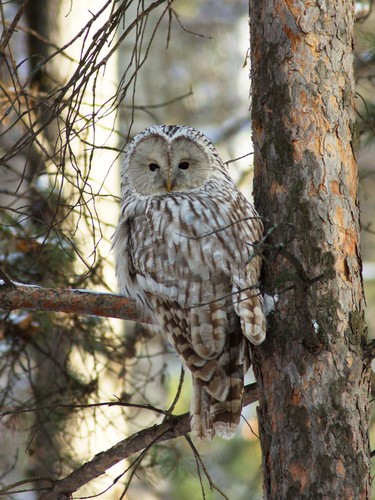
Ural Owl
50-62 cm long, wingspan about 1.0-1.3 m
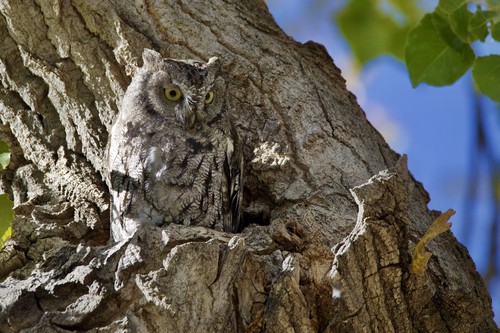
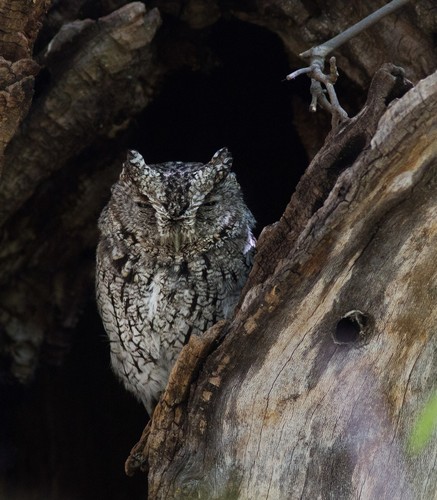
Western Screech-Owl
19-25 cm (7.5-10 in) long, about 55 cm (21.5 in) wingspan
Whiskered Screech-Owl
17-19 cm (6.7-7.5 in) long, 43 cm wingspan
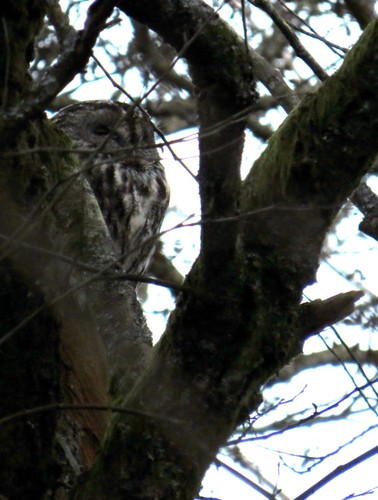
Tawny Owl
37-43 cm (15-17 in) long, 81-96 cm wingspan
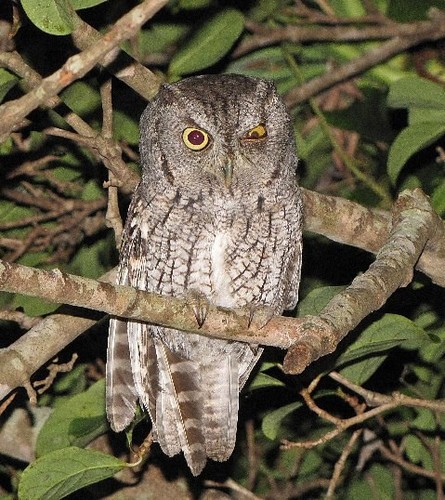
Screech Owl
16-25 cm long, wingspan about 46-61 cm
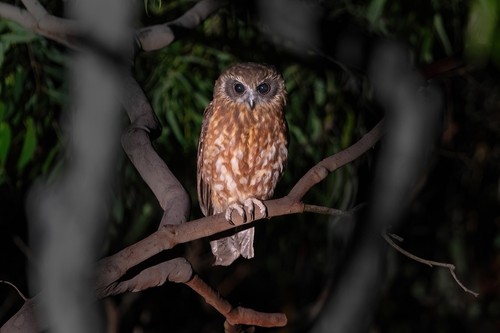
Southern Boobook
27-36 cm (11-14 in) long
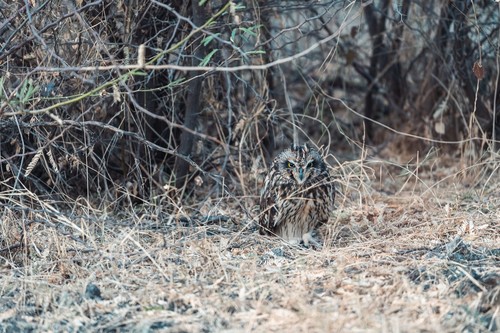
Short-eared Owl
34-42 cm (13-17 in) long, 85-110 cm wingspan
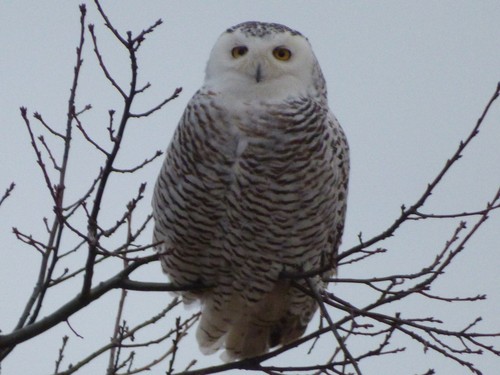
Snowy Owl
52-71 cm (20-28 in) long, 125-150 cm (49-59 in) wingspan
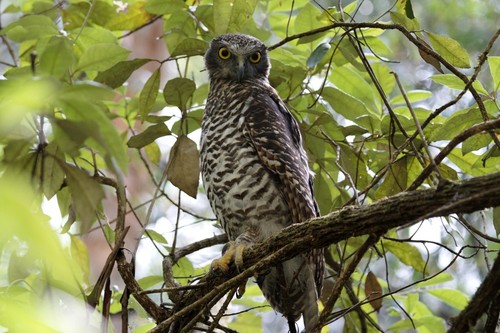
Powerful Owl
60-65 cm (24-26 in) long, 112-135 cm (44-53 in) wingspan
Northern Saw-whet Owl
18-21 cm (7-8.5 in) long, 42-56 cm (17-22 in) wingspan
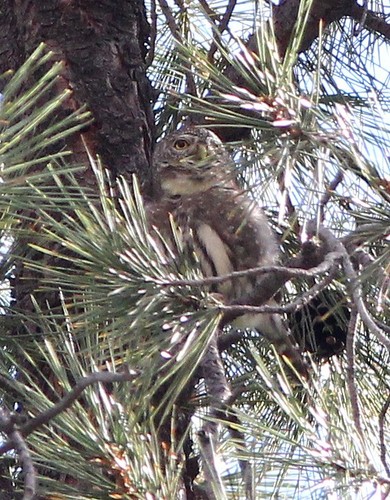
Northern Pygmy-Owl
16-18 cm (6.3-7.1 in) long, 35-39 cm wingspan
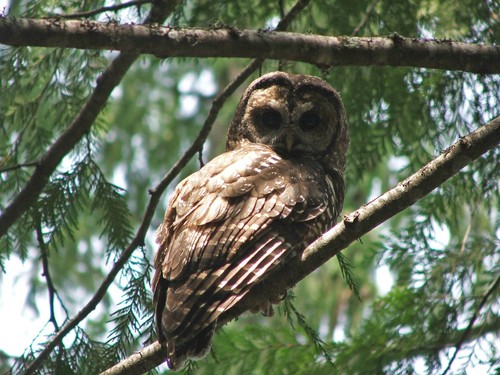
Spotted Owl
43-48 cm (17-19 in) long, 100-114 cm wingspan