
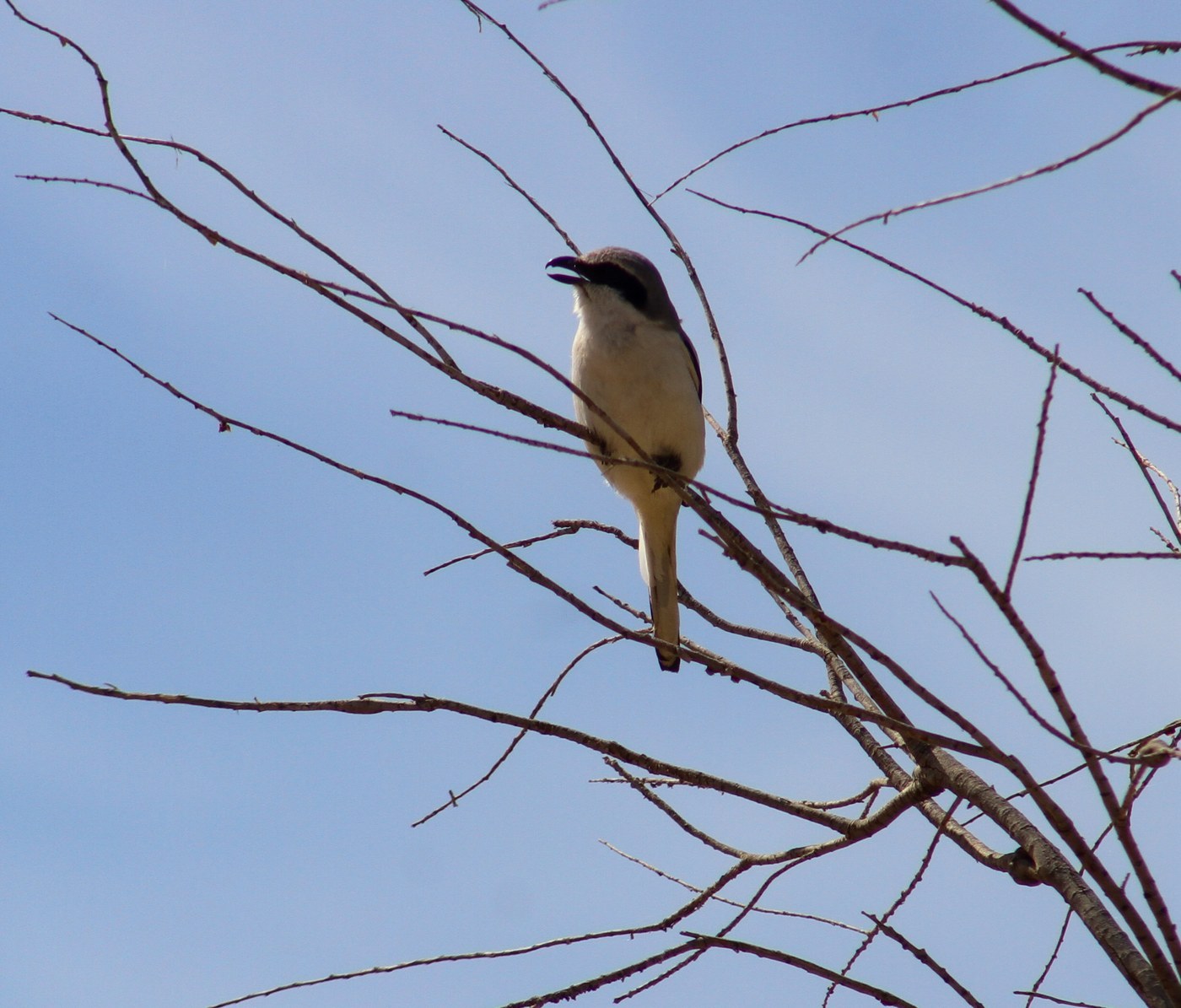
Great Grey Shrike
Lanius excubitor
A predatory grey-and-white songbird nicknamed the "butcher bird" for its habit of impaling prey on thorns to store for later.
- Size
- 22-26 cm (9-10 in) long, 30-34 cm wingspan
- Habitat
- open country, heathland, and farmland with scattered bushes or thorny scrub
- Type
- songbird
Spotted a bird like this?
Identify any bird from a photo, free.
Overview
The Great Grey Shrike is a striking, predatory songbird, with pale grey upperparts, clean white underparts, a bold black mask through the eye, and black wings marked with a white patch visible in flight. A fairly long, black tail with white outer feathers is often flicked and fanned while perched.
Despite belonging to the songbird order, it behaves like a miniature raptor, hunting large insects, small mammals, and even other birds from prominent perches, and famously caches surplus prey by impaling it on thorns or barbed wire, a habit that has earned it the nickname "butcher bird".
How to identify it
Key field marks
- Pale grey upperparts, white underparts
- Bold black mask through the eye
- Black wings with a white patch, visible especially in flight
- Long black tail with white outer edges, often flicked
- Hooked bill tip, unusual among songbirds
- Upright posture on prominent perches such as bush tops or wires
Similar species
- Red-backed Shrike is smaller with a chestnut back and, in males, a blue-grey crown, lacking the Great Grey Shrike's clean pale grey-and-white pattern.
- Woodchat Shrike shows a bright chestnut crown and nape, quite different from Great Grey Shrike's plain grey head.
Its larger size, pale grey upperparts, and habit of perching prominently in open country distinguish it from smaller, more richly colored shrike relatives.
Habitat & range
Habitat
Favors open country with scattered thorny bushes, heathland, rough grassland, and farmland edges that provide both hunting perches and thorns or barbed wire for caching prey.
Range
Breeds across northern and central Europe, Scandinavia, and boreal Asia; in western Europe including Britain it occurs mainly as a scarce winter visitor from more northerly breeding populations.
Migration
Northern and eastern populations are migratory, moving south and west in autumn to winter in more temperate open country, while some populations further south are more sedentary.
Behavior & voice
Behavior
Hunts from an exposed perch, dropping onto prey on the ground or catching insects and small birds in flight, then frequently impaling surplus prey on thorns, spines, or barbed wire to create a cache, or "larder", for later consumption.
Voice
Gives a harsh, grating "shek-shek" alarm call, along with a varied, sometimes musical song incorporating mimicry of other species.
Feeding
A versatile predator, taking large insects such as beetles and grasshoppers, along with small mammals, small birds, and lizards, especially in winter when insect prey is scarce.
Nesting and breeding
Builds a bulky cup nest in a dense, often thorny bush or small tree. Females lay 4-7 eggs, incubated mainly by the female for about 15-17 days, with both parents feeding the young.
Frequently asked questions
Why is the Great Grey Shrike called the "butcher bird"?
It impales surplus prey such as insects, small mammals, or small birds on thorns or barbed wire, creating a cached "larder" for later feeding, a habit reminiscent of a butcher's hooks.
Is the Great Grey Shrike a bird of prey?
No, it is technically a songbird (passerine), but it hunts like a small raptor, taking insects, small mammals, and even other birds.
Is the Great Grey Shrike seen in Britain year-round?
No, in Britain it occurs mainly as a scarce winter visitor from breeding populations further north and east.
How do you tell Great Grey Shrike from Red-backed Shrike?
Great Grey Shrike is larger with plain pale grey upperparts, while Red-backed Shrike is smaller with a chestnut-brown back.
Great Grey Shrike guides
In-depth guides for identifying, finding, and understanding Great Grey Shrike.
Other birds you may enjoy
Black Redstart
13-14.5 cm (5.1-5.7 in) long, 23-26 cm wingspan
Black-throated Sparrow
12-14 cm (4.7-5.5 in) long, about 19-20 cm (7.5-8 in) wingspan
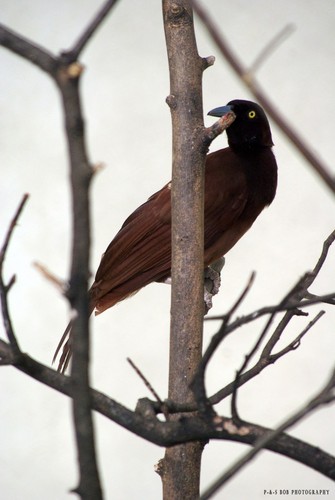
Greater Bird-of-paradise
Body about 43 cm; males with additional flank plumes up to 50 cm and long tail wires
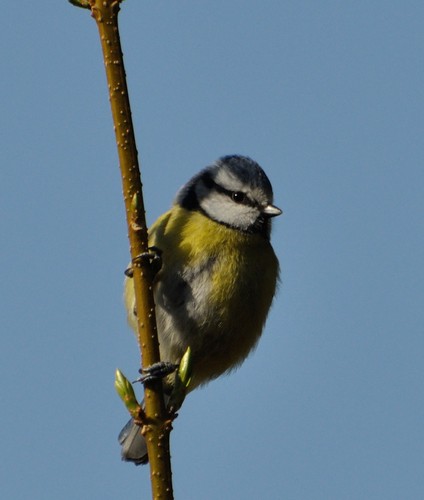
Blue Tit
11-12 cm (4.3-4.7 in) long, 17-20 cm wingspan
Red-billed Quelea
11.5–13 cm long, wingspan about 20–22 cm
White-plumed Antbird
13-14 cm (5-5.5 in) long
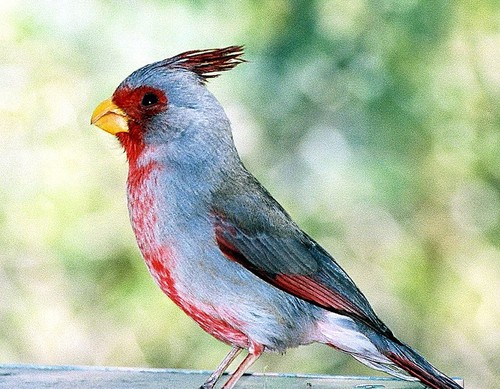
Pyrrhuloxia
19-22 cm (7.5-8.7 in) long, 30 cm wingspan
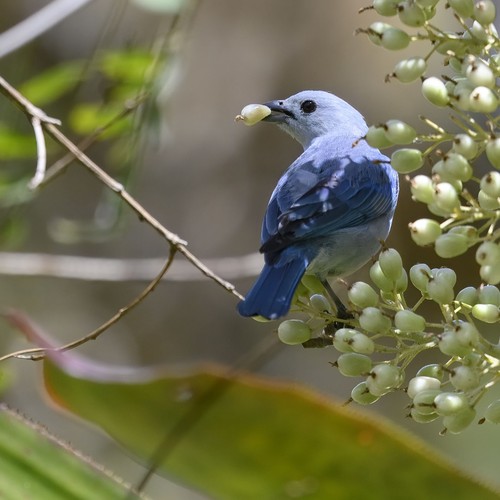
Blue-gray Tanager
16-18 cm (6-7 in) long
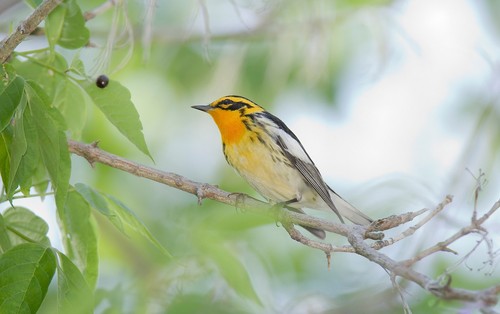
Blackburnian Warbler
11-13 cm (4.3-5.1 in) long, 20-22 cm wingspan
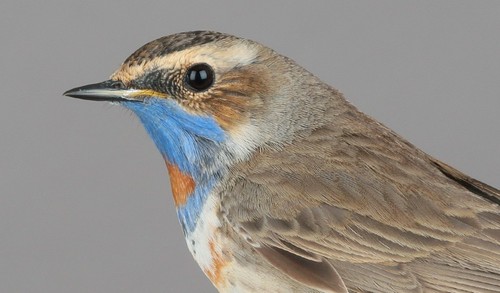
Bluethroat
13-14 cm (5.1-5.5 in) long, 20-22 cm wingspan
Eurasian Nuthatch
12-14.5 cm (4.7-5.7 in) long, 22.5-27 cm wingspan
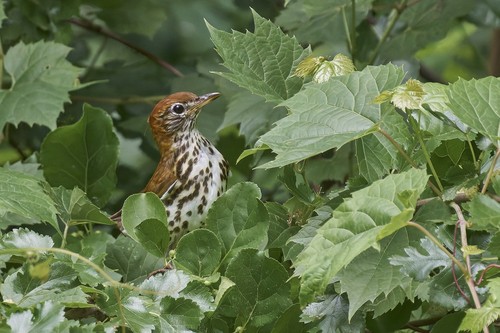
Wood Thrush
19-21 cm (7.5-8.3 in) long, about 33 cm (13 in) wingspan