
Great Cormorant
Phalacrocorax carbo
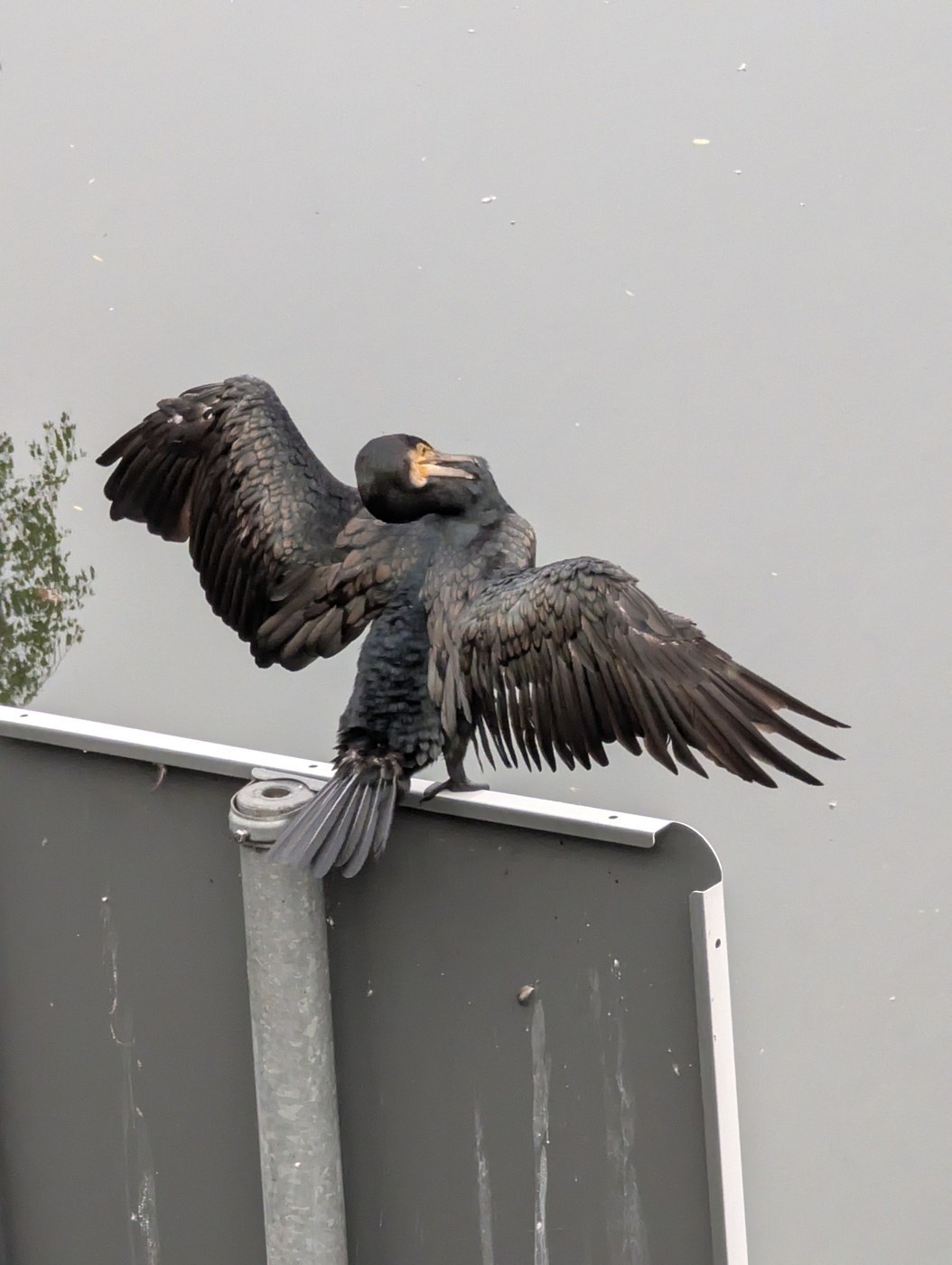
A large, widespread cormorant with glossy black-and-bronze plumage, a white throat patch, and a white breeding-season thigh patch, found across much of the Old World.
- Size
- 80-100 cm (31-39 in) long, 121-160 cm wingspan
- Habitat
- coasts, lakes, and rivers across Europe, Asia, Africa, and Australia
- Type
- seabird
Spotted a bird like this?
Identify any bird from a photo, free.
Overview
The Great Cormorant is the largest and most widely distributed cormorant species, found across coasts, lakes, and rivers throughout Europe, Asia, Africa, Australia, and even parts of eastern North America. It is a powerful, adaptable waterbird able to exploit both marine and freshwater environments.
Appearance
Adults are largely black with a bronze-green iridescent sheen, a distinctive white patch on the throat and chin, and yellow-orange facial skin. Breeding adults also develop a conspicuous white patch on the thigh and scattered white filoplumes on the head and neck.
How to identify it
Key field marks
- Large size, the biggest widespread cormorant across much of its range
- Glossy black plumage with a bronze-green sheen
- White chin and throat patch
- White thigh patch in breeding adults
- Heavy build and thick neck compared to smaller cormorant species
Similar species
Where ranges overlap with smaller cormorants and shags, the Great Cormorant is distinguished by its larger size, heavier bill, and the combination of a white throat patch with (in season) a white thigh patch.
Habitat & range
Habitat and range
Great Cormorants occupy an enormous range across the Old World, from coastal cliffs and estuaries to inland lakes and rivers, found throughout Europe, Asia, Africa, and Australia, with a distinct population also breeding in eastern North America. They are highly adaptable, occupying both marine and freshwater habitats.
Northern populations are migratory, moving to milder coasts and wetlands in winter, while populations in warmer regions tend to be more sedentary.
Behavior & voice
Behavior
Great Cormorants forage by diving from the surface and pursuing fish underwater with powerful propulsion from their feet, often hunting in relatively shallow water. Like other cormorants, they frequently perch with wings spread to dry their partially wettable plumage.
Voice
They are mostly silent away from breeding colonies, giving deep guttural croaks and grunts near nests.
Nesting and breeding
Great Cormorants nest colonially on cliffs, in trees, or on the ground on predator-free islands, building bulky stick nests. They typically lay three to four eggs, and colonies can be large where suitable sites and abundant fish are available.
Frequently asked questions
How big is the Great Cormorant compared to other cormorants?
It is one of the largest cormorant species worldwide, notably bigger and heavier-billed than most other cormorants sharing its range.
What does the white patch on a Great Cormorant mean?
The white throat patch is present year-round, while an additional white thigh patch develops only during the breeding season as part of courtship plumage.
Where is the Great Cormorant found?
Across an extremely wide range spanning Europe, Asia, Africa, Australia, and a distinct breeding population in eastern North America.
How does the Great Cormorant catch fish?
It dives from the surface and pursues fish underwater using its webbed feet for propulsion.
Great Cormorant guides
In-depth guides for identifying, finding, and understanding Great Cormorant.
Other birds you may enjoy
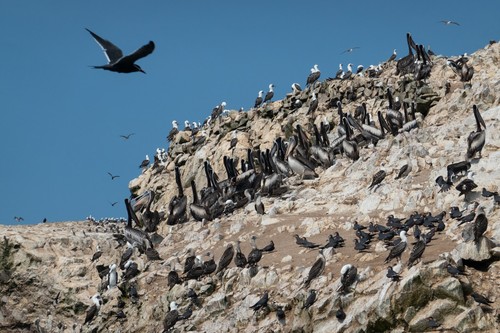
Peruvian Pelican
137-152 cm (54-60 in) long, up to 228 cm wingspan
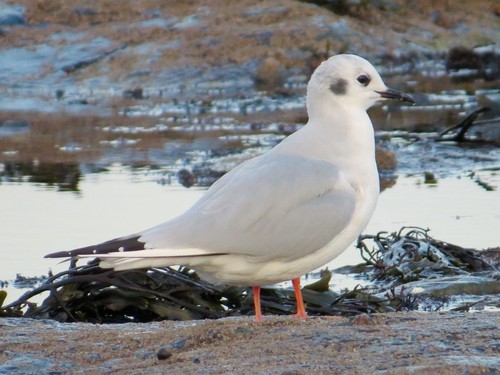
Bonaparte's Gull
28-33 cm (11-13 in) long, 76-84 cm wingspan
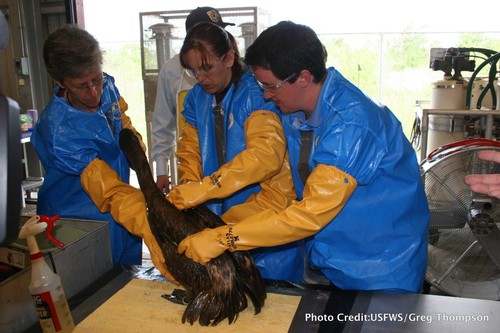
Brown Pelican
106-137 cm (42-54 in) long, 200-230 cm wingspan
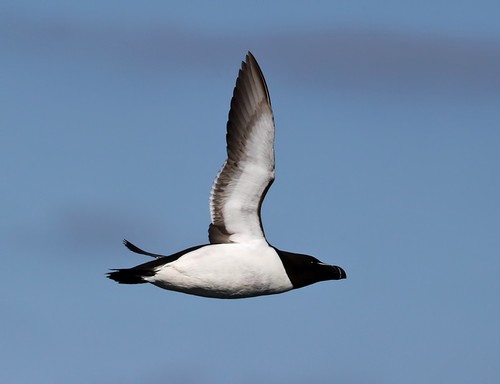
Razorbill
37-39 cm (15-15.5 in) long, 63-68 cm wingspan
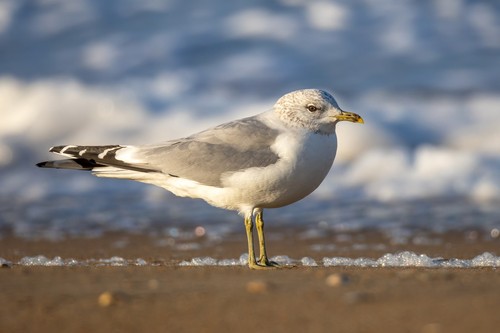
Common Gull
40-46 cm (16-18 in) long, 110-130 cm wingspan
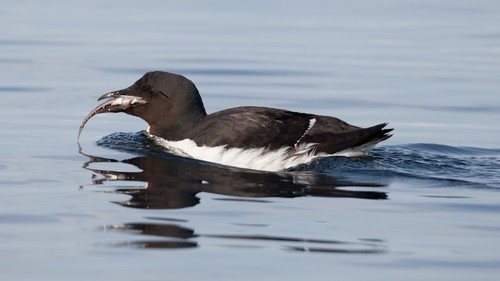
Thick-billed Murre
40-48 cm (16-19 in) long, 65-75 cm wingspan
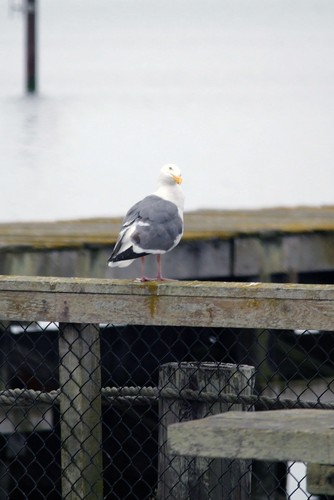
Western Gull
55-68 cm (22-27 in) long, 130-144 cm wingspan
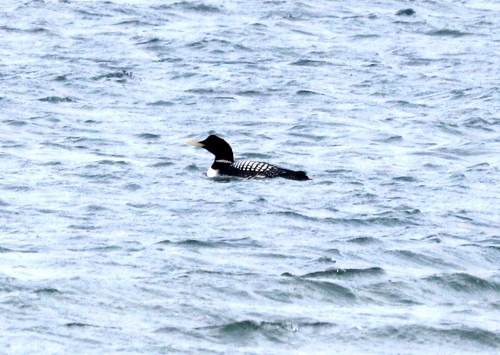
Yellow-billed Loon
76-97 cm (30-38 in) long, 135-152 cm wingspan
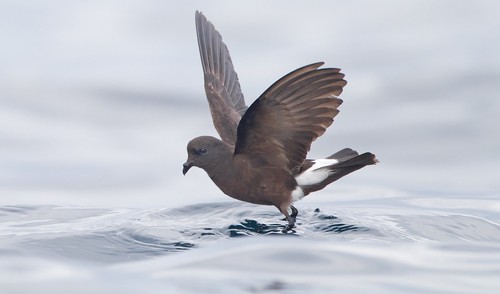
Wilson's Storm-Petrel
15-19 cm (6-7.5 in) long, wingspan 38-42 cm (15-16.5 in)
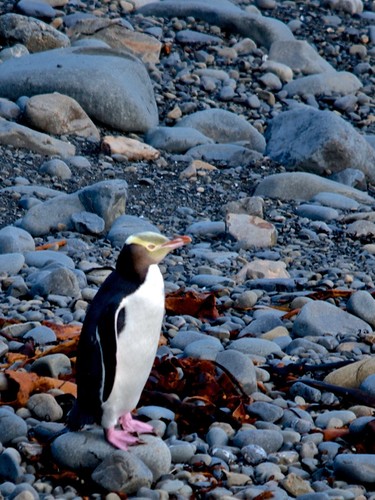
Yellow-eyed Penguin
62-79 cm (24-31 in) tall, 3-8.5 kg (6.6-18.7 lb)
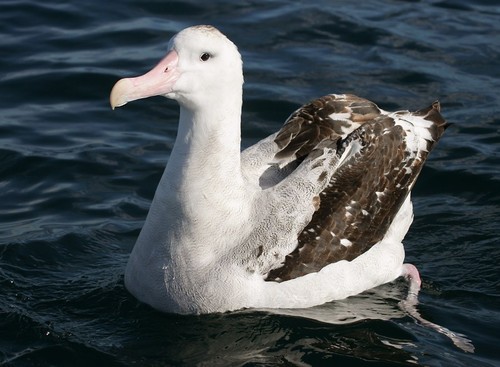
Wandering Albatross
107-135 cm (42-53 in) long, wingspan up to 3.5 m (11.5 ft)
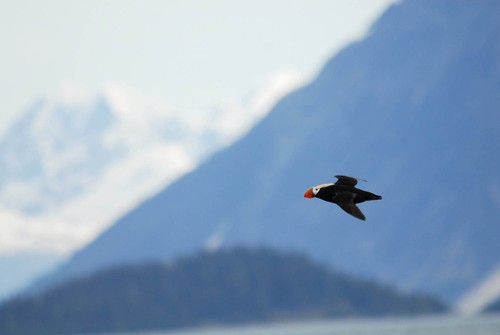
Tufted Puffin
35-41 cm (14-16 in) long, about 63-70 cm wingspan