
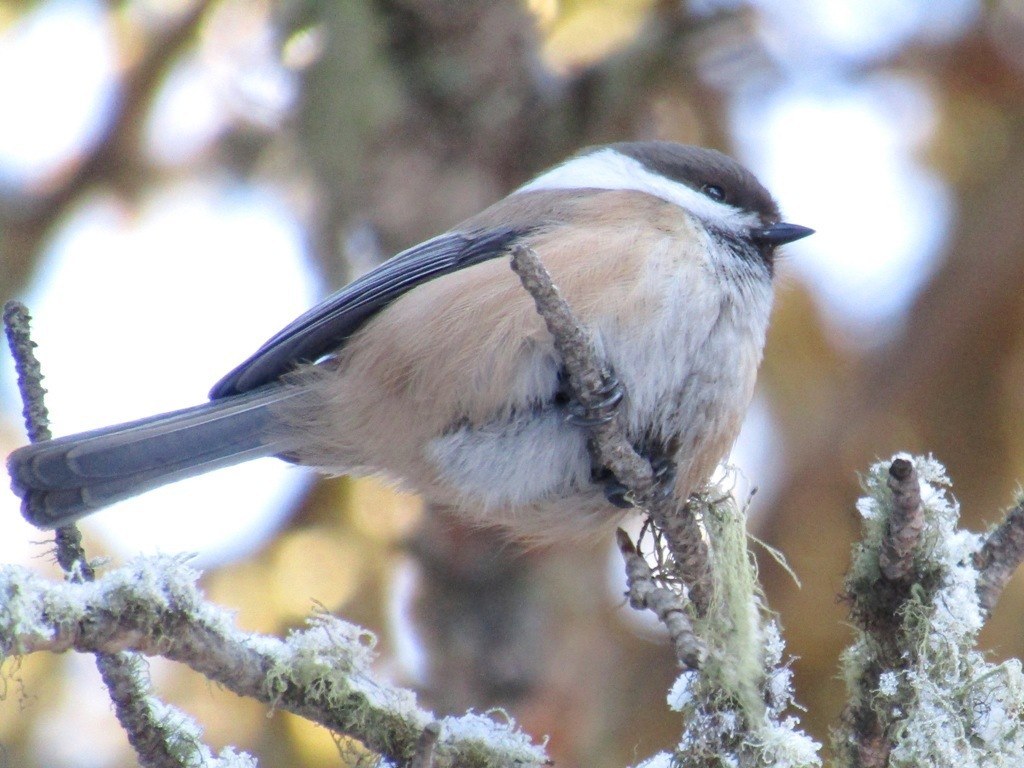
Gray-headed Chickadee
Poecile cinctus
A rare, remote-dwelling chickadee of far-northern taiga and tundra edge, known in Eurasia as the Siberian Tit.
- Size
- 13-14.5 cm (5.1-5.7 in) long, 19-21.5 cm wingspan
- Habitat
- subarctic willow and birch scrub and taiga forest edges
- Type
- songbird
Spotted a bird like this?
Identify any bird from a photo, free.
Overview
The Gray-headed Chickadee, called the Siberian Tit across most of its Eurasian range, is a large, shaggy-capped chickadee of the far north, showing a grayish-brown cap, buffy-brown flanks, a large white cheek patch, and a black bib. It is one of the rarest and least-studied breeding birds in North America, found only in remote parts of northern and western Alaska and extreme northern Yukon, where it is difficult to locate due to low density and inaccessible habitat.
Across its much larger Eurasian range, spanning Scandinavia through Siberia, it is more numerous and better studied, inhabiting similar subarctic scrub and taiga edge habitat.
How to identify it
Key Field Marks
- Grayish-brown cap, longer and shaggier-looking than other chickadees
- Large, prominent white cheek patch
- Black bib
- Buffy-brown wash on flanks
- Overall larger and bulkier than Boreal Chickadee
Similar Species
- Boreal Chickadee: smaller, with a more solidly brown cap and less prominent cheek patch; ranges overlap in parts of Alaska.
- Black-capped Chickadee: has a solid black (not brownish-gray) cap and less buffy flanks.
- Distinguishing this species requires careful attention to cap color, cheek patch size, and overall bulk, especially where it might overlap with Boreal Chickadee.
Habitat & range
Habitat
Gray-headed Chickadees inhabit subarctic scrub, particularly stunted willow and birch thickets near tree line, as well as open taiga forest edges.
Range
In North America the species is restricted to remote parts of northern and western Alaska and extreme northern Yukon; it is far more widespread across northern Scandinavia, Russia, and Siberia, where it is known as the Siberian Tit.
Migration
The species is largely non-migratory, remaining resident within its subarctic range through the winter, relying on cached food to survive extreme cold and limited daylight.
Behavior & voice
Behavior
Like other chickadees, it forages actively in scrub and low trees, typically in pairs or small family groups, and readily caches food for retrieval during the long, dark winter.
Voice
The call is a nasal, buzzy "chick-a-day-day," somewhat lower and harsher than that of related chickadees; song consists of simple whistled or buzzy phrases.
Feeding
Diet includes insects and spiders during the brief summer, shifting to cached seeds and other stored food during the long winter months.
Nesting
Nests are placed in tree cavities, often old woodpecker holes in birch or willow, lined with fur and feathers for insulation. Clutches typically number 6-10 eggs.
Frequently asked questions
Where can I find a Gray-headed Chickadee in North America?
It occurs only in remote parts of northern and western Alaska and extreme northern Yukon, making it one of the hardest North American songbirds to see.
Is the Gray-headed Chickadee the same as the Siberian Tit?
Yes, they are the same species; Siberian Tit is the name commonly used across its much larger Eurasian range.
How do I tell it apart from a Boreal Chickadee?
The Gray-headed Chickadee is larger with a grayer, shaggier cap and a more prominent white cheek patch than the smaller, browner-capped Boreal Chickadee.
Does the Gray-headed Chickadee migrate?
No, it is a non-migratory resident that survives the harsh subarctic winter largely on cached food.
What habitat does it prefer?
Stunted willow and birch scrub near the northern tree line, as well as open taiga forest edges.
Gray-headed Chickadee guides
In-depth guides for identifying, finding, and understanding Gray-headed Chickadee.
Other birds you may enjoy
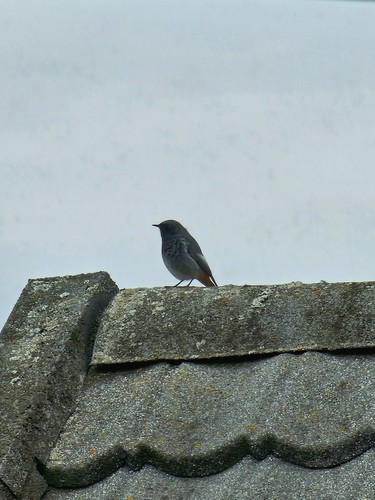
Black Redstart
13-14.5 cm (5.1-5.7 in) long, 23-26 cm wingspan
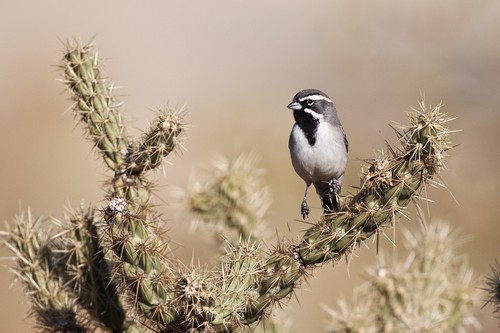
Black-throated Sparrow
12-14 cm (4.7-5.5 in) long, about 19-20 cm (7.5-8 in) wingspan
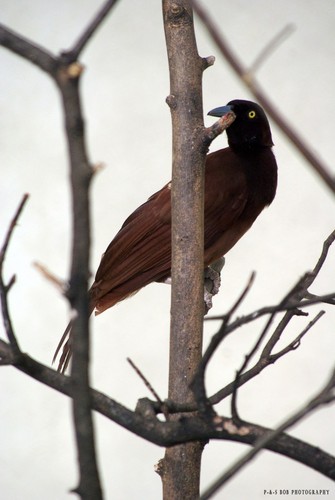
Greater Bird-of-paradise
Body about 43 cm; males with additional flank plumes up to 50 cm and long tail wires
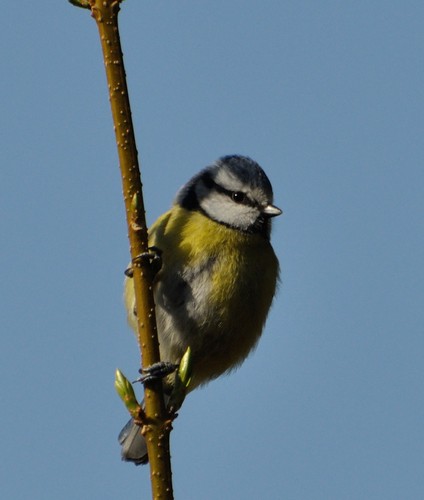
Blue Tit
11-12 cm (4.3-4.7 in) long, 17-20 cm wingspan

Red-billed Quelea
11.5–13 cm long, wingspan about 20–22 cm
White-plumed Antbird
13-14 cm (5-5.5 in) long
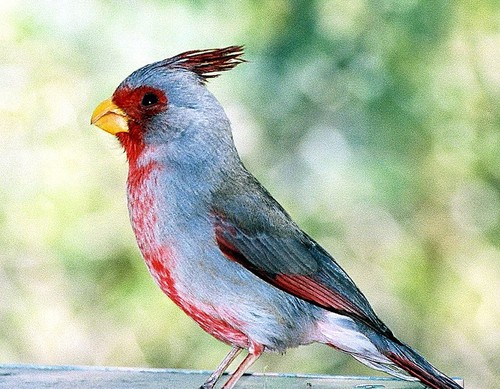
Pyrrhuloxia
19-22 cm (7.5-8.7 in) long, 30 cm wingspan
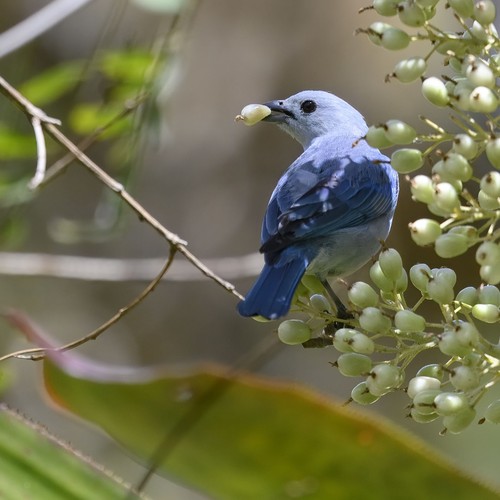
Blue-gray Tanager
16-18 cm (6-7 in) long
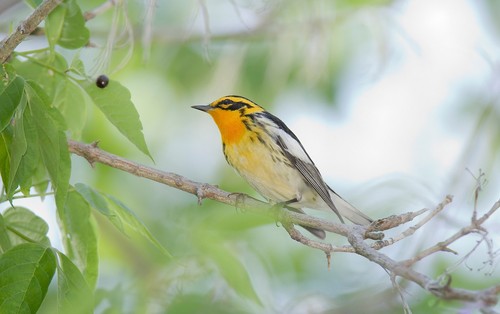
Blackburnian Warbler
11-13 cm (4.3-5.1 in) long, 20-22 cm wingspan
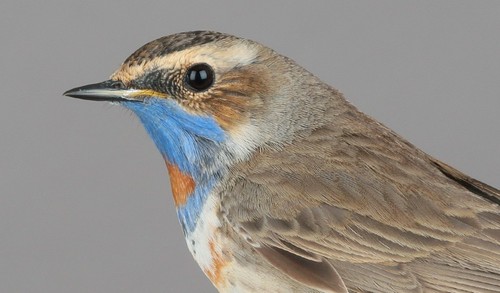
Bluethroat
13-14 cm (5.1-5.5 in) long, 20-22 cm wingspan
Eurasian Nuthatch
12-14.5 cm (4.7-5.7 in) long, 22.5-27 cm wingspan
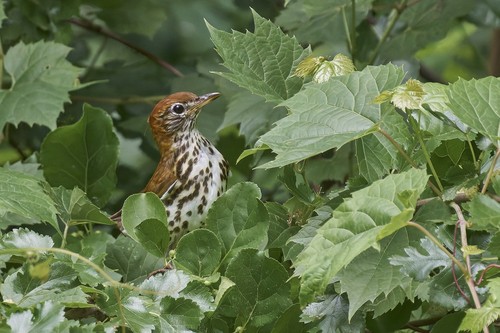
Wood Thrush
19-21 cm (7.5-8.3 in) long, about 33 cm (13 in) wingspan