
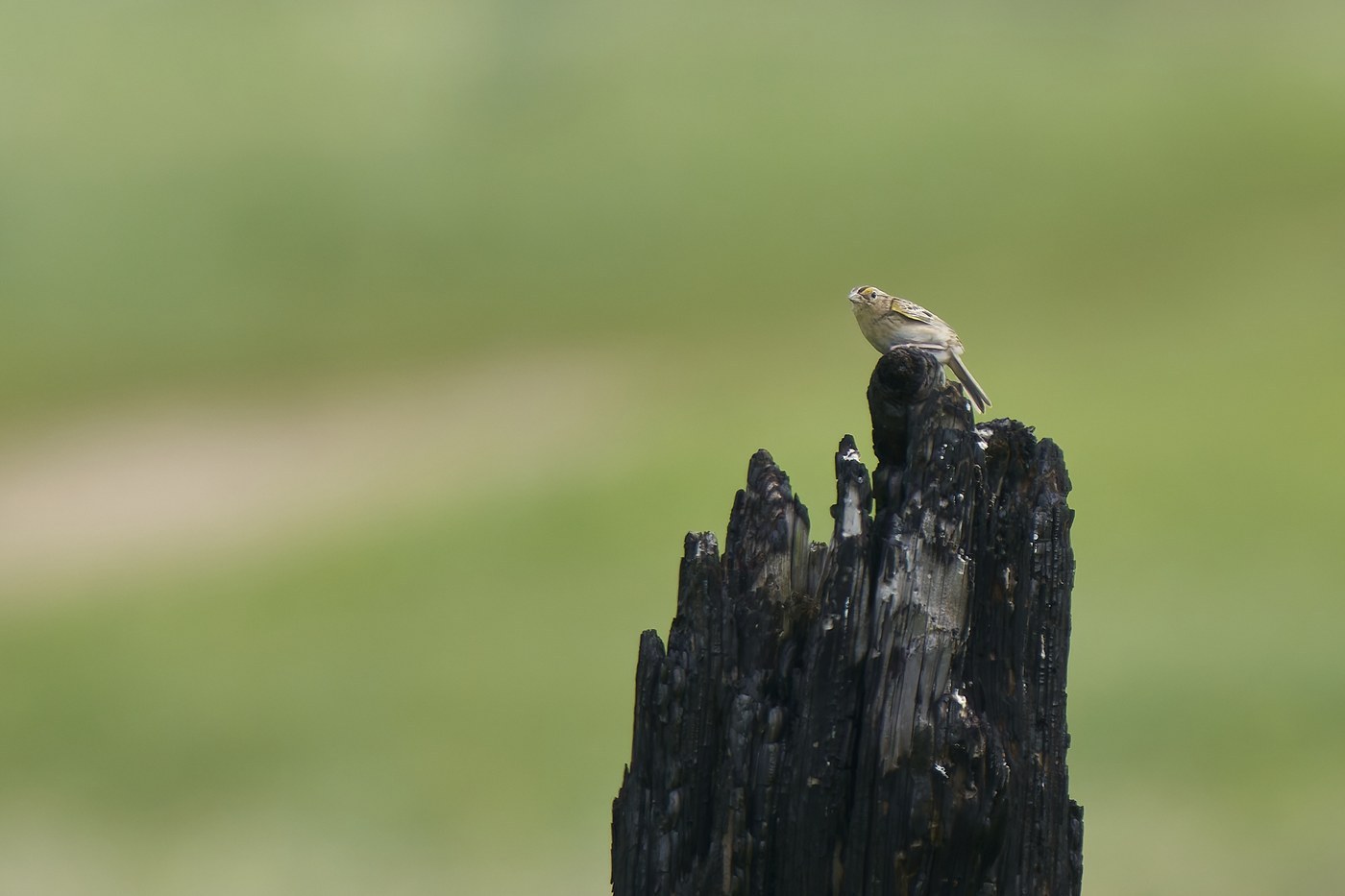
Grasshopper Sparrow
Ammodramus savannarum
A small, flat-headed, short-tailed sparrow of grasslands whose thin insect-like song resembles a grasshopper's buzz.
- Size
- 10-13 cm (3.9-5.1 in) long, 18 cm wingspan
- Habitat
- native prairies, grasslands, and hayfields
- Type
- songbird
Spotted a bird like this?
Identify any bird from a photo, free.
Overview
The Grasshopper Sparrow is a small, flat-headed, short-tailed sparrow with an unstreaked buffy-orange breast that sets it apart from most other North American sparrows, which typically show streaked underparts. The crown is dark with a pale central stripe, and the back shows a scaled pattern of chestnut, black, and gray.
The overall impression is of a compact, big-headed, almost tail-less bird that spends most of its time low and hidden in grass, making its distinctive insect-like song often the easiest way to detect its presence.
How to identify it
Key field marks
- Plain, unstreaked buffy-orange breast (unusual among sparrows)
- Flat head profile with a pale central crown stripe
- Short tail and a compact, large-headed body shape
- Scaled chestnut-black-gray pattern on the back
Similar species
- Savannah Sparrow and most other grassland sparrows show clear streaking on the breast, unlike the Grasshopper Sparrow's plain underparts.
- Le Conte's Sparrow and other Ammodramus relatives have more orange in the face and some breast streaking, differing from the Grasshopper Sparrow's essentially unmarked chest.
Habitat & range
Grasshopper Sparrows breed across much of the United States and southern Canada, historically tied to native prairie but now also using hayfields and pastures, wherever there is a mix of grass, bare ground, and scattered forbs. The species has declined sharply, among the steepest declines of any North American grassland bird, largely due to loss and intensification of grassland habitat.
The species winters in the southern United States, Mexico, and parts of Central America and the Caribbean, again in open grassy habitats, and is a medium- to long-distance migrant.
Behavior & voice
Grasshopper Sparrows are notoriously secretive, running through grass like a mouse rather than flying, and are far more often heard than seen; they typically only flush reluctantly and fly a short distance low over the grass before dropping back down.
The song is a very thin, high, insect-like buzz, often preceded by one or two short introductory notes, closely resembling the sound of a grasshopper or cricket, which gives the species its name. Diet is dominated by insects, especially grasshoppers, during the breeding season, with more seeds taken outside of summer. Nests are built on the ground, well hidden under overhanging grass, often with a partial dome or side entrance, and typical clutches contain three to six eggs.
Frequently asked questions
How do you identify a Grasshopper Sparrow?
Look for a small, flat-headed, short-tailed sparrow with a plain, unstreaked buffy-orange breast, a scaled chestnut-and-black back, and a pale central crown stripe.
Why is it called a Grasshopper Sparrow?
Its thin, buzzy, insect-like song closely resembles the sound made by a grasshopper or cricket, rather than the bird eating mainly grasshoppers, though grasshoppers are indeed a major part of its diet.
What does a Grasshopper Sparrow sound like?
A very thin, high, buzzy trill, often introduced by one or two short 'tik' notes, closely resembling an insect's buzz rather than a typical bird song.
Where do Grasshopper Sparrows live?
In native prairies, grasslands, and hayfields across much of the US and southern Canada in summer, wintering in the southern US, Mexico, and parts of Central America and the Caribbean.
Why are Grasshopper Sparrow populations declining so fast?
The species depends heavily on native prairie and grassland habitat, which has been extensively lost or converted to intensive agriculture, making it one of the most steeply declining grassland birds in North America.
Grasshopper Sparrow guides
In-depth guides for identifying, finding, and understanding Grasshopper Sparrow.
Other birds you may enjoy
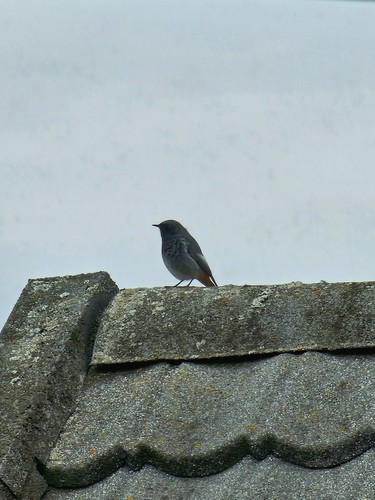
Black Redstart
13-14.5 cm (5.1-5.7 in) long, 23-26 cm wingspan
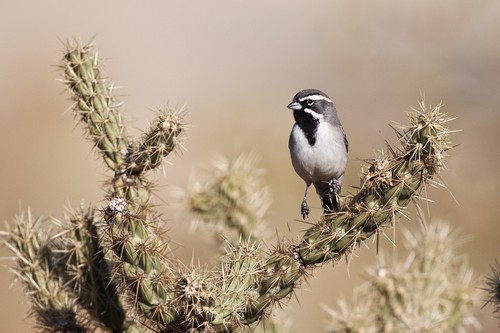
Black-throated Sparrow
12-14 cm (4.7-5.5 in) long, about 19-20 cm (7.5-8 in) wingspan
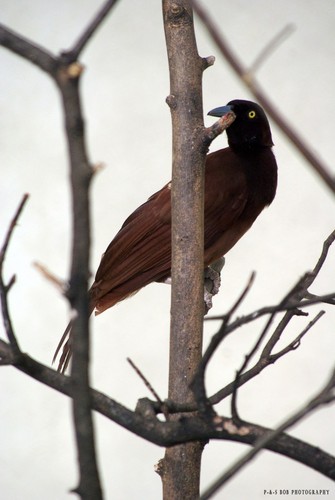
Greater Bird-of-paradise
Body about 43 cm; males with additional flank plumes up to 50 cm and long tail wires
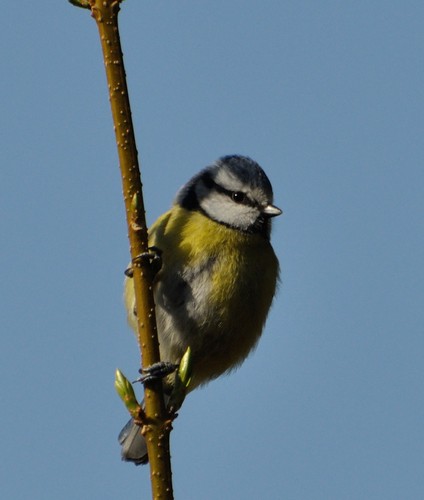
Blue Tit
11-12 cm (4.3-4.7 in) long, 17-20 cm wingspan
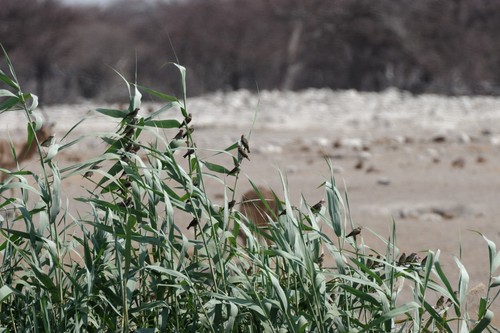
Red-billed Quelea
11.5–13 cm long, wingspan about 20–22 cm
White-plumed Antbird
13-14 cm (5-5.5 in) long
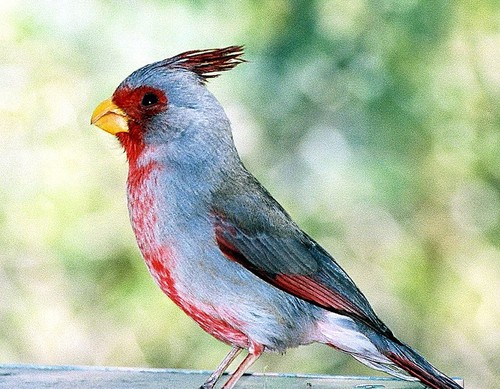
Pyrrhuloxia
19-22 cm (7.5-8.7 in) long, 30 cm wingspan
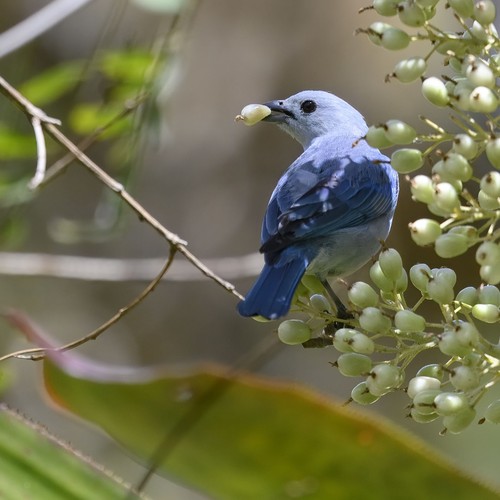
Blue-gray Tanager
16-18 cm (6-7 in) long
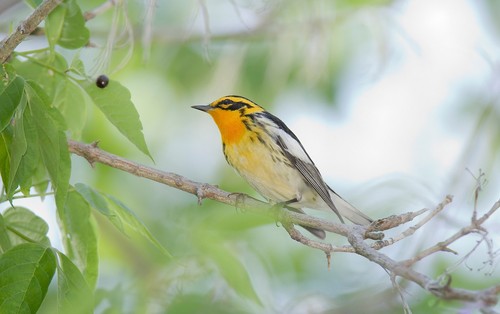
Blackburnian Warbler
11-13 cm (4.3-5.1 in) long, 20-22 cm wingspan
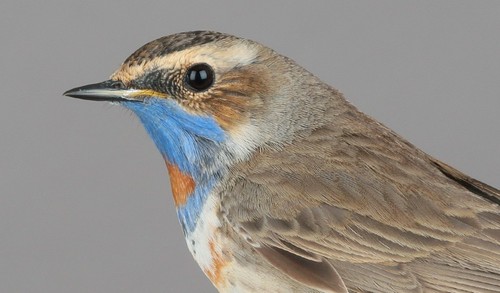
Bluethroat
13-14 cm (5.1-5.5 in) long, 20-22 cm wingspan
Eurasian Nuthatch
12-14.5 cm (4.7-5.7 in) long, 22.5-27 cm wingspan
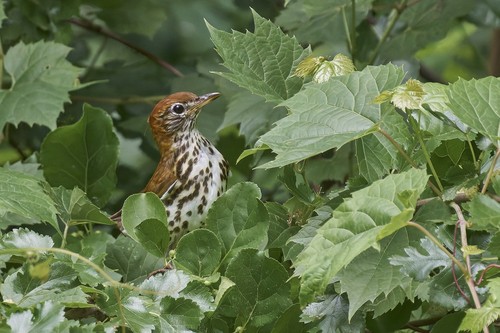
Wood Thrush
19-21 cm (7.5-8.3 in) long, about 33 cm (13 in) wingspan