
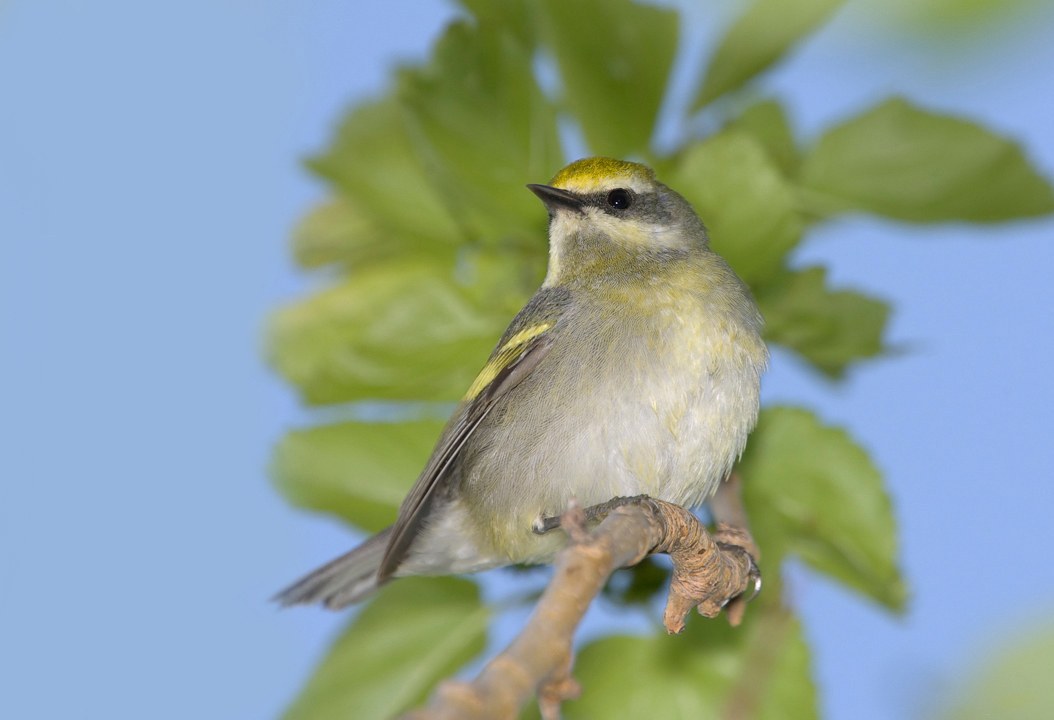
Golden-winged Warbler
Vermivora chrysoptera
A gray-and-white warbler with a bold golden wing patch and yellow crown, once common in shrubby eastern habitat but now steeply declining and prone to hybridizing with Blue-winged Warbler.
- Size
- 11-13 cm (4.3-5.1 in) long, 19-20 cm wingspan
- Habitat
- shrubby early-successional habitat, old fields, and forest edges
- Type
- songbird
Spotted a bird like this?
Identify any bird from a photo, free.
Overview
The Golden-winged Warbler is a strikingly patterned warbler, pale gray above and white below, set off by a bright golden-yellow patch on the wing and a matching yellow crown. Adult males have a bold black throat and face mask bordered by white, while females show a paler gray version of the same pattern with a gray throat and mask instead of black.
The species is well known among birders for its extensive hybridization with the closely related Blue-winged Warbler, producing two named hybrid forms, the "Brewster's Warbler" and the rarer, more recessive "Lawrence's Warbler," which show intermediate or unusual combinations of the two parent species' features.
How to identify it
Key field marks
- Pale gray upperparts, white underparts
- Bright golden-yellow wing patch and yellow crown
- Black throat and face mask bordered by white (male); gray throat/mask in females
- Thin, sharp bill
Similar species
Blue-winged Warbler is the closest relative and frequent hybridization partner; it has yellow underparts and a greenish-yellow back rather than gray, plus a black eyeline instead of a full face mask. Hybrid "Brewster's Warblers" typically show a whitish body with a yellow wing patch, while "Lawrence's Warblers" show a yellow body with a black throat and mask like Golden-winged.
Habitat & range
Golden-winged Warblers breed in shrubby early-successional habitat, including regenerating fields, shrub wetlands, and forest edges, across a patchy range spanning the upper Midwest, the Appalachians, and parts of the northeastern United States and adjacent Canada. This habitat type is naturally temporary, and the species has suffered from the loss of such young, brushy habitat as forests mature or land use changes.
They winter in Central America and northern South America, typically in mid-elevation forest edge and shrubby second growth.
Behavior & voice
Behavior and voice
Golden-winged Warblers forage distinctively by probing into curled dead leaves and leaf clusters in search of caterpillars and other insects, a foraging technique shared with the closely related Blue-winged Warbler.
The song is a simple, buzzy series, often rendered as "bee-bzz-bzz-bzz," with one higher introductory note followed by several lower buzzy notes.
Nesting
The nest is built on or near the ground, hidden in dense grass or shrub cover, made of grass, bark strips, and leaves. Clutches typically contain 4-6 eggs. The species is considered Near Threatened due to steep population declines linked to habitat loss and competition and hybridization with Blue-winged Warbler.
Frequently asked questions
Why is the Golden-winged Warbler declining?
Its populations have dropped steeply in recent decades due to loss of the shrubby early-successional habitat it needs, as well as competition and extensive hybridization with the expanding Blue-winged Warbler.
What is a Brewster's Warbler?
It is a hybrid between Golden-winged and Blue-winged Warblers, typically showing a whitish body with a yellow wing patch, an intermediate combination of the two parent species' features.
How do you tell Golden-winged from Blue-winged Warbler?
Golden-winged Warbler is gray and white with a black throat/face mask and golden wing patch, while Blue-winged Warbler has yellow underparts, a greenish-yellow back, and a simple black eyeline rather than a full mask.
What does a Golden-winged Warbler eat?
Mostly insects and spiders, especially caterpillars, which it often extracts by probing into curled dead leaves.
Where does the Golden-winged Warbler winter?
In Central America and northern South America, generally in mid-elevation forest edge and shrubby second-growth habitat.
Golden-winged Warbler guides
In-depth guides for identifying, finding, and understanding Golden-winged Warbler.
Other birds you may enjoy
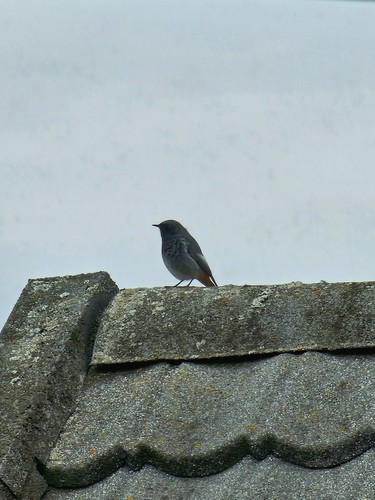
Black Redstart
13-14.5 cm (5.1-5.7 in) long, 23-26 cm wingspan
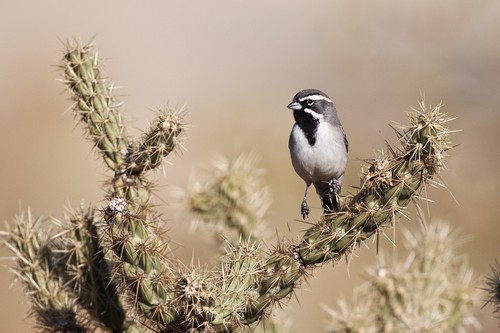
Black-throated Sparrow
12-14 cm (4.7-5.5 in) long, about 19-20 cm (7.5-8 in) wingspan
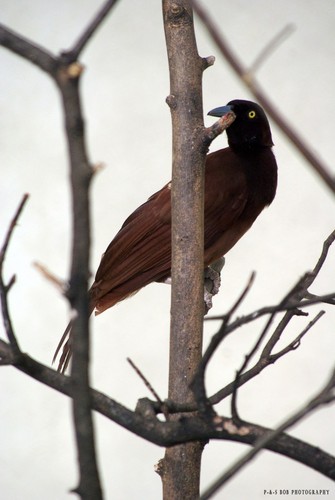
Greater Bird-of-paradise
Body about 43 cm; males with additional flank plumes up to 50 cm and long tail wires
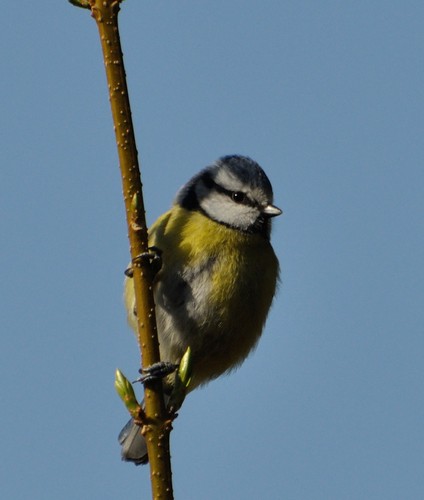
Blue Tit
11-12 cm (4.3-4.7 in) long, 17-20 cm wingspan
Red-billed Quelea
11.5–13 cm long, wingspan about 20–22 cm
White-plumed Antbird
13-14 cm (5-5.5 in) long
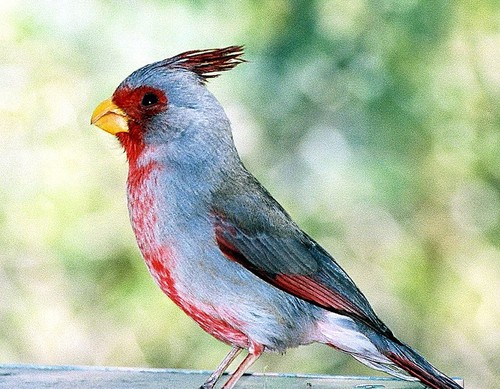
Pyrrhuloxia
19-22 cm (7.5-8.7 in) long, 30 cm wingspan
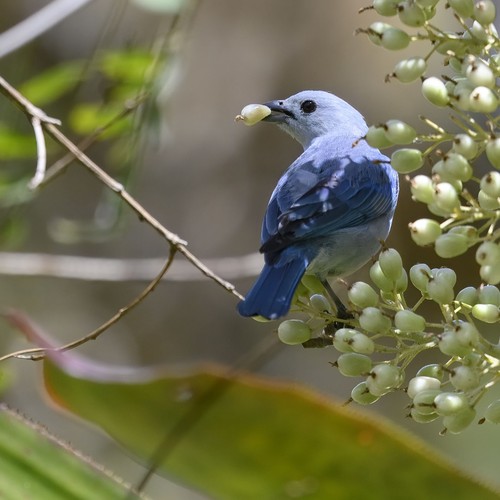
Blue-gray Tanager
16-18 cm (6-7 in) long
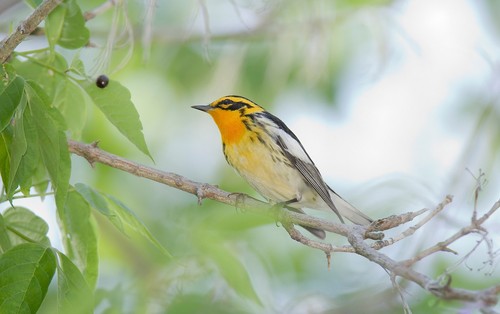
Blackburnian Warbler
11-13 cm (4.3-5.1 in) long, 20-22 cm wingspan
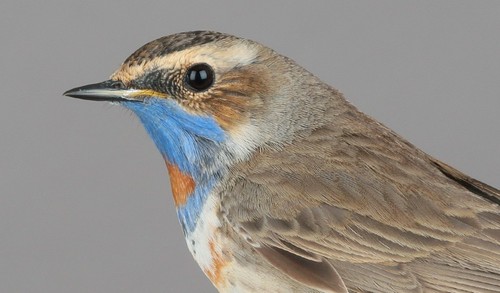
Bluethroat
13-14 cm (5.1-5.5 in) long, 20-22 cm wingspan
Eurasian Nuthatch
12-14.5 cm (4.7-5.7 in) long, 22.5-27 cm wingspan
Wood Thrush
19-21 cm (7.5-8.3 in) long, about 33 cm (13 in) wingspan