
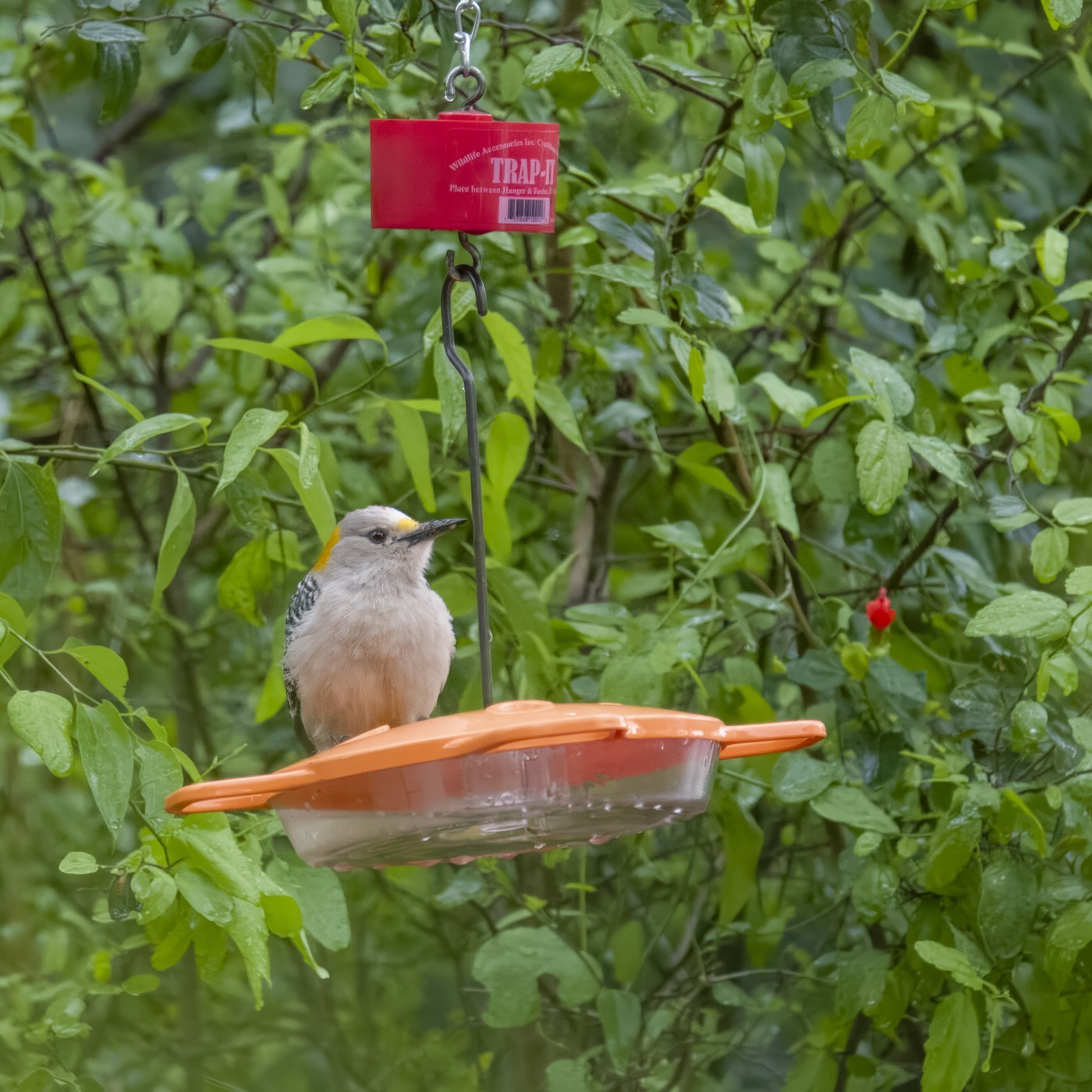
Golden-fronted Woodpecker
Melanerpes aurifrons
A barred, zebra-backed woodpecker of south Texas brushlands with a bright golden-orange patch on the nape and forehead.
- Size
- 22-26 cm (8.7-10.2 in) long, 43 cm wingspan
- Habitat
- mesquite woodlands, riparian groves, brushy scrub, and suburban areas of south Texas
- Type
- woodpecker
Spotted a bird like this?
Identify any bird from a photo, free.
Overview
The Golden-fronted Woodpecker is a handsome, barred-backed woodpecker with pale gray-buff underparts and a distinctive golden-yellow to orange patch on the nape, extending forward to a small patch above the bill. Males additionally show an orange-red crown patch, while females lack it, showing gray on the crown instead.
This species largely replaces the similar Red-bellied Woodpecker across the brushlands of south and central Texas, with the two species overlapping in a narrow contact zone where hybrids occasionally occur.
How to identify it
Key Field Marks
- Black-and-white barred back and wings
- Pale gray-buff face and underparts, sometimes with a faint orange wash on the belly
- Bright golden-yellow to orange nape patch, extending to a small patch above the bill
- Males show an additional orange-red crown patch; females have a plain gray crown
Similar Species
- Red-bellied Woodpecker overlaps in range and looks similar but has a red nape extending onto the crown in males and lacks the golden forehead patch; ranges meet in a narrow zone in central Texas.
- Gila Woodpecker lacks the golden nape and forehead patch and has a plain tan face.
Habitat & range
Habitat
Golden-fronted Woodpeckers inhabit mesquite brushland, riparian woodlands, palm groves, and increasingly suburban parks and yards across their Texas range.
Range
Found from south and central Texas and southwestern Oklahoma south through eastern Mexico to Nicaragua.
Migration
This species is a non-migratory resident throughout its range.
Behavior & voice
Behavior
Golden-fronted Woodpeckers are conspicuous, vocal birds that forage on trunks, limbs, and occasionally the ground, and readily cache acorns and other food in bark crevices for later use.
Voice
Calls include a rolling churr similar to Red-bellied Woodpecker and a sharp chattering rattle; drumming is a fast, even roll.
Feeding
Diet is varied, including insects, acorns, pecans, fruit, corn, and cactus fruit; the species will also visit feeders.
Nesting
Pairs excavate cavities in dead limbs, utility poles, or fence posts; both parents incubate the 4-5 white eggs and feed the young.
Frequently asked questions
How do you tell a Golden-fronted Woodpecker from a Red-bellied Woodpecker?
Golden-fronted Woodpecker has a golden-orange patch on the nape and forehead rather than the solid red cap and nape of the Red-bellied Woodpecker, and the two species' ranges only narrowly overlap in central Texas.
Where do Golden-fronted Woodpeckers live?
They live in brushland, riparian woods, and suburban areas of south and central Texas south through Mexico to Nicaragua.
What do Golden-fronted Woodpeckers eat?
They eat insects, acorns, fruit, corn, and cactus fruit, and will visit backyard feeders.
Do male and female Golden-fronted Woodpeckers look different?
Yes, males have an additional orange-red patch on the crown that females lack.
Golden-fronted Woodpecker guides
In-depth guides for identifying, finding, and understanding Golden-fronted Woodpecker.
Other birds you may enjoy
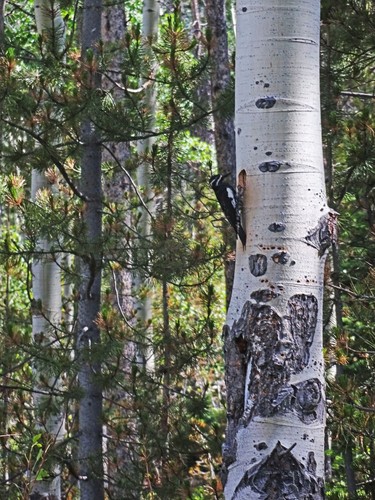
Williamson's Sapsucker
21-25 cm (8-10 in) long, 40-42 cm wingspan
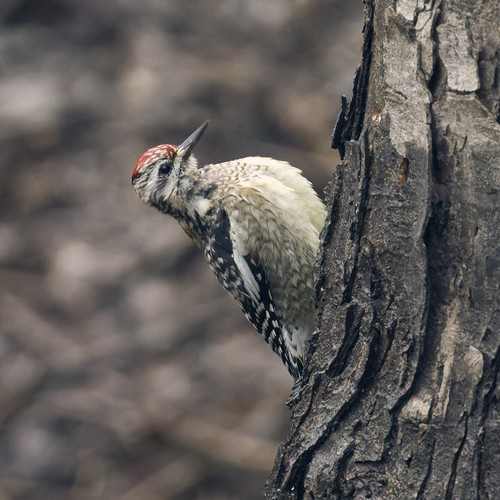
Yellow-bellied Sapsucker
18-21 cm (7-8.3 in) long, 34-40 cm wingspan
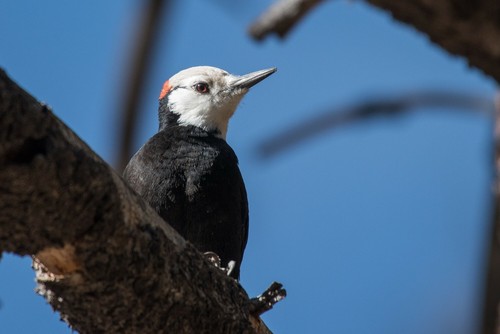
White-headed Woodpecker
20-23 cm (8-9 in) long, 38-41 cm wingspan
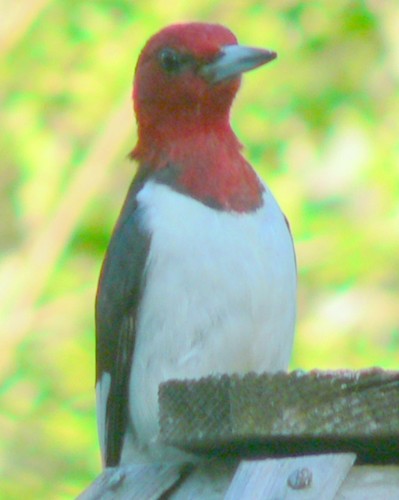
Red-headed Woodpecker
19-23 cm (7.5-9 in) long, 42-46 cm wingspan
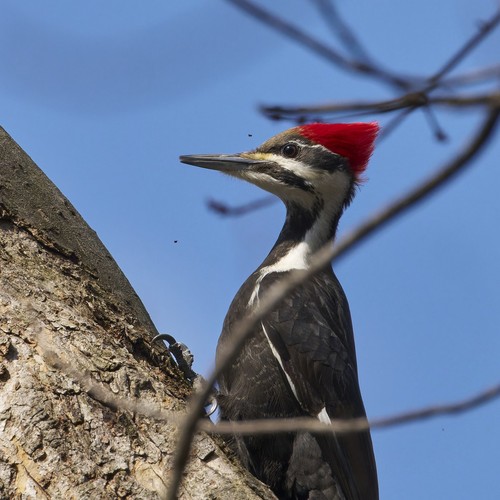
Pileated Woodpecker
40-49 cm (16-19 in) long, 66-75 cm wingspan
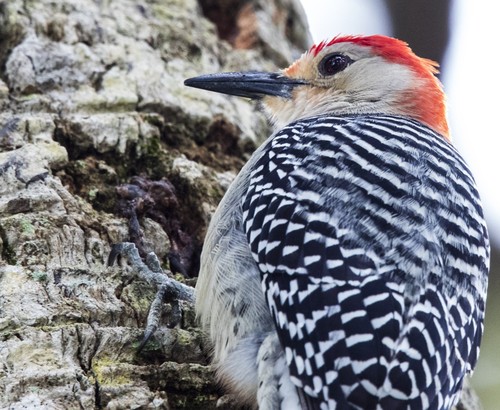
Red-bellied Woodpecker
22-27 cm (9-10.5 in) long, 38-46 cm wingspan
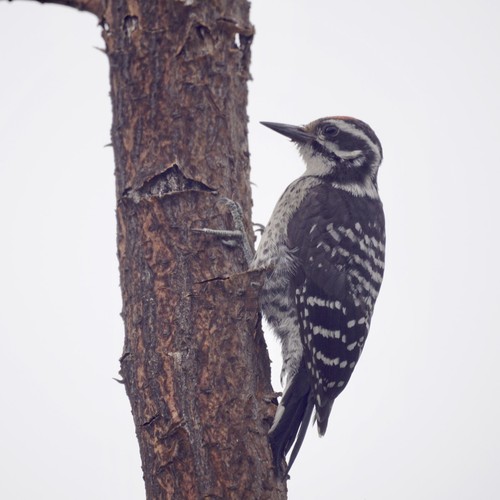
Nuttall's Woodpecker
18-20 cm (7-8 in) long, 34-38 cm wingspan
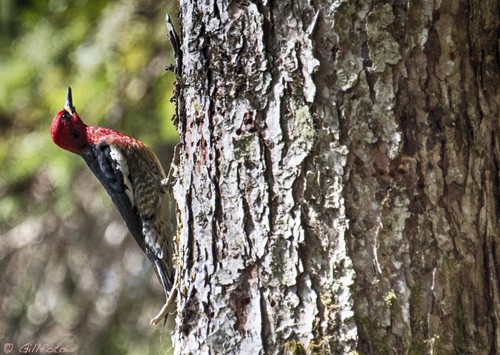
Red-breasted Sapsucker
20-23 cm (8-9 in) long, 34-40 cm wingspan
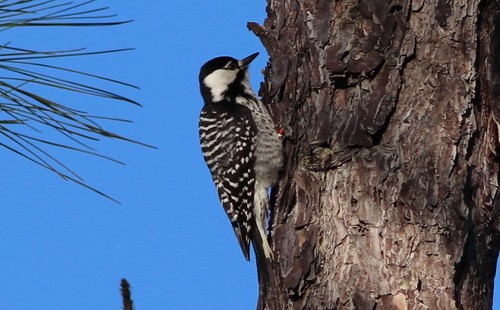
Red-cockaded Woodpecker
20-23 cm (8-9 in) long, 35-38 cm wingspan
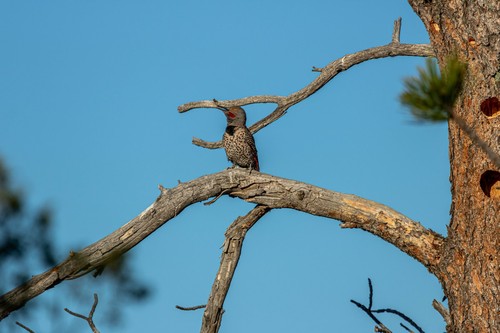
Northern Flicker
28-36 cm (11-14 in) long, 42-51 cm wingspan
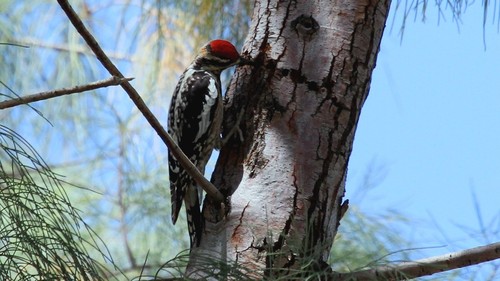
Red-naped Sapsucker
19-21 cm (7.5-8.3 in) long, 34-40 cm wingspan
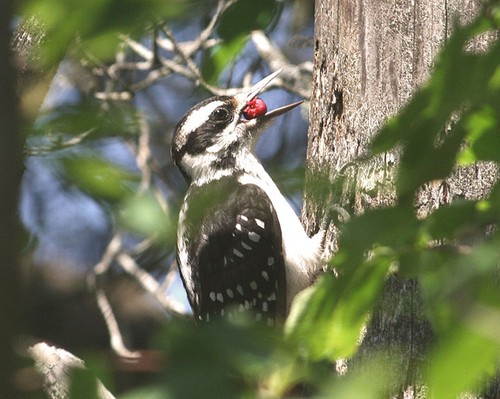
Hairy Woodpecker
23-26 cm (9-10 in) long, 33-41 cm wingspan