
Golden-fronted Woodpecker Identification Guide
A barred-backed Texas and Mexico woodpecker with a golden-orange nasal tuft and nape patch, and a red crown patch present only in males.
Read the full Golden-fronted Woodpecker encyclopedia entry →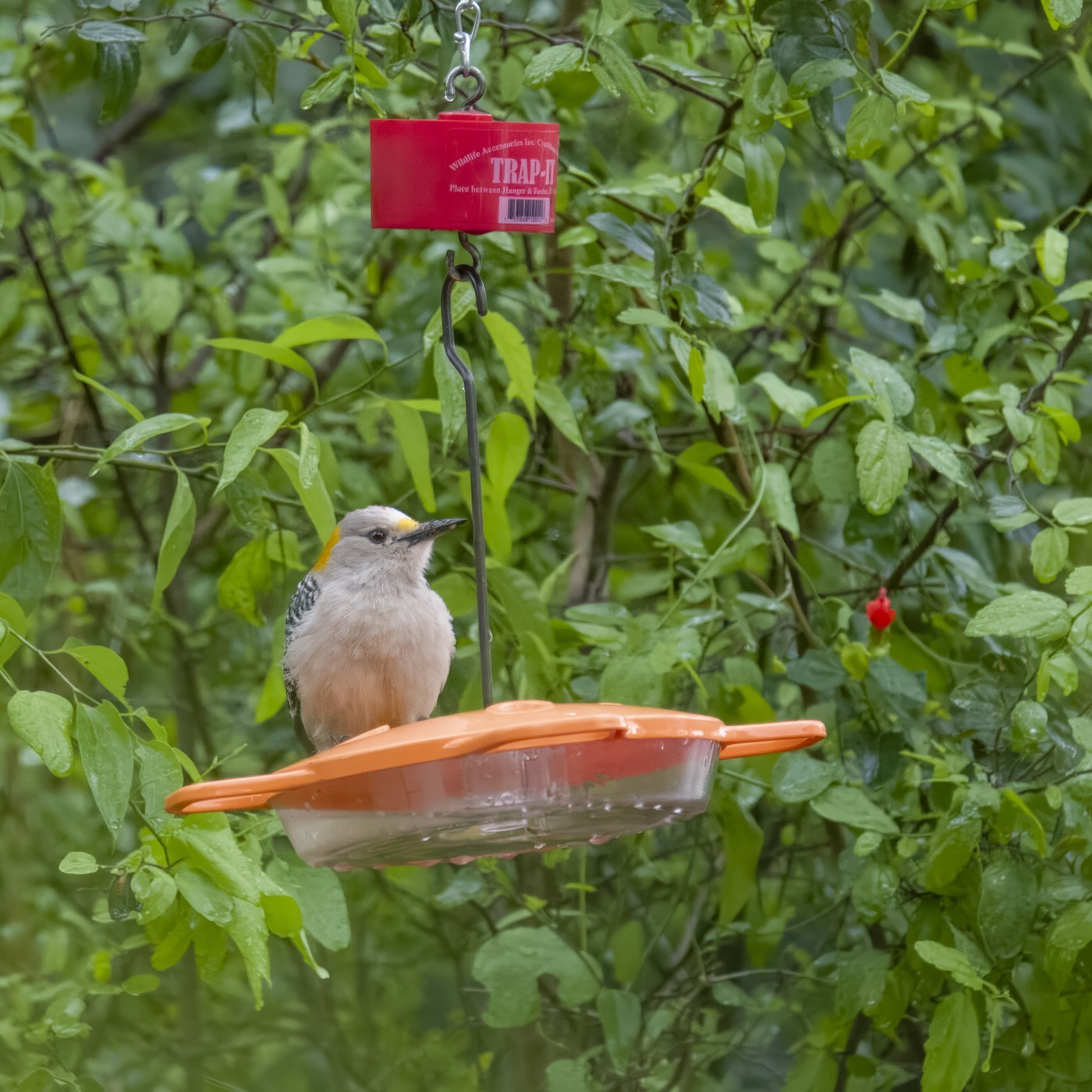
Key Field Marks
- Size & shape: A medium-sized woodpecker, about 22-25 cm, similar in build to other Melanerpes woodpeckers, with a straight, chisel-like bill and stiff tail used for bracing against tree trunks.
- Plumage: Black-and-white barred (ladder-backed) pattern across the back and wings; underparts are plain buffy-gray to pale tan, sometimes with a faint yellowish wash on the belly.
- Head pattern: A golden-yellow to orange patch above the bill (nasal tufts) and a matching golden-orange to yellow patch on the nape are diagnostic; males additionally show a red crown patch, which females lack, showing plain gray on the crown instead.
- Bill & face: Fairly long, straight, dark bill; plain grayish face without strong facial stripes.
- Behavior: Forages by climbing tree trunks and branches, also comes to the ground and feeds on cactus fruit, mesquite pods, and other fruit as well as insects; often conspicuous and vocal, visiting yards and feeders within its range.
Similar Species
- Golden-fronted vs. Red-bellied Woodpecker: Ranges overlap in a narrow zone in Texas; Red-bellied Woodpecker has a fully red nape extending onto the crown in males (with just a gray forehead), lacks the golden nasal tuft, and typically shows a slightly more red-washed belly, while Golden-fronted shows the golden forehead patch and, in males, a red crown patch separated from the nape.
- Gila Woodpecker: Found further west (Arizona/Sonoran Desert); lacks any golden or red on the head aside from the male's small red cap, and has a plainer brownish-gray head overall without the golden nasal/nape patches.
- Ladder-backed Woodpecker: Much smaller, with a barred face and no golden head patches.
Where & When to See It
Resident across central and southern Texas, southeastern New Mexico, and Oklahoma south through eastern and central Mexico into Central America, in a wide range of habitats including mesquite scrub, riparian woodland, brushy country, palm groves, and suburban areas with trees. It is non-migratory and can be found year-round throughout its range, commonly visiting backyard feeders (suet, fruit) in Texas.
Voice & Song Cues
Calls include a rolling, harsh "churr" or "krrrr" and a loud, sharp "chek" or "kek-kek-kek" series; also drums on trees, poles, or resonant surfaces in short bursts typical of Melanerpes woodpeckers.
Frequently asked questions
How do you tell a Golden-fronted Woodpecker from a Red-bellied Woodpecker?
Golden-fronted Woodpecker shows a golden-yellow to orange patch above the bill and on the nape, with males having a separate red crown patch, whereas Red-bellied Woodpecker males have solid red running from the bill to the nape and lack the golden forehead patch.
Do female Golden-fronted Woodpeckers have red on the head?
No — females lack the red crown patch that males show, having a plain gray crown, though both sexes show the golden nasal tuft and nape patch.
What habitat is best for finding a Golden-fronted Woodpecker?
Mesquite scrub, riparian woodland, and brushy or suburban areas with scattered trees across central and southern Texas and much of Mexico, where it is a common year-round resident.
Does the Golden-fronted Woodpecker come to backyard feeders?
Yes, it readily visits suet and fruit feeders within its Texas and Mexico range, making it one of the more feeder-friendly woodpeckers there.