
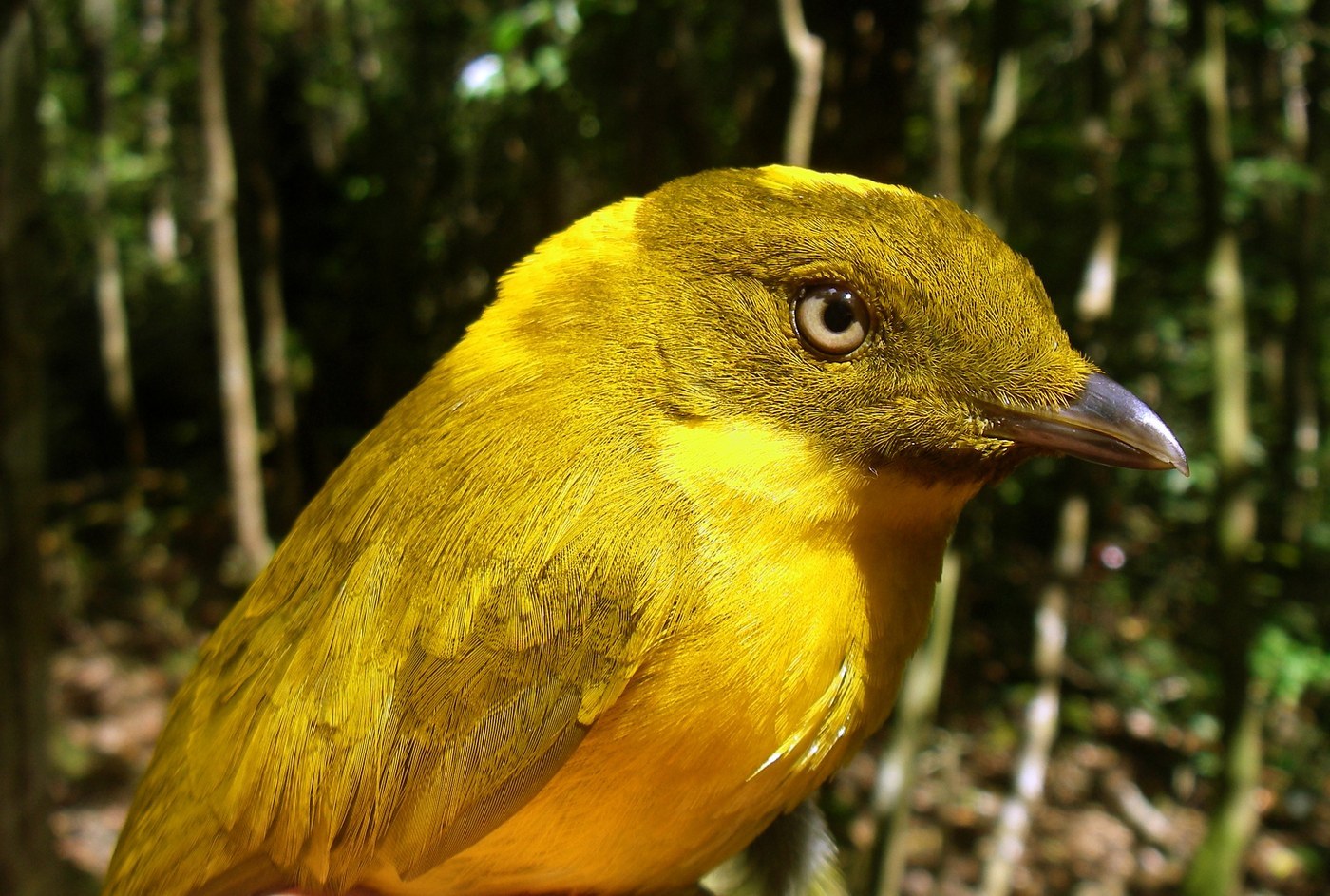
Golden Bowerbird
Prionodura newtoniana
The smallest bowerbird species, restricted to Queensland's Wet Tropics uplands; the male is golden-yellow and olive-brown and builds the tallest maypole-style bower relative to its size of any bird.
- Size
- 23-25 cm (9-10 in) long
- Habitat
- upland tropical rainforest
- Type
- songbird
Spotted a bird like this?
Identify any bird from a photo, free.
Overview
The Golden Bowerbird is the smallest member of the bowerbird family and is found nowhere in the world outside a restricted patch of upland rainforest in the Wet Tropics of far north Queensland. Adult males show a striking combination of olive-brown upperparts and bright golden-yellow underparts, crown, and tail, while females are much plainer, olive-grey above with paler grey underparts, offering good camouflage in the misty mountain forest.
Rather than building the avenue-style bowers typical of many relatives, the male constructs an extraordinary maypole bower: two tower-like stick structures built around slender saplings, sometimes joined by a horizontal stick perch, that can reach well over two meters tall, an astonishing scale relative to the bird's small size and one of the most impressive construction feats in the bird world.
How to identify it
Key field marks
- Small size, the smallest bowerbird species
- Male: olive-brown upperparts with bright golden-yellow underparts, crown, and tail
- Female: plain olive-grey above, paler grey below
- Restricted to cool, misty upland rainforest in a small part of northeastern Queensland
Similar species
- No other bowerbird occurs within its restricted upland range in the Wet Tropics, making location and the male's gold-and-olive pattern reliable identification clues.
- Tooth-billed Bowerbird, found in the same region, is plain olive-brown all over without any golden-yellow coloring and builds a very different court of upturned leaves rather than a tower bower.
Habitat & range
Habitat
Restricted to cool, high-altitude tropical rainforest, generally above about 900 meters elevation.
Range
Endemic to a small area of the Wet Tropics of far north Queensland, Australia, including the Atherton Tablelands region, and found nowhere else in the world.
Migration
Sedentary, remaining within its restricted upland rainforest habitat year-round.
Behavior & voice
Behavior
Males build and maintain an elaborate maypole-style bower of two stick towers built up around saplings, sometimes exceeding two meters in height, and display from a connecting perch to attract females; considered one of the most extreme examples of bower construction relative to body size in any bird.
Voice
A distinctive, mechanical-sounding, buzzing or rattling call, along with softer chattering notes.
Feeding
Feeds on fruit, insects, and flowers foraged in the rainforest canopy and understorey.
Nesting
The female builds a simple cup nest of moss and plant material in a tree cavity or dense vegetation, separate from the male's display bower; lays 1-2 white eggs.
Frequently asked questions
Where does the Golden Bowerbird live?
It is found only in a small area of cool, high-altitude rainforest in the Wet Tropics of far north Queensland, Australia, and nowhere else in the world.
How tall can a Golden Bowerbird's bower be?
Its maypole-style bower, built from two stick towers around saplings, can reach well over two meters tall, an extraordinary size relative to the bird's small body.
How do you identify a male Golden Bowerbird?
Look for a small bird with olive-brown upperparts and bright golden-yellow underparts, crown, and tail.
What does a Golden Bowerbird eat?
Fruit, insects, and flowers foraged in the rainforest canopy and understorey.
Golden Bowerbird guides
In-depth guides for identifying, finding, and understanding Golden Bowerbird.
Other birds you may enjoy
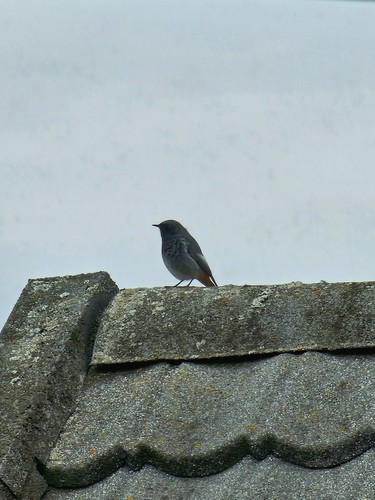
Black Redstart
13-14.5 cm (5.1-5.7 in) long, 23-26 cm wingspan
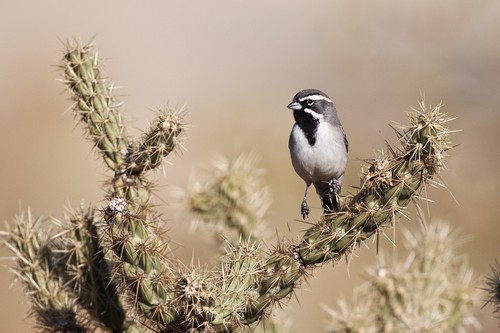
Black-throated Sparrow
12-14 cm (4.7-5.5 in) long, about 19-20 cm (7.5-8 in) wingspan
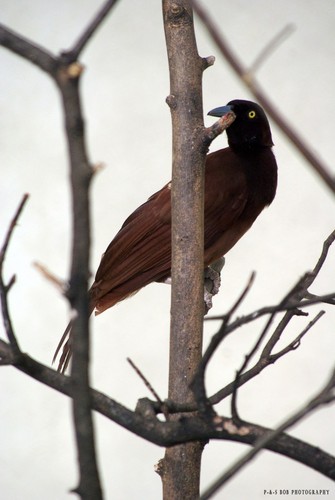
Greater Bird-of-paradise
Body about 43 cm; males with additional flank plumes up to 50 cm and long tail wires
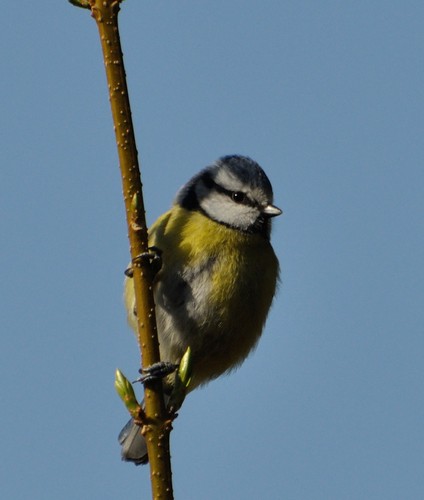
Blue Tit
11-12 cm (4.3-4.7 in) long, 17-20 cm wingspan
Red-billed Quelea
11.5–13 cm long, wingspan about 20–22 cm
White-plumed Antbird
13-14 cm (5-5.5 in) long
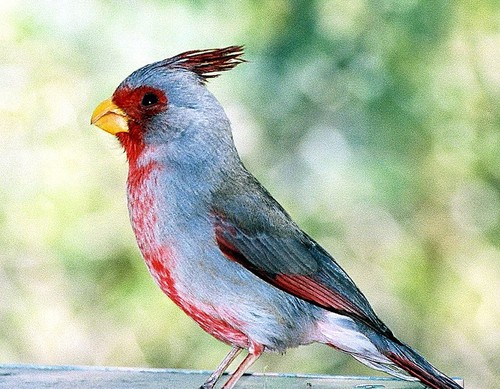
Pyrrhuloxia
19-22 cm (7.5-8.7 in) long, 30 cm wingspan
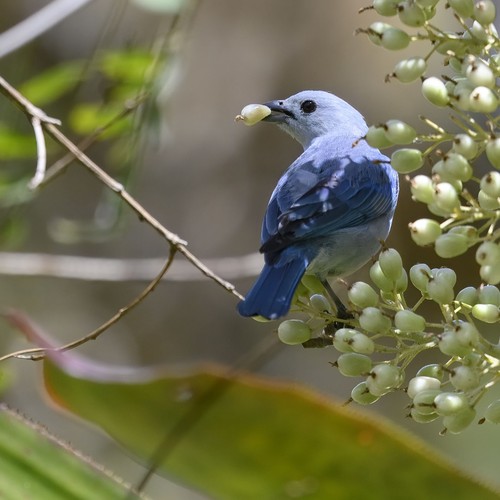
Blue-gray Tanager
16-18 cm (6-7 in) long
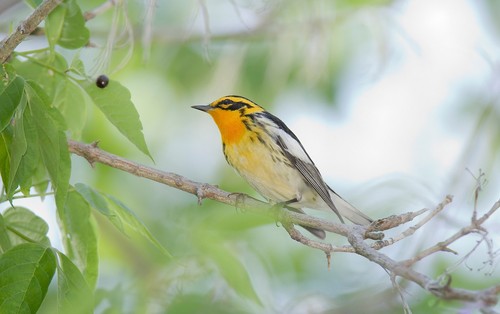
Blackburnian Warbler
11-13 cm (4.3-5.1 in) long, 20-22 cm wingspan
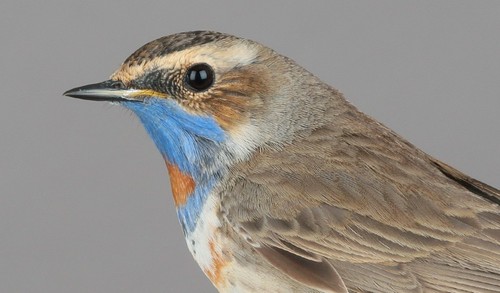
Bluethroat
13-14 cm (5.1-5.5 in) long, 20-22 cm wingspan
Eurasian Nuthatch
12-14.5 cm (4.7-5.7 in) long, 22.5-27 cm wingspan
Wood Thrush
19-21 cm (7.5-8.3 in) long, about 33 cm (13 in) wingspan