
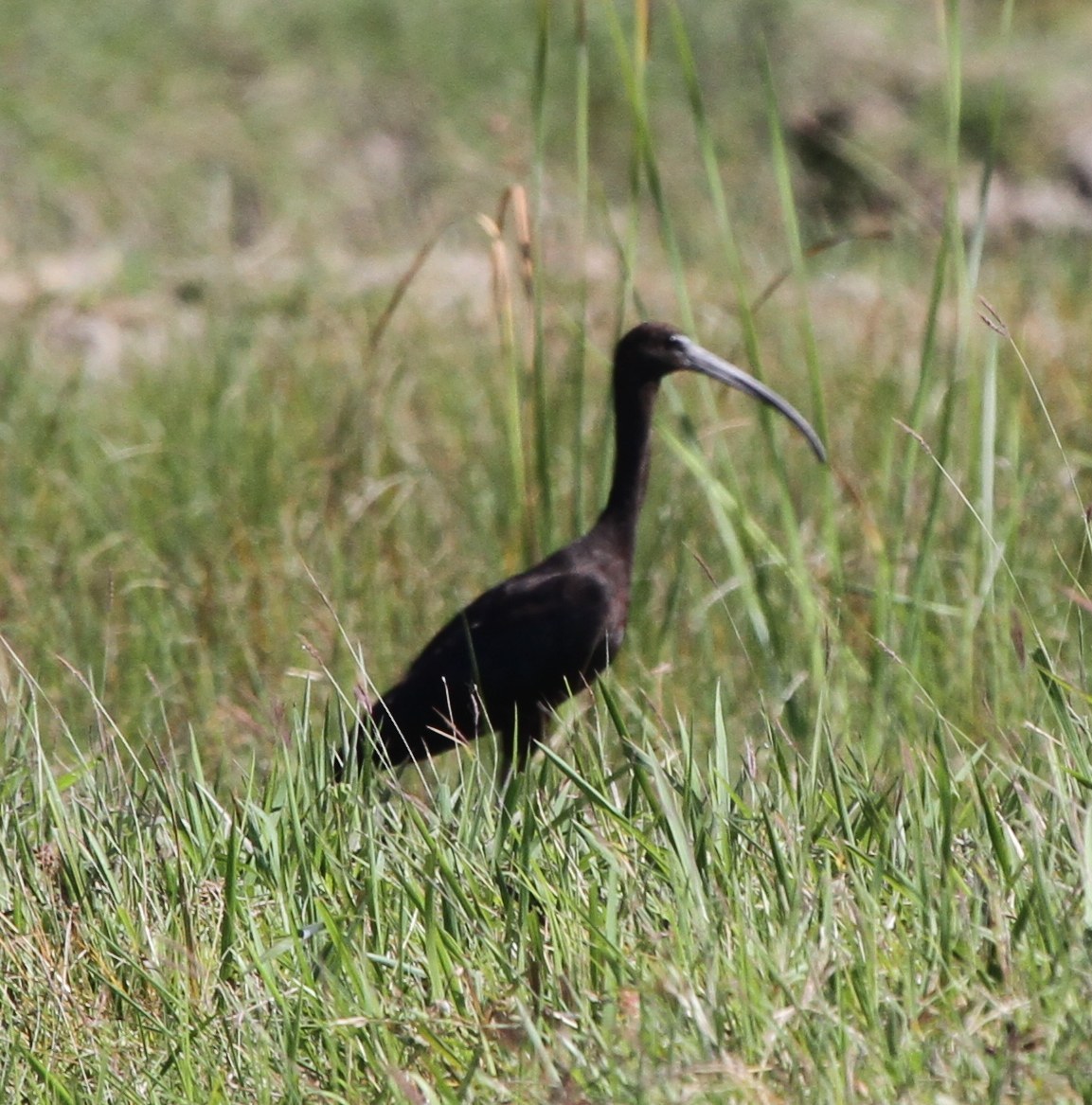
Glossy Ibis
Plegadis falcinellus
The world's most widespread ibis, a dark, iridescent wading bird with a long down-curved bill found on wetlands across the globe.
- Size
- 48-66 cm (19-26 in) long, 80-105 cm wingspan
- Habitat
- marshes, wet meadows, and shallow wetlands on nearly every continent except Antarctica
- Type
- wading-bird
Spotted a bird like this?
Identify any bird from a photo, free.
Overview
The Glossy Ibis appears almost black at a distance, but at close range or in good light its plumage reveals a rich iridescent sheen of bronze, chestnut, purple, and green across the body and wings. It has the classic ibis shape: a long, slender, down-curved bill, long legs, and an elongated neck often held outstretched in flight.
This is by far the most widely distributed ibis species in the world, breeding on nearly every continent apart from Antarctica, and its range has been expanding in recent decades, including a notable spread into new areas of North America and Europe.
How to identify it
Key field marks
- Overall dark plumage with iridescent bronze, purple, and green sheen
- Long, thin, down-curved bill
- Long neck extended in flight (unlike herons, which tuck their necks)
- Flies in loose lines or V-formations
Similar species
The White-faced Ibis is nearly identical and best distinguished in breeding plumage by a thin band of white feathering around the red facial skin and eye (absent or less complete in Glossy Ibis) and reddish rather than grey-brown legs. Careful attention to face and leg color is often needed to separate the two where ranges overlap.
Habitat & range
Habitat
Glossy Ibis use shallow freshwater and brackish wetlands, including marshes, flooded fields, wet meadows, and the margins of lakes and rivers.
Range and migration
It has an enormous global distribution across parts of Europe, Africa, Asia, Australia, and the Americas. Many populations are migratory or nomadic, tracking rainfall and wetland conditions, and the species has expanded its range substantially in North America in recent decades.
Behavior & voice
Behavior
Highly social, Glossy Ibis forage, roost, and migrate in flocks, often mixing with egrets, herons, and other ibis species, and fly with their neck and legs extended in loose lines.
Voice
A nasal, grunting series of croaks, given mainly around nesting colonies.
Feeding
It probes mud and shallow water with its curved bill for insects, crustaceans, and small fish, often walking steadily through wet grasslands and flooded fields.
Nesting and breeding
Glossy Ibis nest colonially, frequently alongside herons and egrets, building stick nests in trees, shrubs, or reeds; clutches usually contain 3-4 eggs.
Frequently asked questions
Is the Glossy Ibis really glossy?
Yes, though it looks blackish from a distance, its plumage shows an iridescent bronze, purple, and green sheen in good light.
Where is the Glossy Ibis found?
It has the widest distribution of any ibis, occurring on wetlands across Europe, Africa, Asia, Australia, and the Americas.
How do you tell a Glossy Ibis from a White-faced Ibis?
Look for a thin white border around the reddish facial skin and eye, and reddish legs, in breeding White-faced Ibis; Glossy Ibis lacks a complete white face border.
What does a Glossy Ibis eat?
Insects, crustaceans, and small fish probed from mud and shallow water.
Glossy Ibis guides
In-depth guides for identifying, finding, and understanding Glossy Ibis.
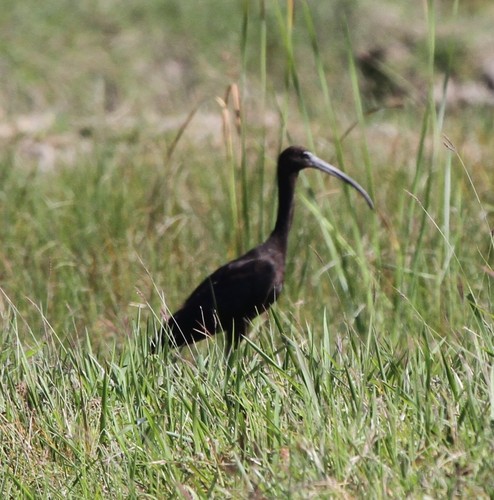
Glossy Ibis identified by the community
Real birds identified with Bird Identifier.

Other birds you may enjoy
Demoiselle Crane
85-100 cm (33-39 in) long, 155-180 cm wingspan
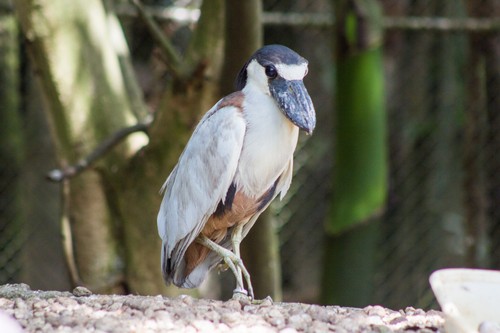
Boat-billed Heron
41-56 cm (16-22 in) long
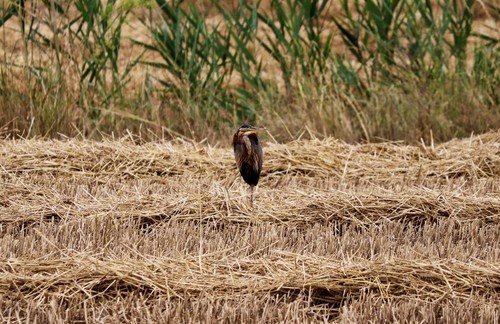
Purple Heron
78-90 cm (31-35 in) long, 120-152 cm wingspan
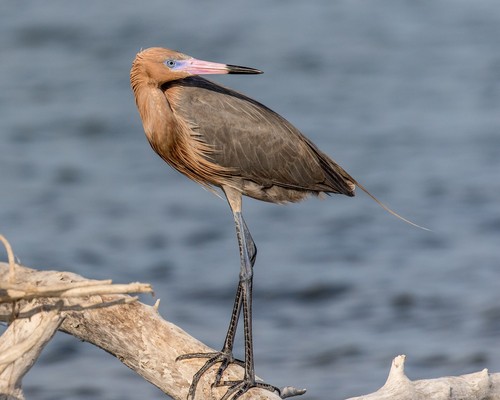
Reddish Egret
68-82 cm (27-32 in) long, 116-125 cm wingspan
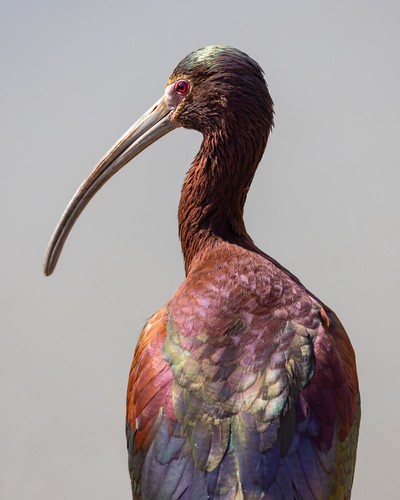
White-faced Ibis
46-56 cm (18-22 in) long, 88-93 cm wingspan
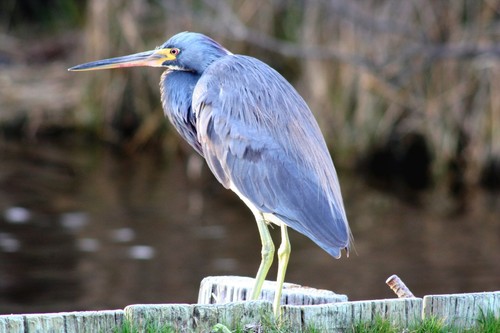
Tricolored Heron
61-76 cm (24-30 in) long, about 96 cm wingspan
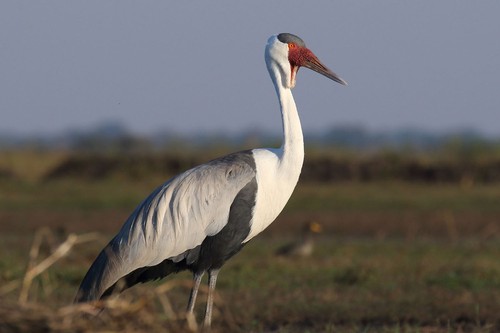
Wattled Crane
120-175 cm (47-69 in) tall, one of the tallest cranes, wingspan up to about 230 cm (7.5 ft)
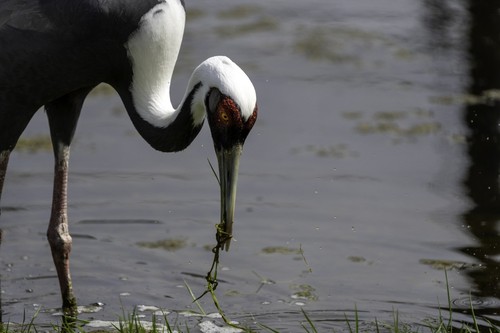
White-naped Crane
112-125 cm (44-49 in) long, 195-210 cm wingspan
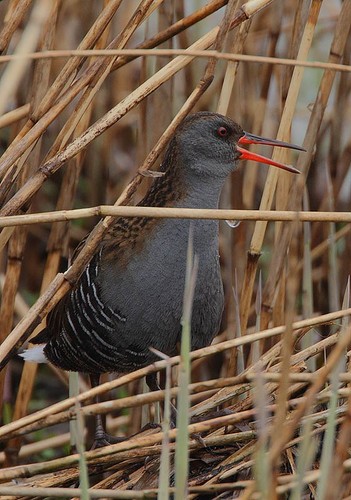
Water Rail
23-28 cm (9-11 in) long, wingspan 38-45 cm
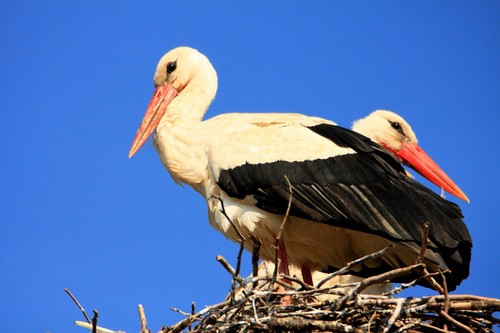
White Stork
100-125 cm (39-49 in) long, 155-215 cm wingspan
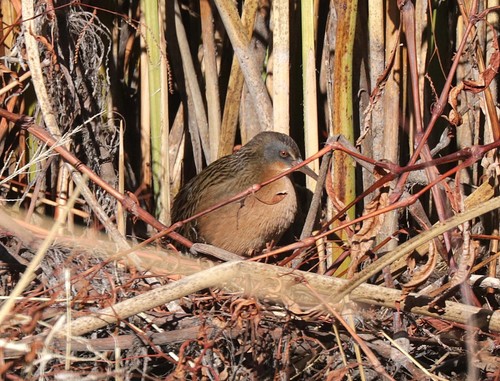
Virginia Rail
20-27 cm (8-11 in) long, wingspan 32-38 cm
Wattled Jacana
17-23 cm (7-9 in) long