
Glossy Ibis Identification Guide
The most widespread ibis species in the world, the Glossy Ibis appears blackish at a distance but reveals a rich bronze-green iridescence and long downcurved bill up close.
Read the full Glossy Ibis encyclopedia entry →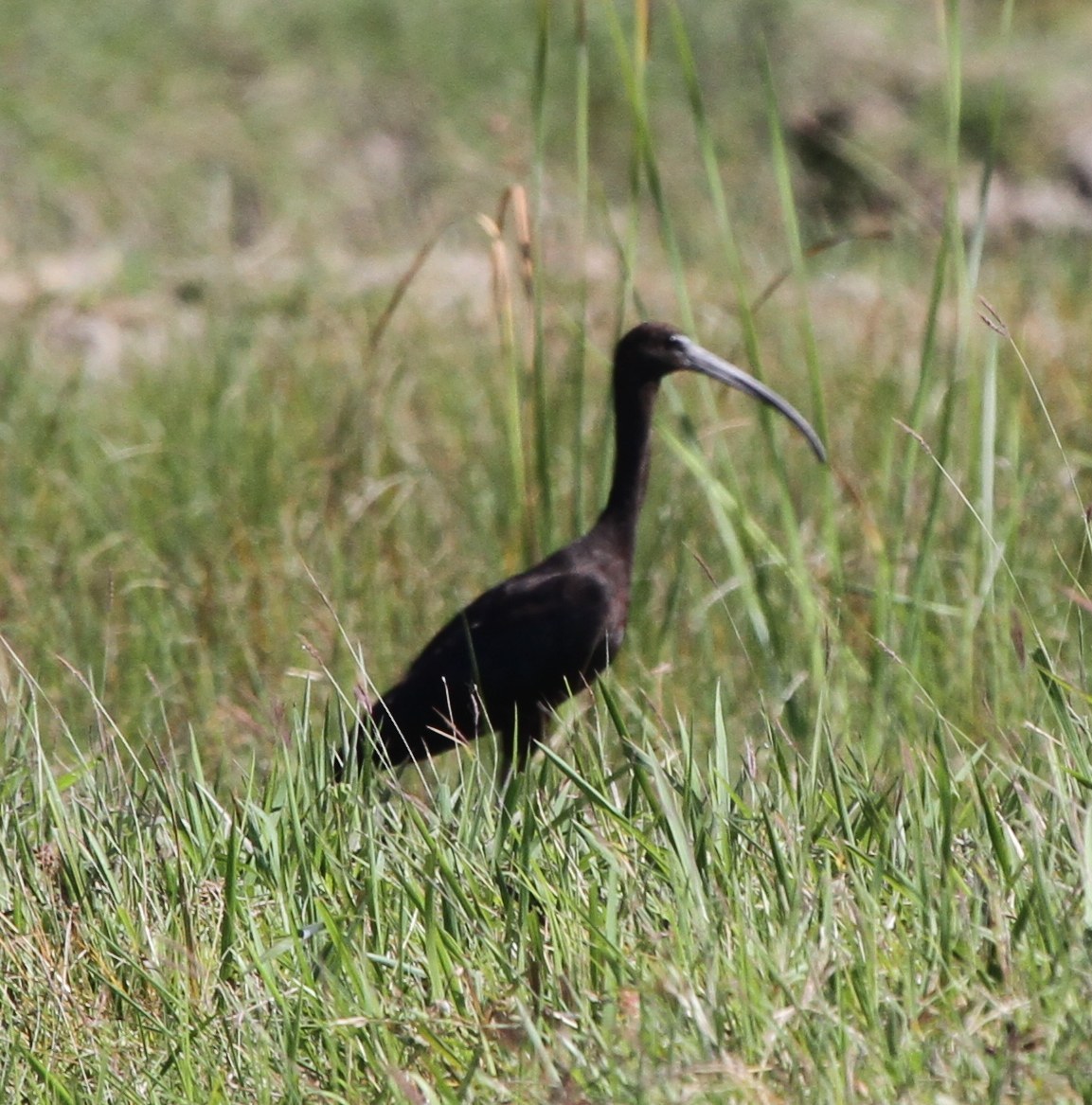
Key Field Marks
- Size: A medium-sized ibis, 48–66 cm (19–26 in) long, with a long neck, long legs, and a long, evenly downcurved bill.
- Plumage: Breeding adults are deep chestnut-maroon overall with a glossy bronze, green, and purple iridescent sheen across the wings and back that is often only visible in good light — from a distance the bird can look uniformly black.
- Bill: Long, thin, and strongly downcurved, dull grayish-brown in color (not brightly colored).
- Facial skin: Dull blue-gray, without a bold white border.
- Flight: Flies with neck and legs fully extended, often in loose lines or V-formations, with alternating flaps and glides.
Separating It From Similar Species
- White-faced Ibis is the primary confusion species in the Americas, especially where ranges overlap. In breeding plumage, White-faced Ibis has a bright red eye and reddish legs, with a band of white feathers bordering the bare facial skin (giving the "white-faced" name); Glossy Ibis has a dark brown eye and lacks the white feather border around its duller blue-gray facial skin.
- Outside of breeding plumage and in juveniles, the two are extremely similar, and facial skin pattern plus eye color (when visible at close range) remain the most reliable distinguishing features.
- No other widespread ibis shares its combination of overall dark, glossy plumage and thin downcurved bill across most of its range, though care is needed in regions where both ibis species co-occur.
Where and When to Find It
- Habitat: Freshwater and brackish marshes, flooded fields, shallow lake edges, and wetland impoundments where it wades and probes soft mud for invertebrates.
- Range: The most widespread ibis species globally, found across parts of the Americas, Europe, Africa, Asia, and Australia; range has been expanding in North America in recent decades.
- Season: Migratory in the northern and southern extremes of its range, moving to warmer wetlands outside the breeding season; more sedentary in tropical and subtropical areas.
Voice
- Relatively quiet; gives low, guttural grunting and croaking notes, mainly around breeding colonies rather than in general flight or foraging.
Frequently asked questions
How do you tell a Glossy Ibis from a White-faced Ibis?
In breeding plumage, White-faced Ibis has a red eye, reddish legs, and a white feather border around its facial skin, while Glossy Ibis has a dark eye and lacks the white border around its duller blue-gray facial skin.
Why does the Glossy Ibis look black from a distance?
Its deep chestnut-maroon plumage and iridescent bronze-green-purple sheen only become visible in good light at closer range; from afar it often appears simply dark or black.
Is the Glossy Ibis really the most widespread ibis in the world?
Yes, it has the broadest global distribution of any ibis species, occurring on every continent except Antarctica, including recent range expansion in North America.
What habitat does the Glossy Ibis prefer?
It favors freshwater and brackish marshes, flooded agricultural fields, and shallow wetland edges where it can probe soft mud with its long bill for invertebrates.
Glossy Ibis identified by the community
Recent Glossy Ibis sightings identified with Bird Identifier.
