
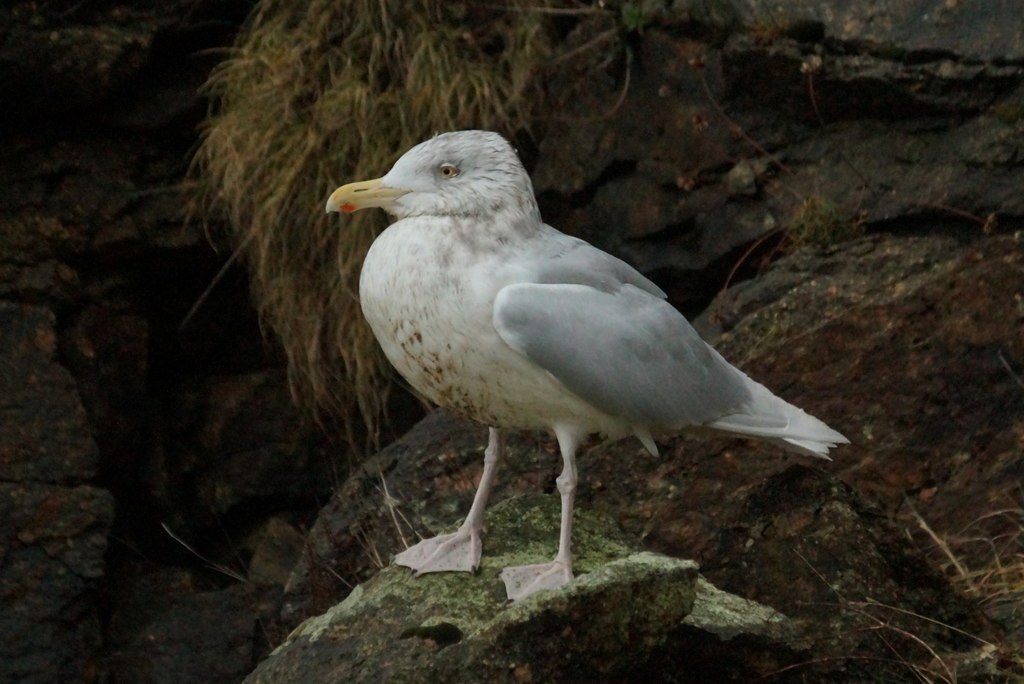
Glaucous Gull
Larus hyperboreus
A huge, pale Arctic gull with wingtips lacking black, a formidable predator and scavenger of the far north.
- Size
- 69-79 cm (27-31 in) long, 138-158 cm wingspan
- Habitat
- Arctic tundra coasts and cliffs for breeding; temperate coasts in winter
- Type
- seabird
Spotted a bird like this?
Identify any bird from a photo, free.
Overview
The Glaucous Gull is one of the largest gulls in the world, an imposing, bulky Arctic species instantly recognizable by its very pale plumage. Unlike almost all other large gulls, adults show no black at all in the wingtips; instead the primaries are the same pale gray as the rest of the mantle, or nearly white, giving the bird a strikingly "white-winged" appearance in flight.
Adults have a thick yellow bill with a bold red spot near the tip, pink legs, and a pale eye. Juvenile and immature birds are pale creamy-buff overall, sometimes appearing almost entirely white, and take about four years to mature.
A formidable and opportunistic Arctic predator, the Glaucous Gull will readily take the eggs and chicks of other seabirds, scavenge carcasses of seals and whales, and follow fishing vessels in search of discards.
How to identify it
Key field marks
- Very large size, among the biggest gulls
- No black in the wingtips; primaries pale gray to nearly white
- Thick yellow bill with a red gonydeal spot
- Pink legs
- Pale, cream-colored immature plumage
Similar species
- Iceland Gull: smaller and more delicate, with a smaller bill and rounder head, though it shares the white wingtips.
- Glaucous-winged Gull: wingtips are only slightly darker gray than the mantle, not pure white, and the species is restricted to the Pacific, not circumpolar Arctic.
- Herring Gull: shows obvious black wingtips, unlike Glaucous Gull.
Habitat & range
Habitat
Breeds on Arctic coastal cliffs, tundra, and islands circumpolar around the high Arctic. Winters along northern temperate coasts, harbors, and near fishing operations, sometimes venturing well south of the breeding range during irruption years.
Range and migration
Breeds across the circumpolar Arctic including northern Alaska, Canada, Greenland, and Eurasia; winters along the coasts of the northern Atlantic and Pacific, occasionally reaching farther south along the Great Lakes and mid-latitude coastlines in winter.
Behavior & voice
Behavior
A dominant and aggressive presence at seabird colonies and fishing harbors, Glaucous Gulls are skilled predators, taking eggs, chicks, and even adult birds of smaller species, in addition to scavenging.
Voice
Calls resemble those of other large gulls: deep, resonant "kyow" notes and a long call given with the head thrown back.
Feeding
An opportunistic predator and scavenger feeding on fish, marine invertebrates, carrion (including seal and whale carcasses), and the eggs and chicks of other seabirds.
Nesting and breeding
Nests as solitary pairs or in loose colonies on Arctic cliffs and rocky coastlines, building a scrape lined with vegetation. Clutches typically contain two to three eggs, incubated by both parents.
Frequently asked questions
What makes the Glaucous Gull unusual among large gulls?
It lacks black wingtips entirely, showing pale gray to nearly white primaries, unlike most large gulls which have dark wingtips.
How big is a Glaucous Gull?
It is one of the largest gulls in the world, with a wingspan approaching 1.6 meters (over 5 feet).
Where does the Glaucous Gull live?
It breeds around the circumpolar Arctic and winters along northern coasts, occasionally straying farther south in winter.
What does the Glaucous Gull eat?
It is an opportunistic predator and scavenger, eating fish, carrion, and the eggs and chicks of other seabirds.
Glaucous Gull guides
In-depth guides for identifying, finding, and understanding Glaucous Gull.
Other birds you may enjoy
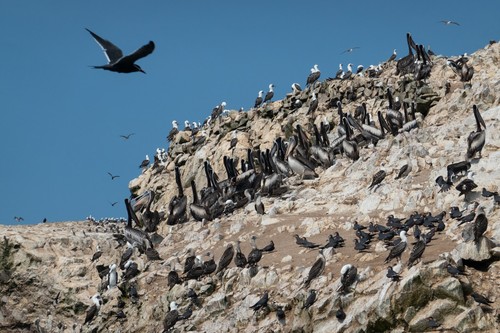
Peruvian Pelican
137-152 cm (54-60 in) long, up to 228 cm wingspan
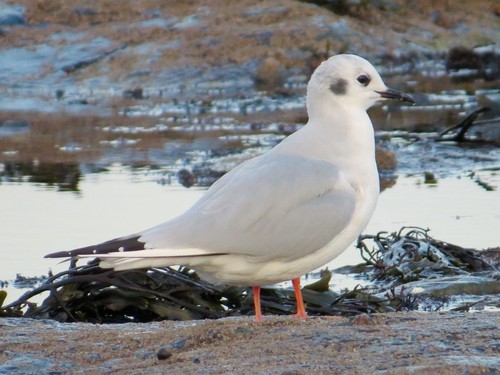
Bonaparte's Gull
28-33 cm (11-13 in) long, 76-84 cm wingspan
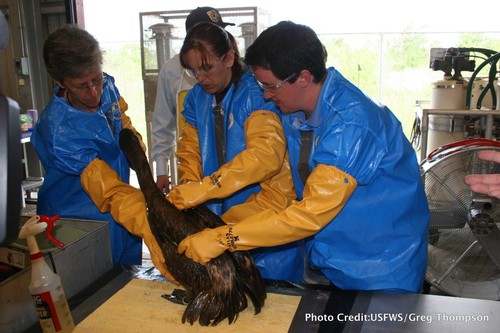
Brown Pelican
106-137 cm (42-54 in) long, 200-230 cm wingspan
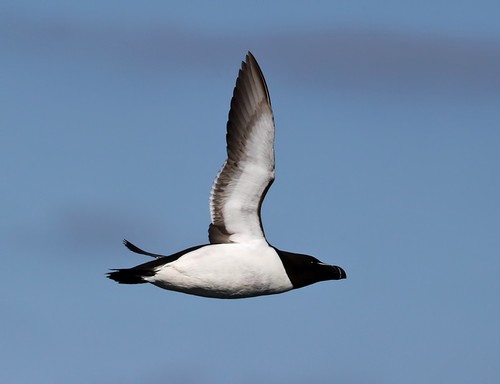
Razorbill
37-39 cm (15-15.5 in) long, 63-68 cm wingspan
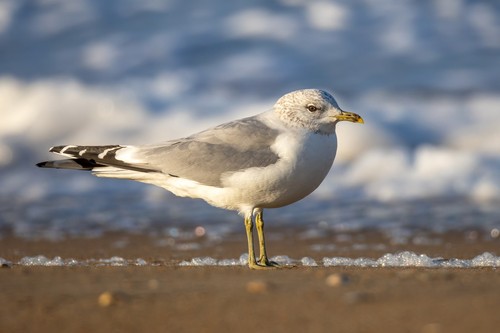
Common Gull
40-46 cm (16-18 in) long, 110-130 cm wingspan
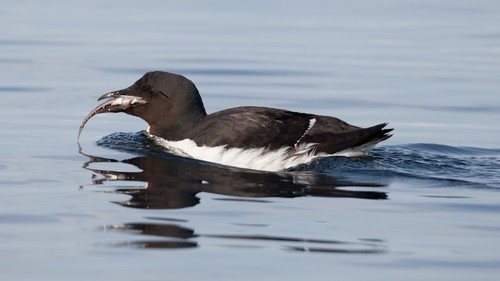
Thick-billed Murre
40-48 cm (16-19 in) long, 65-75 cm wingspan
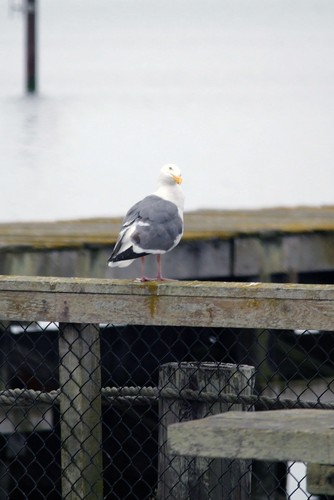
Western Gull
55-68 cm (22-27 in) long, 130-144 cm wingspan
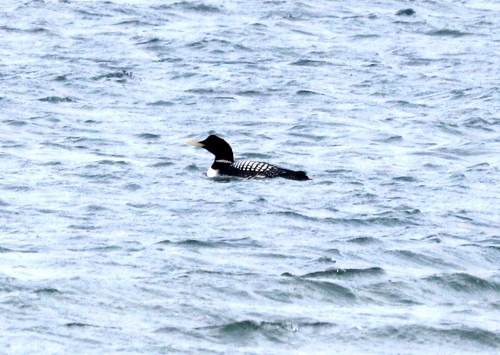
Yellow-billed Loon
76-97 cm (30-38 in) long, 135-152 cm wingspan
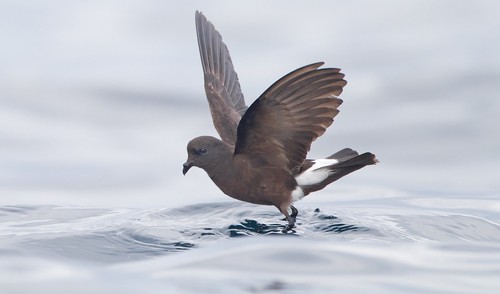
Wilson's Storm-Petrel
15-19 cm (6-7.5 in) long, wingspan 38-42 cm (15-16.5 in)
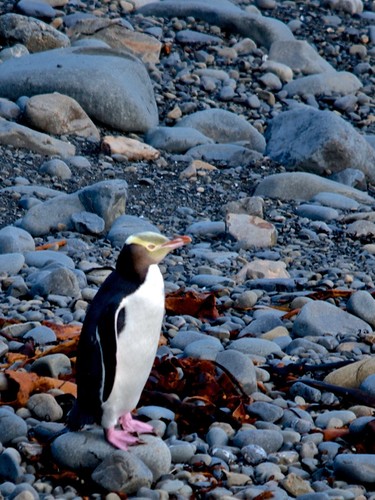
Yellow-eyed Penguin
62-79 cm (24-31 in) tall, 3-8.5 kg (6.6-18.7 lb)
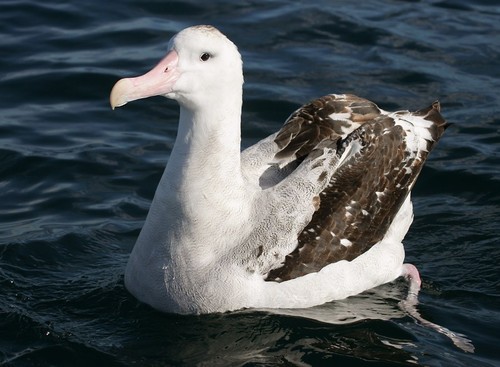
Wandering Albatross
107-135 cm (42-53 in) long, wingspan up to 3.5 m (11.5 ft)
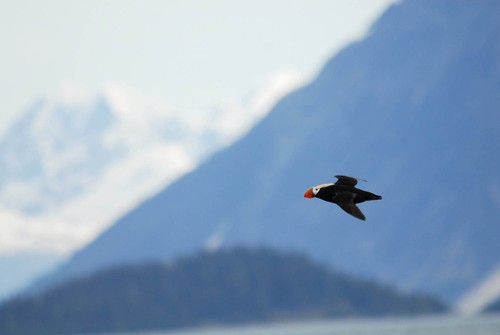
Tufted Puffin
35-41 cm (14-16 in) long, about 63-70 cm wingspan