
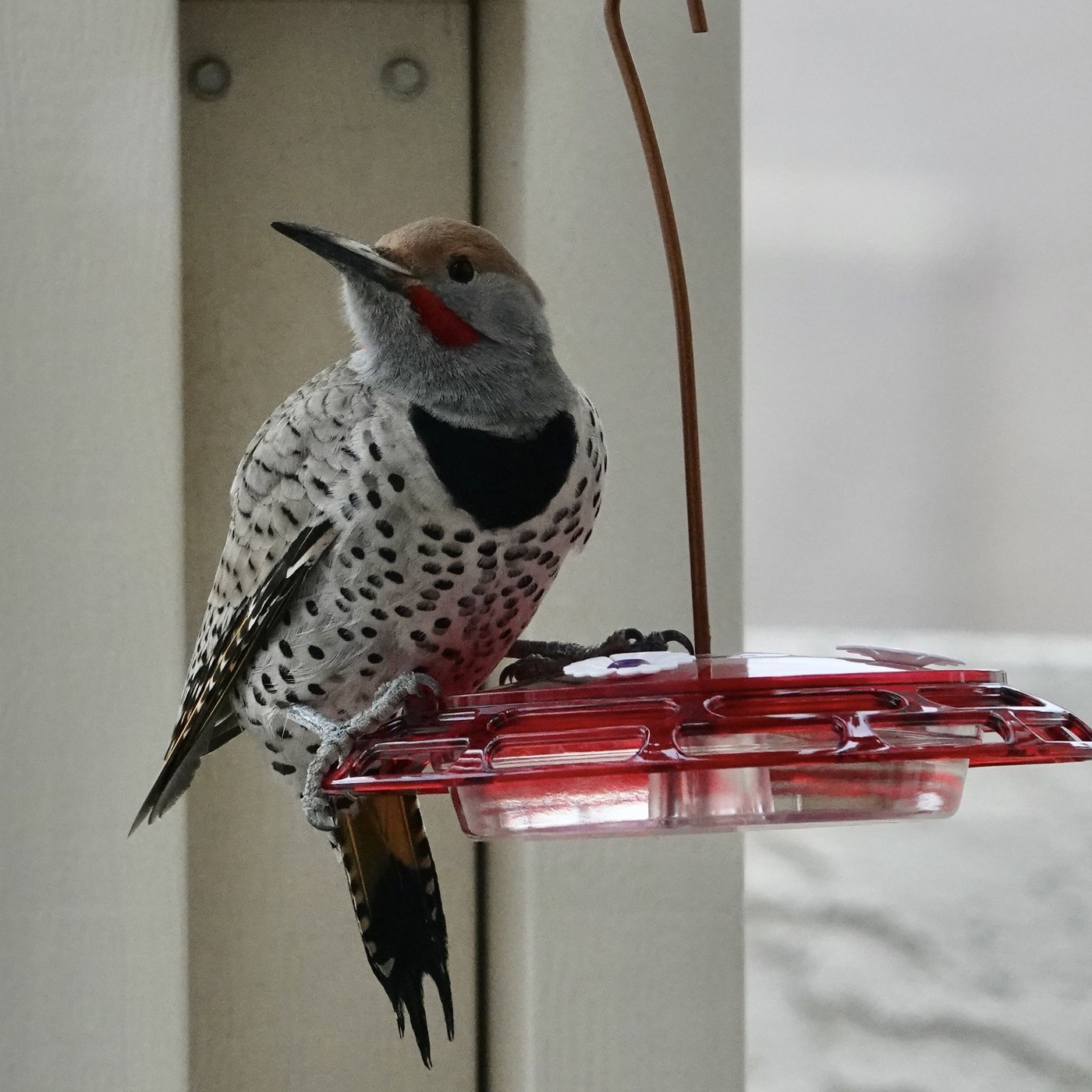
Gilded Flicker
Colaptes chrysoides
A large, desert-dwelling flicker with golden-yellow underwings that nests in the towering saguaro cactus.
- Size
- 28-31 cm (11-12 in) long, 43-51 cm wingspan
- Habitat
- Sonoran desert with saguaro cacti, desert washes, and mesquite woodland
- Type
- woodpecker
Spotted a bird like this?
Identify any bird from a photo, free.
Overview
The Gilded Flicker is a large, ground-foraging woodpecker of the Sonoran Desert, closely resembling the more widespread Northern Flicker's 'yellow-shafted' form. It has a brown, black-barred back, a black bib across the upper breast, spotted underparts, and a gray face with a tan-brown crown. In flight, golden-yellow flashes are visible in the wings and tail.
Males show a red mustache stripe extending from the base of the bill, absent in females. This species is closely tied to the saguaro cactus for nesting, alongside the Gila Woodpecker, and was formerly considered a subspecies of the Northern Flicker before being split as a full species.
How to identify it
Key Field Marks
- Brown, black-barred back and wings
- Black bib on the upper breast
- Black-spotted, pale buffy underparts
- Gray face with a tan-brown crown
- Golden-yellow underwings and undertail visible in flight
- Males show a red mustache stripe; females lack it
Similar Species
- Northern Flicker ('red-shafted' form) shows salmon-red, not golden-yellow, underwings and a gray crown with a brown face, the reverse pattern from the Gilded Flicker; the two species hybridize in a narrow contact zone.
- Gila Woodpecker is smaller, lacks the black bib and spotted underparts, and has a barred rather than plain tan face.
Habitat & range
Habitat
Gilded Flickers inhabit Sonoran Desert scrub with saguaro cacti, as well as desert washes lined with mesquite and cottonwood, and adjacent suburban areas.
Range
This species is found in the deserts of southern Arizona, southeastern California, and northwestern Mexico, including Baja California and Sonora.
Migration
Gilded Flickers are largely non-migratory permanent residents throughout their range.
Behavior & voice
Behavior
Like other flickers, this species forages heavily on the ground, probing soil and leaf litter for ants with its long, barbed tongue, unlike most woodpeckers that forage mainly on tree trunks.
Voice
Calls include a loud, laughing series of klee-yer notes and a long wick-wick-wick-wick rattle similar to the Northern Flicker; drumming is a fast, even roll.
Feeding
Ants form the bulk of the diet, supplemented by other insects, cactus fruit, and seeds.
Nesting
Pairs excavate a nest cavity in a saguaro cactus or, less commonly, a tree; both parents incubate the 3-5 white eggs and feed the nestlings.
Frequently asked questions
How is the Gilded Flicker different from the Northern Flicker?
The Gilded Flicker shows golden-yellow flight feathers and a gray face with a brown crown, the reverse of the red-shafted Northern Flicker, which has salmon-red flight feathers and a brown face with a gray crown.
Where does the Gilded Flicker live?
It lives in Sonoran Desert habitat with saguaro cacti across southern Arizona, southeastern California, and northwestern Mexico.
What does a Gilded Flicker eat?
It feeds mainly on ants gathered from the ground, along with other insects, cactus fruit, and seeds.
Does the Gilded Flicker nest in saguaro cacti?
Yes, it commonly excavates its nest cavity in a saguaro cactus, similar to the Gila Woodpecker.
Gilded Flicker guides
In-depth guides for identifying, finding, and understanding Gilded Flicker.
Other birds you may enjoy
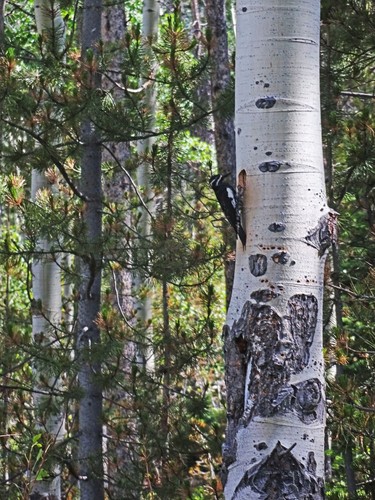
Williamson's Sapsucker
21-25 cm (8-10 in) long, 40-42 cm wingspan
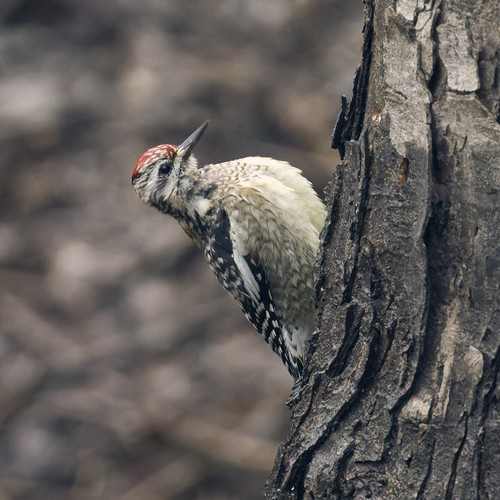
Yellow-bellied Sapsucker
18-21 cm (7-8.3 in) long, 34-40 cm wingspan
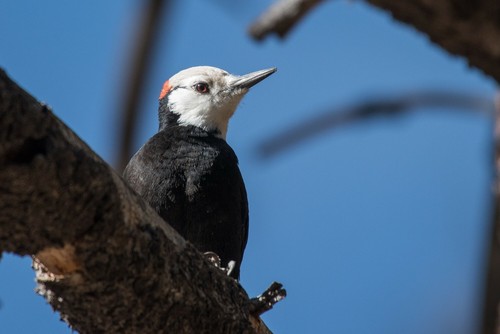
White-headed Woodpecker
20-23 cm (8-9 in) long, 38-41 cm wingspan
Red-headed Woodpecker
19-23 cm (7.5-9 in) long, 42-46 cm wingspan
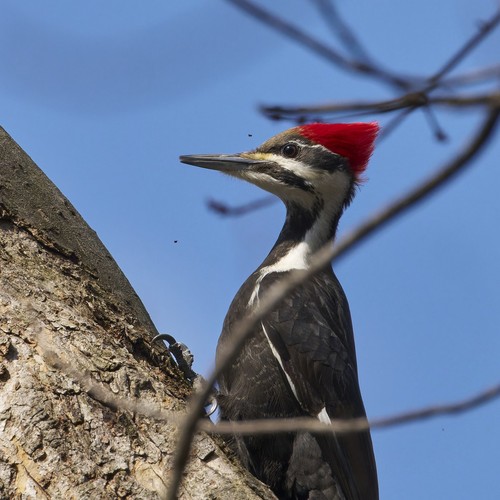
Pileated Woodpecker
40-49 cm (16-19 in) long, 66-75 cm wingspan
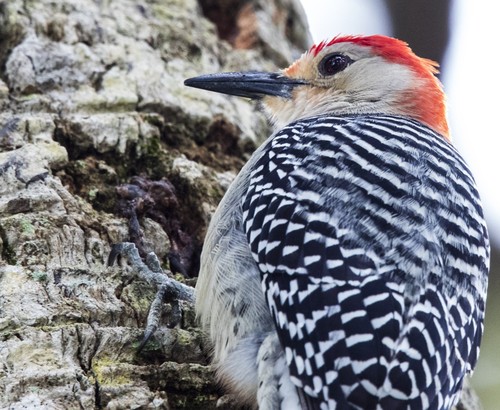
Red-bellied Woodpecker
22-27 cm (9-10.5 in) long, 38-46 cm wingspan
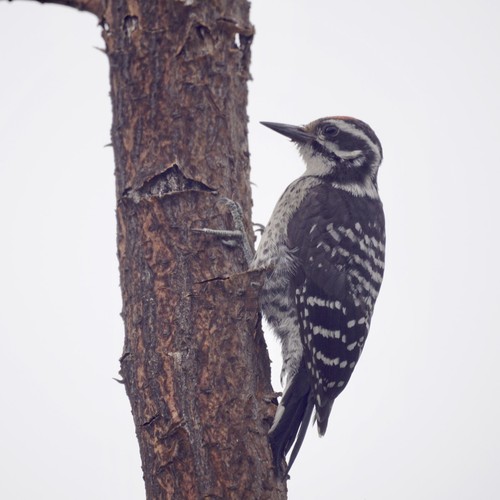
Nuttall's Woodpecker
18-20 cm (7-8 in) long, 34-38 cm wingspan
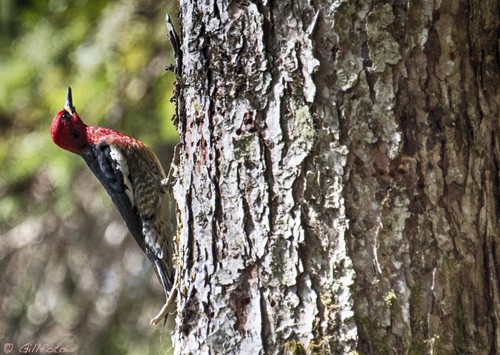
Red-breasted Sapsucker
20-23 cm (8-9 in) long, 34-40 cm wingspan
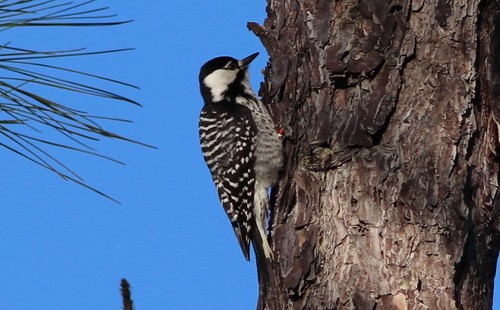
Red-cockaded Woodpecker
20-23 cm (8-9 in) long, 35-38 cm wingspan
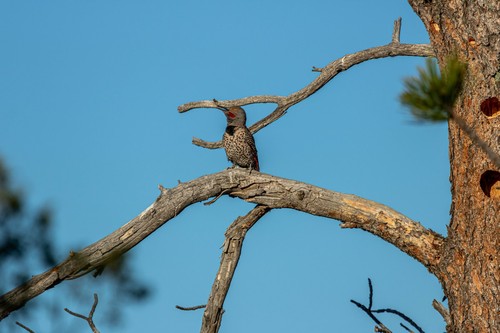
Northern Flicker
28-36 cm (11-14 in) long, 42-51 cm wingspan
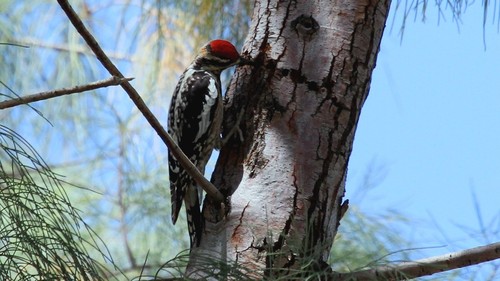
Red-naped Sapsucker
19-21 cm (7.5-8.3 in) long, 34-40 cm wingspan
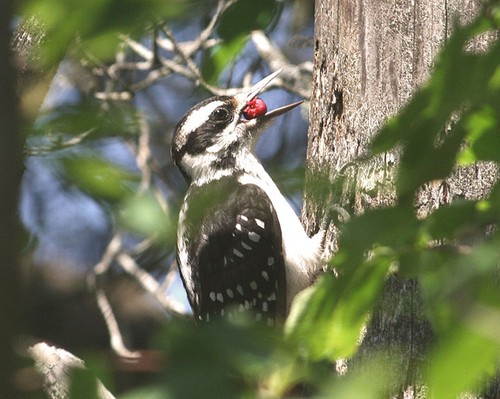
Hairy Woodpecker
23-26 cm (9-10 in) long, 33-41 cm wingspan