
Gilded Flicker Identification Guide
A large desert-dwelling flicker closely tied to saguaro cacti, the Gilded Flicker shows golden-yellow flight feathers, a spotted breast with a black bib, and a red mustache stripe on males.
Read the full Gilded Flicker encyclopedia entry →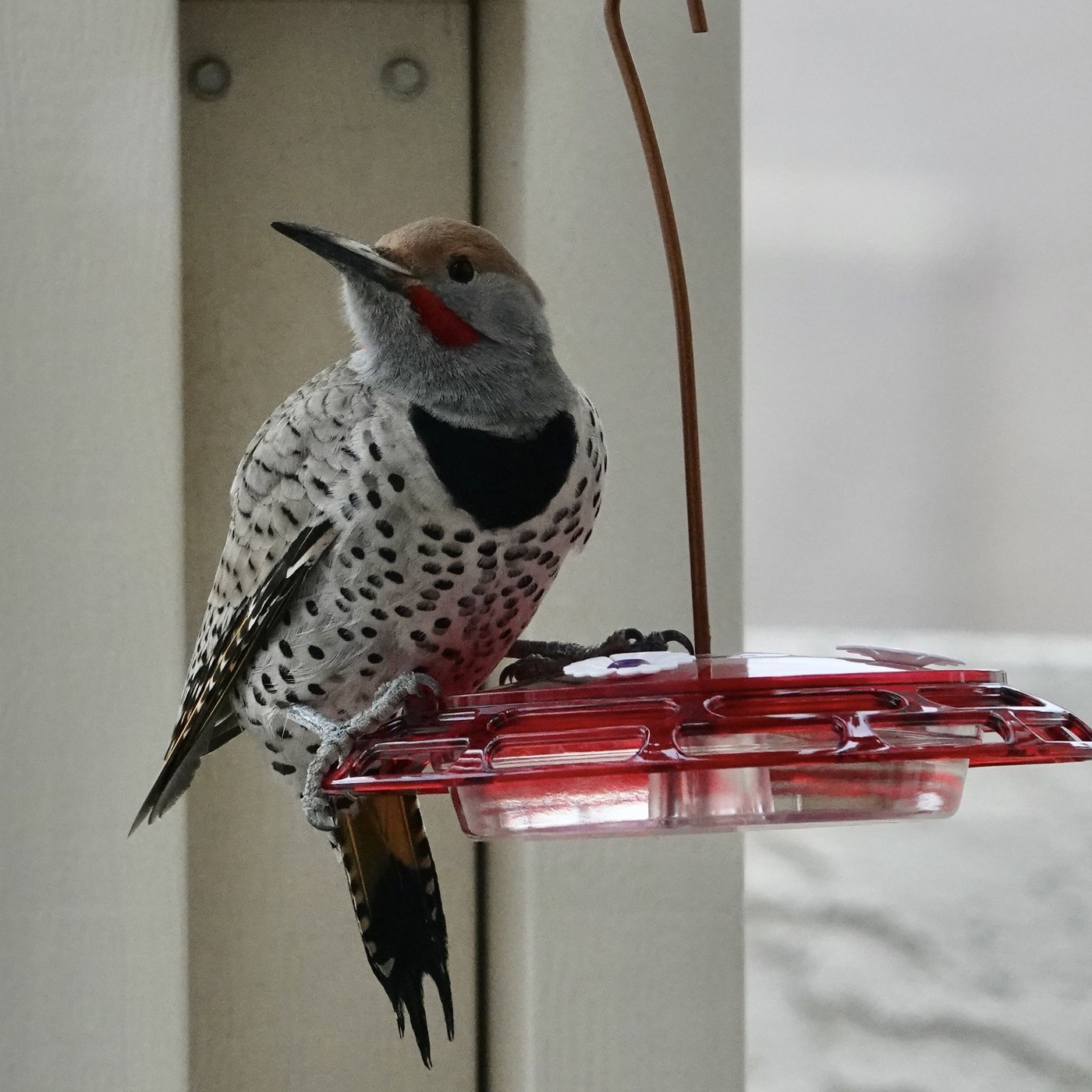
Key Field Marks
- Size: A large woodpecker, about 28 cm (11 in) long, similar in size to the more widespread Northern Flicker.
- Plumage: Brown, barred back and wings; buffy underparts covered in black spots; a bold black crescent bib across the upper chest; gray face and throat with a brown crown; white rump patch conspicuous in flight.
- Flight feathers: Bright golden-yellow shafts and undersides of the wings and tail, visible as a flash of yellow in flight — the source of the species' name.
- Male: Shows a red mustache (malar) stripe; females lack this red stripe entirely.
Separating It From Similar Species
- Northern Flicker (red-shafted form), which overlaps in range, is the primary confusion species. The clearest difference is the underwing/undertail color: Gilded Flicker shows yellow, while red-shafted Northern Flicker shows red/salmon-pink.
- Habitat is also a useful clue — Gilded Flicker is strongly tied to saguaro-studded Sonoran Desert, while red-shafted Northern Flicker is more a bird of woodlands and mountains, though the two do hybridize where ranges meet, occasionally producing birds with intermediate underwing color.
- Both species share a gray face, brown crown, spotted underparts, and black bib, so the flight-feather color and habitat are the most dependable field marks.
Where and When to Find It
- Habitat: Sonoran Desert scrub with saguaro cacti, and desert riparian corridors; nests almost exclusively in cavities excavated in saguaros.
- Range: Resident year-round (non-migratory) in Arizona, extreme southeastern California, and northwestern Mexico.
- Behavior: Like other flickers, forages largely on the ground for ants and other insects rather than gleaning bark like typical woodpeckers.
Voice
- Gives a loud, rapid "wick-wick-wick-wick" call very similar to other flicker species.
- Also utters a single loud "klee-yer" note, and drums on saguaro trunks and other resonant surfaces to declare territory.
Frequently asked questions
How do you tell a Gilded Flicker from a Northern Flicker?
The most reliable mark is underwing/undertail color: Gilded Flicker shows yellow flight feather shafts, while the overlapping red-shafted form of Northern Flicker shows red or salmon-pink. Habitat also helps, since Gilded Flicker sticks closely to saguaro desert.
Do Gilded Flickers and Northern Flickers hybridize?
Yes, where their ranges meet in the desert Southwest, hybrids occur and can show intermediate underwing coloration, complicating identification.
Where do Gilded Flickers nest?
They nest almost exclusively in cavities they excavate in saguaro cacti, making them a keystone species for the Sonoran Desert cavity-nesting community.
How do you sex a Gilded Flicker?
Males show a red mustache stripe on the face; females lack any red stripe and have a plain gray face.