
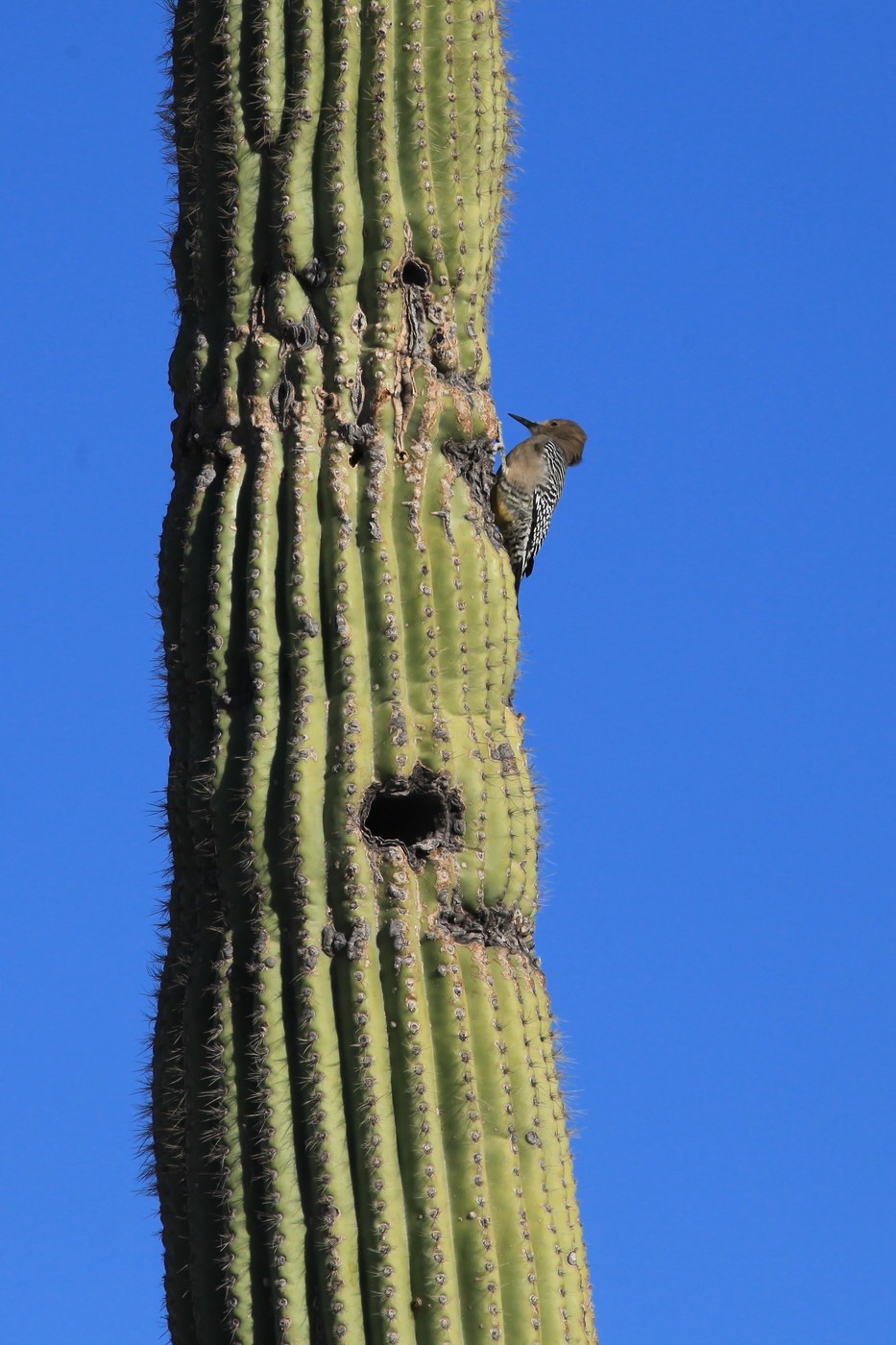
Gila Woodpecker
Melanerpes uropygialis
A desert-adapted woodpecker that carves its nest cavities into towering saguaro cacti.
- Size
- 20-24 cm (8-9.5 in) long, 40-42 cm wingspan
- Habitat
- Sonoran desert with saguaro cacti, desert washes, and suburban yards
- Type
- woodpecker
Spotted a bird like this?
Identify any bird from a photo, free.
Overview
The Gila Woodpecker is a mid-sized woodpecker of the Sonoran Desert, with a plain tan-brown head and underparts and a strikingly barred black-and-white back and wings, giving it a zebra-like pattern. Males have a small red cap patch on the crown, absent in females, while both sexes share the same barred back pattern and pale gray-brown face and chest.
This species is a keystone member of the saguaro cactus community, excavating nest cavities in the cactus flesh that, once abandoned, are reused by numerous other desert animals including elf owls, cactus wrens, and various reptiles.
How to identify it
Key Field Marks
- Plain tan-brown head, neck, and underparts
- Black-and-white barred back and wings giving a ladder-backed appearance
- Small red crown patch on males only
- White wing patches visible in flight
- Grayish-tan face without strong facial markings
Similar Species
- Ladder-backed Woodpecker and Golden-fronted Woodpecker also show barred backs, but Golden-fronted has a distinct golden-yellow nape patch and Ladder-backed is much smaller with a spotted, streaked breast.
- Gilded Flicker is larger with a spotted breast, black bib, and salmon-yellow underwing color, distinct from the Gila Woodpecker's plain tan underparts.
Habitat & range
Habitat
Gila Woodpeckers are closely tied to Sonoran Desert habitat containing saguaro cacti, but also inhabit desert washes lined with mesquite and cottonwood, and readily adapt to suburban yards, parks, and golf courses within their range.
Range
This species is found in the deserts of southern Arizona, southeastern California, and northwestern Mexico, including Baja California and Sonora.
Migration
Gila Woodpeckers are non-migratory permanent residents throughout their range, remaining on territory year-round.
Behavior & voice
Behavior
Gila Woodpeckers are bold, adaptable birds that forage on cacti, trees, and even the ground, and readily visit backyard feeders for suet, fruit, and sugar water.
Voice
The most common call is a rolling, chattering churr, along with a sharp yip-like note; drumming is a fast, even roll delivered on resonant wood or, occasionally, metal objects.
Feeding
Diet includes insects gleaned from bark and cactus, cactus fruit and nectar, berries, and occasionally small lizards or bird eggs.
Nesting
Pairs excavate a cavity in a saguaro cactus or, less often, a tree; the cavity must cure for months before use since the cactus forms a hardened scar tissue lining called a 'boot.' Both parents incubate the 3-4 white eggs.
Frequently asked questions
Why does the Gila Woodpecker nest in cacti?
Saguaro cacti provide sturdy, insulated nest cavities in the open desert where large trees are scarce; the cactus forms a hardened callus around the cavity that protects both the cactus and the birds.
How can I tell a male from a female Gila Woodpecker?
Males have a small red patch on the crown of the head, which females lack; otherwise the sexes look alike.
What do Gila Woodpeckers eat?
They eat insects, cactus fruit, nectar, berries, and occasionally small lizards, and will visit feeders for suet and sugar water.
Are Gila Woodpeckers only found near saguaros?
While closely associated with saguaro-studded desert, they also live in desert washes and suburban areas with suitable trees.
Gila Woodpecker guides
In-depth guides for identifying, finding, and understanding Gila Woodpecker.
Other birds you may enjoy
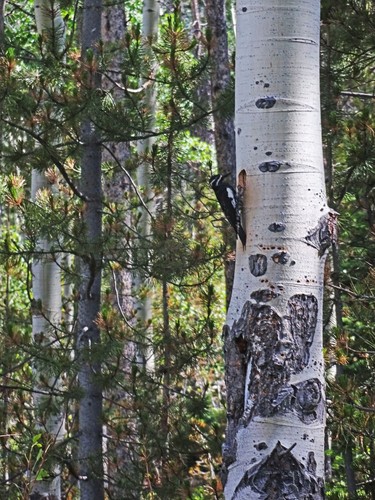
Williamson's Sapsucker
21-25 cm (8-10 in) long, 40-42 cm wingspan
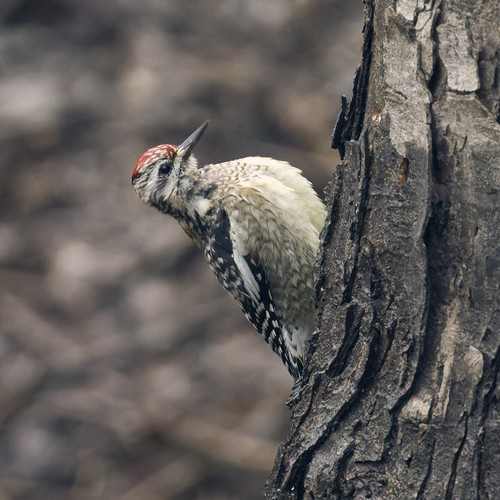
Yellow-bellied Sapsucker
18-21 cm (7-8.3 in) long, 34-40 cm wingspan
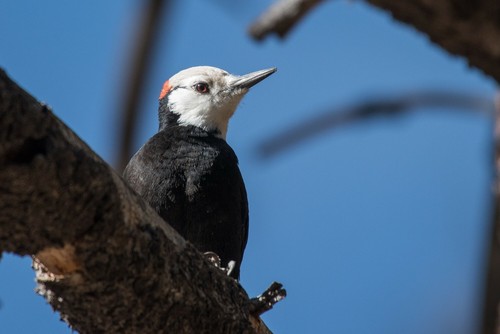
White-headed Woodpecker
20-23 cm (8-9 in) long, 38-41 cm wingspan
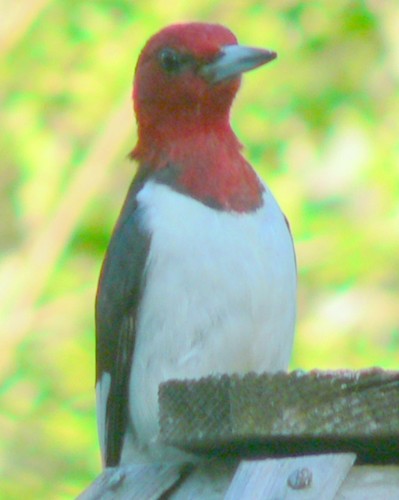
Red-headed Woodpecker
19-23 cm (7.5-9 in) long, 42-46 cm wingspan
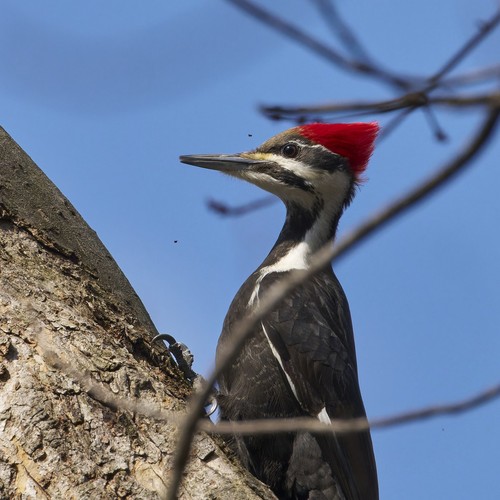
Pileated Woodpecker
40-49 cm (16-19 in) long, 66-75 cm wingspan
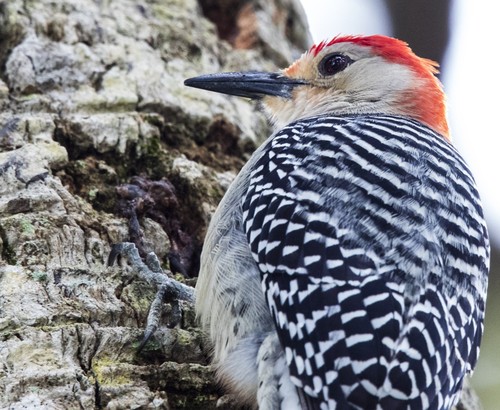
Red-bellied Woodpecker
22-27 cm (9-10.5 in) long, 38-46 cm wingspan
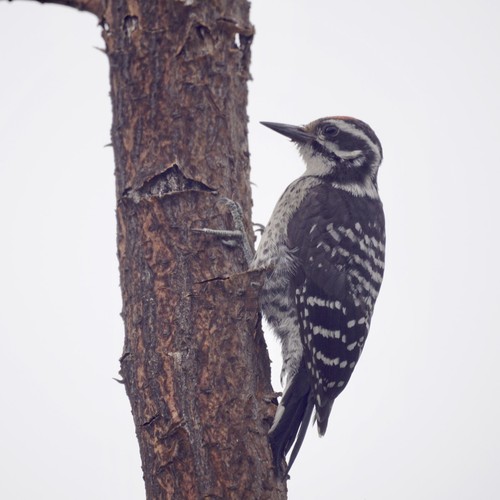
Nuttall's Woodpecker
18-20 cm (7-8 in) long, 34-38 cm wingspan
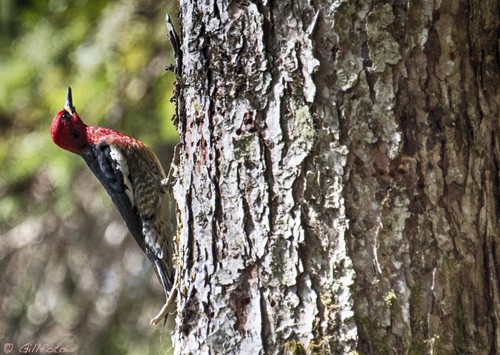
Red-breasted Sapsucker
20-23 cm (8-9 in) long, 34-40 cm wingspan
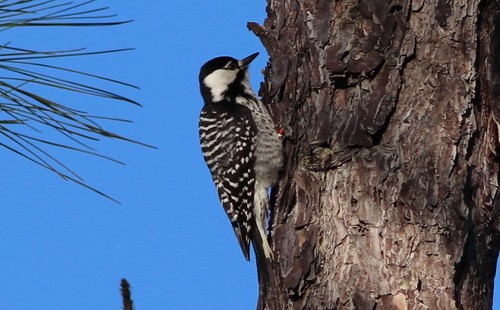
Red-cockaded Woodpecker
20-23 cm (8-9 in) long, 35-38 cm wingspan
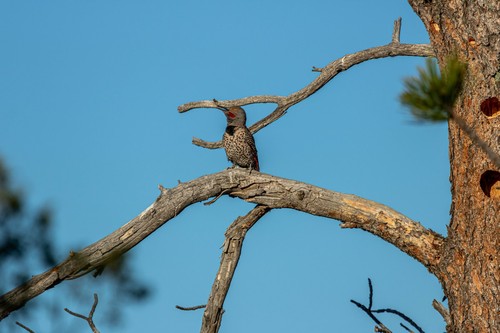
Northern Flicker
28-36 cm (11-14 in) long, 42-51 cm wingspan
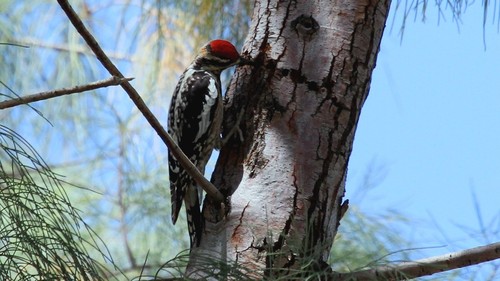
Red-naped Sapsucker
19-21 cm (7.5-8.3 in) long, 34-40 cm wingspan
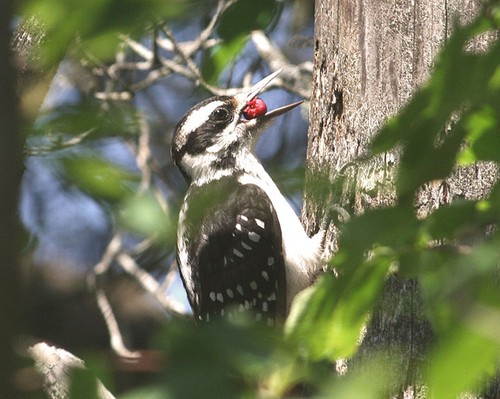
Hairy Woodpecker
23-26 cm (9-10 in) long, 33-41 cm wingspan