
Gila Woodpecker Identification Guide
A signature bird of the saguaro desert, the Gila Woodpecker shows a plain tan head and body with a zebra-striped back, and males sport a small red crown patch.
Read the full Gila Woodpecker encyclopedia entry →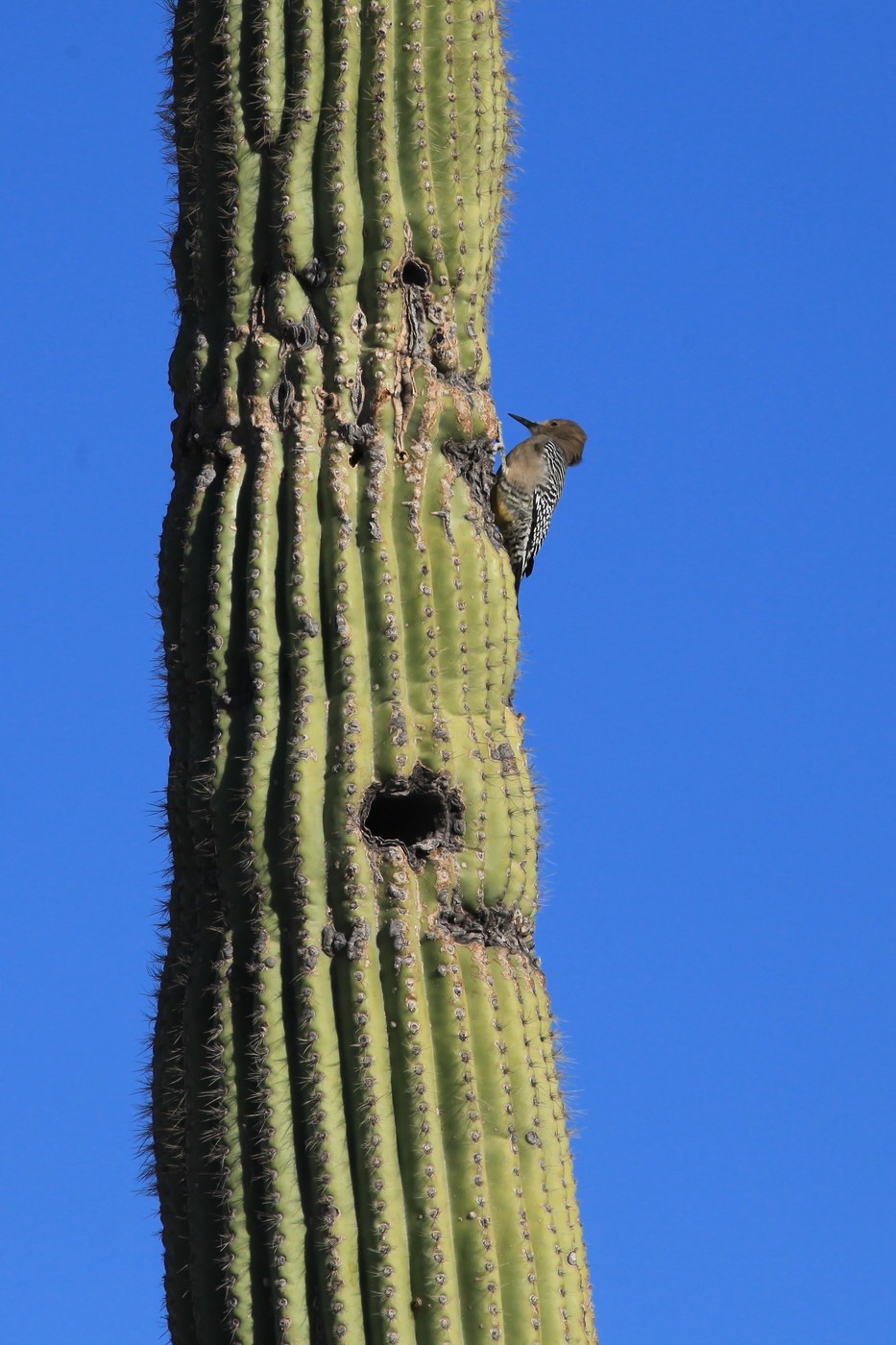
Key Field Marks
- Size: A medium-sized woodpecker, about 20–23 cm (8–9 in) long.
- Head and underparts: Plain tan to grayish-tan with no strong facial pattern — a key feature separating it from many other woodpeckers.
- Back and wings: Bold black-and-white barring ("zebra-backed") across the back, wings, and tail.
- Male: Small, neat red patch on the crown; females lack this red patch entirely, showing a fully plain tan head.
- Bill: Straight, chisel-shaped, gray-black.
Separating It From Similar Species
- Gilded Flicker is larger, with brown (not tan) barred upperparts, a spotted (not plain) breast, a black crescent bib, and males show a red mustache stripe rather than a red crown patch — plus obvious yellow flight feather shafts in flight.
- Ladder-backed Woodpecker is much smaller with a strongly patterned black-and-white face and barred underparts, unlike the plain tan underparts of Gila Woodpecker.
- The combination of a plain tan head/breast with a zebra-barred back and (in males) a small red crown spot is diagnostic for Gila Woodpecker within its range.
Where and When to Find It
- Habitat: Sonoran Desert with saguaro cacti, desert riparian woodland, and increasingly urban/suburban desert gardens with palms and mesquites.
- Range: Resident year-round (non-migratory) in Arizona, southeastern California, and south into Sonora and Baja California, Mexico.
- Behavior: Excavates nest cavities in saguaro cacti, which later provide crucial nest sites for other desert species such as Elf Owls and other cavity nesters after the woodpeckers move on. Omnivorous, eating insects, cactus fruit, and nectar, and readily visits hummingbird feeders and orange halves at backyard feeding stations.
Voice
- Gives a rolling, harsh "churr" call and sharp, yelping "yip" notes, often heard before the bird is seen.
- Drums on resonant surfaces including saguaro trunks and, in urban areas, metal objects.
Frequently asked questions
How do you tell a male from a female Gila Woodpecker?
Males have a small, neat red patch on the crown; females lack any red and have an entirely plain tan head.
What's the difference between a Gila Woodpecker and a Gilded Flicker?
Gila Woodpecker has a plain tan head/underparts with a zebra-barred back and a small red crown patch on males; Gilded Flicker is larger, browner-barred, spotted below, with a black bib and a red mustache stripe on males.
Why are Gila Woodpeckers important to other desert birds?
They excavate nest cavities in saguaro cacti that, once abandoned, are reused by other cavity-nesting species like Elf Owls, Ash-throated Flycatchers, and Purple Martins.
Where do Gila Woodpeckers live?
They are year-round residents of the Sonoran Desert in Arizona, southeastern California, and northwestern Mexico, closely tied to saguaro cactus habitat.