
Gambel's Quail
Callipepla gambelii
A desert-adapted quail closely related to the California Quail, distinguished by its plain buffy belly and chestnut side patches.
- Size
- 24-28 cm (9.5-11 in) long, 33-38 cm wingspan
- Habitat
- desert scrub, mesquite thickets, and washes
- Type
- gamebird
Spotted a bird like this?
Identify any bird from a photo, free.
Overview
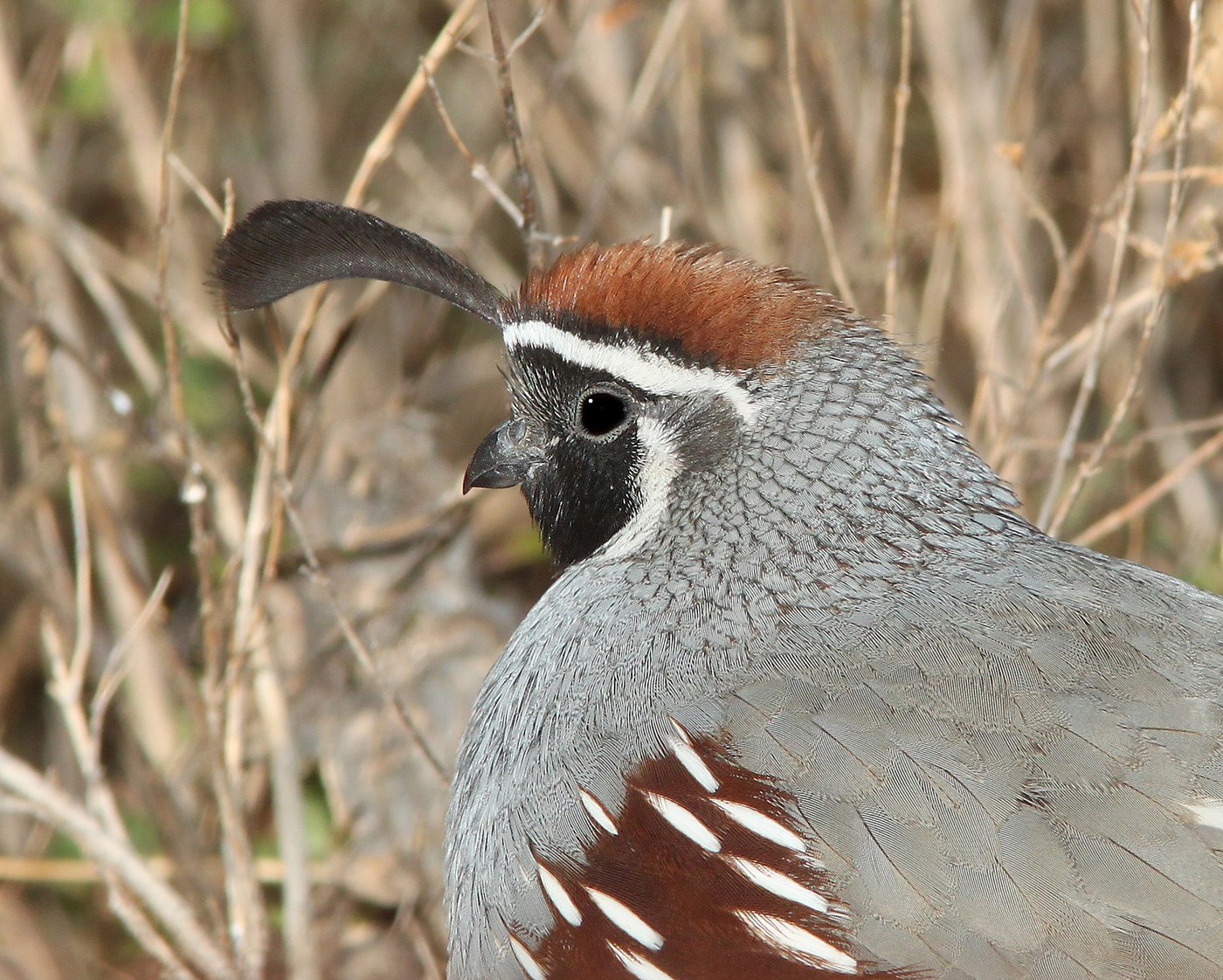
Gambel's Quail is the characteristic quail of the hot, arid deserts of the American Southwest, well adapted to life with little standing water. Like its close relative, the California Quail, males sport a forward-drooping black head plume, but Gambel's Quail is distinguished by a black face patch bordered in white, a chestnut cap, chestnut patches streaked with white along the flanks, and a plain buffy belly lacking the scaled pattern of the California Quail. Females are duller grayish-brown with a smaller plume and lack the bold facial markings.
How to identify it
Key Field Marks
- Forward-drooping black head plume, similar to California Quail
- Male: black face patch bordered in white, chestnut cap, chestnut flank patches streaked with white
- Plain buffy belly, without the scaled pattern of the California Quail
- Female: plainer grayish-brown with a smaller plume
Similar Species
- California Quail has a scaled black-and-white belly pattern and a bluish-gray chest, unlike Gambel's plain buffy belly.
- Scaled Quail has a white, bushy crest instead of a curved plume and an overall scaled body pattern.
Habitat & range
Habitat
Gambel's Quail favor desert scrub, mesquite and cactus thickets, and washes with dense shrubby cover, typically at lower, hotter elevations than related species.
Range
They are found throughout the Sonoran, Mojave, and Chihuahuan Deserts of the southwestern United States, including Arizona, southern California, Nevada, New Mexico, and western Texas, extending into northwestern Mexico.
Migration
Gambel's Quail are nonmigratory, remaining resident year-round within their desert range, well adapted to surviving with minimal free water by obtaining moisture from succulent vegetation and insects.
Behavior & voice
Behavior
Like other quail, Gambel's Quail are highly social, forming coveys outside the breeding season and preferring to run rather than fly when disturbed.
Voice
The distinctive call is a loud, descending "chi-CA-go-go" or similar cackling series, used to keep covey members in contact and during territorial disputes.
Feeding
They forage on the ground for seeds, leaves, cactus fruit (notably from prickly pear and cholla), and insects, well adapted to extracting moisture from succulent desert plants.
Nesting
A shallow scrape lined with grass is built on the ground, often beneath a shrub or cactus for shade and cover, and successful breeding is closely tied to winter and spring rainfall, which drives the availability of food.
Frequently asked questions
How do you tell a Gambel's Quail from a California Quail?
Gambel's Quail has a plain buffy belly and chestnut flank patches, while California Quail has a scaled black-and-white belly and a bluish-gray chest; their ranges also differ, with Gambel's in the desert Southwest and California Quail along the West Coast.
How do Gambel's Quail survive in the desert without much water?
They obtain much of their moisture from succulent vegetation, cactus fruit, and insects, allowing them to persist in arid habitats with little or no standing water.
What does a Gambel's Quail's call sound like?
It gives a loud, descending cackling call, often rendered as "chi-CA-go-go," used to keep covey members together.
Does rainfall affect Gambel's Quail populations?
Yes, breeding success and population numbers are closely tied to winter and spring rainfall, which determines the abundance of the seeds, greenery, and insects needed to raise young.
Gambel's Quail guides
In-depth guides for identifying, finding, and understanding Gambel's Quail.
Other birds you may enjoy
Rock Ptarmigan
34-36 cm (13-14 in) long
Congo Peafowl
Males about 64-70 cm long; females slightly smaller; no elaborate train
Willow Ptarmigan
37-42 cm (15-16.5 in) long
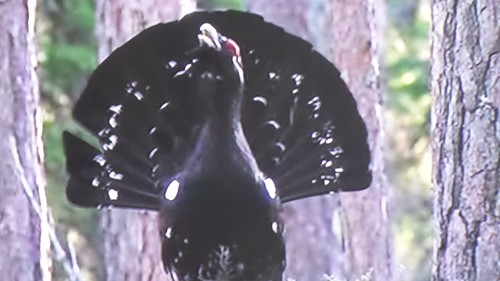
Western Capercaillie
male 74-90 cm (29-35 in), female 54-64 cm; male wingspan up to 125-130 cm
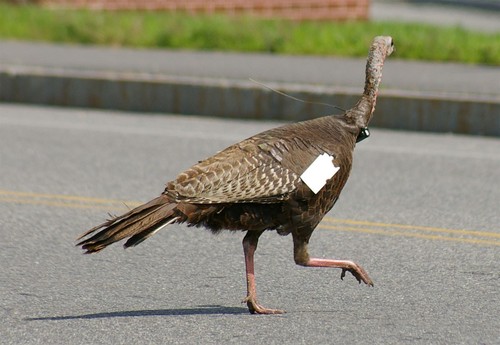
Wild Turkey
males 100-125 cm (39-49 in) long; females smaller, around 76-95 cm (30-37 in)
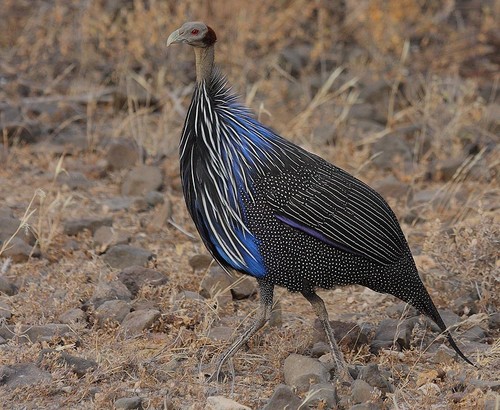
Vulturine Guineafowl
Length 61-71 cm, the largest guineafowl species, with a notably long neck and tail
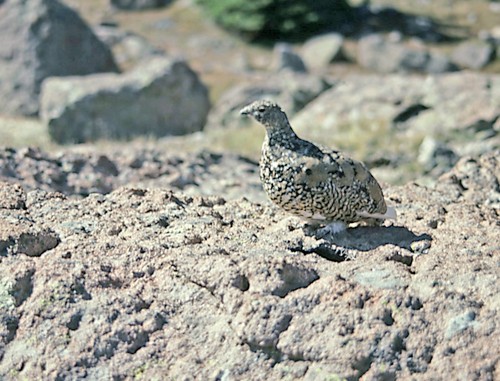
White-tailed Ptarmigan
30-33 cm (12-13 in) long; the smallest ptarmigan species
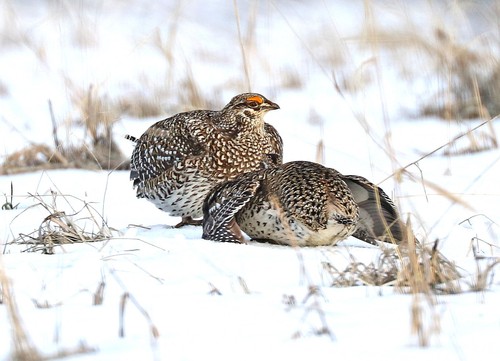
Sharp-tailed Grouse
38-48 cm (15-19 in) long
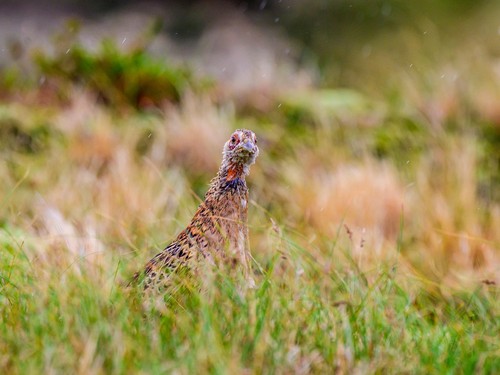
Ring-necked Pheasant
males 76-90 cm (30-35 in) long including a long tail; females smaller, 55-65 cm (22-26 in)
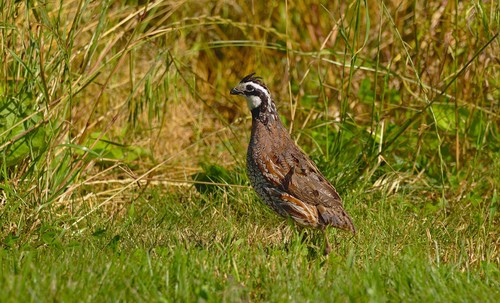
Northern Bobwhite
24-28 cm (9.5-11 in) long, 33-38 cm wingspan
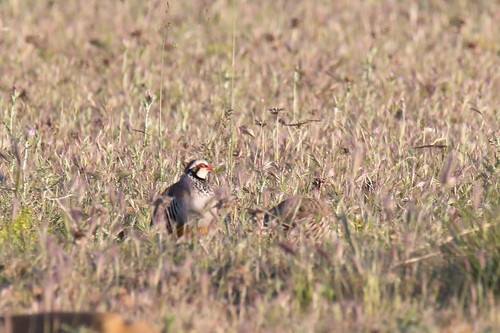
Red-legged Partridge
32-34 cm (13 in) long, 47-50 cm wingspan
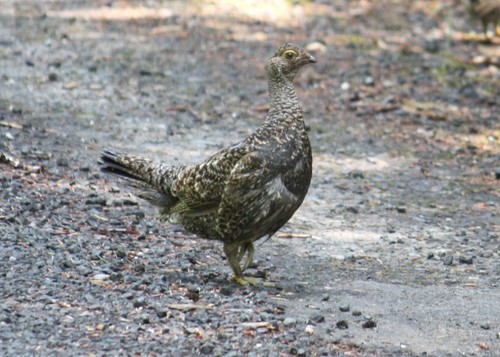
Sooty Grouse
43-48 cm (17-19 in) long; males larger than females