
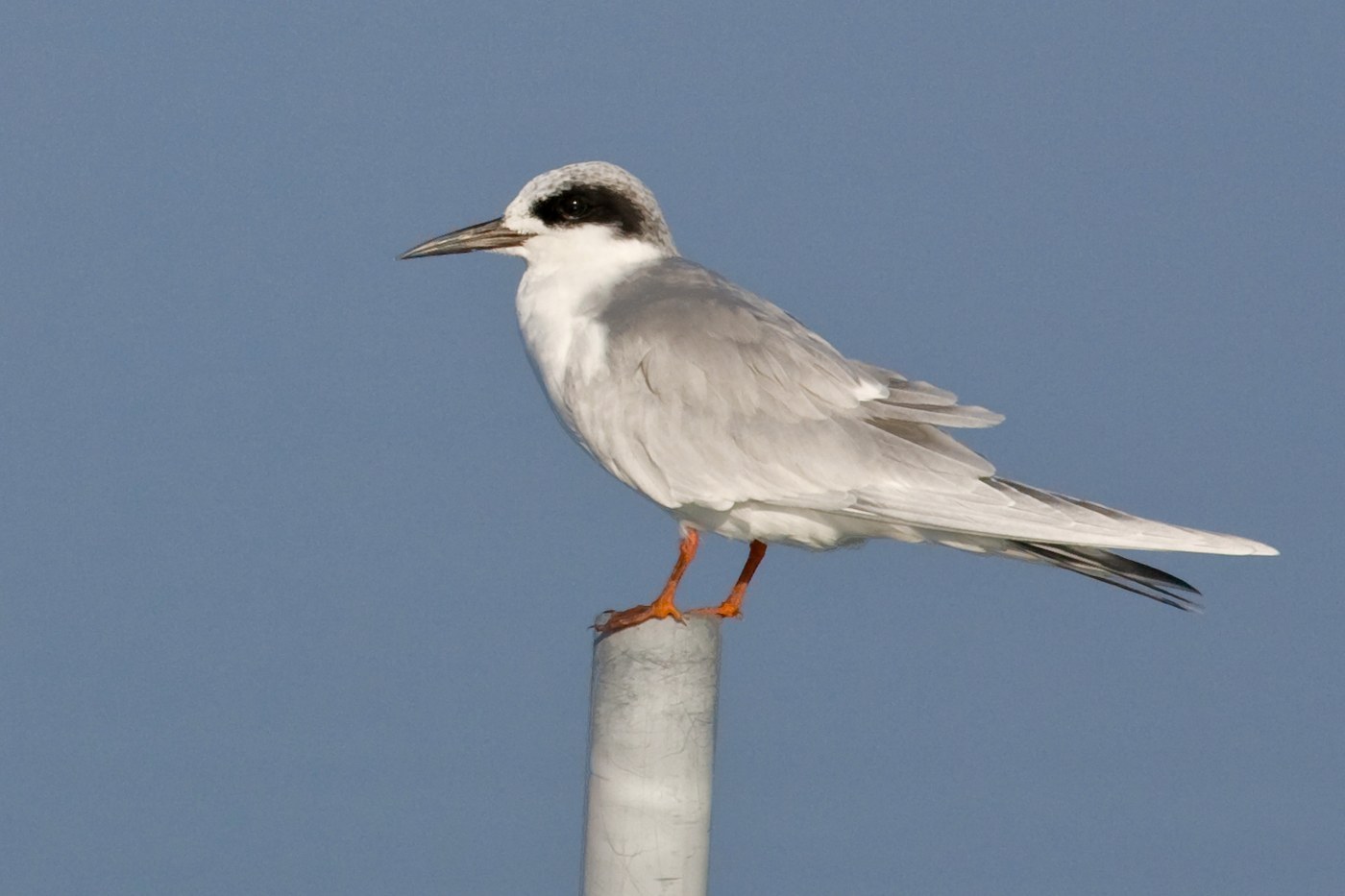
Forster's Tern
Sterna forsteri
A medium-sized tern that breeds almost entirely within North America, distinguished from the similar Common Tern by its pale, silvery wingtips and orange legs.
- Size
- 33-36 cm (13-14 in) long, 73-82 cm wingspan
- Habitat
- interior and coastal marshes
- Type
- seabird
Spotted a bird like this?
Identify any bird from a photo, free.
Overview
Forster's Tern is a medium-sized tern notable for being one of the very few tern species that breeds almost entirely within the borders of North America, nesting in both coastal and interior marshes across the continent. Breeding adults show a black cap, pale gray upperparts, white underparts, and an orange bill with a black tip, closely resembling the more widespread Common Tern.
The key distinguishing feature is the wing pattern: Forster's Tern shows pale, silvery-white primaries that lack the dark wedge typical of the Common Tern, giving the wingtips a translucent, frosty appearance in flight. The legs are orange, and the tail is deeply forked with pale outer webs.
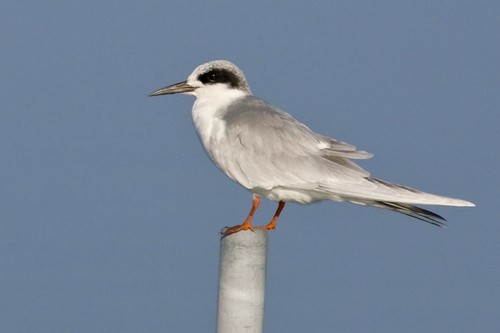
In non-breeding plumage, Forster's Tern develops a distinctive black patch through and around the eye (rather than the smudged nape patch of a winter Common Tern), a useful mark for identification during the colder months.
How to identify it
Key field marks
- Pale, silvery-white primaries lacking a dark wedge
- Orange bill with a black tip (breeding)
- Orange legs
- Distinctive black eye-patch/mask in non-breeding plumage
- Deeply forked tail with pale outer webs
Similar species
- Common Tern: shows a dark wedge on the outer primaries and a more diffuse dark smudge (not a bold patch) around the eye in winter.
- Arctic Tern: shorter legs and an entirely red bill in breeding plumage.
Habitat & range
Habitat
Breeds in both freshwater and coastal salt marshes, often nesting on floating mats of vegetation or muskrat houses; winters along coastal beaches, bays, and estuaries.
Range and migration
Breeds locally across interior wetlands of the western and central United States and Canada, as well as along the Atlantic and Gulf coasts. Winters along the southern coasts of the United States, Mexico, and the Caribbean, making it a relatively short-distance migrant compared to many other terns.
Behavior & voice
Behavior
Forster's Terns forage over marshes, lakes, and coastal waters, hovering before plunge-diving, and often nest on floating vegetation to avoid flooding and mammalian predators in marsh habitat.
Voice
Calls include a nasal, buzzy "zaap" or "kerr" note, distinct in tone from the sharper calls of Common Tern.
Feeding
Feeds mainly on small fish caught by plunge-diving, supplemented by insects, especially over freshwater marshes.
Nesting and breeding
Nests in marshes, often on floating mats of dead vegetation, muskrat lodges, or occasionally on the ground on sandy islands. Clutches typically contain two to four eggs, incubated by both parents.
Frequently asked questions
How do you tell a Forster's Tern from a Common Tern?
Forster's Tern has pale, silvery wingtips without a dark wedge and orange legs, while Common Tern shows a darker wedge on the outer primaries; in winter, Forster's Tern has a bold black eye-patch rather than a diffuse smudge.
Where does Forster's Tern breed?
It breeds almost entirely within North America, in both interior freshwater marshes and coastal salt marshes.
What does Forster's Tern eat?
Mainly small fish caught by plunge-diving, along with insects, especially over freshwater marsh habitat.
Why does Forster's Tern nest on floating vegetation?
Nesting on floating mats or muskrat houses in marshes helps protect eggs and chicks from flooding and ground predators.
Forster's Tern guides
In-depth guides for identifying, finding, and understanding Forster's Tern.
Other birds you may enjoy
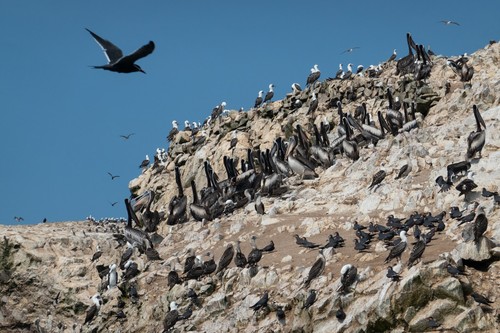
Peruvian Pelican
137-152 cm (54-60 in) long, up to 228 cm wingspan
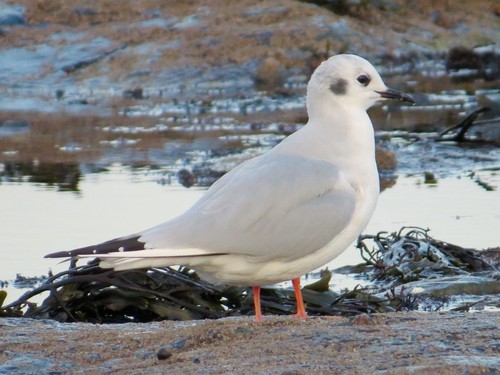
Bonaparte's Gull
28-33 cm (11-13 in) long, 76-84 cm wingspan
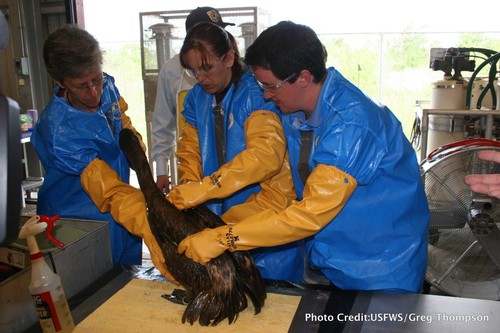
Brown Pelican
106-137 cm (42-54 in) long, 200-230 cm wingspan
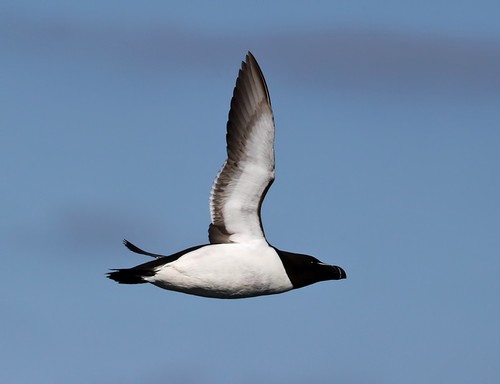
Razorbill
37-39 cm (15-15.5 in) long, 63-68 cm wingspan
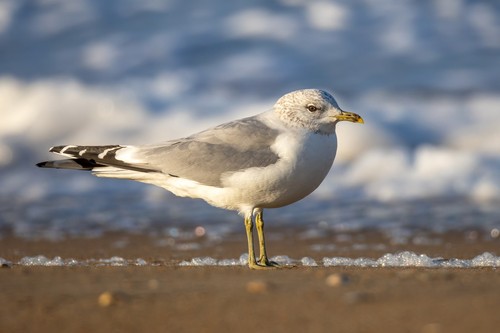
Common Gull
40-46 cm (16-18 in) long, 110-130 cm wingspan
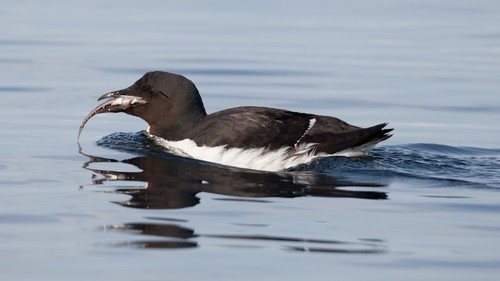
Thick-billed Murre
40-48 cm (16-19 in) long, 65-75 cm wingspan
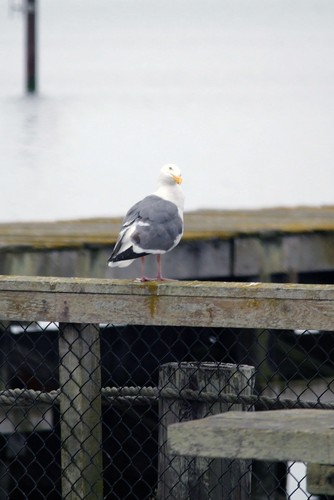
Western Gull
55-68 cm (22-27 in) long, 130-144 cm wingspan
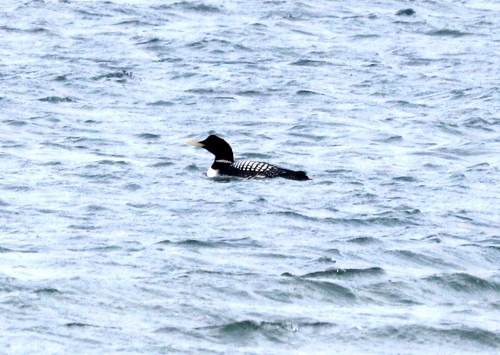
Yellow-billed Loon
76-97 cm (30-38 in) long, 135-152 cm wingspan
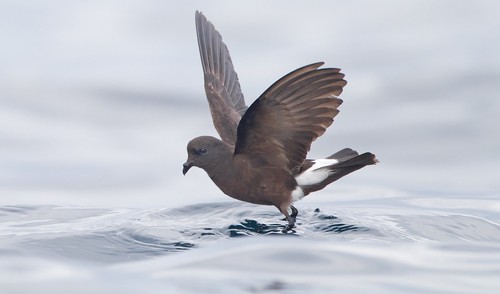
Wilson's Storm-Petrel
15-19 cm (6-7.5 in) long, wingspan 38-42 cm (15-16.5 in)
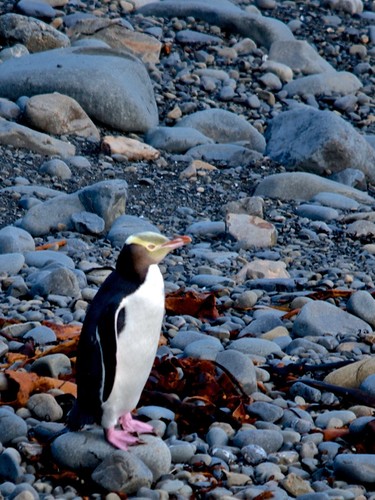
Yellow-eyed Penguin
62-79 cm (24-31 in) tall, 3-8.5 kg (6.6-18.7 lb)
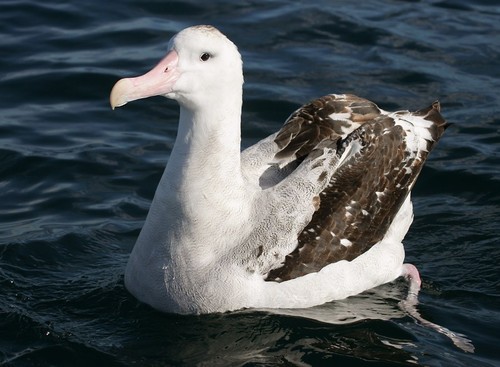
Wandering Albatross
107-135 cm (42-53 in) long, wingspan up to 3.5 m (11.5 ft)
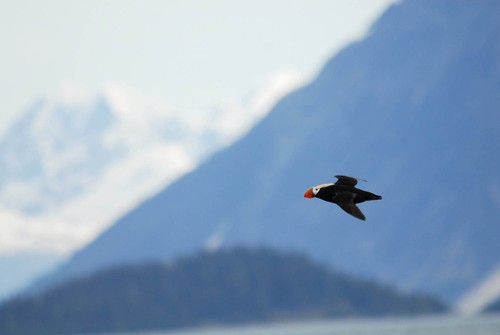
Tufted Puffin
35-41 cm (14-16 in) long, about 63-70 cm wingspan