
Forster's Tern Identification Guide
A pale, medium-sized North American tern best known for its distinctive winter plumage black eye-patch (rather than full black cap), orange-based bill, and preference for marshes over open ocean.
Read the full Forster's Tern encyclopedia entry →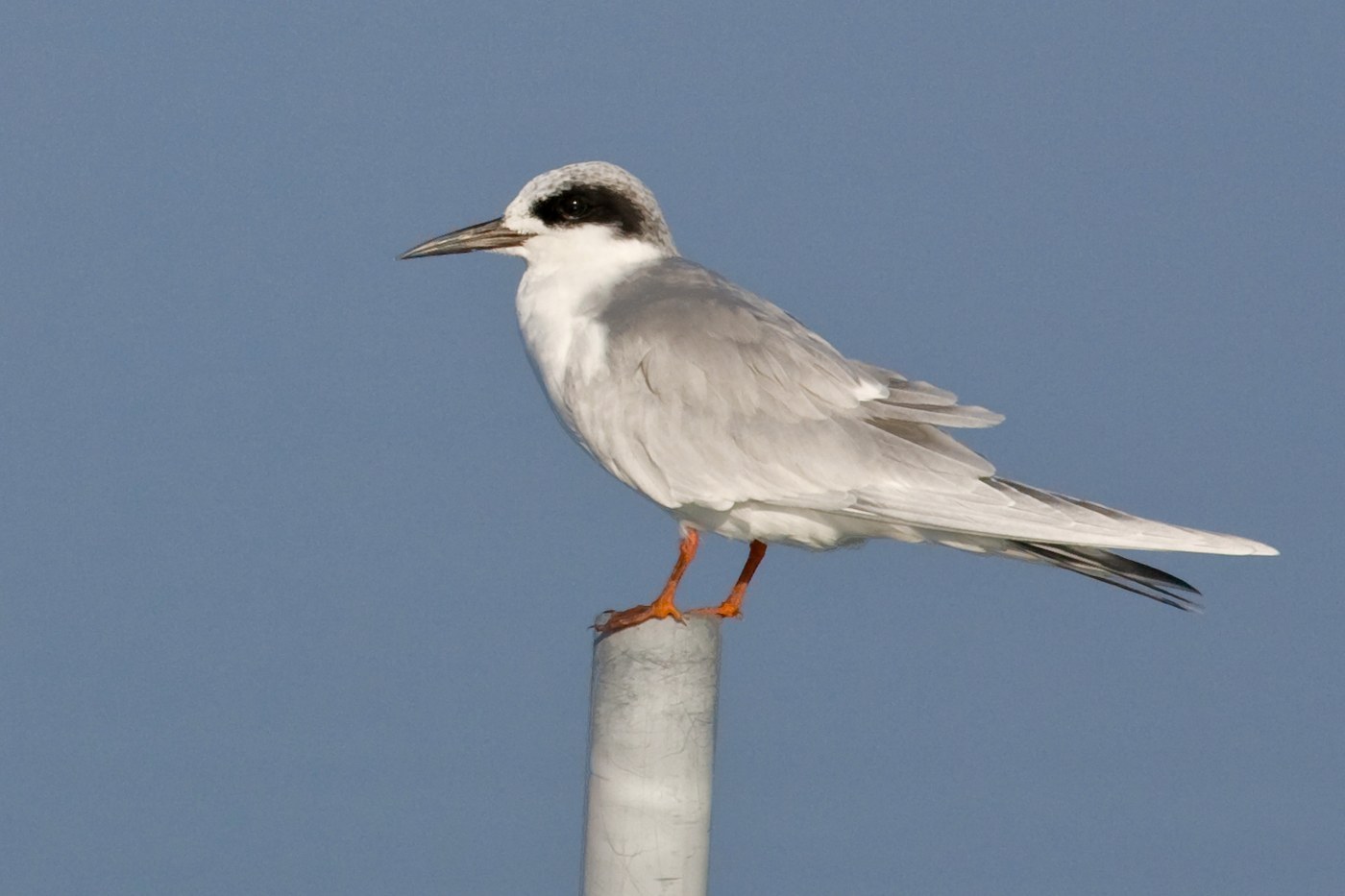
Key Field Marks
- Size & shape: A medium-sized tern, about 13-15 inches long, with a moderately deep fork in the tail and long, pointed wings.
- Breeding plumage: Pale gray back and wings, white underparts, and a full black cap; the orange bill has a black tip.
- Non-breeding plumage: The signature field mark — a black patch confined to and behind the eye (a "bandit mask"), rather than a full black cap, with the rest of the head white. This is the single best way to distinguish it from similar terns in winter plumage.
- Wings in flight: Primaries look pale and silvery, frosty white above, distinctly paler than the frosty gray body — a useful flight ID feature, especially in fall.
- Legs & bill: Orange-red legs; bill is orange with a black tip in breeding season, becoming mostly black in winter.
Similar Species
- Common Tern in winter plumage retains more black on the rear crown/nape (not just an eye-patch) and shows a dark carpal bar on the wing that Forster's Tern lacks; Common Tern's primaries look darker, not frosty.
- Arctic Tern has shorter legs, a more uniformly gray body with less white contrast, and translucent (not frosty white) primaries.
- The eye-only black patch in non-breeding/winter plumage is the most reliable mark separating Forster's Tern from all regularly confused Sterna terns.
Where & When to See It
- Range: Breeds locally across interior and coastal wetlands of North America, from the Prairie Pothole region to Gulf Coast and Atlantic and Pacific coastal marshes; winters along the southern U.S. coasts, Mexico, and Central America.
- Habitat: Strongly associated with salt and freshwater marshes, unlike many terns that prefer open ocean or barrier beaches; nests on marsh vegetation, mudflats, or floating debris.
- Season: Present as a breeder in summer across much of its range; a common winter resident along the Gulf Coast, southern Atlantic, and southern Pacific coasts.
Voice & Behavior Cues
- Calls are harsh and grating, often described as a nasal "zaap" or "kerr," lower and buzzier than the calls of Common Tern.
- Forages by hovering and plunge-diving for small fish over marsh channels and shallow bays, typically staying closer to marsh habitat than open-water terns.
Frequently asked questions
How do I identify a Forster's Tern in winter plumage?
Look for a black patch confined to the eye area (a bandit mask) rather than a full black cap — this is the clearest distinction from Common and Arctic Terns in non-breeding plumage.
What habitat is Forster's Tern most associated with?
Unlike many terns, it favors salt and freshwater marshes over open ocean, both for breeding and much of its wintering range.
How can I separate Forster's Tern from Common Tern in flight?
Forster's Tern shows frosty white primaries that look paler than the body, while Common Tern's primaries appear darker with a visible dark carpal bar.
When and where can I see Forster's Terns in winter?
They winter commonly along the Gulf Coast, southern Atlantic coast, and southern Pacific coast of North America, often over marshes and bays.