
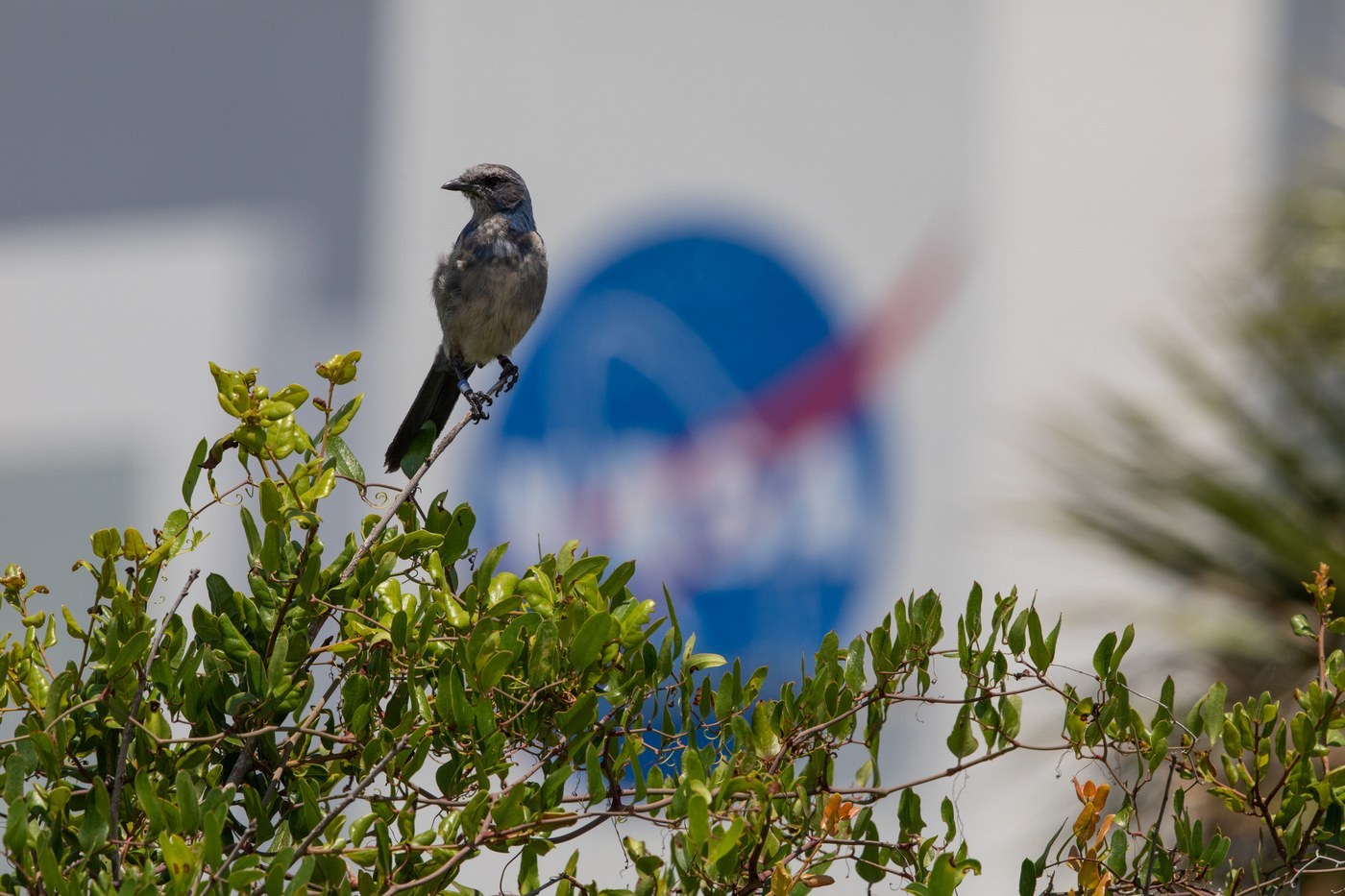
Florida Scrub-Jay
Aphelocoma coerulescens
A crestless blue-and-gray jay found nowhere in the world except Florida's rapidly shrinking scrub-oak habitat.
- Size
- 28-31 cm (11-12 in) long, 34-36 cm wingspan
- Habitat
- fire-maintained scrub oak habitat found only in peninsular Florida
- Type
- songbird
Spotted a bird like this?
Identify any bird from a photo, free.
Overview
The Florida Scrub-Jay is North America's only bird species restricted entirely to Florida, and one of the most range-limited birds in the continental United States. It shows soft blue upperparts, a pale gray back, a white-streaked throat, and a blue necklace across a whitish breast, with no crest. Once considered part of a wider "Scrub Jay" complex, it was recognized as a full species distinct from the western scrub-jays.
This jay depends on fire-maintained oak scrub, a habitat that has been drastically reduced by development and fire suppression, making the species a conservation priority and a symbol of Florida's imperiled scrub ecosystem.
How to identify it
Key Field Marks
- Blue head, wings, and tail with a contrasting pale gray-brown back
- Whitish throat streaked with fine blue, bordered by a blue necklace band across the upper breast
- No crest; pale grayish underparts
- Often seen perched conspicuously atop low scrub oaks
Similar Species
- Woodhouse's Scrub-Jay and California Scrub-Jay are nearly identical in plumage but occur far to the west and do not overlap in range with the Florida Scrub-Jay.
- Blue Jay, which does overlap in range, has a prominent crest, black necklace, and white wing bars, unlike the crestless Florida Scrub-Jay.
Habitat & range
Florida Scrub-Jays are restricted entirely to scrub habitat on the sandy ridges of peninsular Florida, dominated by low, fire-adapted scrub oaks kept short by periodic wildfire. This specialized habitat has been drastically reduced by agriculture and development, and today the species survives mainly in protected reserves and remaining patches of native scrub in central Florida.
The species is non-migratory and highly territorial, with family groups occupying and defending the same scrub patch for years.
Behavior & voice
Voice
Gives harsh, rasping calls including a repeated queedle or kesh and various scolding notes used in territorial and alarm contexts.
Feeding
Forages on the ground and in low scrub for acorns, insects, and small vertebrates; caches thousands of acorns each fall, burying them individually in sandy soil and relocating many later by memory.
Nesting
Breeds cooperatively, with family groups including non-breeding helpers, typically offspring from prior years, that assist in feeding young and defending the territory against predators such as snakes.
Frequently asked questions
Where can I find a Florida Scrub-Jay?
This species occurs only in Florida, in patches of fire-maintained scrub oak habitat, primarily in central Florida reserves such as those in Highlands, Brevard, and Polk counties.
Why is the Florida Scrub-Jay considered vulnerable?
Loss of its specialized scrub-oak habitat to development and agriculture, along with fire suppression that allows scrub to overgrow, have caused significant population declines.
How do you tell a Florida Scrub-Jay from a Blue Jay?
The Florida Scrub-Jay lacks a crest and has plain blue-and-gray plumage with a blue necklace, while the Blue Jay has a prominent crest, black necklace, and white wing markings.
Do Florida Scrub-Jays live in family groups?
Yes, they are cooperative breeders that live in extended family territories, with helper birds assisting the breeding pair in raising young.
Florida Scrub-Jay guides
In-depth guides for identifying, finding, and understanding Florida Scrub-Jay.
Other birds you may enjoy

Black Redstart
13-14.5 cm (5.1-5.7 in) long, 23-26 cm wingspan

Black-throated Sparrow
12-14 cm (4.7-5.5 in) long, about 19-20 cm (7.5-8 in) wingspan

Greater Bird-of-paradise
Body about 43 cm; males with additional flank plumes up to 50 cm and long tail wires

Blue Tit
11-12 cm (4.3-4.7 in) long, 17-20 cm wingspan

Red-billed Quelea
11.5–13 cm long, wingspan about 20–22 cm
White-plumed Antbird
13-14 cm (5-5.5 in) long

Pyrrhuloxia
19-22 cm (7.5-8.7 in) long, 30 cm wingspan

Blue-gray Tanager
16-18 cm (6-7 in) long

Blackburnian Warbler
11-13 cm (4.3-5.1 in) long, 20-22 cm wingspan

Bluethroat
13-14 cm (5.1-5.5 in) long, 20-22 cm wingspan

Eurasian Nuthatch
12-14.5 cm (4.7-5.7 in) long, 22.5-27 cm wingspan

Wood Thrush
19-21 cm (7.5-8.3 in) long, about 33 cm (13 in) wingspan