
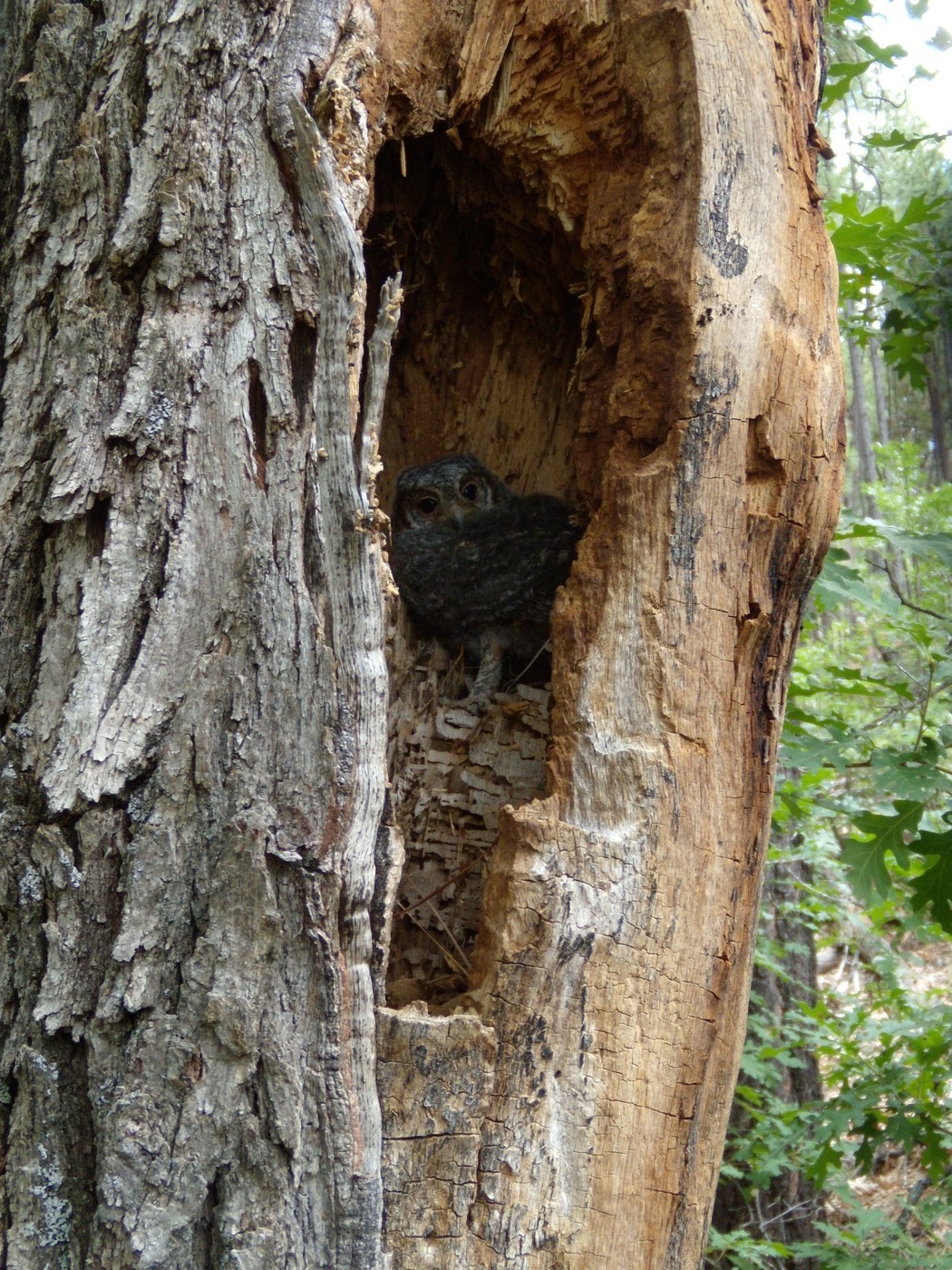
Flammulated Owl
Psiloscops flammeolus
A tiny, dark-eyed, migratory owl of western pine forests whose deep, ventriloquial hoot belies its diminutive size.
- Size
- 15-17 cm (6-6.7 in) long, 35-38 cm wingspan
- Habitat
- open montane pine forests, especially with mature ponderosa pine
- Type
- owl
Spotted a bird like this?
Identify any bird from a photo, free.
Overview
The Flammulated Owl is one of North America's smallest owls, barely larger than a sparrow, yet it produces a surprisingly deep, low-pitched call that seems to come from a much larger bird. It has small, indistinct ear tufts, dark brown or black eyes rather than the yellow eyes typical of most owls, and cryptic gray or reddish-brown plumage mottled to resemble tree bark.
Two color morphs occur - a grayer morph and a more rufous "flammulated" (flame-colored) morph, the latter giving the species its name. Its small size and rich camouflage make it extraordinarily difficult to spot even when calling from close range.
As one of the few truly migratory North American owls, wintering entirely in Mexico and Central America, it is almost exclusively insectivorous, a trait shared by few other owl species.
How to identify it
Key Field Marks
- Very small size with short, often barely visible ear tufts
- Dark brown/black eyes (not yellow)
- Cryptic gray or rufous mottled plumage resembling bark
- Deep, low hoot that sounds disproportionately large for the bird's size
Similar Species
- Western Screech-Owl is larger with yellow eyes and more prominent ear tufts.
- Northern Pygmy-Owl has yellow eyes, a longer tail, and lacks ear tufts, and is diurnal rather than strictly nocturnal.
- The combination of tiny size, dark eyes, and a deep, far-carrying hoot is diagnostic.
Habitat & range
Flammulated Owls breed in open, mature montane forest dominated by ponderosa pine or other pines mixed with oak, typically at mid to high elevations in western North America, from British Columbia south through the Rocky Mountains and interior ranges to Mexico. They are almost entirely absent from lowland or dense closed-canopy forest.
This species is a long-distance migrant, wintering in pine-oak forests of Mexico and Central America, and arrives on breeding grounds relatively late in spring once insect prey becomes abundant.
Behavior & voice
Behavior
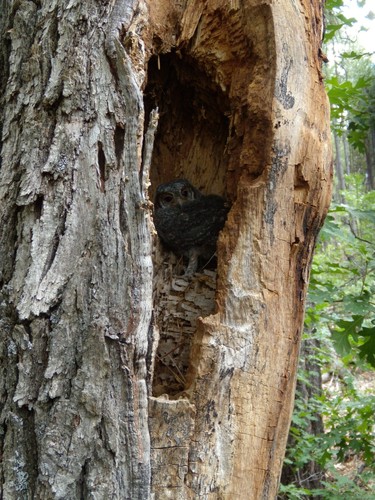
Strictly nocturnal and highly secretive, Flammulated Owls are far more often heard than seen, calling from dense cover high in pines. They are notoriously difficult to locate visually due to their small size and cryptic plumage.
Voice
The male's song is a soft, low, evenly spaced single or double hoot, "boop" or "boo-boot," repeated at intervals; the low pitch is deceptive given the bird's tiny size and can carry surprisingly far through open pine forest.
Feeding
Unlike most owls, this species feeds almost exclusively on insects, especially moths, beetles, and crickets, caught in flight or gleaned from foliage and bark at night.
Nesting & Breeding
Flammulated Owls nest in old woodpecker cavities, particularly those made by flickers, laying 2-4 eggs. Because they depend entirely on insect prey, they are among the last owls to arrive in spring and the first to depart in fall.
Frequently asked questions
Why does such a small owl have such a deep call?
The Flammulated Owl's low, resonant hoot is disproportionate to its tiny body size, an adaptation that likely makes it harder for predators to judge its true size and location.
What does a Flammulated Owl eat?
It feeds almost entirely on insects such as moths, beetles, and crickets, unlike most owls which rely heavily on small mammals.
Does the Flammulated Owl migrate?
Yes, it is one of the few fully migratory North American owls, breeding in western mountain pine forests and wintering in Mexico and Central America.
Why is the Flammulated Owl hard to see?
Its tiny size, cryptic bark-like plumage, and habit of calling from dense cover high in pines make it one of the most difficult North American owls to spot, even when heard clearly.
Flammulated Owl guides
In-depth guides for identifying, finding, and understanding Flammulated Owl.
Other birds you may enjoy
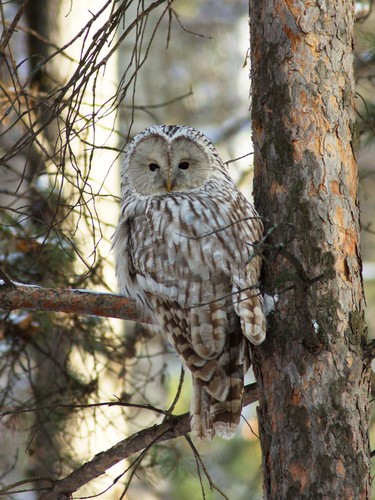
Ural Owl
50-62 cm long, wingspan about 1.0-1.3 m
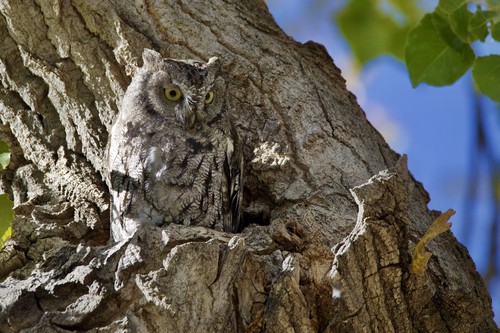
Western Screech-Owl
19-25 cm (7.5-10 in) long, about 55 cm (21.5 in) wingspan
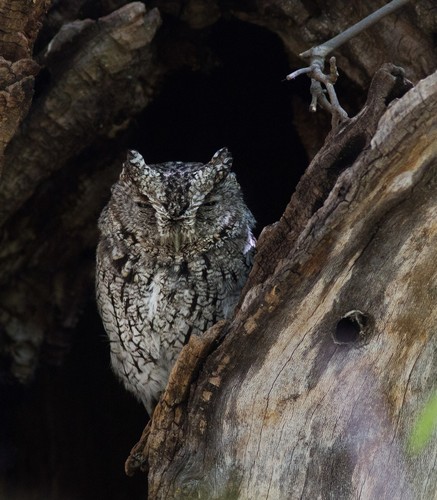
Whiskered Screech-Owl
17-19 cm (6.7-7.5 in) long, 43 cm wingspan
Tawny Owl
37-43 cm (15-17 in) long, 81-96 cm wingspan
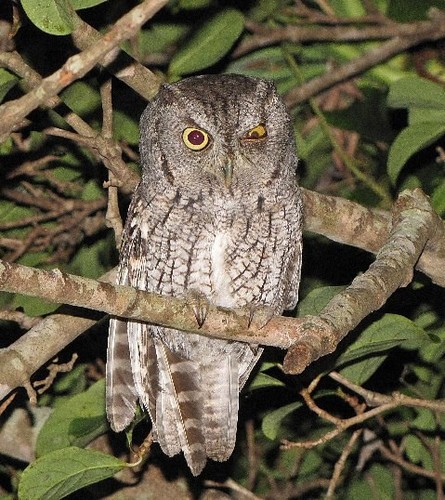
Screech Owl
16-25 cm long, wingspan about 46-61 cm
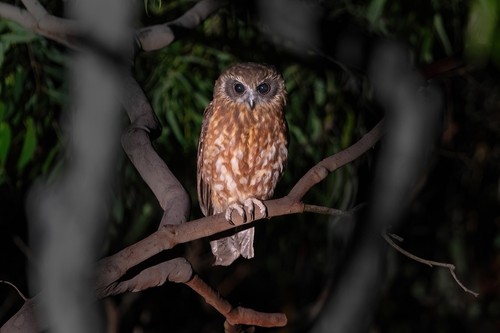
Southern Boobook
27-36 cm (11-14 in) long
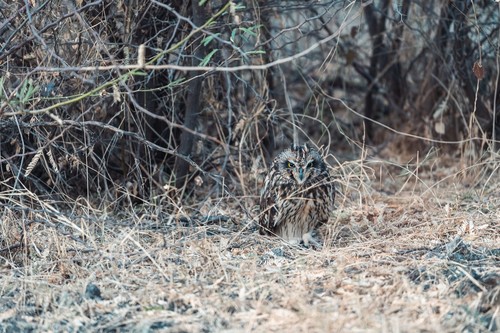
Short-eared Owl
34-42 cm (13-17 in) long, 85-110 cm wingspan
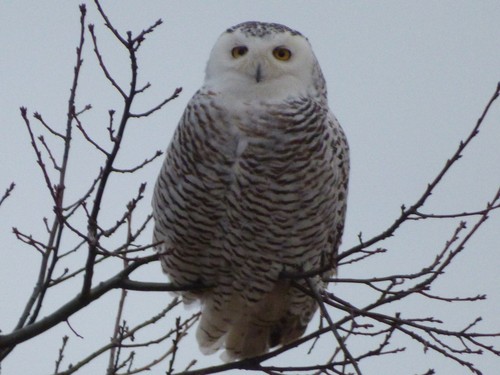
Snowy Owl
52-71 cm (20-28 in) long, 125-150 cm (49-59 in) wingspan
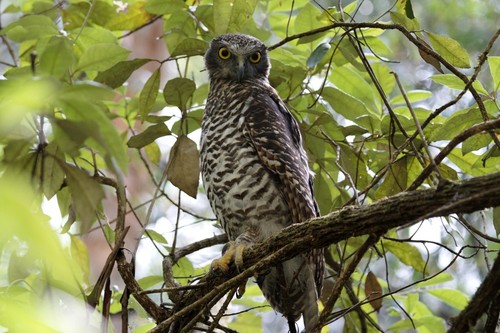
Powerful Owl
60-65 cm (24-26 in) long, 112-135 cm (44-53 in) wingspan
Northern Saw-whet Owl
18-21 cm (7-8.5 in) long, 42-56 cm (17-22 in) wingspan
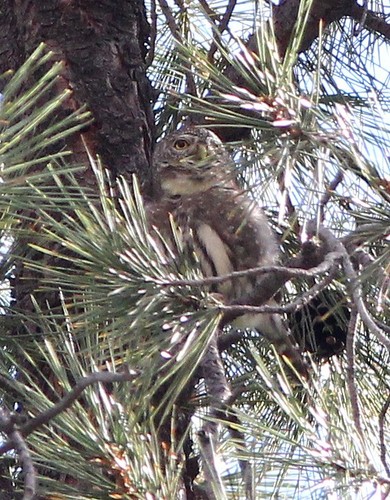
Northern Pygmy-Owl
16-18 cm (6.3-7.1 in) long, 35-39 cm wingspan
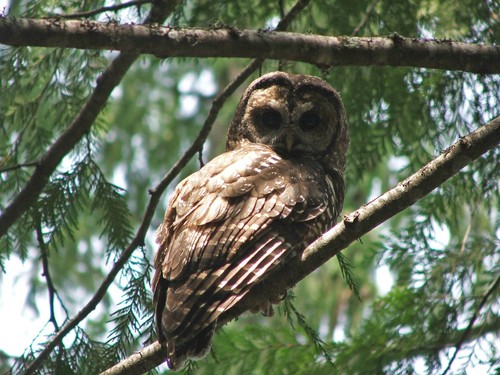
Spotted Owl
43-48 cm (17-19 in) long, 100-114 cm wingspan