
Flammulated Owl Identification Guide
A tiny, dark-eyed migratory owl of western montane pine forests, best detected by its low, ventriloquial hoots rather than by sight, since it is rarely seen well after dark.
Read the full Flammulated Owl encyclopedia entry →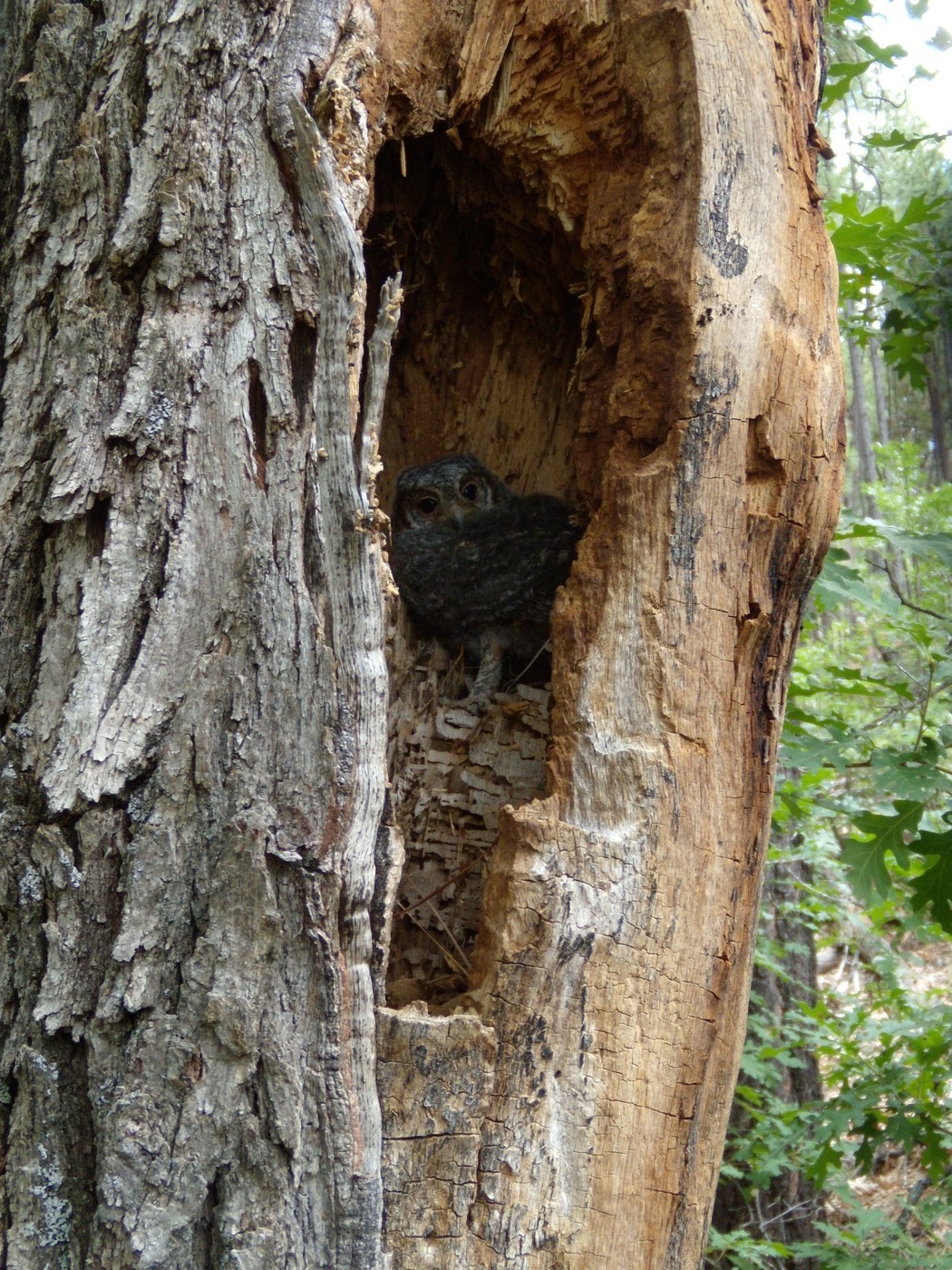
Key Field Marks
- Size: Very small owl (about 17 cm, roughly the size of a small screech-owl but slimmer and lighter), among the smallest owls in North America.
- Eyes: Dark brown/blackish eyes, unusual among small North American owls, most of which (like screech-owls) have yellow eyes — a key distinguishing feature when seen well.
- Ear tufts: Small, often barely noticeable ear tufts, much less prominent than on screech-owls.
- Plumage: Cryptic gray or reddish-brown (rufous) mottled plumage that blends seamlessly with pine bark, providing excellent camouflage against tree trunks when roosting.
- Overall impression: Compact, short-tailed, and superficially screech-owl-like in shape but smaller, darker-eyed, and far more vocal at long range than visually conspicuous.
Behavior
Strictly nocturnal and highly cryptic, roosting tight against tree trunks by day where camouflage renders it nearly invisible; almost entirely insectivorous, foraging by sallying for moths and other night-flying insects. One of the few small owls that is a true long-distance migrant, wintering in Mexico and Central America.
Similar Species
- Western Screech-Owl: Larger, with yellow eyes and more prominent ear tufts; gives a very different accelerating "bouncing ball" call series rather than the Flammulated Owl's evenly spaced hoots.
- Whiskered Screech-Owl: Also has yellow eyes and different vocalizations (rhythmic Morse-code-like series), occurring in similar montane habitat in the Southwest but easily separated by eye color and call once heard well.
- Northern Pygmy-Owl: Yellow eyes, no ear tufts, long tail, and is diurnal/crepuscular rather than strictly nocturnal, quite different in habits and structure.
Where & When to Find One
Breeds in open, mature montane pine and pine-oak forests (especially ponderosa pine) of the interior mountains of the western United States, extending south through the Mexican highlands, typically at mid- to high elevations. A summer resident on the breeding grounds from roughly April/May through September, after which the entire population migrates south to winter in Mexico and Central America — it essentially disappears from U.S. breeding areas in winter, unlike most other North American owls. Detected almost entirely by ear at dusk and after dark during the breeding season in open, park-like pine forest with a grassy or brushy understory.
Voice
Song is a low, soft, evenly spaced single or double hoot — "boop" or "boo-boot" — repeated at a slow, steady pace; the call is deceptively low-pitched and far-carrying for such a tiny bird and is notoriously ventriloquial, making the caller very difficult to pinpoint even when close, which is the primary reason most observers detect this species by ear rather than by sight.
Frequently asked questions
How do most birders detect a Flammulated Owl?
Almost entirely by ear — its low, soft, evenly spaced hooting call carries well at night but is notoriously ventriloquial and hard to pinpoint, and the owl itself is extremely cryptic and rarely seen.
What is the key visual difference between a Flammulated Owl and a screech-owl?
Flammulated Owl has dark brown/blackish eyes, while both Western and Whiskered Screech-Owls have yellow eyes; Flammulated Owl is also smaller with less prominent ear tufts.
Does the Flammulated Owl migrate?
Yes, unusually for a small owl, it is a true long-distance migrant, breeding in western U.S. mountain pine forests in summer and wintering entirely in Mexico and Central America.
What habitat should I search for a Flammulated Owl?
Open, mature montane pine or pine-oak forest, especially ponderosa pine stands with a grassy or brushy understory, typically at mid to high elevation in the interior West.
What does the Flammulated Owl's call sound like?
A low-pitched, soft, single or double "boop" or "boo-boot" hoot repeated steadily, surprisingly deep and far-carrying for such a tiny owl.