
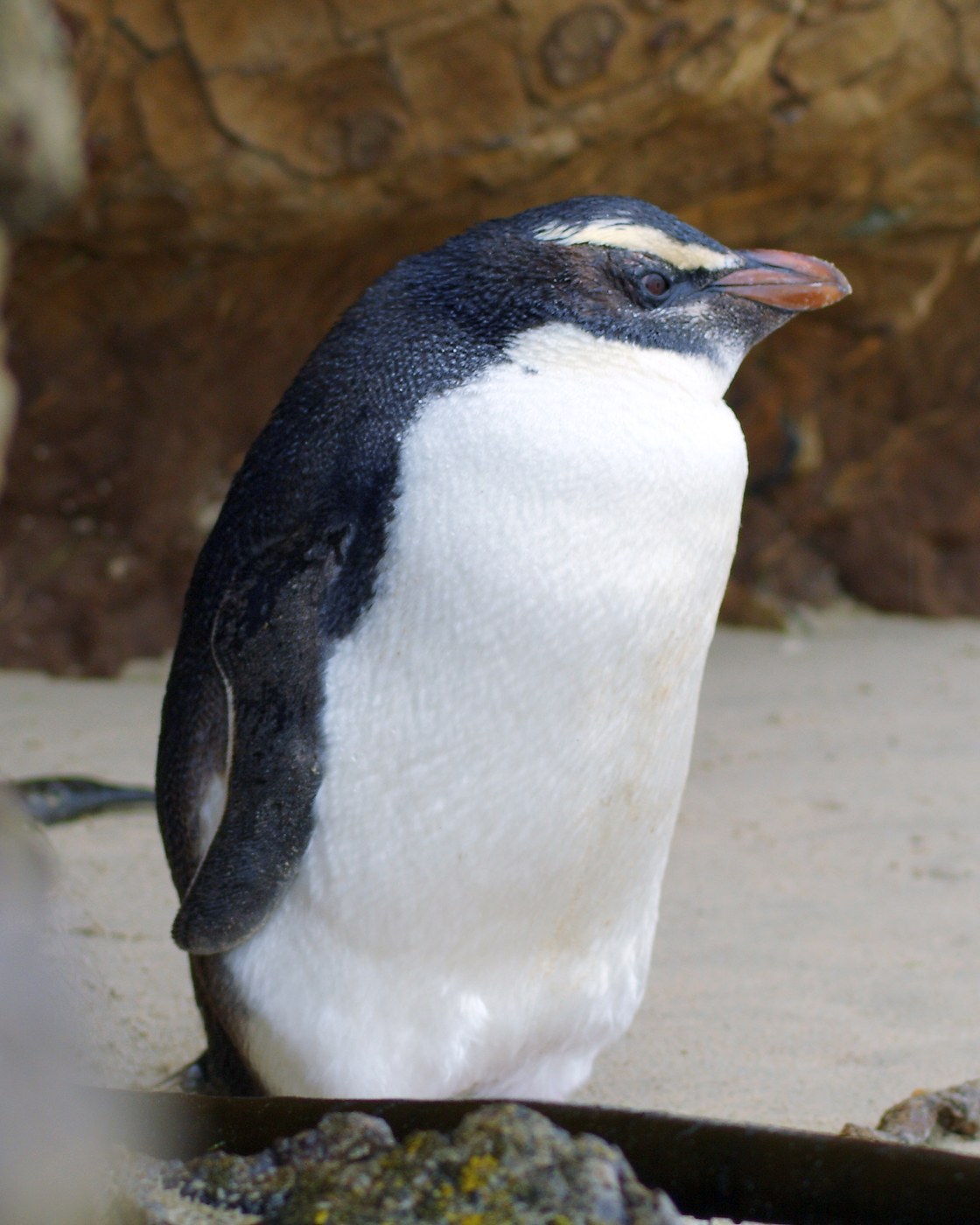
Fiordland Penguin
Eudyptes pachyrhynchus
A rare crested penguin, known as tawaki, that breeds uniquely among rainforest and rocky coastline of remote Fiordland, distinguished by its broad yellow eyebrow-stripe crest.
- Size
- 55-60 cm (22-24 in) long
- Habitat
- temperate rainforest coastline of Fiordland, southwest New Zealand, and Stewart Island; forages at sea
- Type
- seabird
Spotted a bird like this?
Identify any bird from a photo, free.
Overview
The Fiordland Penguin, called tawaki in Maori, is a medium-sized crested penguin with glossy blue-black upperparts and clean white underparts, set apart by a broad yellow stripe running from the base of the bill back over each eye to form a drooping crest at the rear of the head. Pale whitish streaks on the cheeks are another distinguishing feature of this species.
Unusually among penguins, it breeds along the rugged, densely forested coastline of Fiordland and on Stewart Island, nesting under coastal rainforest cover, in caves, or among boulders and tree roots rather than on open beaches, a reflection of the wet, temperate climate of its restricted breeding range. It remains one of the least studied and rarest penguin species due to the remoteness and difficulty of access to its breeding grounds.
How to identify it
Key field marks
- Glossy blue-black upperparts and white underparts
- Broad yellow eyebrow stripe extending back into a drooping crest
- Pale whitish streaking on the cheeks
- Large, heavy reddish-brown bill
- Pink feet
Similar species
- Snares Penguin is very similar but lacks the pale cheek streaking and has a slightly different crest shape, and breeds only on the Snares Islands, not mainland New Zealand coastline.
- Fiordland Penguin breeding under forest cover, rather than on open beaches, is itself a useful behavioral clue distinguishing it from most other penguin species encountered around New Zealand.
Habitat & range
Range
Breeds only along the remote southwest coast of Fiordland and on Stewart Island/Rakiura and nearby islands, New Zealand; disperses more widely at sea outside the breeding season, with occasional records reaching Australia.
Habitat
Unusually for a penguin, nests under dense coastal temperate rainforest, in caves, rock crevices, or among tree roots close to the shoreline, rather than on open beaches.
Migration
Birds disperse widely at sea after breeding and molting, returning to the same breeding sites in subsequent seasons.
Behavior & voice
Behavior
Comes ashore at dusk and departs before dawn during much of the breeding season, likely to avoid predators, making it a difficult species to observe; pairs are generally monogamous and reuse nest sites across years.
Voice
Gives loud, braying and trumpeting calls at colonies, particularly during arrivals, departures, and courtship displays.
Feeding
Forages at sea, diving to catch small fish, squid, and krill, sometimes traveling considerable distances from the colony to find food.
Nesting
Nests under forest cover, in caves, or among rocks and roots; typically lays two eggs, though usually only one chick survives to fledging, and both parents share incubation and chick-guarding duties.
Frequently asked questions
Why does the Fiordland Penguin nest in a rainforest?
Its breeding range in remote, wet Fiordland has dense coastal temperate rainforest right down to the shoreline, and the species has adapted to nest under this forest cover, in caves, or among tree roots rather than on open beaches.
What is the Maori name for the Fiordland Penguin?
Tawaki.
Why is the Fiordland Penguin hard to study?
Its breeding grounds are extremely remote and often inaccessible, and the birds typically come ashore at dusk and leave before dawn, making direct observation difficult.
How can you tell a Fiordland Penguin from other crested penguins?
Look for the broad yellow eyebrow stripe forming a drooping crest, combined with pale whitish streaking on the cheeks, a feature lacking in most similar species.
Fiordland Penguin guides
In-depth guides for identifying, finding, and understanding Fiordland Penguin.
Other birds you may enjoy
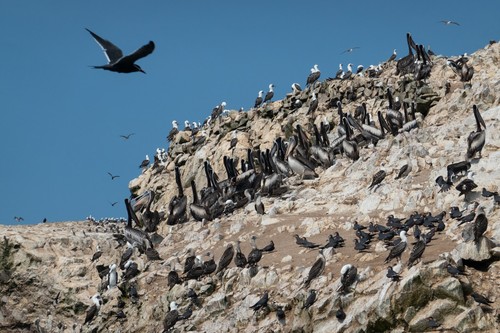
Peruvian Pelican
137-152 cm (54-60 in) long, up to 228 cm wingspan
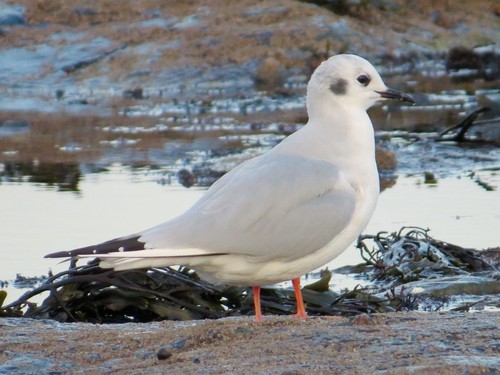
Bonaparte's Gull
28-33 cm (11-13 in) long, 76-84 cm wingspan
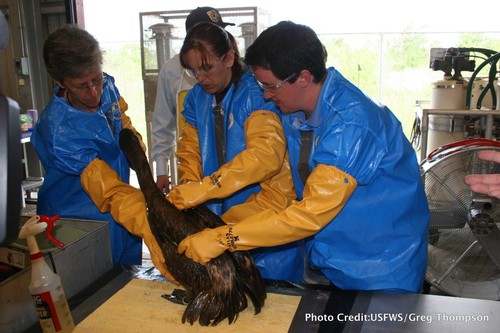
Brown Pelican
106-137 cm (42-54 in) long, 200-230 cm wingspan
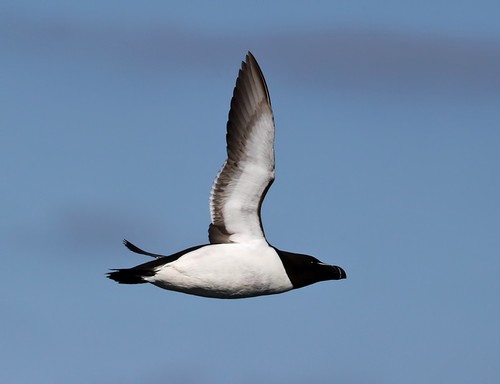
Razorbill
37-39 cm (15-15.5 in) long, 63-68 cm wingspan
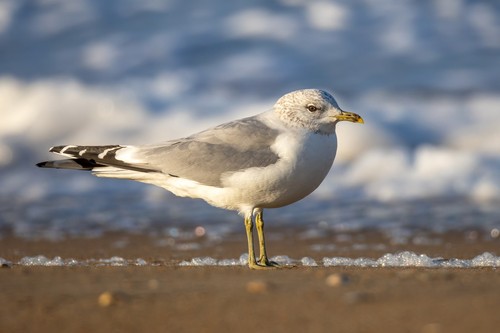
Common Gull
40-46 cm (16-18 in) long, 110-130 cm wingspan
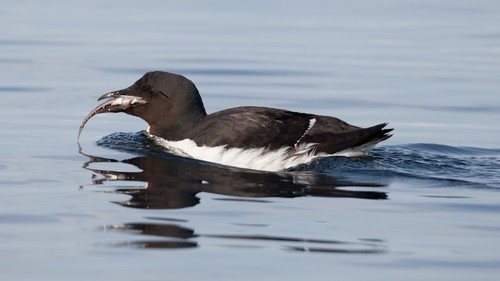
Thick-billed Murre
40-48 cm (16-19 in) long, 65-75 cm wingspan
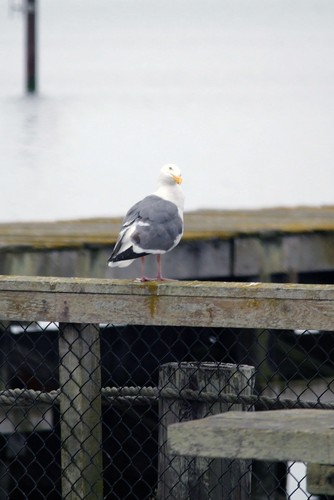
Western Gull
55-68 cm (22-27 in) long, 130-144 cm wingspan
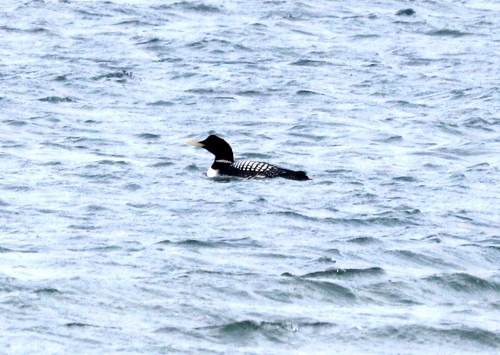
Yellow-billed Loon
76-97 cm (30-38 in) long, 135-152 cm wingspan
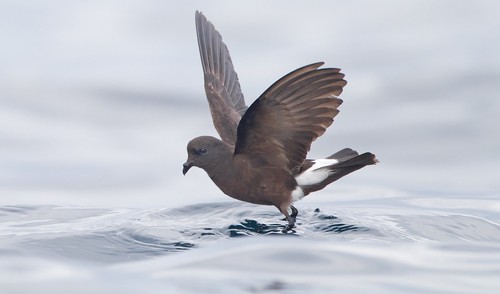
Wilson's Storm-Petrel
15-19 cm (6-7.5 in) long, wingspan 38-42 cm (15-16.5 in)
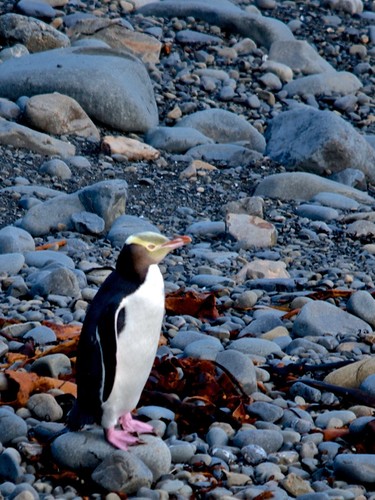
Yellow-eyed Penguin
62-79 cm (24-31 in) tall, 3-8.5 kg (6.6-18.7 lb)
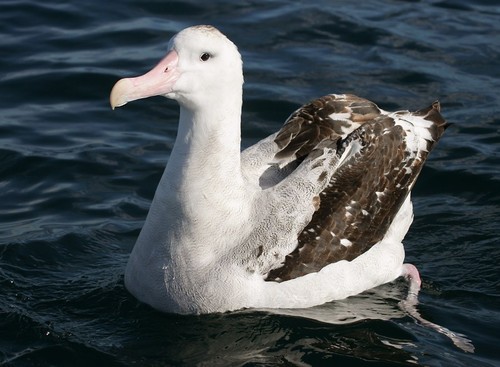
Wandering Albatross
107-135 cm (42-53 in) long, wingspan up to 3.5 m (11.5 ft)
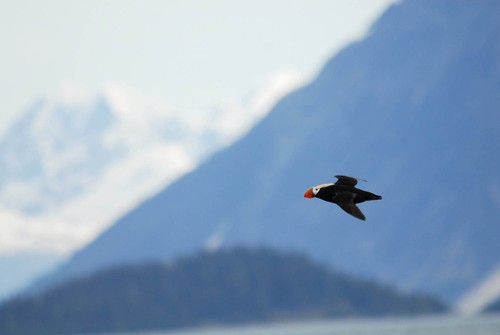
Tufted Puffin
35-41 cm (14-16 in) long, about 63-70 cm wingspan