
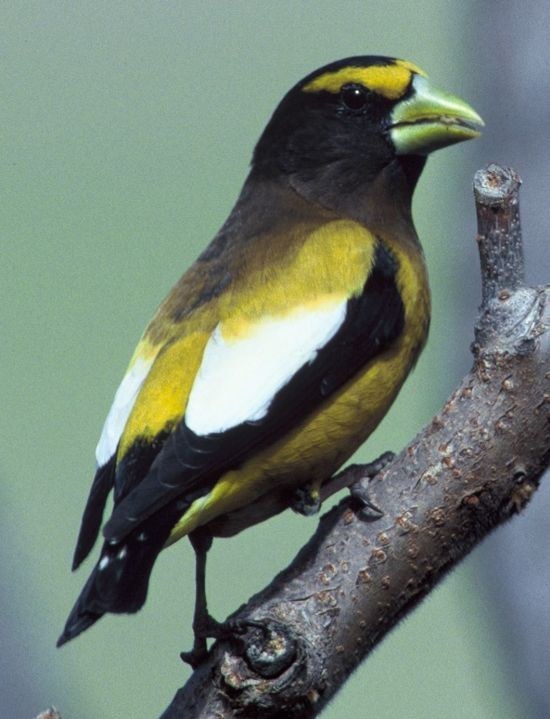
Evening Grosbeak
Hesperiphona vespertina
A bulky, big-billed finch with bold black, white, and gold plumage, once a common winter visitor to feeders but now sharply declining.
- Size
- 16-22 cm (6.3-8.7 in) long, 30-36 cm wingspan
- Habitat
- coniferous and mixed forests; visits feeders in winter
- Type
- songbird
Spotted a bird like this?
Identify any bird from a photo, free.
Overview
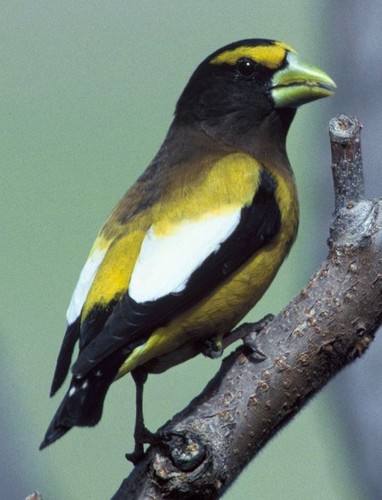
The Evening Grosbeak is a large, striking finch with an oversized, pale conical bill built for cracking heavy seeds. Adult males are bold yellow on the body with a black tail and wings crossed by large white patches, a dark brown-black head, and a bright yellow eyebrow stripe that gives a distinctive "eyebrowed" look. Females and immatures are more subdued silvery-gray with hints of yellow on the nape and flanks and the same bold black-and-white wing pattern, though less contrasty than males.
Once an abundant and conspicuous winter visitor to bird feeders across much of North America, the Evening Grosbeak has experienced one of the steepest population declines of any widespread songbird since the 1970s, attributed largely to changes in spruce budworm outbreaks (a key food source), forest management, and other factors, making sightings more special today than a few decades ago.
How to identify it
Key Field Marks
- Massive, pale ivory to greenish conical bill
- Males: golden-yellow body, black tail, black wings with large white patches, dark head with yellow forehead/eyebrow
- Females: silvery-gray overall with a yellowish nape wash and similar black-and-white wing pattern, more muted
- Short, notched black tail
- Stocky, bull-necked build
Similar Species
- American Goldfinch: much smaller and slimmer-billed, lacking the grosbeak's massive bill and bulk.
- Pine Grosbeak: rosy-red (male) or gray-olive (female), without the Evening Grosbeak's bold yellow-and-black pattern or huge pale bill.
- Cedar Waxwing: superficially similar silhouette in flight but has a crest, black mask, and red wax-tipped feathers rather than a grosbeak's massive bill.
Habitat & range
Habitat
Evening Grosbeaks breed in coniferous and mixed coniferous-deciduous forests, especially where spruce budworm outbreaks occur, and are frequently seen at bird feeders, particularly for sunflower seeds, during fall and winter.
Range
The species breeds across the boreal forest of Canada, the northeastern United States, and mountainous areas of the western United States and Mexico.
Migration
Evening Grosbeaks are irruptive migrants; in years of poor cone crops they move erratically and sometimes in large numbers well south of their breeding range, though such large irruptions have become far less frequent as the overall population has declined.
Behavior & voice
Behavior
Evening Grosbeaks are gregarious, traveling and feeding in flocks that can number from a handful to dozens of birds, often dominating feeders due to their large size and strong bills.
Voice
The call is a loud, ringing "clee-ip" or "peer," often the first sign of a flock's presence; the song is an unremarkable, short, warbled phrase rarely given.
Feeding
Diet includes tree seeds, buds, berries, and large numbers of insects such as spruce budworm caterpillars during the breeding season; the powerful bill lets them crack seeds too hard for most other finches, including box elder and sunflower seeds.
Nesting
Nests are loose, flat cups of twigs placed high in a conifer, built mainly by the female. Typically 2-5 eggs are laid, and young fledge in about two weeks, fed by both parents.
Frequently asked questions
Why have Evening Grosbeak numbers declined so much?
Populations have fallen by an estimated 90 percent or more since the 1970s, likely linked to reduced spruce budworm outbreaks, forest changes, and other still-debated factors.
What does an Evening Grosbeak eat at feeders?
They are especially fond of sunflower seeds, which their oversized bill can crack with ease, along with other large seeds and tree buds.
How can I tell a male from a female Evening Grosbeak?
Males are bright golden-yellow with a dark head and yellow eyebrow, while females are mostly silvery-gray with only a hint of yellow, though both share bold black-and-white wings.
Are Evening Grosbeaks migratory?
They are irruptive rather than strictly migratory, wandering unpredictably south of their breeding range in years when food is scarce farther north.
Where do Evening Grosbeaks nest?
They nest in coniferous and mixed forests across Canada, the northeastern U.S., and western mountains, building flat twig nests high in conifers.
Evening Grosbeak guides
In-depth guides for identifying, finding, and understanding Evening Grosbeak.
Other birds you may enjoy
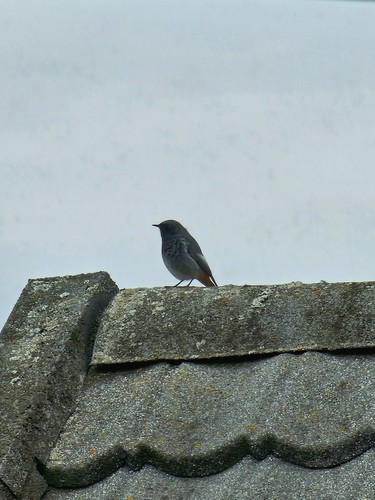
Black Redstart
13-14.5 cm (5.1-5.7 in) long, 23-26 cm wingspan
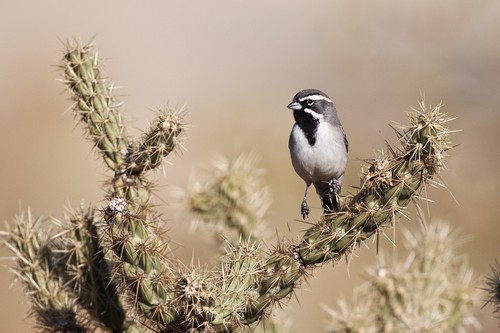
Black-throated Sparrow
12-14 cm (4.7-5.5 in) long, about 19-20 cm (7.5-8 in) wingspan
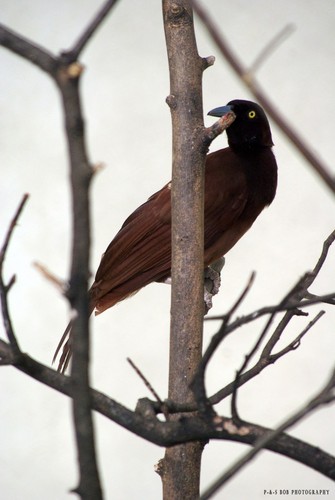
Greater Bird-of-paradise
Body about 43 cm; males with additional flank plumes up to 50 cm and long tail wires
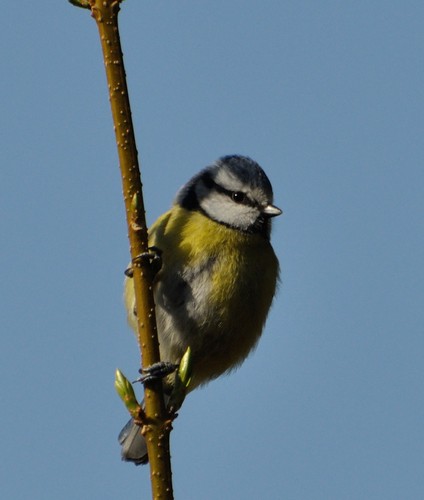
Blue Tit
11-12 cm (4.3-4.7 in) long, 17-20 cm wingspan
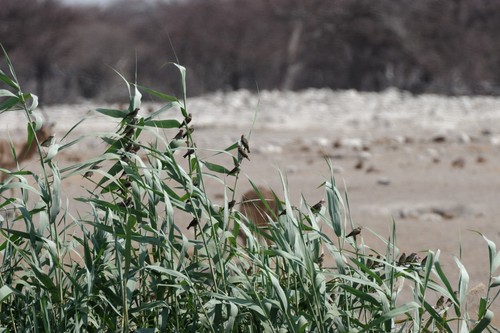
Red-billed Quelea
11.5–13 cm long, wingspan about 20–22 cm
White-plumed Antbird
13-14 cm (5-5.5 in) long
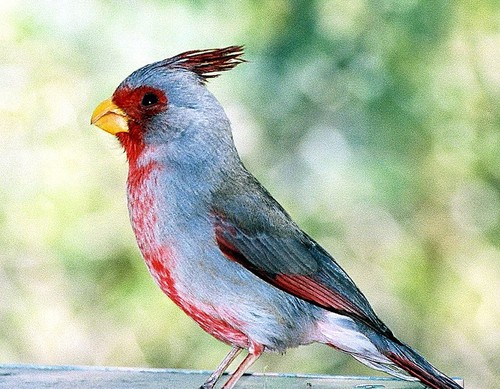
Pyrrhuloxia
19-22 cm (7.5-8.7 in) long, 30 cm wingspan
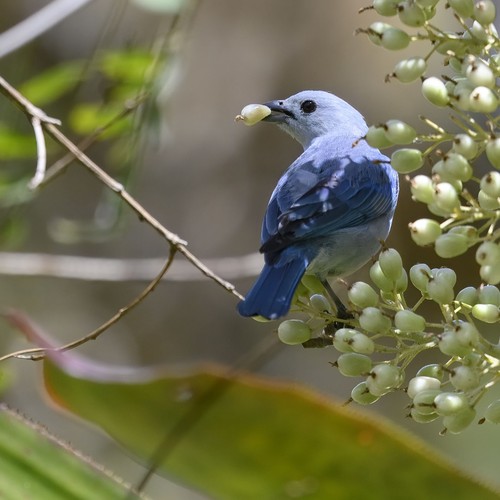
Blue-gray Tanager
16-18 cm (6-7 in) long
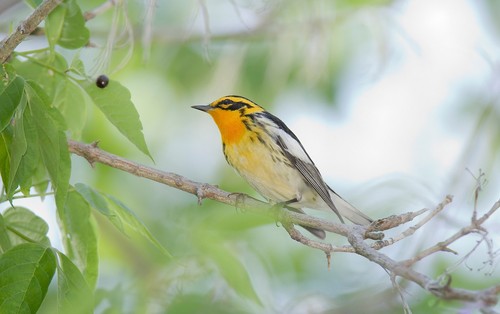
Blackburnian Warbler
11-13 cm (4.3-5.1 in) long, 20-22 cm wingspan
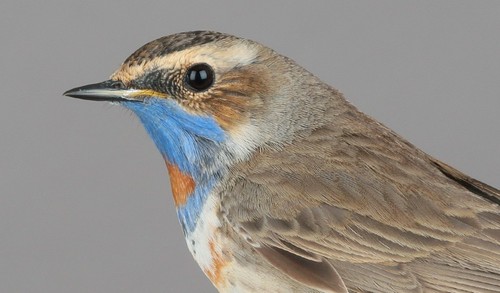
Bluethroat
13-14 cm (5.1-5.5 in) long, 20-22 cm wingspan
Eurasian Nuthatch
12-14.5 cm (4.7-5.7 in) long, 22.5-27 cm wingspan
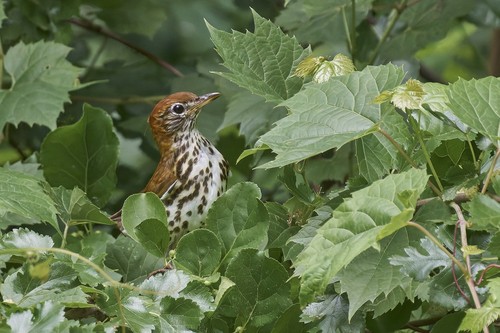
Wood Thrush
19-21 cm (7.5-8.3 in) long, about 33 cm (13 in) wingspan