
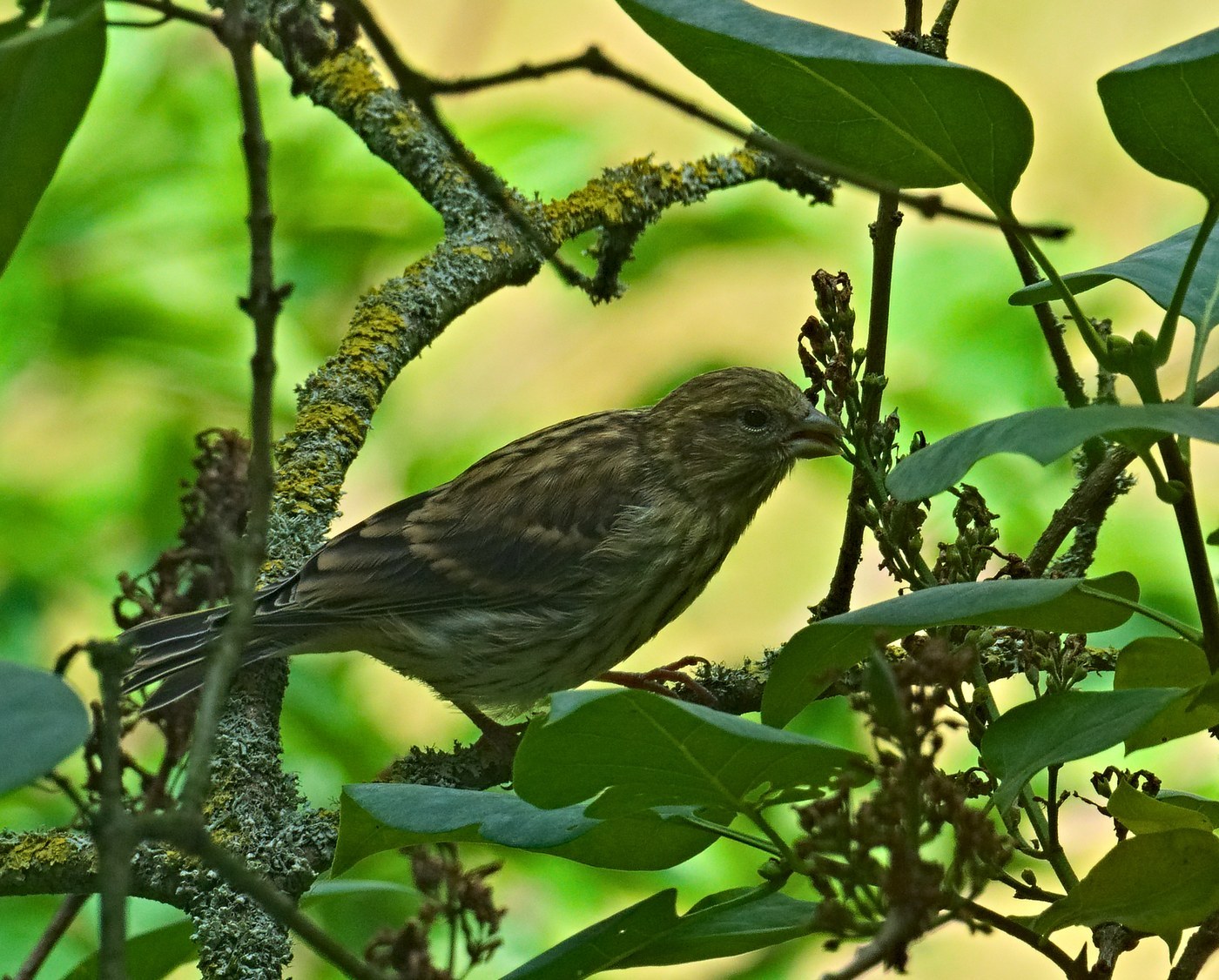
European Serin
Serinus serinus
A tiny, streaky, canary-like finch of southern and central Europe with a bright yellow-green rump and a fast, jingling song.
- Size
- 11-12 cm (4.3-4.7 in) long, 20-23 cm wingspan
- Habitat
- open woodland edges, parks, gardens, orchards, and scrubby cultivated land
- Type
- songbird
Spotted a bird like this?
Identify any bird from a photo, free.
Overview
The European Serin is the smallest widespread finch in Europe, a close relative of the domesticated canary and sharing something of its cheerful, bubbling voice. It is a bird of warm, open country, common in gardens, parks, and orchards across much of southern and central Europe.
Appearance
A tiny, short-tailed, stubby-billed finch, streaked brown above with a bright yellow-green face, breast, and especially rump — the rump patch is often the most conspicuous feature, flashing in flight. Females are duller and more heavily streaked than males, with less yellow overall.
How to identify it
Key Field Marks
- Very small size with a stubby, conical bill
- Bright yellow-green rump, obvious in flight
- Streaked brown back, yellow-tinged face and breast in males
- Short, notched tail
Similar Species
Citril Finch and Siskin are the main confusion species. Siskin is larger, more sharply patterned with black cap and chin in males, and has a longer, more pointed bill. Citril Finch lacks the heavy dark streaking on the back shown by the Serin and has greyer, less streaky flanks. The Serin's diminutive size and bright rump patch are the best quick clues.
Habitat & range
Habitat
Serins favor warm, sunny, semi-open habitats: orchards, vineyards, parks, large gardens with conifers, and scrubby woodland edges. They have expanded northward through much of continental Europe over the past two centuries, though they remain scarce or absent as breeders in Britain.
Range and Migration
The species breeds across southern and central Europe, North Africa, and around the Mediterranean basin. Northern and higher-altitude populations are migratory, wintering further south, while Mediterranean populations are largely resident.
Behavior & voice
Behavior
Serins are active, restless little finches, often seen in small flocks feeding on the ground or low in vegetation, and frequently perching in the tops of tall conifers to sing.
Voice
The song is a fast, high-pitched, jingling, buzzy rattle, often likened to the sound of a bunch of keys being jangled or the fizzing of a firework fuse, delivered from a high perch or in a fluttering display flight.
Nesting and Breeding
The nest, built by the female, is a small, neat cup of moss, grass, and lichen placed in the outer branches of a conifer or fruit tree. Clutches of 3-5 pale, lightly spotted eggs are incubated for about 13 days, with pairs sometimes raising two broods per season.
Frequently asked questions
Is the European Serin related to the canary?
Yes, it belongs to the same genus as the wild Atlantic Canary, and its cheerful, jangling song has a similar quality.
Where is the best place to see a European Serin?
It is common in gardens, orchards, and parks across southern and central Europe, particularly around the Mediterranean, but is a rare visitor to Britain and Ireland.
How do you distinguish a Serin from a Siskin?
The Serin is smaller with a stubbier bill and lacks the Siskin's black cap and more sharply defined yellow wing markings; its overall look is stockier and less streamlined.
What does the Serin's song sound like?
A very fast, high, buzzy jingle often compared to jangling keys or a fizzing sparkler, quite unlike the more musical song of most other finches.
European Serin guides
In-depth guides for identifying, finding, and understanding European Serin.
Other birds you may enjoy
Black Redstart
13-14.5 cm (5.1-5.7 in) long, 23-26 cm wingspan
Black-throated Sparrow
12-14 cm (4.7-5.5 in) long, about 19-20 cm (7.5-8 in) wingspan
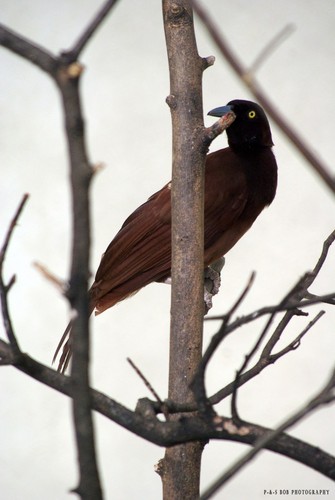
Greater Bird-of-paradise
Body about 43 cm; males with additional flank plumes up to 50 cm and long tail wires
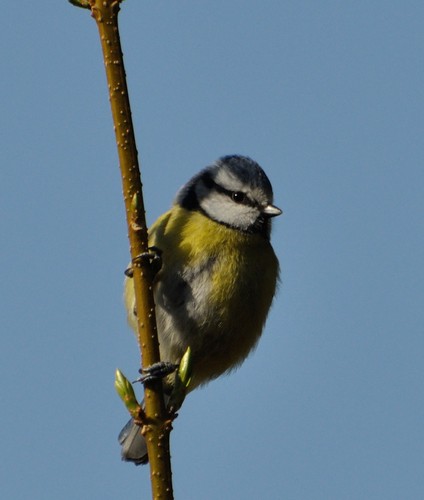
Blue Tit
11-12 cm (4.3-4.7 in) long, 17-20 cm wingspan

Red-billed Quelea
11.5–13 cm long, wingspan about 20–22 cm
White-plumed Antbird
13-14 cm (5-5.5 in) long
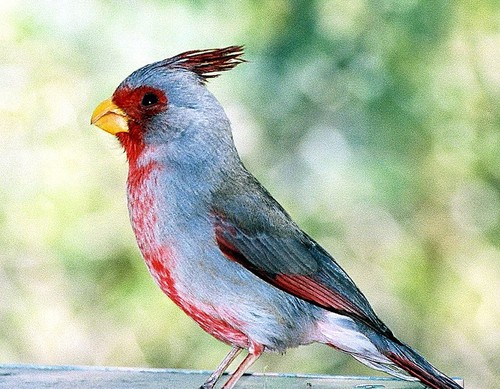
Pyrrhuloxia
19-22 cm (7.5-8.7 in) long, 30 cm wingspan
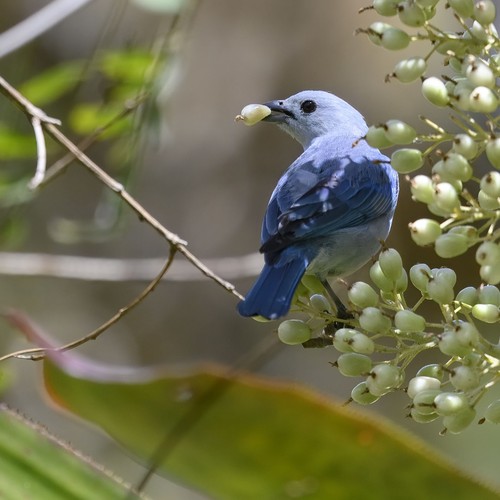
Blue-gray Tanager
16-18 cm (6-7 in) long
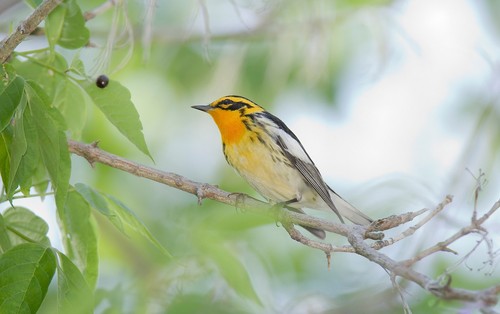
Blackburnian Warbler
11-13 cm (4.3-5.1 in) long, 20-22 cm wingspan
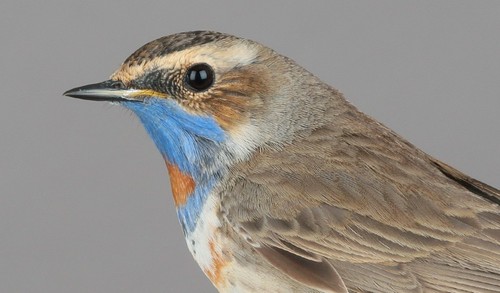
Bluethroat
13-14 cm (5.1-5.5 in) long, 20-22 cm wingspan
Eurasian Nuthatch
12-14.5 cm (4.7-5.7 in) long, 22.5-27 cm wingspan
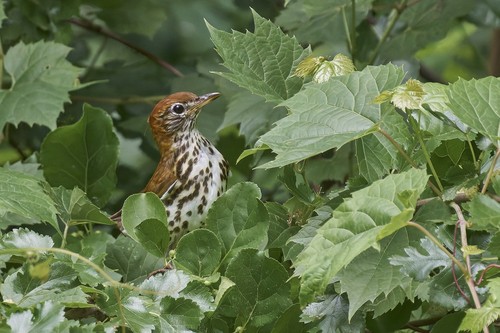
Wood Thrush
19-21 cm (7.5-8.3 in) long, about 33 cm (13 in) wingspan