
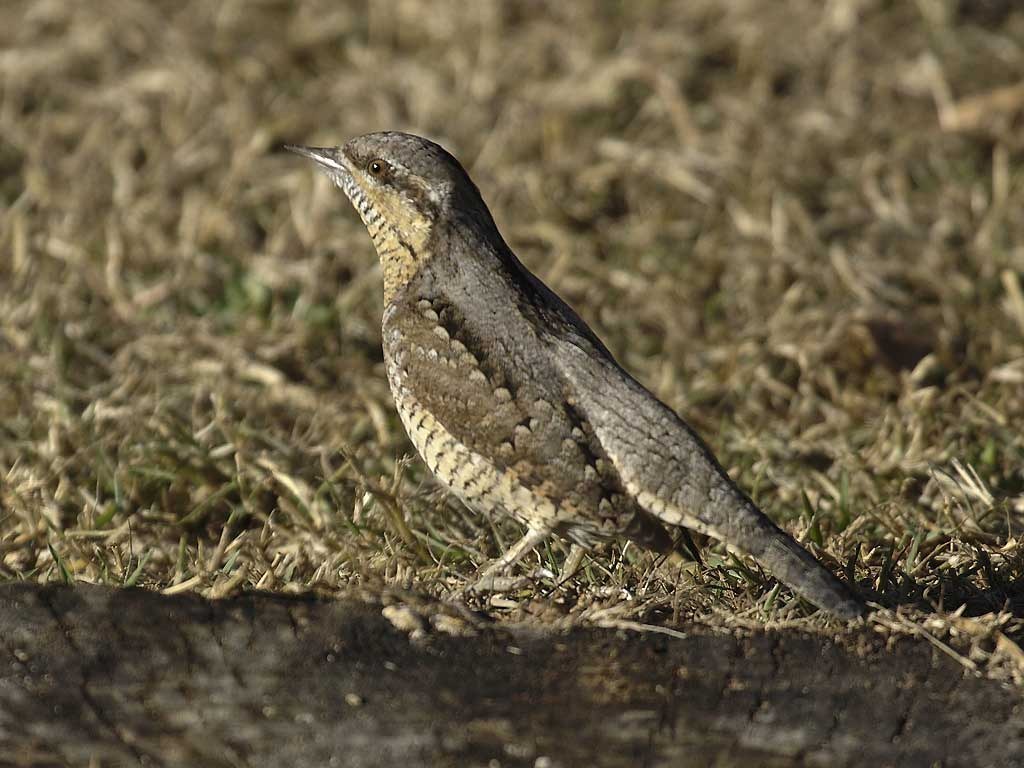
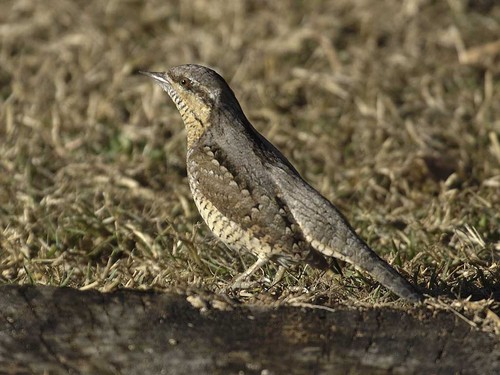
Eurasian Wryneck
Jynx torquilla
A cryptically patterned, bark-colored relative of woodpeckers named for its ability to twist its head almost fully around.
- Size
- 16-17 cm (6.5 in) long, 25-27 cm wingspan
- Habitat
- open woodland, orchards, hedgerows, and gardens with anthills nearby
- Type
- woodpecker
Spotted a bird like this?
Identify any bird from a photo, free.
Overview
The Eurasian Wryneck is an unusual, atypical member of the woodpecker family, lacking the stiff tail and chisel-like bill of its relatives. Its plumage is intricately patterned in greys and browns, mimicking tree bark so effectively that it can be almost invisible when motionless against a trunk.
Its name comes from a striking defensive display: when threatened at the nest, it can twist and writhe its head and neck in snake-like fashion, hissing, which likely deters potential predators.
How to identify it
Key field marks
- Intricately patterned grey-brown, bark-like plumage
- Long, slender tail (not stiff like true woodpeckers)
- Fine dark eye-stripe and streaking down the back
- Perches across branches like a songbird rather than clinging vertically
- Repetitive, nasal "quee-quee-quee" call
Similar species
- No other European bird shares this combination of cryptic bark-like pattern and woodpecker relationship; superficially it may resemble a large, patterned warbler or nightjar in poor views, but its shape and behavior are distinctive.
Its cryptic camouflage means it is more often detected by its distinctive nasal call than by sight.
Habitat & range
Habitat
Favors open, sunny habitats such as orchards, hedgerows, open woodland edges, and gardens, generally where ant colonies are abundant on the ground.
Range
Breeds across much of Europe and temperate Asia; a long-distance migrant, wintering in sub-Saharan Africa and South Asia.
Migration
A true migrant, arriving on breeding grounds in spring and departing in autumn for African or Asian wintering areas; now a scarce or rare breeder in parts of western Europe including Britain, where it is mainly seen as a passage migrant.
Behavior & voice
Behavior
Unlike true woodpeckers, the Wryneck does not excavate wood or climb trunks in the typical woodpecker fashion; it perches more like a songbird and feeds mostly on the ground. When alarmed at the nest it performs its famous neck-twisting, hissing display.
Voice
Gives a loud, repeated, nasal "quee-quee-quee-quee" series, often delivered from a prominent perch in spring.
Feeding
Highly specialized on ants and their larvae and pupae, gathered from the ground using a long, sticky tongue.
Nesting and breeding
Nests in existing tree cavities or nest boxes rather than excavating its own hole. Females lay 7-10 white eggs, incubated by both parents for about 12-14 days.
Frequently asked questions
Why is it called a Wryneck?
Because of its remarkable defensive display of twisting and writhing its head and neck like a snake when disturbed at the nest.
Is the Wryneck a true woodpecker?
It belongs to the woodpecker family but behaves quite differently, not excavating wood or climbing trunks, and migrating long distances unlike most relatives.
What does the Wryneck eat?
Almost exclusively ants and their larvae, gathered from the ground.
Does the Wryneck breed in Britain?
It is now a very rare or occasional breeder, mainly seen as a scarce passage migrant in spring and autumn.
Eurasian Wryneck guides
In-depth guides for identifying, finding, and understanding Eurasian Wryneck.
Other birds you may enjoy
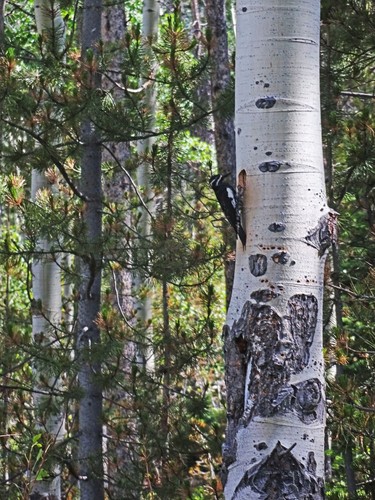
Williamson's Sapsucker
21-25 cm (8-10 in) long, 40-42 cm wingspan
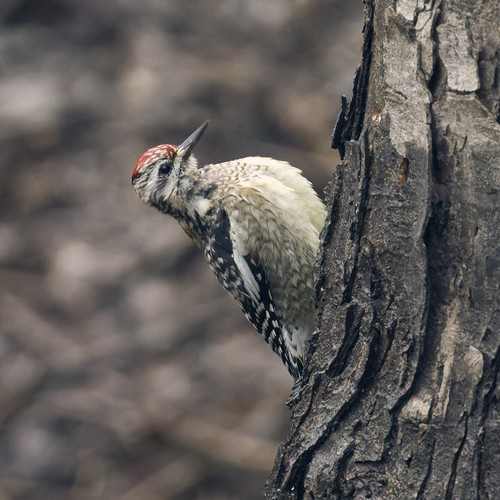
Yellow-bellied Sapsucker
18-21 cm (7-8.3 in) long, 34-40 cm wingspan
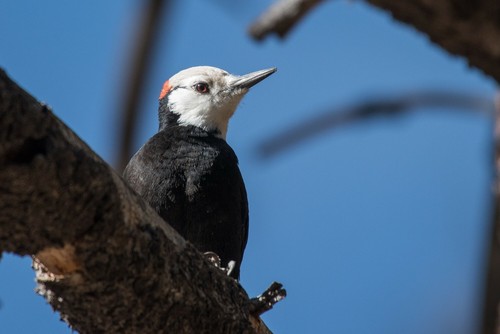
White-headed Woodpecker
20-23 cm (8-9 in) long, 38-41 cm wingspan
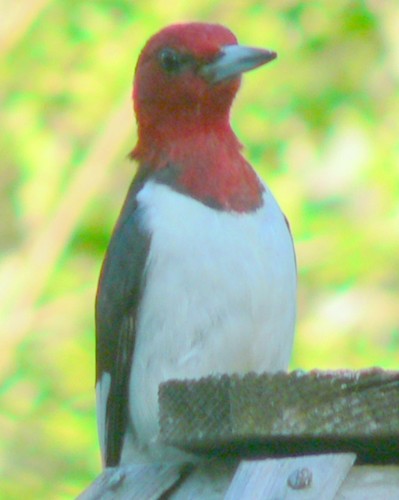
Red-headed Woodpecker
19-23 cm (7.5-9 in) long, 42-46 cm wingspan
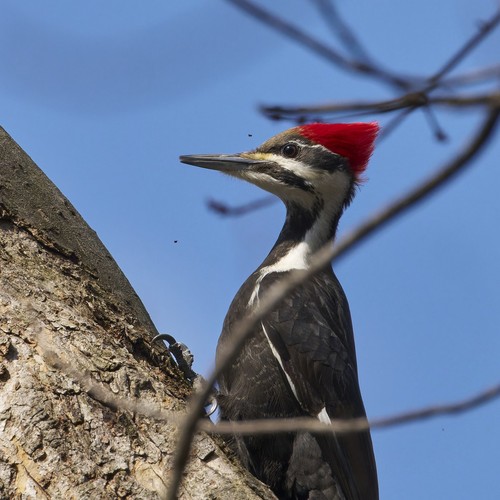
Pileated Woodpecker
40-49 cm (16-19 in) long, 66-75 cm wingspan
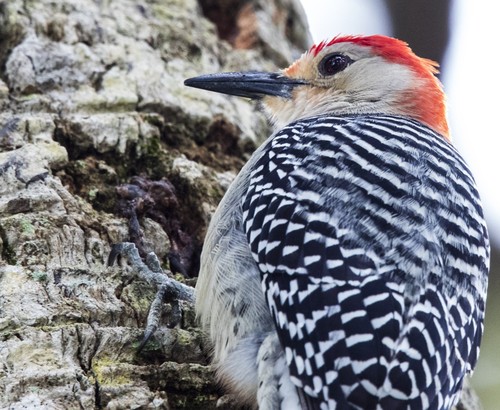
Red-bellied Woodpecker
22-27 cm (9-10.5 in) long, 38-46 cm wingspan
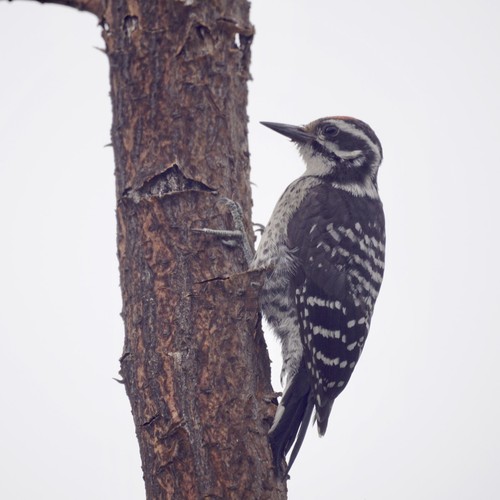
Nuttall's Woodpecker
18-20 cm (7-8 in) long, 34-38 cm wingspan
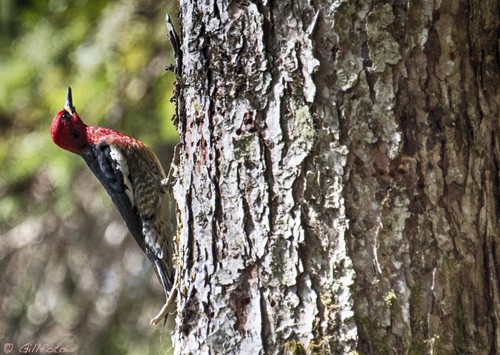
Red-breasted Sapsucker
20-23 cm (8-9 in) long, 34-40 cm wingspan
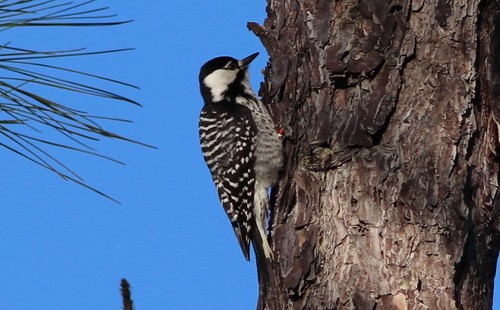
Red-cockaded Woodpecker
20-23 cm (8-9 in) long, 35-38 cm wingspan
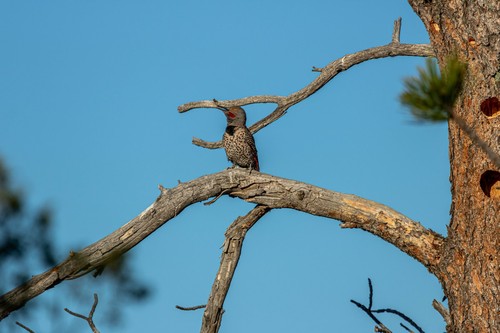
Northern Flicker
28-36 cm (11-14 in) long, 42-51 cm wingspan
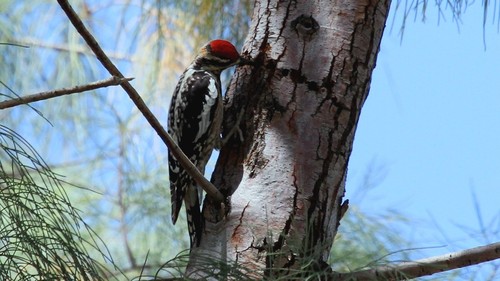
Red-naped Sapsucker
19-21 cm (7.5-8.3 in) long, 34-40 cm wingspan
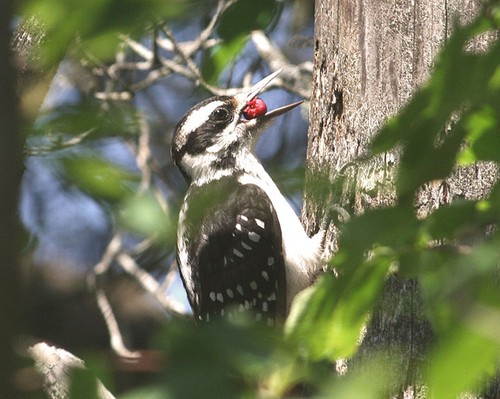
Hairy Woodpecker
23-26 cm (9-10 in) long, 33-41 cm wingspan