
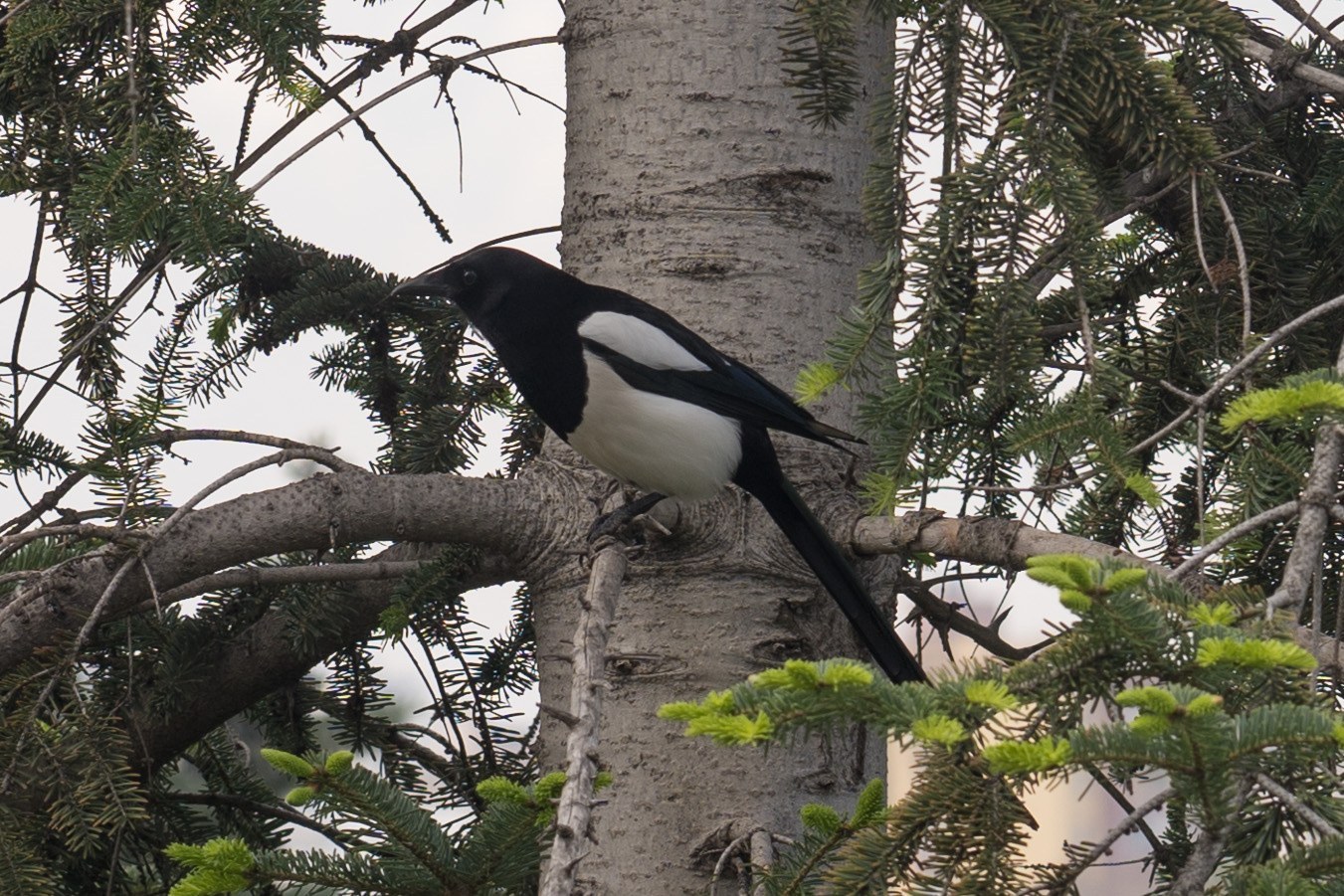
Eurasian Magpie
Pica pica
A boldly pied corvid with a long, iridescent tail, known for its intelligence and adaptability to human landscapes.
- Size
- 44-46 cm long including tail; wingspan around 52-62 cm
- Habitat
- Woodland edges, farmland, parks, gardens, and urban areas across temperate Eurasia
- Type
- songbird
Spotted a bird like this?
Identify any bird from a photo, free.
Overview
The Eurasian Magpie is a large, unmistakable member of the crow family, easily recognized by its bold black-and-white plumage and long, wedge-shaped tail. The head, breast, and back appear glossy black, contrasting sharply with a clean white belly and prominent white patches on the shoulders (scapulars) and flight feathers.
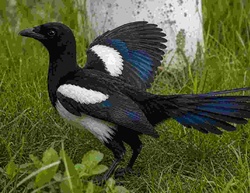
At close range or in good light, the black plumage of the wings and tail reveals a striking iridescent sheen, shifting between green, blue, and purple depending on the angle of light. The tail is notably long, often as long as the body itself, and tapers to a graduated point.
Sexes are similar in plumage, though males average slightly larger. Juveniles look much like adults but with a shorter tail and duller sheen.
How to identify it
Key field marks
- Bold black-and-white plumage with a glossy black head, breast, and back
- White belly and white patches on the shoulders and wings
- Very long, iridescent, graduated tail
- Iridescent green-blue-purple sheen on black feathers in good light
- Heavy, slightly curved black bill
Similar species
- No other widespread European bird shares the same combination of pied plumage and extremely long tail, making the Eurasian Magpie essentially unmistakable within its range.
- Other magpie species elsewhere in the world (such as the Black-billed Magpie of North America) look extremely similar but do not overlap in range with the Eurasian Magpie and were historically considered the same species.
Habitat & range
Habitat
Eurasian Magpies are highly adaptable, occupying woodland edges, hedgerows, farmland, parks, gardens, and urban and suburban areas, generally avoiding only dense unbroken forest and treeless open terrain.
Range
The species has an extremely wide distribution across temperate Europe and Asia, from Britain and Iberia eastward through Russia, the Middle East, Central Asia, to China, Korea, and Japan.
Migration
Eurasian Magpies are largely non-migratory and sedentary, with resident pairs typically defending the same territory year-round.
Behavior & voice
Behavior
Magpies are highly intelligent and social corvids, capable of problem-solving, tool use in some contexts, and recognizing individual humans. Outside the breeding season they may gather in loose flocks, particularly at communal winter roosts, while breeding pairs hold and defend territories.
Voice
The most familiar call is a harsh, chattering "chak-chak-chak" or rattling alarm call, used to mob predators or signal alarm. Magpies also produce a variety of softer, more musical notes, particularly during courtship and at the nest.
Feeding
As an omnivorous forager, the Eurasian Magpie eats a wide variety of foods including insects and other invertebrates, small vertebrates, carrion, the eggs and nestlings of other birds, seeds, and fruit, often caching surplus food for later use.
Nesting and breeding
Magpies build large, domed stick nests with a roofed structure and a side entrance, often placed high in trees, sometimes reused or refurbished across years. Females typically lay 5-8 eggs, and both parents contribute to feeding the young after they hatch.
Frequently asked questions
How do you identify a Eurasian Magpie?
Look for a large black-and-white bird with a very long, iridescent tail, a white belly, and white patches on the wings and shoulders.
How intelligent are Eurasian Magpies?
They are among the most intelligent birds known, capable of complex problem-solving, using tools in some situations, and recognizing individual human faces.
What do Eurasian Magpies eat?
They are omnivores, eating insects, small invertebrates, carrion, the eggs and young of other birds, seeds, and fruit.
Where do Eurasian Magpies live?
They occupy a huge range across temperate Europe and Asia, thriving in woodland edges, farmland, parks, gardens, and urban areas.
Do Eurasian Magpies migrate?
No, they are generally resident, holding the same territory throughout the year.
Eurasian Magpie guides
In-depth guides for identifying, finding, and understanding Eurasian Magpie.
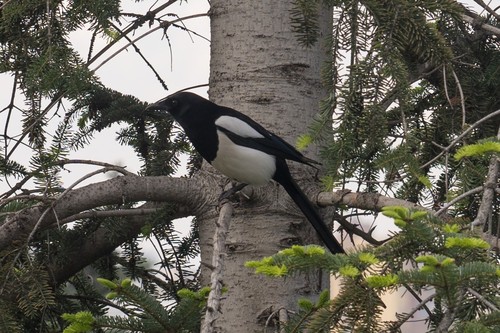
Eurasian Magpie identified by the community
Real birds identified with Bird Identifier.

Other birds you may enjoy
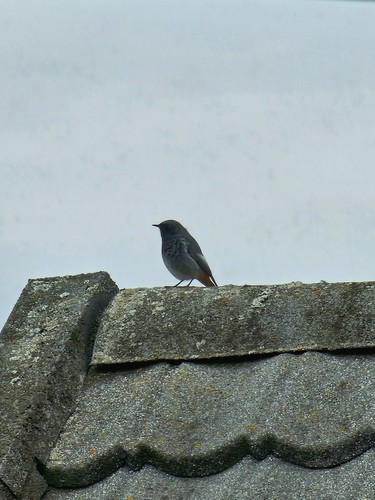
Black Redstart
13-14.5 cm (5.1-5.7 in) long, 23-26 cm wingspan
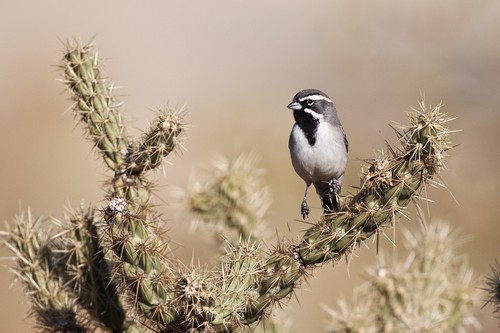
Black-throated Sparrow
12-14 cm (4.7-5.5 in) long, about 19-20 cm (7.5-8 in) wingspan
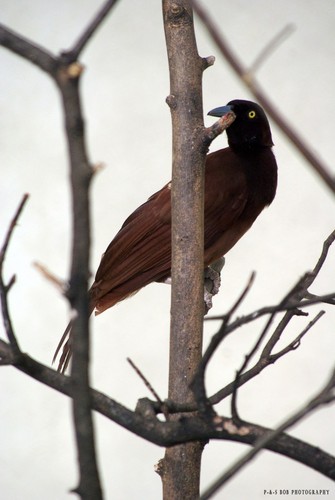
Greater Bird-of-paradise
Body about 43 cm; males with additional flank plumes up to 50 cm and long tail wires
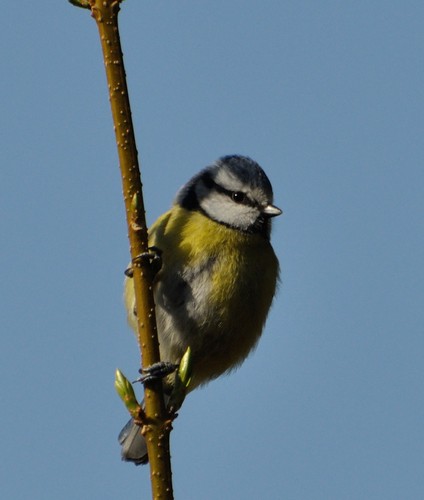
Blue Tit
11-12 cm (4.3-4.7 in) long, 17-20 cm wingspan
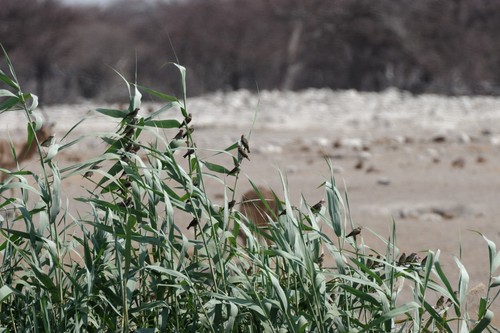
Red-billed Quelea
11.5–13 cm long, wingspan about 20–22 cm
White-plumed Antbird
13-14 cm (5-5.5 in) long
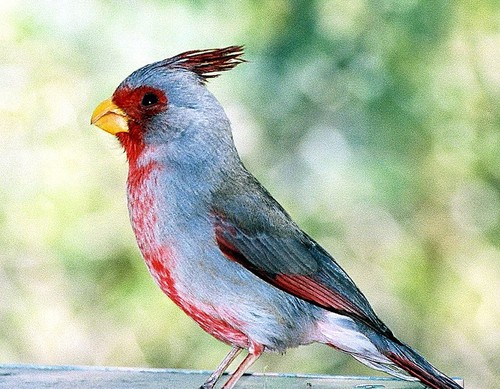
Pyrrhuloxia
19-22 cm (7.5-8.7 in) long, 30 cm wingspan
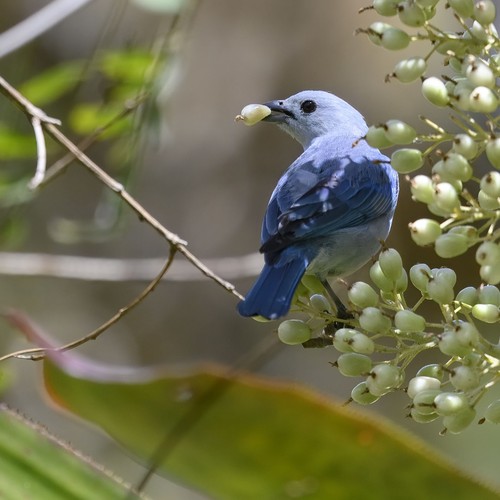
Blue-gray Tanager
16-18 cm (6-7 in) long
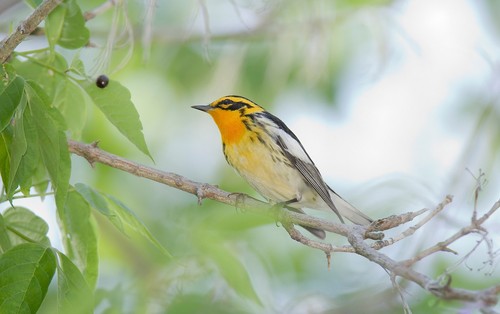
Blackburnian Warbler
11-13 cm (4.3-5.1 in) long, 20-22 cm wingspan
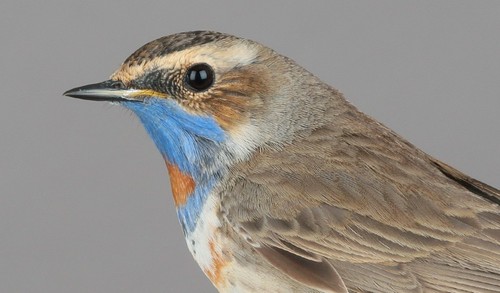
Bluethroat
13-14 cm (5.1-5.5 in) long, 20-22 cm wingspan
Eurasian Nuthatch
12-14.5 cm (4.7-5.7 in) long, 22.5-27 cm wingspan
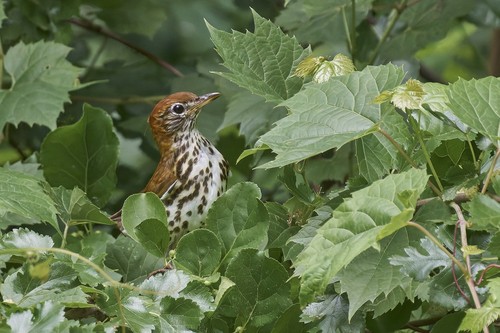
Wood Thrush
19-21 cm (7.5-8.3 in) long, about 33 cm (13 in) wingspan