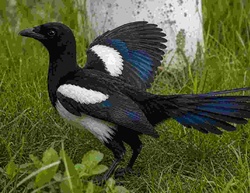
Eurasian Magpie Identification Guide
An unmistakable black-and-white corvid with a long, iridescent tail and glossy blue-green sheen, easily recognized by its bold pied pattern and harsh chattering call.
Read the full Eurasian Magpie encyclopedia entry →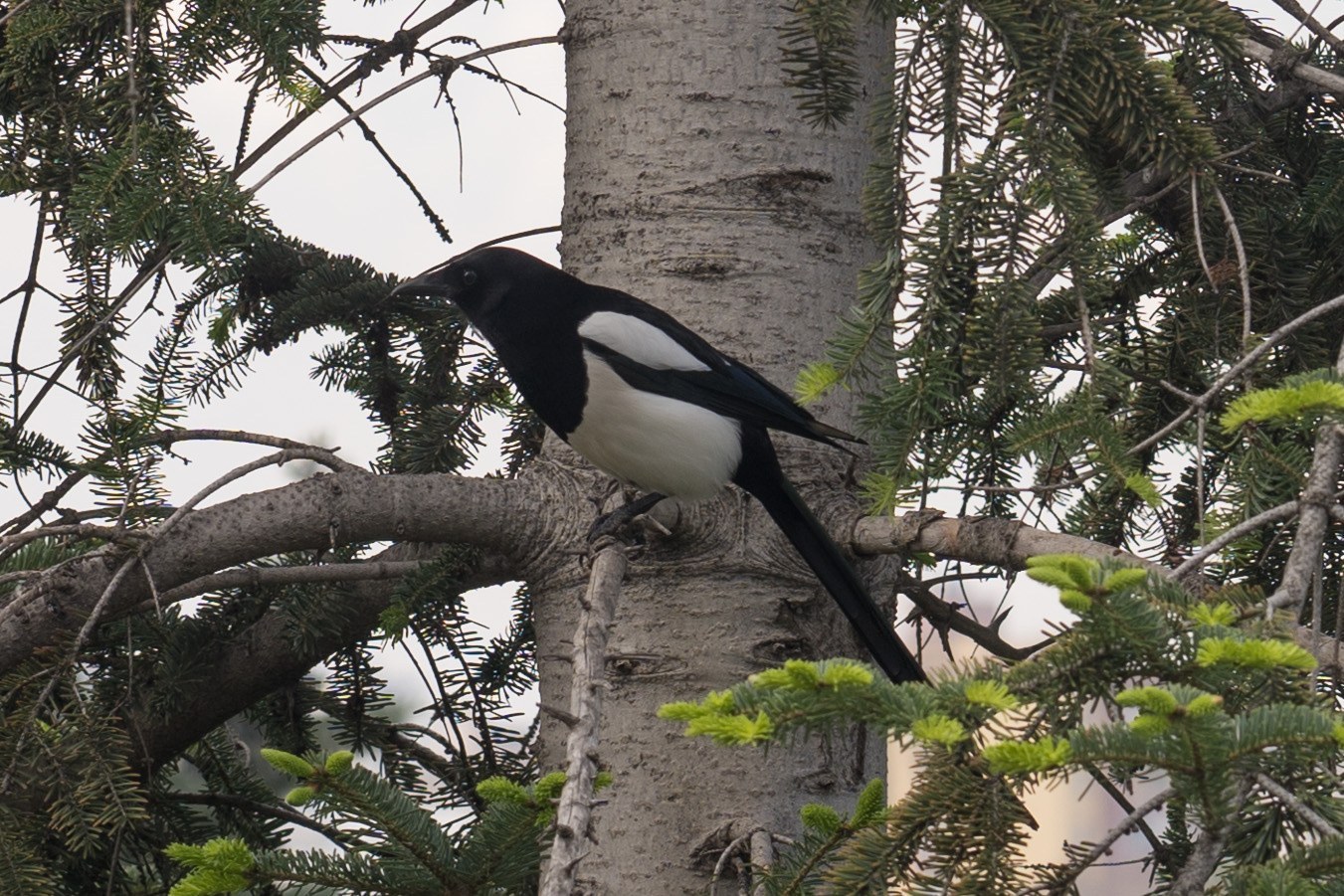
Key Field Marks
- Size & shape: A medium-large corvid (40–51 cm, much of that length in the tail) with a long, strongly graduated tail that is often as long as or longer than the body — an instantly recognizable silhouette.
- Plumage: Bold black-and-white pattern: black head, breast, and back contrast sharply with a white belly and white patches on the shoulders (scapulars) and primaries.
- Iridescence: The black areas of the plumage, especially the tail and wings, show a glossy iridescent sheen of blue, green, and purple in good light, not visible in poor lighting or at a distance.
- In flight: Short, rounded wings with bold white primary patches flash conspicuously, combined with the long tail streaming behind; flight is somewhat labored with shallow, rapid wingbeats alternating with glides.
- Behavior: Bold, noisy, and often confiding, especially in urban and suburban areas; forages on the ground with a rather jaunty, hopping walk; frequently gathers in small, noisy groups, particularly outside the breeding season.
Similar Species
- No true look-alikes in most of its range: The long tail combined with the bold black-and-white pattern is unique among widespread European and Asian birds and cannot realistically be confused with any other species.
- Regional magpie species (e.g., Azure-winged Magpie, in areas of overlap): Differ obviously by having blue (not black) wings and tail and lacking the bold white shoulder/wing patches of Eurasian Magpie.
Where & When to Look
- Habitat: Highly adaptable, found in farmland, hedgerows, open woodland edges, parks, gardens, and urban areas; avoids only dense unbroken forest and treeless open moorland.
- Range: Widespread resident across nearly all of Europe, much of temperate Asia, and parts of North Africa.
- Season: Present year-round; conspicuous at all times of year, though family groups and loose flocks are especially noticeable in late summer and autumn.
Voice
- Call: A harsh, rapid, chattering "chak-chak-chak-chak" alarm/contact call, one of the most familiar sounds of farmland and garden birdlife across its range.
- Other sounds: A variety of softer chuckling and gurgling notes are given at close range, particularly during social interactions, in addition to the more familiar harsh chatter.
Frequently asked questions
How do I identify a Eurasian Magpie?
Look for a bold black-and-white bird with a very long, graduated tail and white shoulder and wing patches; the black areas show an iridescent blue-green sheen in good light.
What does a Eurasian Magpie sound like?
A harsh, rapid, chattering 'chak-chak-chak' call, usually given as an alarm or contact call.
Are Eurasian Magpies social birds?
Yes, while pairs hold territories during breeding, they often gather in small noisy groups, especially outside the breeding season.
Where do Eurasian Magpies build their nests?
They build large, domed stick nests, often high in trees or tall hedges, which are distinctive and easy to spot in winter after leaves fall.
What habitats do Eurasian Magpies prefer?
They are highly adaptable, thriving in farmland, hedgerows, parks, gardens, and urban areas, generally avoiding only dense forest interiors and open treeless moorland.
Eurasian Magpie identified by the community
Recent Eurasian Magpie sightings identified with Bird Identifier.