
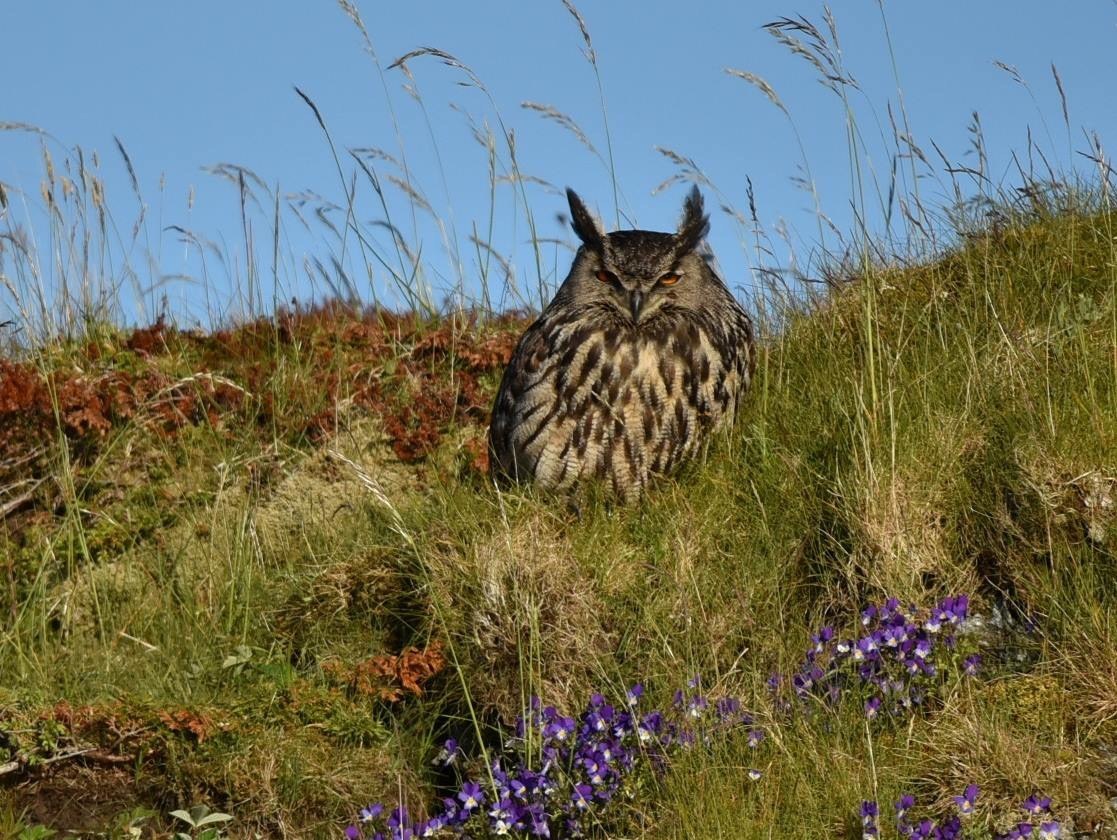
Eurasian Eagle-Owl
Bubo bubo
One of the largest owls in the world, a powerful, ear-tufted predator of cliffs and forests with a deep booming call.
- Size
- 58-75 cm (23-30 in) long, 155-188 cm wingspan
- Habitat
- rocky crags, cliffs, forests, and mountainous or remote terrain
- Type
- owl
Spotted a bird like this?
Identify any bird from a photo, free.
Overview
The Eurasian Eagle-Owl is a massive, powerful owl with long, prominent ear tufts, vivid orange eyes, and richly patterned tawny-brown plumage streaked and barred with black. Its sheer bulk and broad wings make it one of the largest owl species anywhere.
A top nocturnal predator across much of Eurasia, it occupies rugged, undisturbed terrain such as cliffs, gorges, and quarries, though it also hunts over open forest and farmland at night.
How to identify it
Key field marks
- Very large size with broad, rounded wings
- Long, prominent ear tufts
- Bright orange eyes
- Heavily mottled tawny-brown and black plumage
- Deep, far-carrying "ooh-hu" call
Similar species
- Long-eared Owl shares ear tufts but is far smaller and slighter, with yellow-orange eyes and a more slender build.
- Tawny Owl lacks ear tufts entirely and has dark eyes.
Its huge size alone separates the Eurasian Eagle-Owl from virtually all other European owls.
Habitat & range
Habitat
Prefers rocky cliffs, crags, ravines, and quarries for nesting, often adjacent to forest, farmland, or open country used for hunting.
Range
Breeds across much of Europe and Asia, from the Iberian Peninsula and Scandinavia east through Russia to China and Japan; also found in parts of North Africa and the Middle East.
Migration
Generally resident, with adults holding large territories year-round; some northern and high-altitude populations may shift to lower ground in severe winters.
Behavior & voice
Behavior
A formidable nocturnal hunter, the Eurasian Eagle-Owl takes prey ranging from beetles to young foxes and other raptors, hunting from perches or in low, powerful flight. Pairs are territorial and long-lived, often reusing the same cliff-ledge nest sites for many years.
Voice
The male's advertising call is a deep, resonant two-note "ooh-hu", audible over long distances on still nights; females give a higher, more nasal version.
Feeding
An opportunistic apex predator, taking rabbits, hares, rodents, hedgehogs, and a wide range of birds up to the size of herons and other owls.
Nesting and breeding
Nests are simple scrapes on cliff ledges, in caves, or occasionally old stick nests of other large birds. Females lay 1-4 eggs in late winter, incubated for around five weeks, with young remaining near the nest for several months.
Frequently asked questions
How big is the Eurasian Eagle-Owl?
It is one of the largest owl species in the world, with a wingspan that can exceed 1.8 meters (nearly 6 feet).
What does the Eurasian Eagle-Owl eat?
A wide variety of prey including rabbits, hares, hedgehogs, and birds up to the size of other raptors.
Where does the Eurasian Eagle-Owl nest?
On cliff ledges, in quarries, caves, or occasionally old nests of other large birds, on rugged or remote terrain.
What is the difference between an Eagle-Owl and a Long-eared Owl?
The Eagle-Owl is dramatically larger and bulkier, though both species have ear tufts.
Is the Eurasian Eagle-Owl found in Britain?
It is not native to Britain, though rare escapees or vagrants are occasionally recorded.
Eurasian Eagle-Owl guides
In-depth guides for identifying, finding, and understanding Eurasian Eagle-Owl.
Other birds you may enjoy
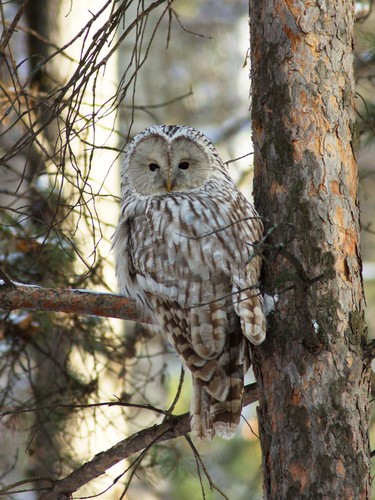
Ural Owl
50-62 cm long, wingspan about 1.0-1.3 m
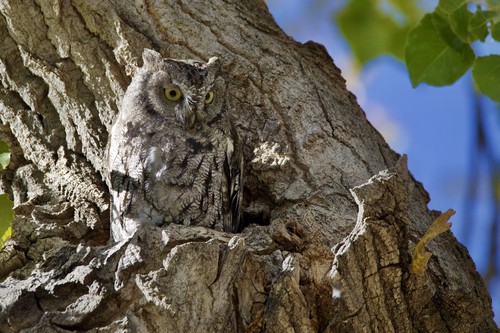
Western Screech-Owl
19-25 cm (7.5-10 in) long, about 55 cm (21.5 in) wingspan
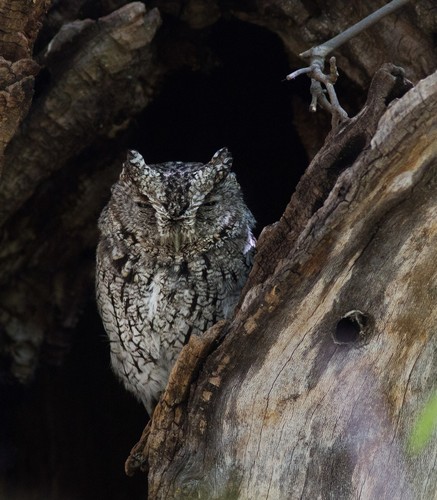
Whiskered Screech-Owl
17-19 cm (6.7-7.5 in) long, 43 cm wingspan
Tawny Owl
37-43 cm (15-17 in) long, 81-96 cm wingspan
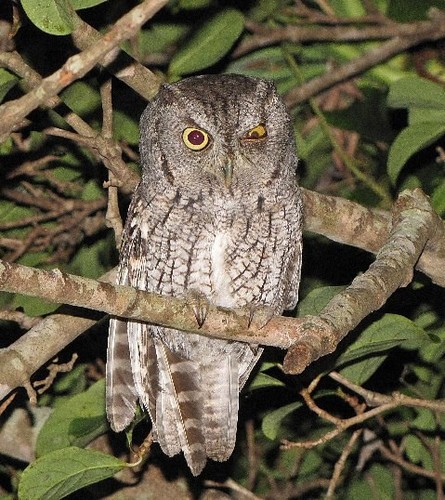
Screech Owl
16-25 cm long, wingspan about 46-61 cm
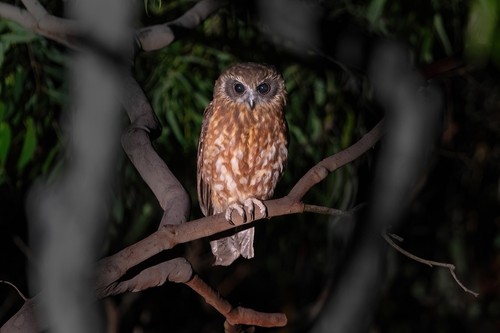
Southern Boobook
27-36 cm (11-14 in) long
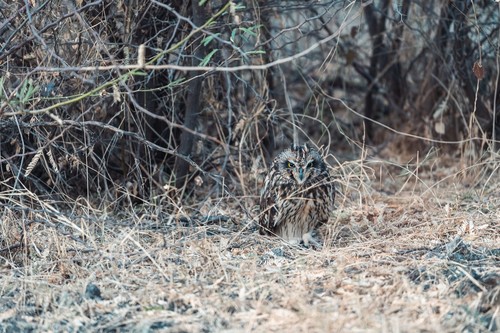
Short-eared Owl
34-42 cm (13-17 in) long, 85-110 cm wingspan
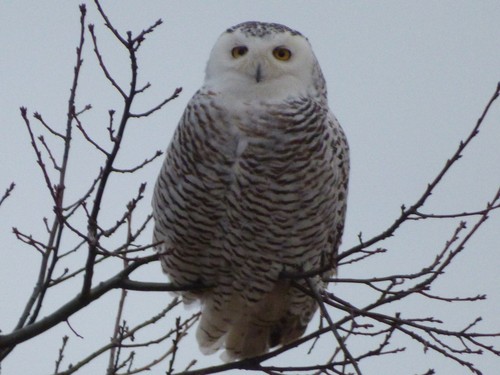
Snowy Owl
52-71 cm (20-28 in) long, 125-150 cm (49-59 in) wingspan
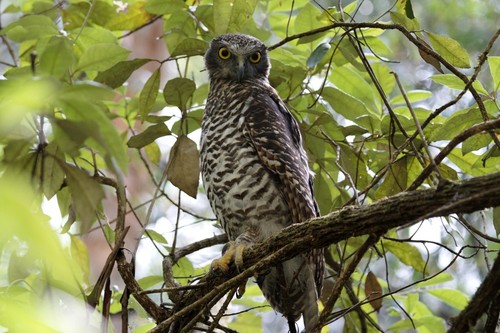
Powerful Owl
60-65 cm (24-26 in) long, 112-135 cm (44-53 in) wingspan
Northern Saw-whet Owl
18-21 cm (7-8.5 in) long, 42-56 cm (17-22 in) wingspan
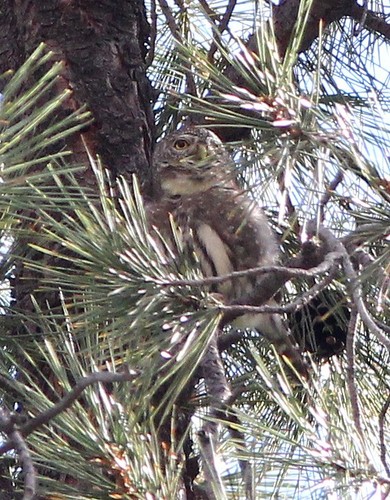
Northern Pygmy-Owl
16-18 cm (6.3-7.1 in) long, 35-39 cm wingspan
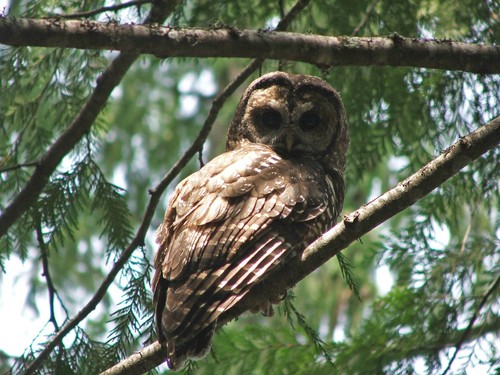
Spotted Owl
43-48 cm (17-19 in) long, 100-114 cm wingspan