
Eurasian Bullfinch
Pyrrhula pyrrhula
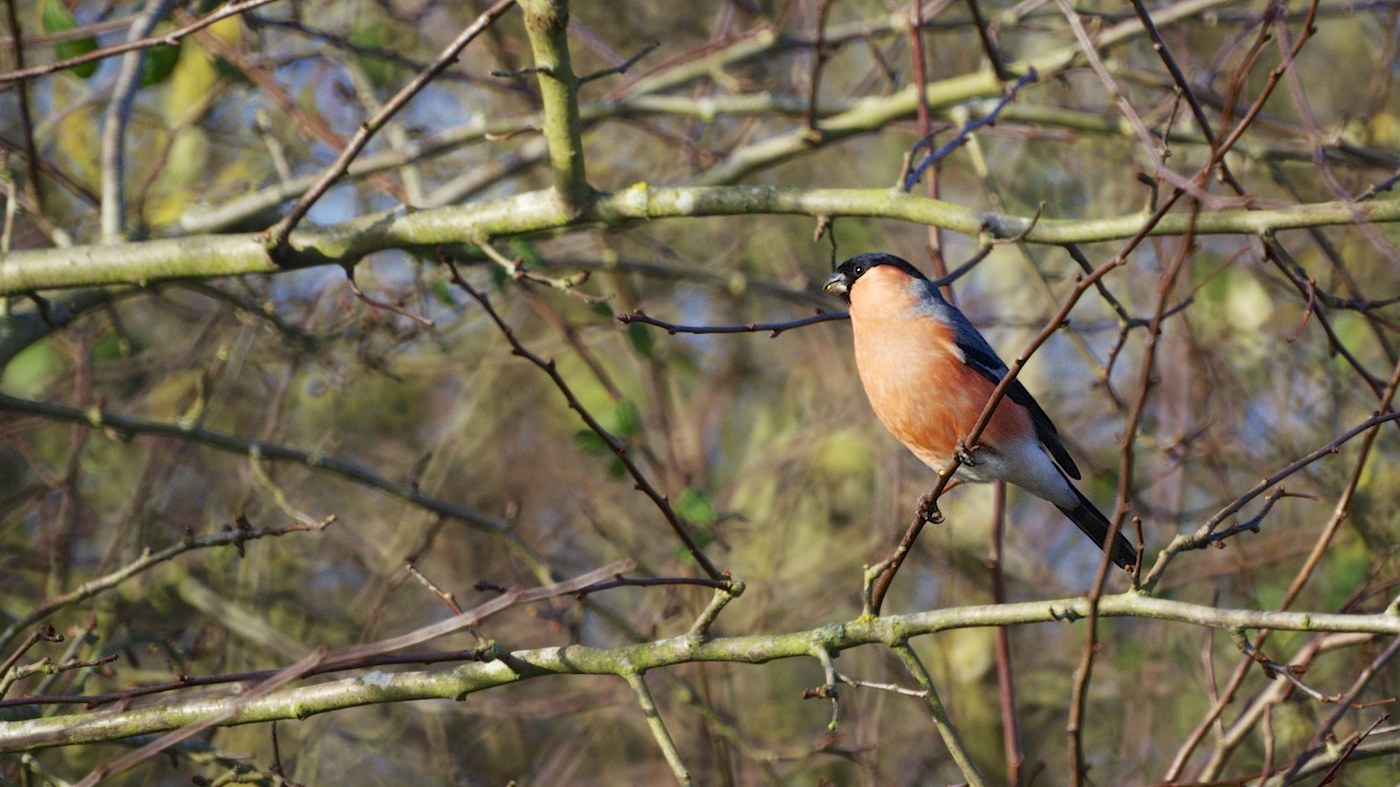
A stocky, shy European finch; the male shows a vivid rosy-pink breast, black cap, and gray back set off by a bright white rump.
- Size
- 14.5-16.5 cm (5.7-6.5 in) long, 22-29 cm wingspan
- Habitat
- woodland edges, hedgerows, orchards, and gardens
- Type
- songbird
Spotted a bird like this?
Identify any bird from a photo, free.
Overview
The Eurasian Bullfinch is a plump, short-billed finch with a distinctive rounded silhouette. The male is boldly colored, with a glossy black cap, face, and short thick bill, a blue-gray back, black wings with a pale wing bar, and a rich rosy-pink breast and cheeks. The female shares the same pattern but with the pink replaced by a more muted grayish-buff tone. Both sexes show a conspicuous bright white rump, very obvious in flight.
Bullfinches are typically shy and retiring, often first detected by their soft, low piping call rather than being seen, and they favor dense cover along woodland edges and hedgerows.
How to identify it
Key field marks
- Male: rosy-pink breast and cheeks, black cap, gray back
- Female: similar pattern but with grayish-buff replacing the pink
- Bright white rump conspicuous in flight
- Short, thick, black bill; black wings with pale bar
Similar species
- No other common European finch combines a black cap with a bright white rump and this stocky shape; unmistakable once seen well.
- In flight, the white rump can suggest a Brambling, but the Bullfinch's flight is more direct and lacks the Brambling's orange tones.
Habitat & range
Habitat
Favors woodland edges, hedgerows, orchards, scrub, and gardens with dense cover.
Range
Widespread across Europe and much of temperate Asia.
Migration
Mostly resident, though some northern and eastern populations move south in harsh winters.
Behavior & voice
Behavior
Shy and unobtrusive, often staying hidden in dense cover; usually seen in pairs or small family groups, feeding quietly and moving off with a soft call when disturbed.
Voice
A soft, low, mournful piping "peu" call, often the first clue to its presence; song is quiet and rarely heard, a subdued warbling mixed with the call note.
Feeding
Eats seeds, buds, and berries; notable for eating tree and shrub buds in spring, historically bringing it into conflict with fruit growers in orchards.
Nesting
Builds a loose, twiggy cup nest lined with fine roots, typically hidden in dense shrubs or hedges; lays 4-5 pale blue eggs with dark spotting and streaking.
Frequently asked questions
How do you identify a male Eurasian Bullfinch?
Look for a black cap and face, gray back, black wings with a pale bar, a rosy-pink breast, and a bright white rump visible in flight.
How does the female Bullfinch differ from the male?
Females share the same black cap and white rump pattern but have grayish-buff underparts instead of the male's rosy pink.
Why were Bullfinches historically considered pests?
They feed on the buds of fruit trees in spring, which historically led orchard growers to view them as a pest species.
What does a Bullfinch sound like?
A soft, low, mournful piping call, often heard before the bird itself is seen, since it tends to stay hidden in dense cover.
Eurasian Bullfinch guides
In-depth guides for identifying, finding, and understanding Eurasian Bullfinch.
Other birds you may enjoy

Black Redstart
13-14.5 cm (5.1-5.7 in) long, 23-26 cm wingspan

Black-throated Sparrow
12-14 cm (4.7-5.5 in) long, about 19-20 cm (7.5-8 in) wingspan

Greater Bird-of-paradise
Body about 43 cm; males with additional flank plumes up to 50 cm and long tail wires

Blue Tit
11-12 cm (4.3-4.7 in) long, 17-20 cm wingspan

Red-billed Quelea
11.5–13 cm long, wingspan about 20–22 cm
White-plumed Antbird
13-14 cm (5-5.5 in) long

Pyrrhuloxia
19-22 cm (7.5-8.7 in) long, 30 cm wingspan

Blue-gray Tanager
16-18 cm (6-7 in) long

Blackburnian Warbler
11-13 cm (4.3-5.1 in) long, 20-22 cm wingspan

Bluethroat
13-14 cm (5.1-5.5 in) long, 20-22 cm wingspan

Eurasian Nuthatch
12-14.5 cm (4.7-5.7 in) long, 22.5-27 cm wingspan

Wood Thrush
19-21 cm (7.5-8.3 in) long, about 33 cm (13 in) wingspan