
Eurasian Bullfinch Identification Guide
A stocky, thick-necked finch with a jet-black cap and, in males, a vivid rose-pink breast, best located by its soft piping call from woodland edges and hedgerows.
Read the full Eurasian Bullfinch encyclopedia entry →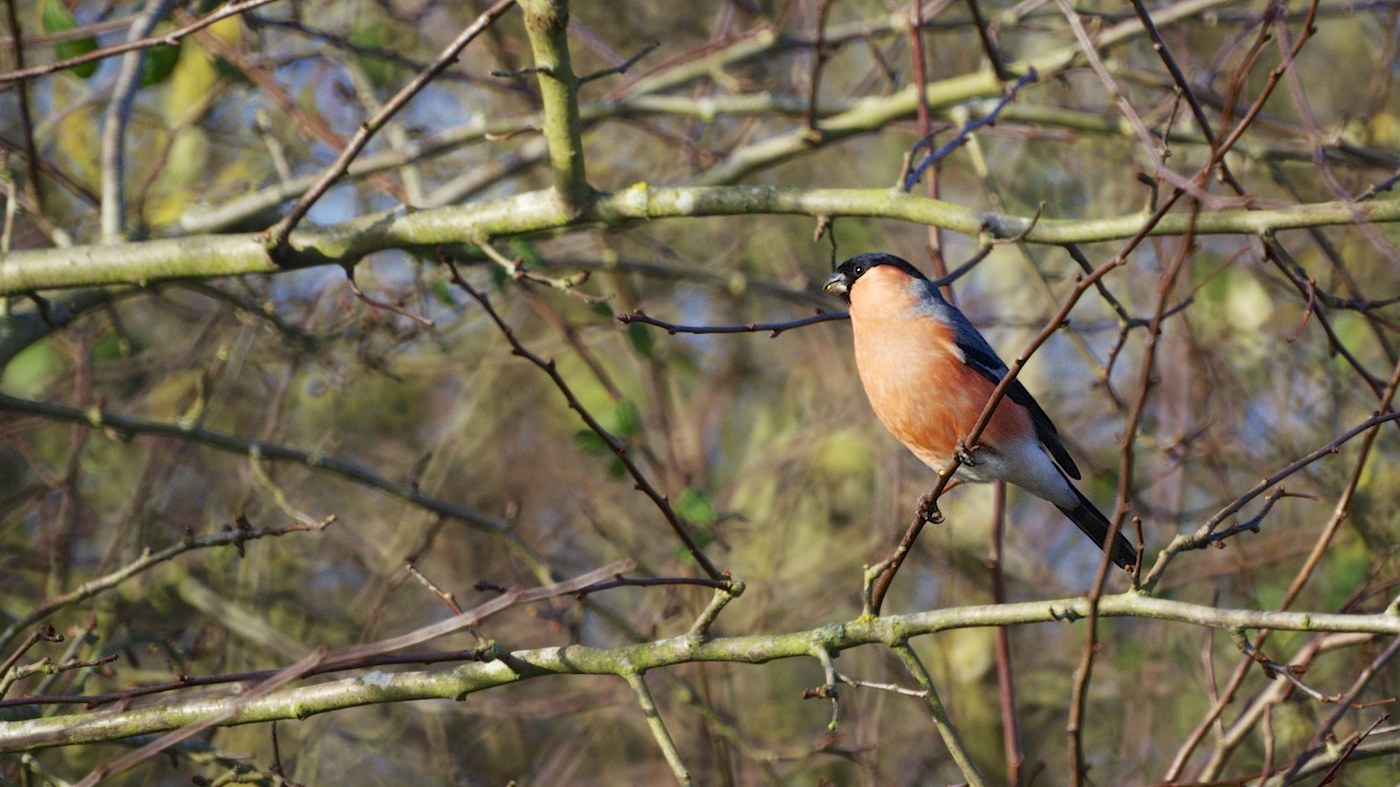
Key Field Marks
- Size & shape: A plump, round-bodied finch (14–16.5 cm) with a short, thick, notably stubby black bill, short neck, and a fairly long, square-cut black tail. The overall silhouette is bull-necked and bull-headed, giving rise to the name.
- Plumage (male): Glossy black cap and chin sharply demarcated from the face; blue-grey back; brilliant rose-pink to red underparts from chin to belly; white rump that flashes obviously in flight; black wings with a pale grey-white wing bar.
- Plumage (female): Same black cap and wing pattern as the male, but underparts are a muted pinkish-grey/buff rather than bright pink, and the back is warmer grey-brown.
- Juveniles: Lack the black cap entirely, appearing plain warm brown-buff with the same white wing bar and white rump, which can cause confusion with other finches until the white rump is seen.
- Behavior: Quiet, unobtrusive, and often detected by voice before being seen. Usually in pairs or small family groups, feeding low in shrubs, hedgerows, or on the ground on seeds and buds; frequently perches motionless in cover.
Similar Species
- Common Chaffinch: Lacks the black cap and rose-pink underparts; has bold double white wing bars and a different, more musical song.
- Trumpeter Finch / other pink finches (range-dependent): Bullfinch's black cap, black wings, and obvious white rump patch are diagnostic and not shared by superficially pink-breasted finches elsewhere.
- Female/juvenile confusion with sparrows or buntings: The white rump seen in flight and thick black bill separate bullfinch from any sparrow or bunting.
Where & When to Look
- Habitat: Deciduous and mixed woodland with dense understory, overgrown hedgerows, scrubby thickets, orchards, and large gardens with fruiting shrubs.
- Range: Widespread resident across most of temperate Europe and across the boreal and temperate belt of Asia to Japan; northern and eastern populations are partially migratory, moving south in hard winters.
- Season: Present year-round in most of its breeding range; in winter, birds sometimes form small flocks and visit orchards or garden feeders for seeds and buds, making them slightly easier to find outside the breeding season.
Voice
- Call: A soft, low, mournful piping "deu" or "phew" whistle, often the only clue to its presence since the bird stays hidden in cover.
- Song: A quiet, creaky, disjointed warble mixed with call-like notes, rarely given and not far-carrying; not a bird typically located by loud song.
Frequently asked questions
What is the easiest way to identify a Eurasian Bullfinch?
Look for a plump finch with a jet-black cap, thick stubby bill, and a bright white rump patch that flashes in flight; males add a vivid rose-pink breast.
How can I tell a male from a female Bullfinch?
Both sexes share the black cap and white rump, but males have bright rose-pink underparts while females show duller pinkish-grey or buff underparts.
Why do I hear a Bullfinch but can't see it?
Bullfinches are shy and stay hidden in dense cover, usually giving away their presence only through a soft, low 'phew' whistling call.
Do Bullfinches migrate?
Most populations are resident, but birds in the coldest parts of the range move south in severe winters, and some northern/eastern populations are more migratory.
What does a juvenile Bullfinch look like?
Juveniles lack the black cap, appearing plain brown-buff, but still show the diagnostic white rump and pale wing bar of adults.