
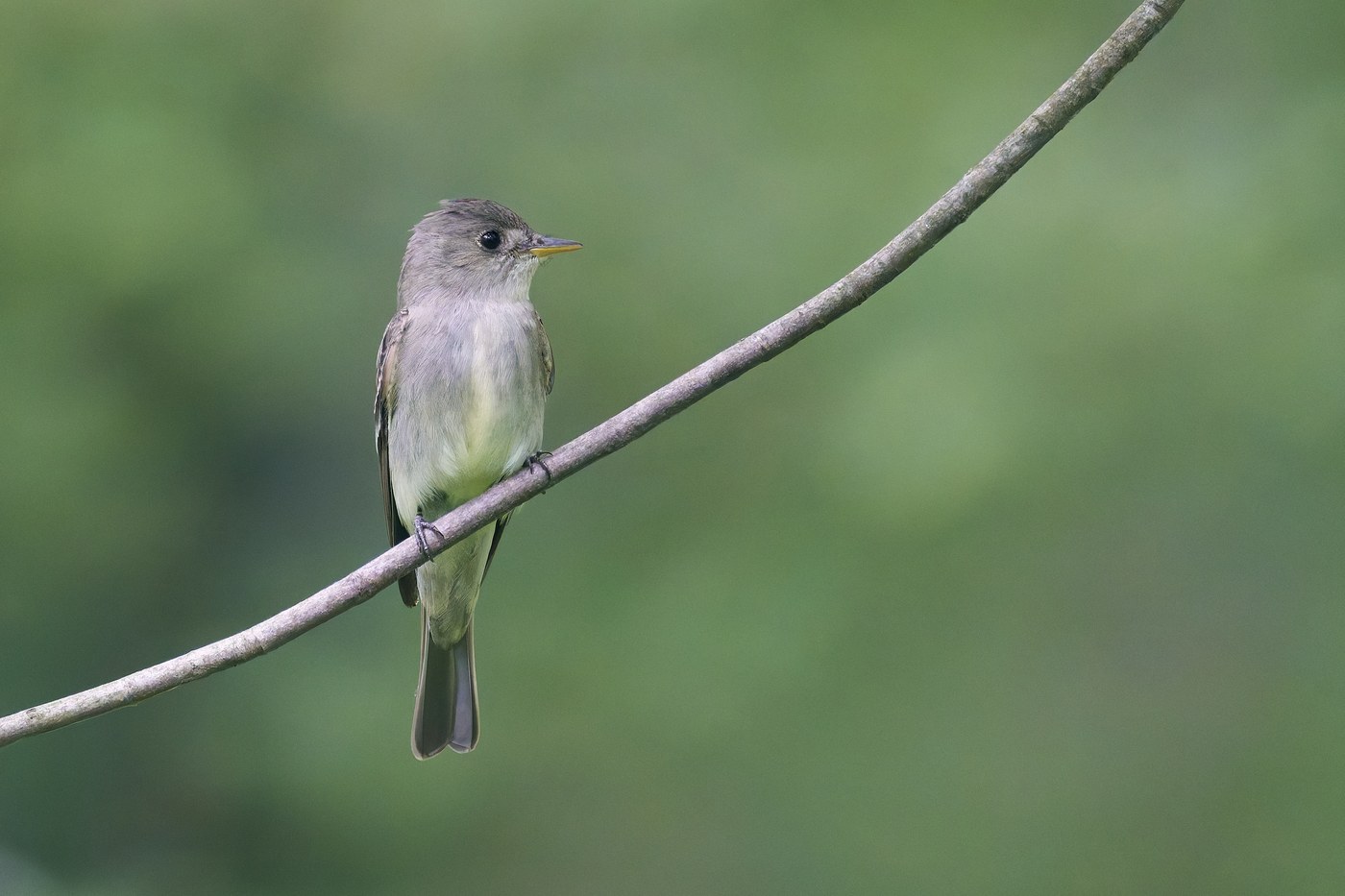
Eastern Wood-Pewee
Contopus virens
A quiet, olive-gray flycatcher of eastern woodlands, best known for its plaintive, slurred "pee-a-wee" song.
- Size
- 14-16 cm (5.5-6.3 in) long, 22-26 cm (8.7-10.2 in) wingspan
- Habitat
- deciduous and mixed woodlands, especially with open understory
- Type
- songbird
Spotted a bird like this?
Identify any bird from a photo, free.
Overview
The Eastern Wood-Pewee is a medium-sized flycatcher of deciduous and mixed forests across the eastern United States and southern Canada. Its plumage is a subtle, unassuming olive-gray above and pale below, with two faint whitish wing bars — a classic "empidonax-like" appearance that makes it easy to overlook visually, though its distinctive song makes it one of the most recognizable sounds of summer woodlands.
It perches upright on bare mid-story branches, often returning to the same perch after sallying out to catch insects, a hallmark flycatcher behavior known as "hawking."
How to identify it
Key field marks
- Olive-gray upperparts, pale grayish-white underparts with a darker wash on the sides of the breast
- Two whitish wing bars
- No conspicuous eye-ring (unlike many Empidonax flycatchers)
- Dark upper mandible, pale/orange lower mandible
- Long primary projection giving a somewhat long-winged look
Similar species
Very similar to Empidonax flycatchers (such as Acadian Flycatcher) but Wood-Pewee lacks a prominent eye-ring and does not habitually wag or pump its tail. Eastern Phoebe lacks wing bars and characteristically pumps its tail. Voice is the most reliable way to distinguish these species in the field.
Habitat & range
Habitat
Prefers mature deciduous and mixed forest with an open subcanopy that allows room for aerial insect foraging, including forest edges, woodlots, and shaded parks.
Range
Breeds across the eastern United States and southeastern Canada. A long-distance migrant, it winters in northern South America. Populations have shown a gradual long-term decline, possibly linked to forest understory changes and factors on the wintering grounds.
Behavior & voice
Behavior
A classic "sit-and-wait" flycatcher, the Eastern Wood-Pewee perches on an exposed dead twig, watches for passing insects, and sallies out to snatch them in flight before returning to the same or a nearby perch.
Voice
The song, a slow, slurred, whistled "pee-a-wee..." followed by a downslurred "pee-oh," is delivered persistently through the day, including during the heat of midday when many other birds fall silent — making it one of the defining sounds of eastern summer woods.
Feeding and nesting
Feeds almost entirely on flying insects captured in mid-air. The nest is a shallow, neat cup saddled on a horizontal branch, camouflaged on the outside with lichen, making it very difficult to spot from below.
Frequently asked questions
What does an Eastern Wood-Pewee sound like?
It sings a slow, plaintive, whistled "pee-a-wee," often followed by a downslurred "pee-oh," repeated frequently through the day.
How do you tell an Eastern Wood-Pewee from an Empidonax flycatcher?
Wood-Pewee lacks a prominent eye-ring, has longer wings relative to its body, and does not pump its tail; its distinctive song is the most reliable clue.
Where does the Eastern Wood-Pewee live?
It breeds in deciduous and mixed forests across the eastern U.S. and southeastern Canada and winters in northern South America.
What does an Eastern Wood-Pewee eat?
Flying insects, caught in mid-air sallies from an exposed perch.
Is the Eastern Wood-Pewee declining?
Yes, long-term surveys show a gradual population decline, likely linked to changes in forest structure and conditions on its South American wintering grounds.
Eastern Wood-Pewee guides
In-depth guides for identifying, finding, and understanding Eastern Wood-Pewee.
Other birds you may enjoy
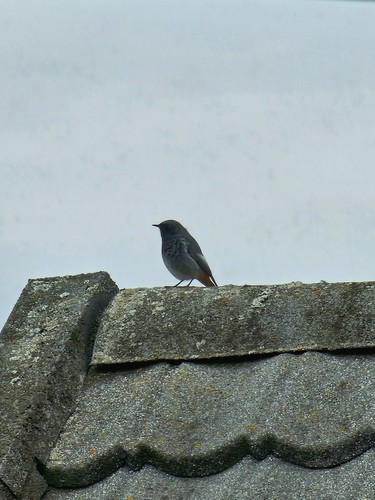
Black Redstart
13-14.5 cm (5.1-5.7 in) long, 23-26 cm wingspan
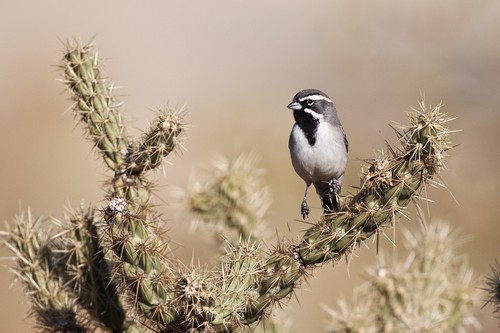
Black-throated Sparrow
12-14 cm (4.7-5.5 in) long, about 19-20 cm (7.5-8 in) wingspan
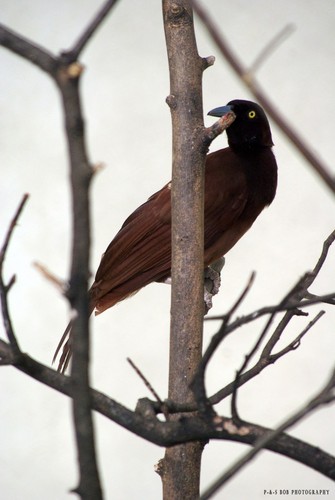
Greater Bird-of-paradise
Body about 43 cm; males with additional flank plumes up to 50 cm and long tail wires
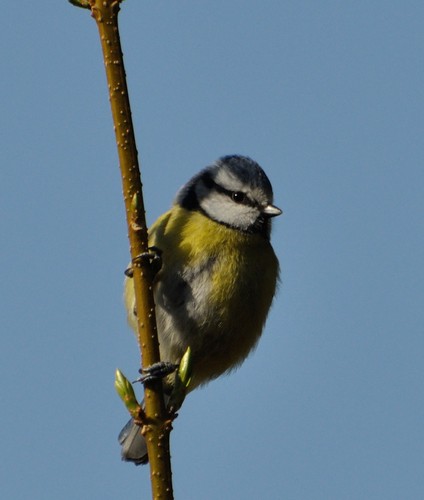
Blue Tit
11-12 cm (4.3-4.7 in) long, 17-20 cm wingspan
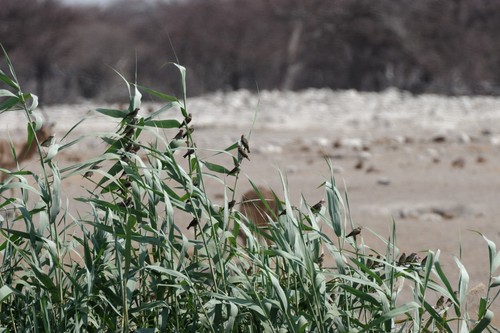
Red-billed Quelea
11.5–13 cm long, wingspan about 20–22 cm
White-plumed Antbird
13-14 cm (5-5.5 in) long
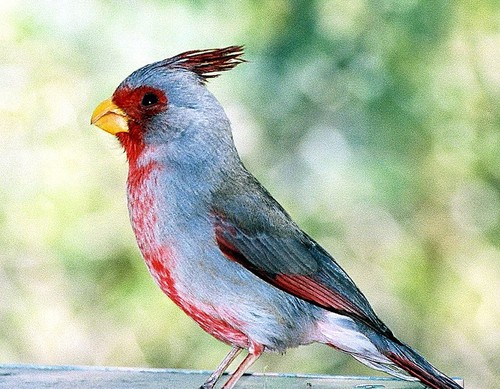
Pyrrhuloxia
19-22 cm (7.5-8.7 in) long, 30 cm wingspan
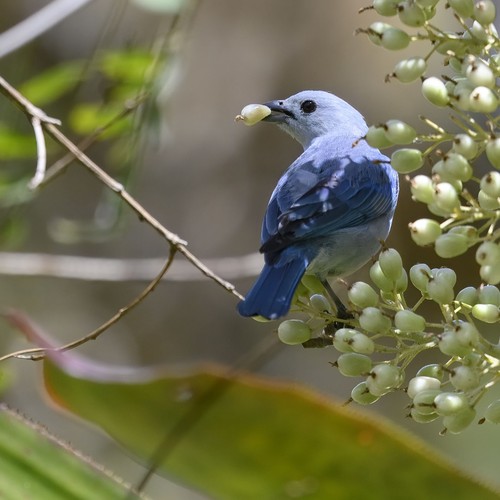
Blue-gray Tanager
16-18 cm (6-7 in) long
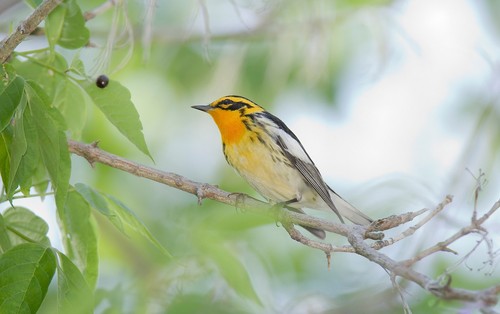
Blackburnian Warbler
11-13 cm (4.3-5.1 in) long, 20-22 cm wingspan
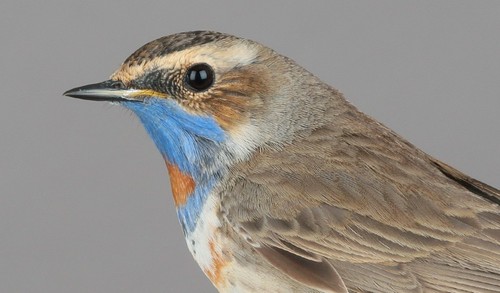
Bluethroat
13-14 cm (5.1-5.5 in) long, 20-22 cm wingspan
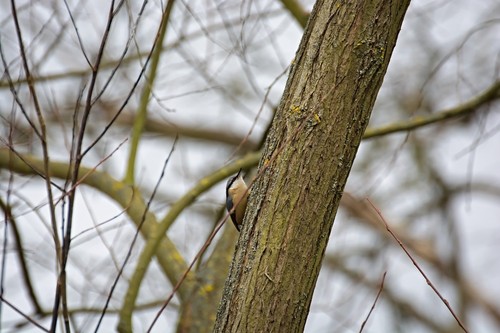
Eurasian Nuthatch
12-14.5 cm (4.7-5.7 in) long, 22.5-27 cm wingspan
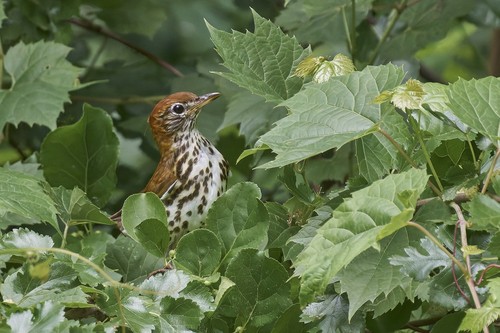
Wood Thrush
19-21 cm (7.5-8.3 in) long, about 33 cm (13 in) wingspan