
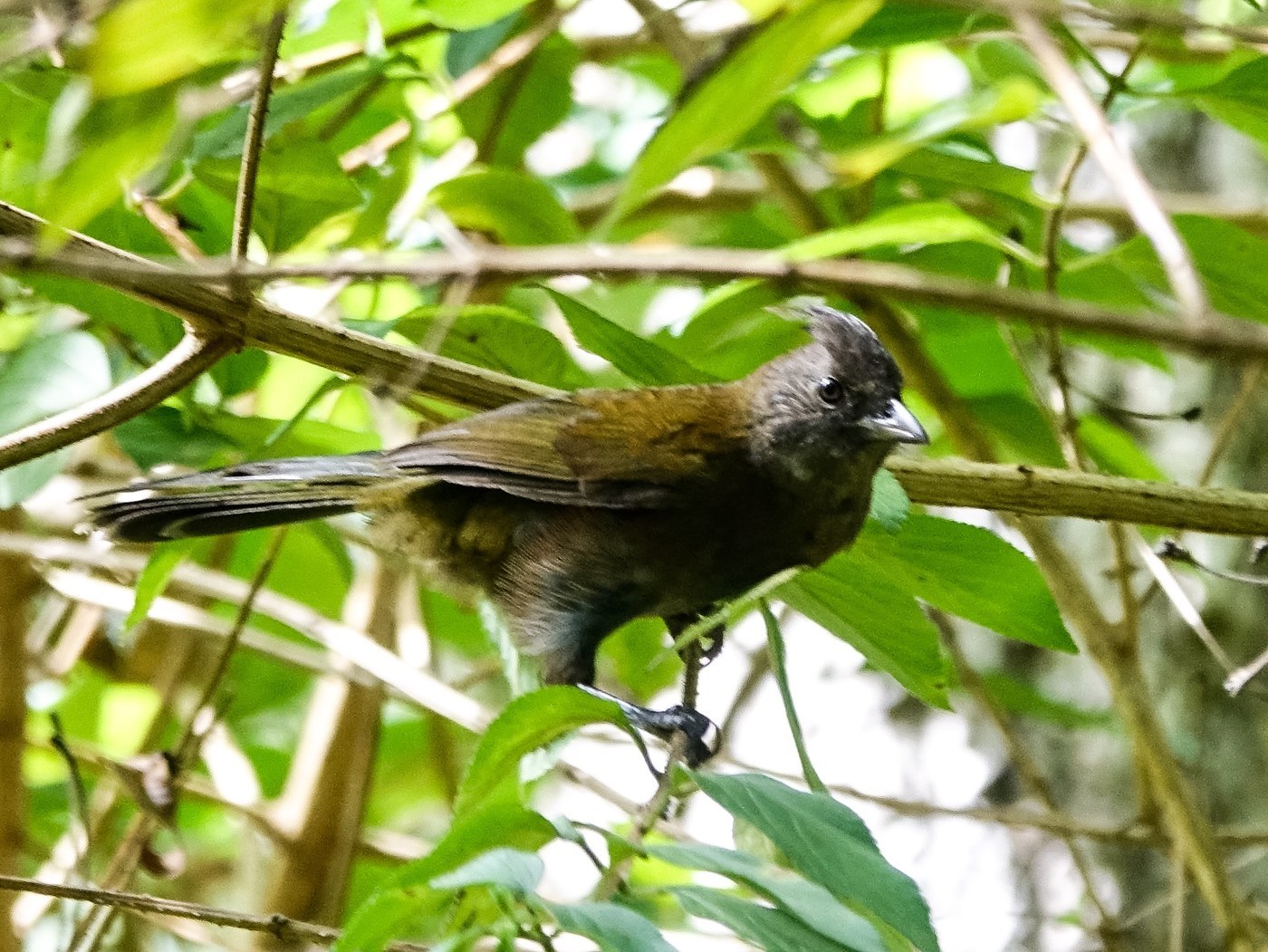
Eastern Whipbird
Psophodes olivaceus
A shy, dark olive forest bird famous for its explosive whip-crack call, usually answered instantly by its mate.
- Size
- 25-30 cm (10-12 in) long
- Habitat
- dense understorey of rainforest and wet eucalypt forest, eastern Australia
- Type
- songbird
Spotted a bird like this?
Identify any bird from a photo, free.
Overview
The Eastern Whipbird is a slender, long-tailed songbird of eastern Australian forests, clothed in dark olive-green plumage with a blackish head and a small, shaggy crest, a white patch below the eye, and a long tail often held cocked. Though its plumage is relatively subdued, it is one of the most instantly recognisable birds of its habitat by voice alone.
Its extraordinary call, a long rising note followed by an explosive cracking 'whip' sound, is one of the most familiar and startling sounds of the wet forests of eastern Australia, and is often immediately followed by a two-note reply from the bird's mate, producing an antiphonal duet so tightly coordinated it can sound like a single bird.
Despite its loud voice, the Eastern Whipbird is a notoriously shy and skulking bird, spending almost all its time low in dense understorey vegetation, and can be extremely difficult to see well even when calling from close range.
How to identify it
Key field marks
- Dark olive-green body with a blackish head and small crest
- White patch below and behind the eye, on the cheek
- Long tail, often cocked, tipped white on the outer feathers
- Extremely distinctive whip-crack call, often followed by a two-note reply
Similar species
No other eastern Australian forest bird shares its combination of dark plumage, crest, and white cheek patch, and its unmistakable whip-crack call readily separates it from all other species even when it cannot be seen. The related Chirruping Wedgebill and other whipbirds occur in different, more arid habitats and do not overlap significantly with the Eastern Whipbird's wet forest range.
Habitat & range
Habitat
Eastern Whipbirds favour the dense, shaded understorey of rainforest, wet eucalypt forest, and thick coastal scrub, particularly where there is a well-developed shrub layer and leaf litter.
Range
The species occurs along the east coast of Australia from far north Queensland south through New South Wales to eastern Victoria, generally within forested habitat close to the coast and ranges.
Migration
Eastern Whipbirds are sedentary, holding permanent territories within dense forest understorey year-round.
Behavior & voice
Behavior
This species is highly secretive, moving and foraging low in dense vegetation and on the ground, rarely venturing into the open, and pairs typically remain together on a shared territory throughout the year.
Voice
Its call is one of the most recognisable in Australian forests: a long, rising whistled note terminating in an explosive whip-crack, usually answered almost instantly by the mate with a sharp two-note 'choo-chweeoo', so tightly timed that the duet often sounds like a single call.
Feeding
It forages on and near the ground, flicking aside leaf litter to find insects, spiders, and other invertebrates, occasionally taking small fruit.
Nesting and breeding
The nest is a frail, shallow cup of twigs and bark built low in a dense shrub or vine tangle; the female performs most of the incubation, and pairs are often assisted by helpers from previous broods in raising young.
Frequently asked questions
What does the Eastern Whipbird sound like?
It gives a long rising note ending in an explosive whip-crack sound, almost always answered instantly by its mate with a sharp two-note reply.
Is the Eastern Whipbird easy to see?
No, despite its loud, distinctive call it is very shy and stays low in dense vegetation, making it much easier to hear than to see.
Where does the Eastern Whipbird live?
It inhabits dense rainforest and wet forest understorey along the east coast of Australia from far north Queensland to eastern Victoria.
What does the Eastern Whipbird eat?
It eats insects, spiders, and other invertebrates found by foraging in leaf litter, along with occasional small fruit.
Why does the whipbird call sound like it comes from one bird?
The male's whip-crack call and the female's answering notes are so precisely timed that the duet often sounds like a single bird calling.
Eastern Whipbird guides
In-depth guides for identifying, finding, and understanding Eastern Whipbird.
Other birds you may enjoy

Black Redstart
13-14.5 cm (5.1-5.7 in) long, 23-26 cm wingspan

Black-throated Sparrow
12-14 cm (4.7-5.5 in) long, about 19-20 cm (7.5-8 in) wingspan

Greater Bird-of-paradise
Body about 43 cm; males with additional flank plumes up to 50 cm and long tail wires

Blue Tit
11-12 cm (4.3-4.7 in) long, 17-20 cm wingspan

Red-billed Quelea
11.5–13 cm long, wingspan about 20–22 cm
White-plumed Antbird
13-14 cm (5-5.5 in) long

Pyrrhuloxia
19-22 cm (7.5-8.7 in) long, 30 cm wingspan

Blue-gray Tanager
16-18 cm (6-7 in) long

Blackburnian Warbler
11-13 cm (4.3-5.1 in) long, 20-22 cm wingspan

Bluethroat
13-14 cm (5.1-5.5 in) long, 20-22 cm wingspan

Eurasian Nuthatch
12-14.5 cm (4.7-5.7 in) long, 22.5-27 cm wingspan

Wood Thrush
19-21 cm (7.5-8.3 in) long, about 33 cm (13 in) wingspan