
Eastern Whipbird Identification Guide
A shy, long-tailed Australian rainforest bird, glossy black-green above with a shaggy crest and white cheek patches, best known for its explosive whip-crack call.
Read the full Eastern Whipbird encyclopedia entry →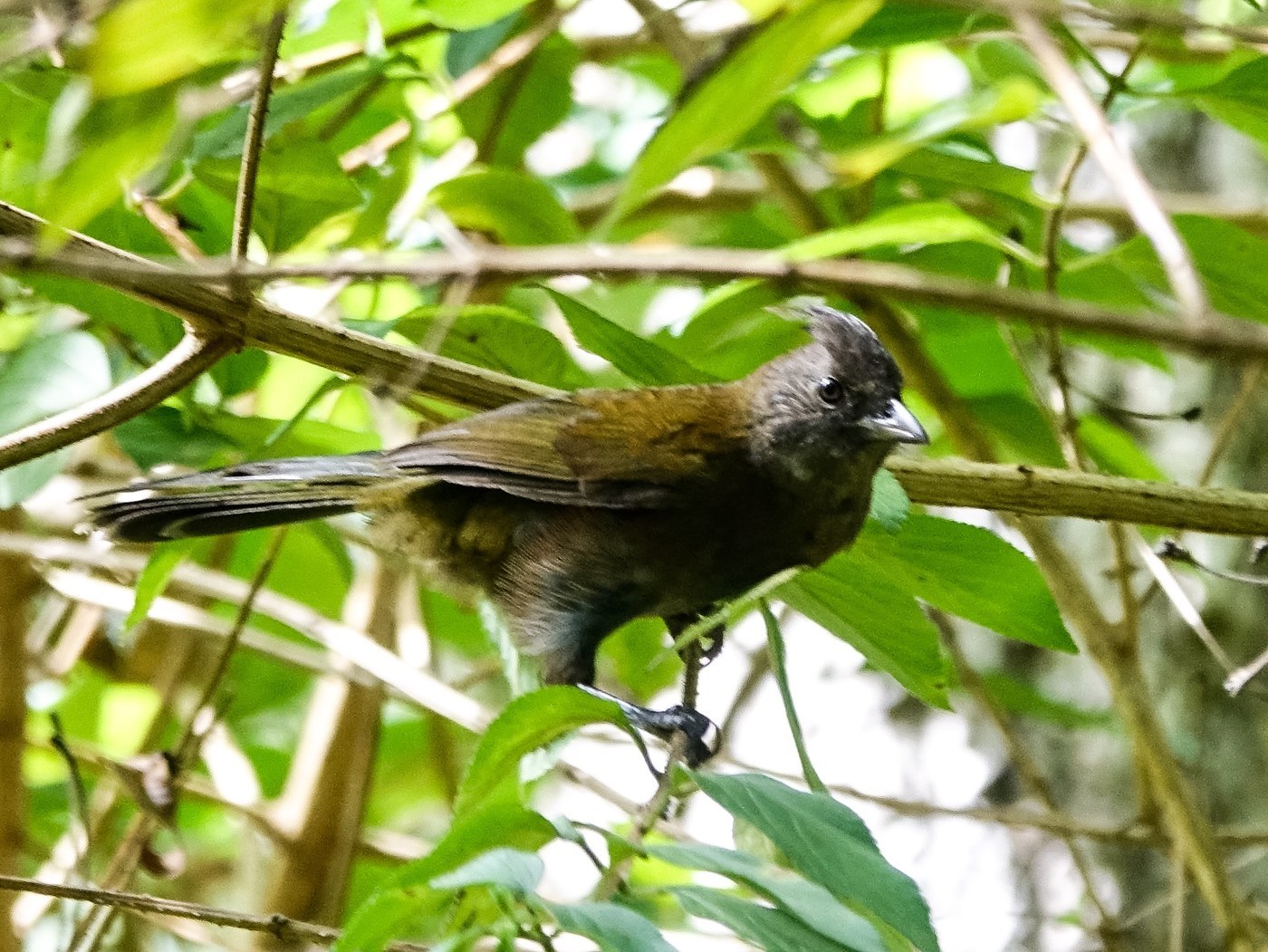
Key Field Marks
- Size & shape: A medium-sized, slender songbird (10-12 in / 26-30 cm) with a long, graduated tail, a shaggy, pointed crest, and fairly long legs adapted to hopping through dense undergrowth.
- Plumage: Overall glossy blackish with a subtle dark olive-green sheen on the back and wings; distinctive bright white patches on the cheeks below the eye stand out against the otherwise dark head.
- Underparts: Sooty-gray to blackish below, darkest on the throat and breast.
- Behavior: Extremely skulking and difficult to see — spends most of its time low in dense understory and vine tangles, more often heard than seen; occasionally flicks or fans its long tail.
Separating from Similar Species
- Spotted Catbird / other rainforest skulkers: Different color pattern (green/spotted rather than glossy black) and different voice; range and habitat overlap only partially.
- Currawongs/other black birds: Much larger, with heavier bills, pale eyes, and different flight/behavior — no real confusion once size and skulking habit are noted.
- Within its range, the combination of glossy black plumage, white cheek patch, shaggy crest, and long tail is essentially unique, making voice and habitat the most practical identification tools given how rarely it is seen well.
Habitat & Range
Inhabits dense, wet rainforest, moist eucalypt forest with thick understory, and adjacent well-vegetated gullies along coastal and near-coastal eastern Australia, from southeastern Queensland through New South Wales into eastern Victoria. Requires dense ground-level and shrub-layer vegetation for foraging (leaf litter, fallen logs) and cover, foraging mainly on invertebrates gleaned from the forest floor and low vegetation.
Seasonal Notes
Resident and non-migratory throughout its range, typically remaining on well-defined territories year-round in pairs that duet persistently. Breeding occurs spring through summer (roughly September-January), with a well-hidden cup nest built low in dense vegetation.
Voice
Famous for an extraordinary duet: the male gives a long, rising whistle followed by an explosive whip-crack sound, and the female instantly answers with two sharp "chew-chew" notes — so tightly timed the whole sequence often sounds like a single bird performing an entire whip-crack-and-response. This far-carrying call is frequently heard resonating through rainforest gullies well before (or instead of) an actual sighting.
Frequently asked questions
Why is the Eastern Whipbird called that?
Its signature duet call ends in an explosive, cracking note that sounds remarkably like the crack of a stock whip, immediately followed by the female's sharp two-note reply.
Is the Eastern Whipbird easy to see?
No — it is notoriously shy and skulking, staying low in dense rainforest and shrub understory, so most encounters are auditory rather than visual.
What habitat should I search for Eastern Whipbirds?
Dense, wet rainforest and moist eucalypt forest with a thick shrub and leaf-litter layer along the eastern Australian coast and ranges, from southeastern Queensland to eastern Victoria.
What does the Eastern Whipbird look like up close?
A slim, long-tailed, glossy blackish bird with an olive-green sheen, a shaggy crest, and bright white patches on the cheeks below the eyes.