
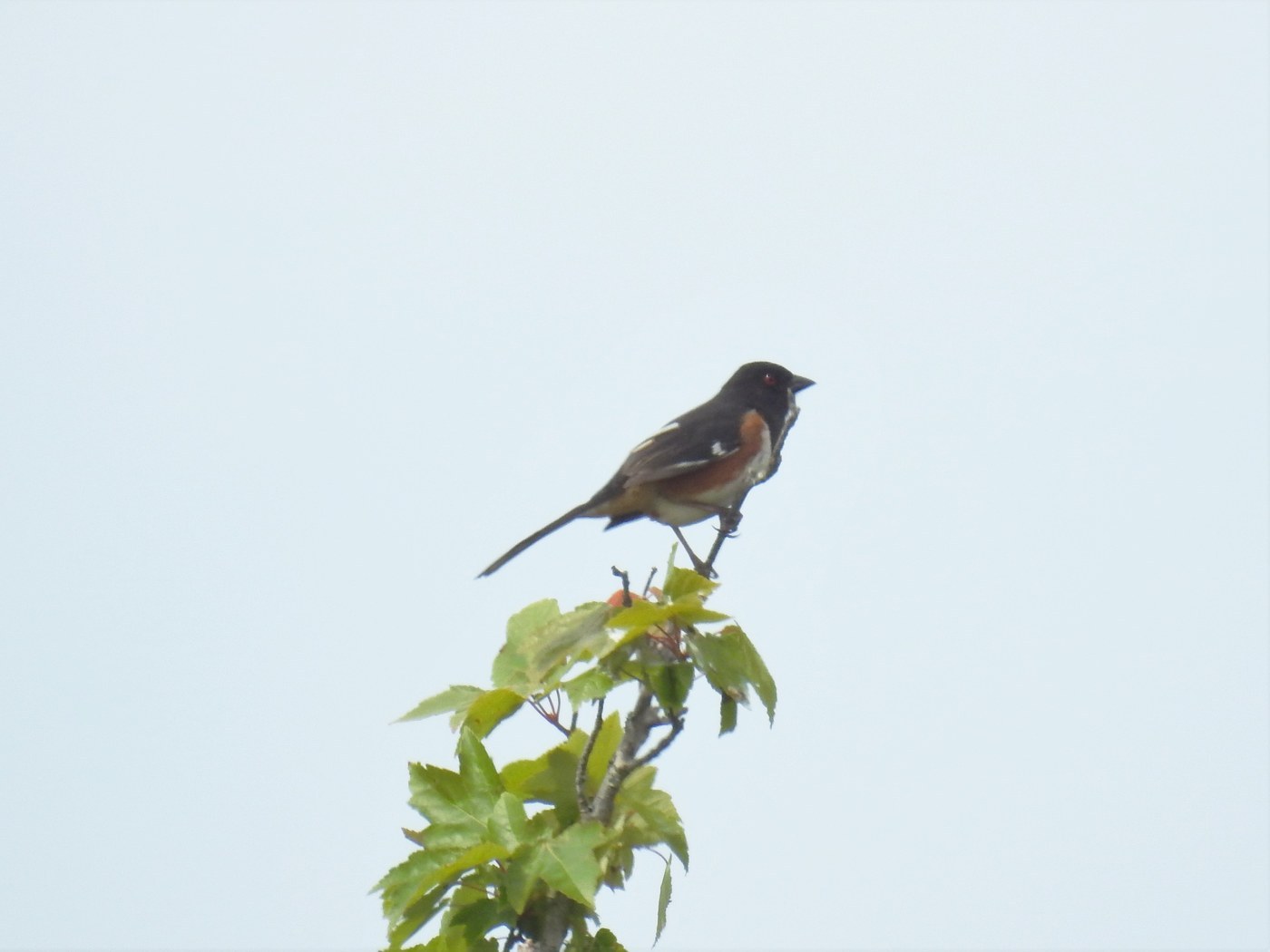
Eastern Towhee
Pipilo erythrophthalmus
A striking sparrow relative with a black hood, rufous flanks, and white belly, known for its 'drink-your-tea' song and rustling leaf-litter foraging.
- Size
- 17-23 cm (6.7-9.1 in) long, 20-30 cm wingspan
- Habitat
- dense shrubby thickets, forest edges, and overgrown fields
- Type
- songbird
Spotted a bird like this?
Identify any bird from a photo, free.
Overview
The Eastern Towhee is a large, boldly patterned member of the sparrow family, with males showing a solid black hood, back, and tail contrasting sharply against warm rufous-orange flanks and a clean white belly. Females share the same pattern but with rich brown replacing the male's black.
Both sexes have striking red eyes (in most of the range), white spots and edges in the wings and tail visible especially in flight, and a heavy, conical seed-eating bill. The overall effect is one of the most striking and easily learned birds of eastern thickets.
How to identify it
Key field marks
- Male: black hood, back, and tail; female: same pattern in rich brown
- Bright rufous-orange flanks and clean white belly in both sexes
- Red eyes (western Florida birds show pale/white eyes)
- White corners on the tail and white wing spots, conspicuous in flight
Similar species
- Spotted Towhee, its western counterpart, is very similar but shows bold white spotting on the black back and wings; the two forms were once considered a single species and hybridize in a narrow zone on the Great Plains.
- No other eastern songbird shares this black-rufous-white combination.
Habitat & range
Eastern Towhees are found across the eastern United States, from southern Canada to Florida and west to the edge of the Great Plains, in dense shrubby thickets, forest edges, overgrown fields, and areas with a thick understory. They avoid open habitats and closed-canopy forest interiors alike, favoring the tangled edge zones in between.
Northern populations migrate south for winter, while birds in the southeastern US, including a distinctive white-eyed Florida population, are largely resident year-round.
Behavior & voice
Eastern Towhees forage almost entirely on or near the ground, using a distinctive noisy double-scratch (kicking backward with both feet at once) to clear leaf litter and expose hidden insects and seeds, a behavior that often gives away their presence in dense cover well before they are seen.
The song is commonly rendered as "drink-your-teeeea," with a clear introductory note or two followed by a musical trill; the call is a distinctive, rising "chewink" or "tow-hee," from which the group's name derives. Diet includes insects, seeds, and berries, foraged mostly from the ground and low vegetation. Nests are built on or near the ground in dense cover, with typical clutches of two to six eggs, and pairs often raise multiple broods per season.
Frequently asked questions
How do you identify an Eastern Towhee?
Look for a large sparrow relative with a black hood and back (brown in females), bright rufous-orange flanks, a clean white belly, red eyes, and white spots in the wings and tail.
What does an Eastern Towhee sound like?
A song often described as 'drink-your-teeeea,' along with a distinctive rising 'chewink' or 'tow-hee' call note.
What is the difference between an Eastern Towhee and a Spotted Towhee?
The Eastern Towhee has a plain black back, while the western Spotted Towhee has bold white spots across the black back and wings; the two were once considered the same species and hybridize where their ranges meet on the Great Plains.
How does an Eastern Towhee forage?
It uses a noisy 'double-scratch' technique, kicking backward with both feet simultaneously to clear leaf litter and expose insects and seeds hidden underneath.
Do Eastern Towhees migrate?
Northern populations migrate south for winter, while birds in the southeastern US, including a distinctive white-eyed Florida population, tend to be resident year-round.
Eastern Towhee guides
In-depth guides for identifying, finding, and understanding Eastern Towhee.
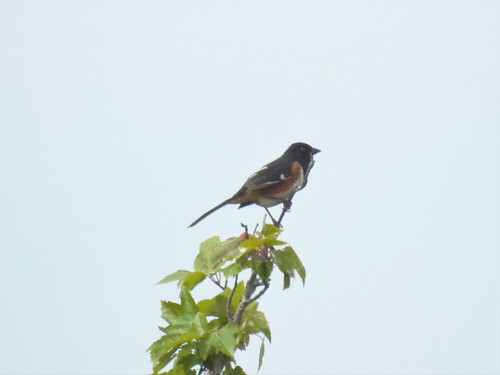
Eastern Towhee identified by the community
Real birds identified with Bird Identifier.

Other birds you may enjoy
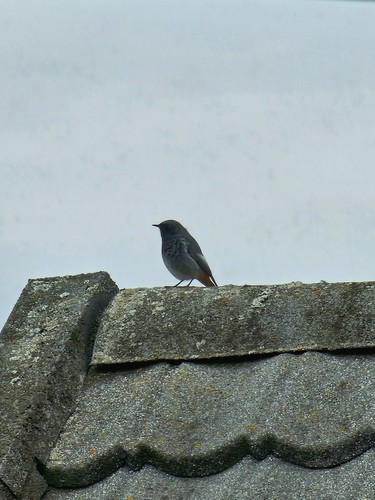
Black Redstart
13-14.5 cm (5.1-5.7 in) long, 23-26 cm wingspan
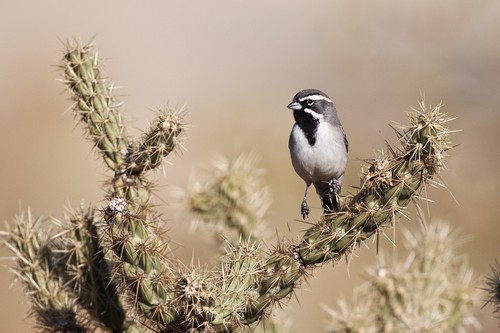
Black-throated Sparrow
12-14 cm (4.7-5.5 in) long, about 19-20 cm (7.5-8 in) wingspan
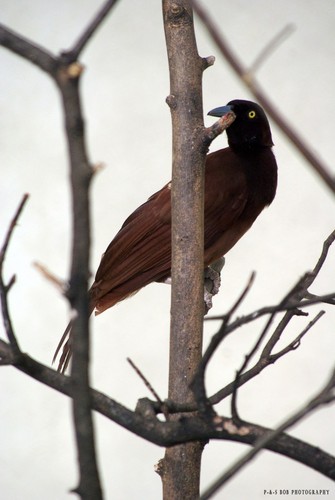
Greater Bird-of-paradise
Body about 43 cm; males with additional flank plumes up to 50 cm and long tail wires
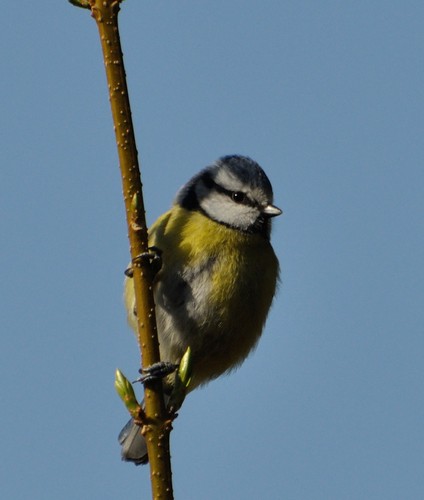
Blue Tit
11-12 cm (4.3-4.7 in) long, 17-20 cm wingspan
Red-billed Quelea
11.5–13 cm long, wingspan about 20–22 cm
White-plumed Antbird
13-14 cm (5-5.5 in) long
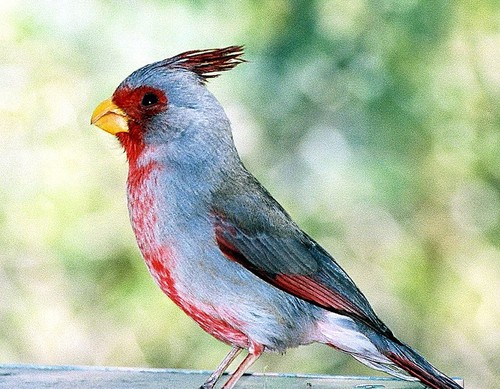
Pyrrhuloxia
19-22 cm (7.5-8.7 in) long, 30 cm wingspan
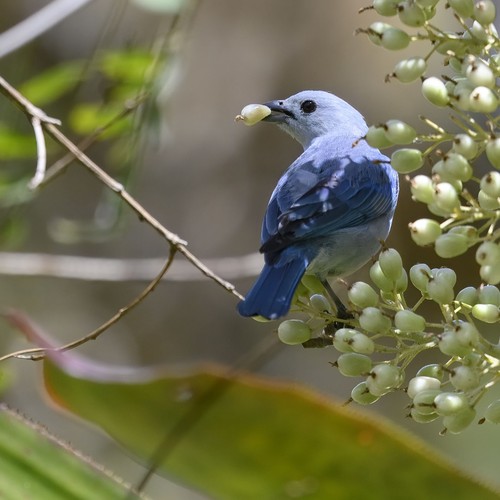
Blue-gray Tanager
16-18 cm (6-7 in) long
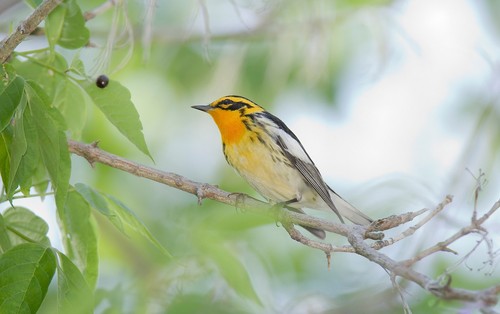
Blackburnian Warbler
11-13 cm (4.3-5.1 in) long, 20-22 cm wingspan
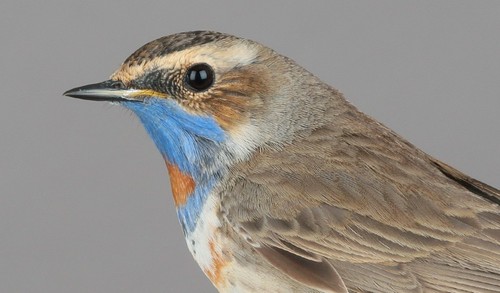
Bluethroat
13-14 cm (5.1-5.5 in) long, 20-22 cm wingspan
Eurasian Nuthatch
12-14.5 cm (4.7-5.7 in) long, 22.5-27 cm wingspan
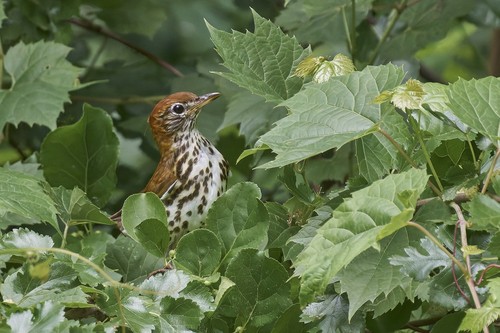
Wood Thrush
19-21 cm (7.5-8.3 in) long, about 33 cm (13 in) wingspan