
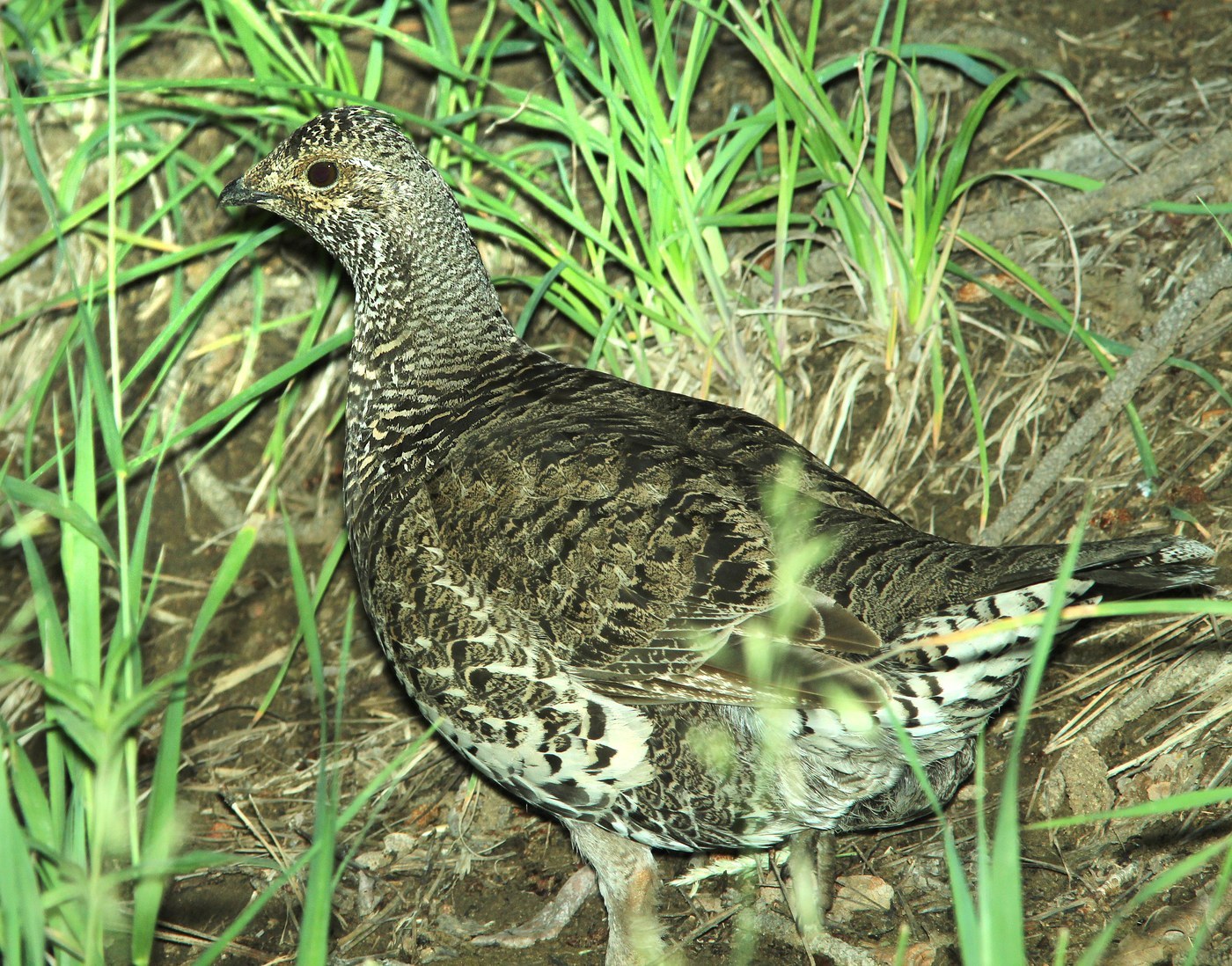
Dusky Grouse
Dendragapus obscurus
A large, gray-toned interior mountain grouse whose males give a deep, far-carrying series of hoots from conifer perches during spring display.
- Size
- 43-48 cm (17-19 in) long; males larger than females
- Habitat
- interior coniferous and mixed forests of the Rocky Mountains and Great Basin ranges
- Type
- gamebird
Spotted a bird like this?
Identify any bird from a photo, free.
Overview
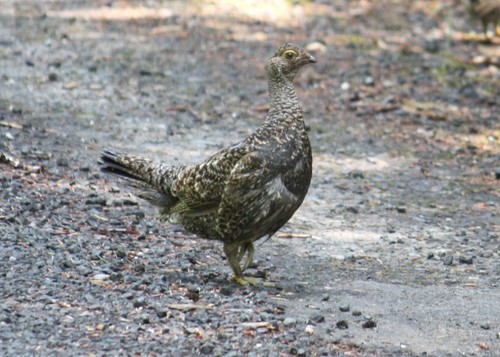
The Dusky Grouse is a large, sooty gray-brown grouse of interior western mountain forests, formerly lumped with the Sooty Grouse of the Pacific coast under the name "Blue Grouse" until the two were split into separate species in 2006 based on differences in voice, display, and genetics. Males are dark gray overall with a plain, unbarred gray tail tipped with a narrow, pale terminal band, and during courtship they inflate yellow-to-reddish neck air sacs bordered by white feather bases. Females are mottled gray-brown, providing camouflage while nesting.
How to identify it
Key field marks
- Overall dark gray plumage in males, with a plain gray tail and narrow, pale (often grayish) terminal tail band
- Yellow to orange-red neck air sacs bordered by white-based feathers, visible during display
- Females are mottled gray-brown and best told from Sooty Grouse by range
Similar species
Sooty Grouse is nearly identical but occurs along the Pacific coast rather than in interior mountains, has a wider, more grayish terminal tail band, and gives a lower-pitched series of hoots; the two species' ranges are mostly separated by the dry interior of the Great Basin.
Habitat & range
Habitat and Range
Dusky Grouse occupy coniferous and mixed forests in mountainous terrain, often using more open, brushy habitat and forest edge in summer and denser conifer stands in winter.
Range
The species is found through the interior mountain ranges of the western United States and Canada, including the Rocky Mountains and Great Basin ranges from British Columbia and Alberta south to Arizona and New Mexico.
Migration
Dusky Grouse make a modest elevational migration, moving to higher-elevation dense conifer stands in winter to feed on needles and descending to more open, brushy habitat at lower elevations in summer.
Behavior & voice
Behavior
Males display from elevated perches, often on the ground or a low branch, inflating their neck air sacs and giving a series of deep hoots while performing short flutter flights.
Voice
The male's advertising call is a series of low, muffled hoots, often described as ventriloquial and difficult to pinpoint by ear.
Feeding
In winter, Dusky Grouse feed heavily on conifer needles, switching to a broader diet of leaves, berries, flowers, and insects during the snow-free months.
Nesting and breeding
Females nest on the ground, often at the base of a tree or under low shrubs, and raise the brood alone after mating with a displaying male.
Frequently asked questions
What is the difference between Dusky Grouse and Sooty Grouse?
The two were split from the former 'Blue Grouse' in 2006. Dusky Grouse occurs in interior mountain ranges like the Rockies, has a narrower, grayer tail band, and a different hoot pattern, while Sooty Grouse lives along the Pacific coast and has a wider tail band.
What sound does a Dusky Grouse make?
Displaying males give a series of low, muffled hoots that can be surprisingly hard to locate by ear, sometimes described as ventriloquial.
Where do Dusky Grouse live?
They inhabit coniferous and mixed forests of interior western mountain ranges, including the Rocky Mountains and Great Basin, from British Columbia south to Arizona and New Mexico.
What do Dusky Grouse eat in winter?
They rely heavily on conifer needles in winter, moving to denser, higher-elevation stands to access this food source.
Dusky Grouse guides
In-depth guides for identifying, finding, and understanding Dusky Grouse.
Other birds you may enjoy
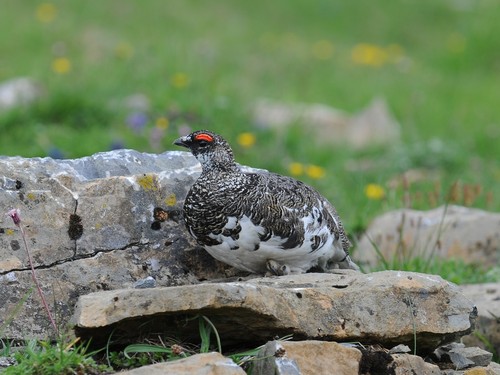
Rock Ptarmigan
34-36 cm (13-14 in) long
Congo Peafowl
Males about 64-70 cm long; females slightly smaller; no elaborate train
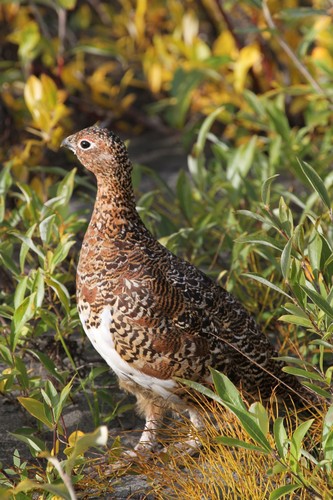
Willow Ptarmigan
37-42 cm (15-16.5 in) long
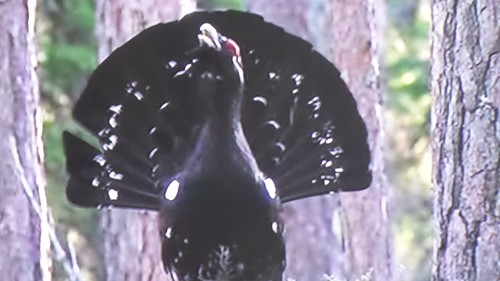
Western Capercaillie
male 74-90 cm (29-35 in), female 54-64 cm; male wingspan up to 125-130 cm
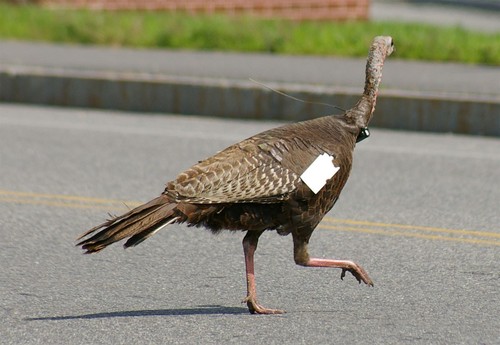
Wild Turkey
males 100-125 cm (39-49 in) long; females smaller, around 76-95 cm (30-37 in)
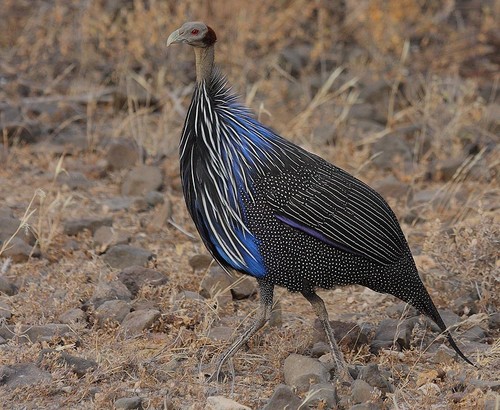
Vulturine Guineafowl
Length 61-71 cm, the largest guineafowl species, with a notably long neck and tail
White-tailed Ptarmigan
30-33 cm (12-13 in) long; the smallest ptarmigan species
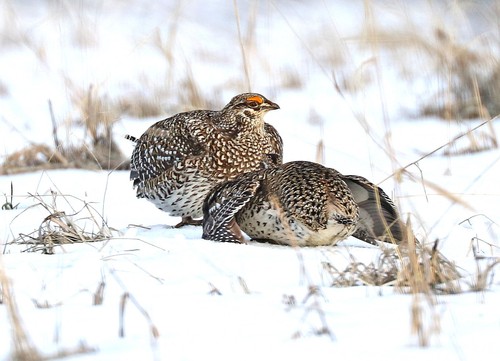
Sharp-tailed Grouse
38-48 cm (15-19 in) long
Ring-necked Pheasant
males 76-90 cm (30-35 in) long including a long tail; females smaller, 55-65 cm (22-26 in)
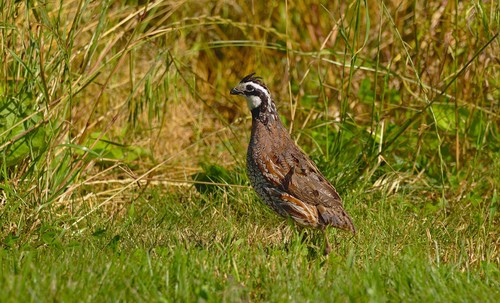
Northern Bobwhite
24-28 cm (9.5-11 in) long, 33-38 cm wingspan
Red-legged Partridge
32-34 cm (13 in) long, 47-50 cm wingspan
Sooty Grouse
43-48 cm (17-19 in) long; males larger than females