
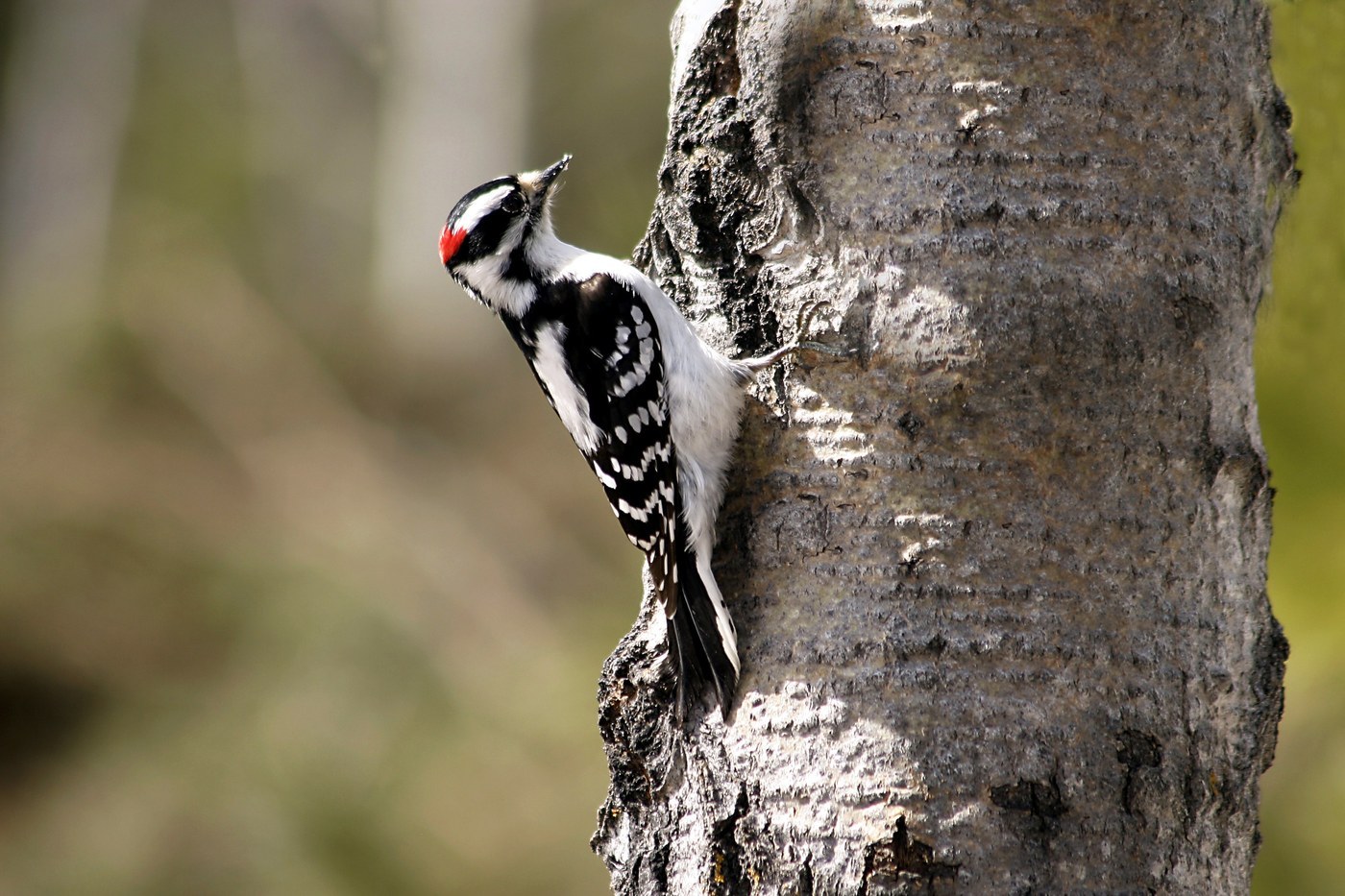
Downy Woodpecker
Dryobates pubescens
North America's smallest woodpecker, a friendly black-and-white bird with a small bill, common at backyard feeders across the continent.
- Size
- 14-18 cm (5.5-7 in) long, 25-31 cm wingspan
- Habitat
- deciduous woodlands, parks, gardens, and suburban yards
- Type
- woodpecker
Spotted a bird like this?
Identify any bird from a photo, free.
Overview
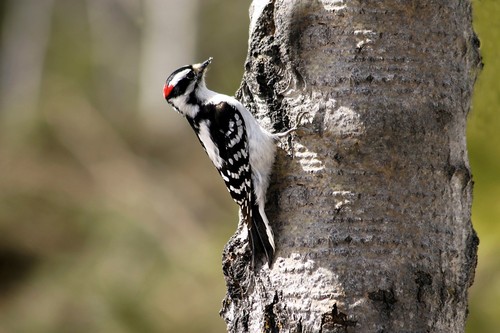
The Downy Woodpecker is the smallest woodpecker in North America, a compact, energetic bird with crisp black-and-white plumage that makes it a familiar sight at backyard suet feeders. It has a checkered black-and-white back, white underparts, spotted black-and-white wings, and a small, stubby bill noticeably shorter than the head - a key distinguishing feature from its larger look-alike.
Males show a small red patch on the back of the head, absent in females, while both sexes share the same overall black-and-white pattern with white outer tail feathers marked with small black spots.
Adaptable and approachable, this tiny woodpecker thrives in a wide range of wooded habitats and is often one of the easiest woodpeckers for beginning birders to observe up close.
How to identify it
Key Field Marks
- Very small size, smallest North American woodpecker
- Short, stubby bill, noticeably shorter than the width of the head
- Black-and-white checkered back, spotted wings, white underparts
- Males have a small red nape patch; white outer tail feathers show small black spots
Similar Species
- Hairy Woodpecker looks nearly identical but is notably larger with a much longer, more chisel-like bill roughly equal to the head length, and its outer tail feathers are usually unspotted white.
- Size and especially relative bill length are the most reliable ways to separate the two species when seen alone.
Habitat & range
Downy Woodpeckers are widespread and common across most of North America, from Alaska and Canada south through the continental United States, occupying deciduous and mixed woodlands, forest edges, orchards, parks, and suburban and urban yards with trees.
This species is largely non-migratory, remaining on or near its home territory year-round, though it may join mixed-species foraging flocks with chickadees, nuthatches, and titmice in winter.
Behavior & voice
Behavior
Downy Woodpeckers forage actively on trunks, branches, and even weed stalks, often joining mixed foraging flocks in winter. They are approachable and frequent visitors to backyard suet and seed feeders.
Voice
The call is a sharp "pik," and the whinny call is a descending series of notes that falls in pitch toward the end, differing from the Hairy Woodpecker's more even, non-descending whinny. Both sexes drum on resonant wood in a short, even burst to communicate.
Feeding
They glean and excavate for insects, especially wood-boring beetle larvae, from bark and dead wood, and also eat berries, seeds, and readily visit suet feeders, sometimes probing goldenrod galls for hidden larvae.
Nesting & Breeding
Both sexes excavate a nest cavity in a dead tree or branch, typically lined only with wood chips, and lay 3-8 eggs. Both parents share incubation and feeding duties, and the pair may reuse the general nesting area in subsequent years though rarely the exact same cavity.
Frequently asked questions
How do you tell a Downy Woodpecker from a Hairy Woodpecker?
The Downy is smaller with a short, stubby bill much shorter than its head, while the Hairy Woodpecker is larger with a long bill roughly equal to its head length; the Downy's outer tail feathers usually show small black spots.
Do Downy Woodpeckers come to backyard feeders?
Yes, they are one of the most frequent and easygoing woodpecker visitors to suet, sunflower seed, and peanut feeders across their range.
What does a Downy Woodpecker eat?
Mostly insects, especially wood-boring beetle larvae, along with berries and seeds, and it readily supplements its diet with suet at feeders.
Where do Downy Woodpeckers nest?
Both parents excavate a cavity in a dead tree or dead branch, typically lined only with wood chips, where they raise 3-8 young.
Downy Woodpecker guides
In-depth guides for identifying, finding, and understanding Downy Woodpecker.
Other birds you may enjoy
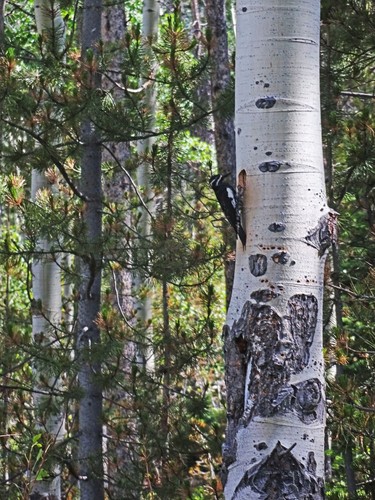
Williamson's Sapsucker
21-25 cm (8-10 in) long, 40-42 cm wingspan
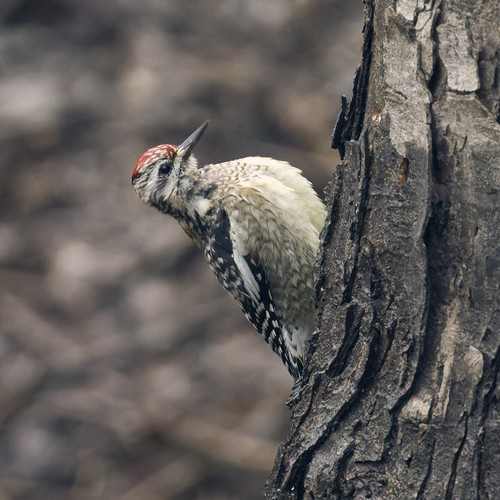
Yellow-bellied Sapsucker
18-21 cm (7-8.3 in) long, 34-40 cm wingspan
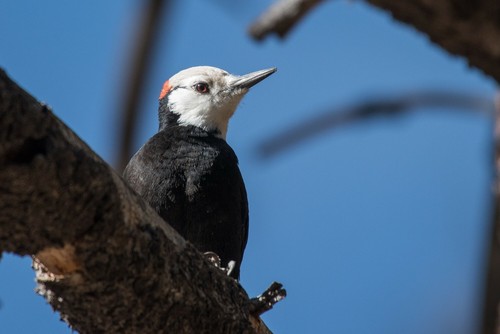
White-headed Woodpecker
20-23 cm (8-9 in) long, 38-41 cm wingspan
Red-headed Woodpecker
19-23 cm (7.5-9 in) long, 42-46 cm wingspan
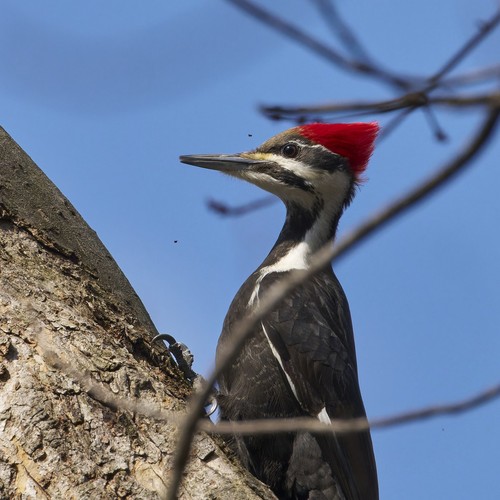
Pileated Woodpecker
40-49 cm (16-19 in) long, 66-75 cm wingspan
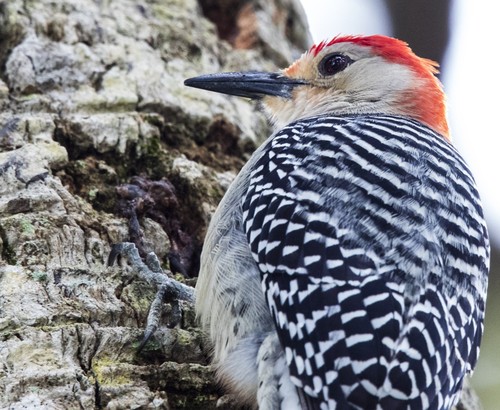
Red-bellied Woodpecker
22-27 cm (9-10.5 in) long, 38-46 cm wingspan
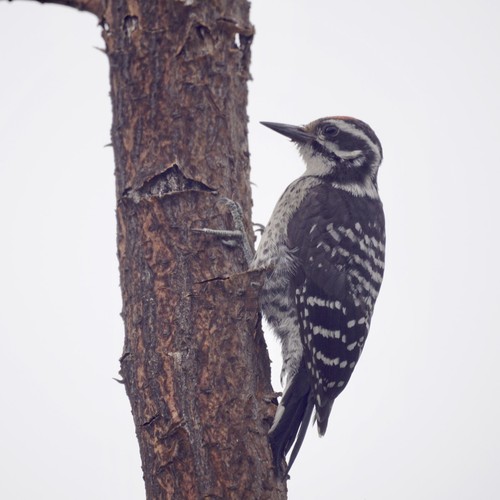
Nuttall's Woodpecker
18-20 cm (7-8 in) long, 34-38 cm wingspan
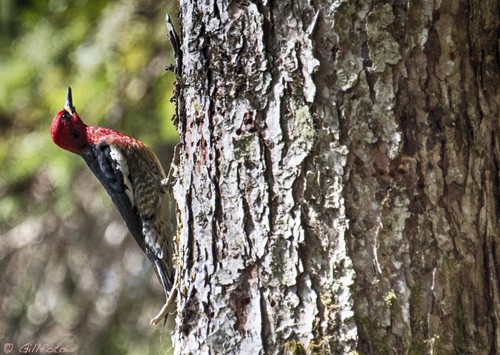
Red-breasted Sapsucker
20-23 cm (8-9 in) long, 34-40 cm wingspan
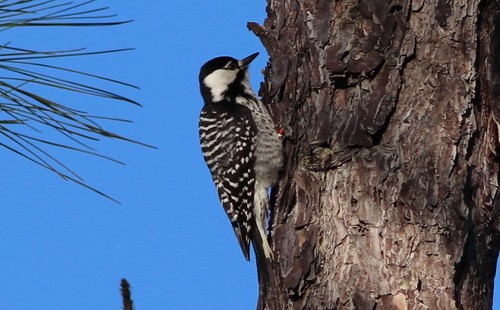
Red-cockaded Woodpecker
20-23 cm (8-9 in) long, 35-38 cm wingspan
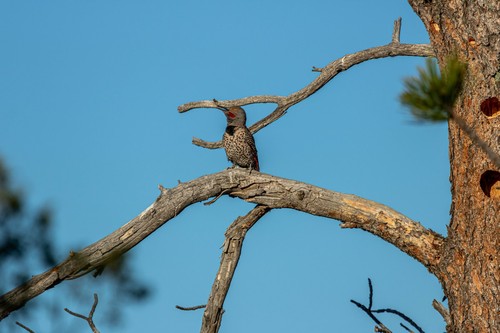
Northern Flicker
28-36 cm (11-14 in) long, 42-51 cm wingspan
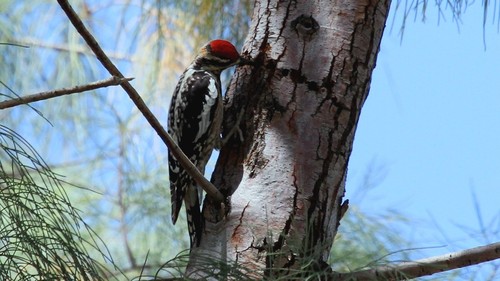
Red-naped Sapsucker
19-21 cm (7.5-8.3 in) long, 34-40 cm wingspan
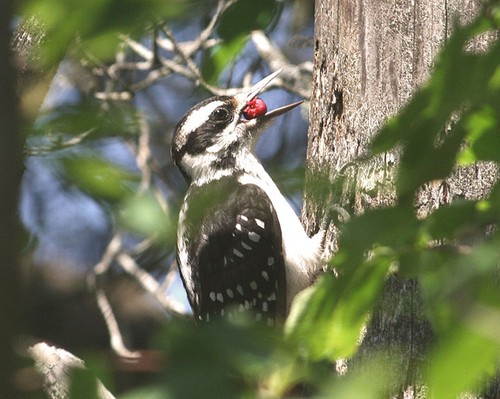
Hairy Woodpecker
23-26 cm (9-10 in) long, 33-41 cm wingspan