
Downy Woodpecker Identification Guide
North America's smallest woodpecker, a black-and-white backyard favorite told from the near-identical Hairy Woodpecker by its short, stubby bill.
Read the full Downy Woodpecker encyclopedia entry →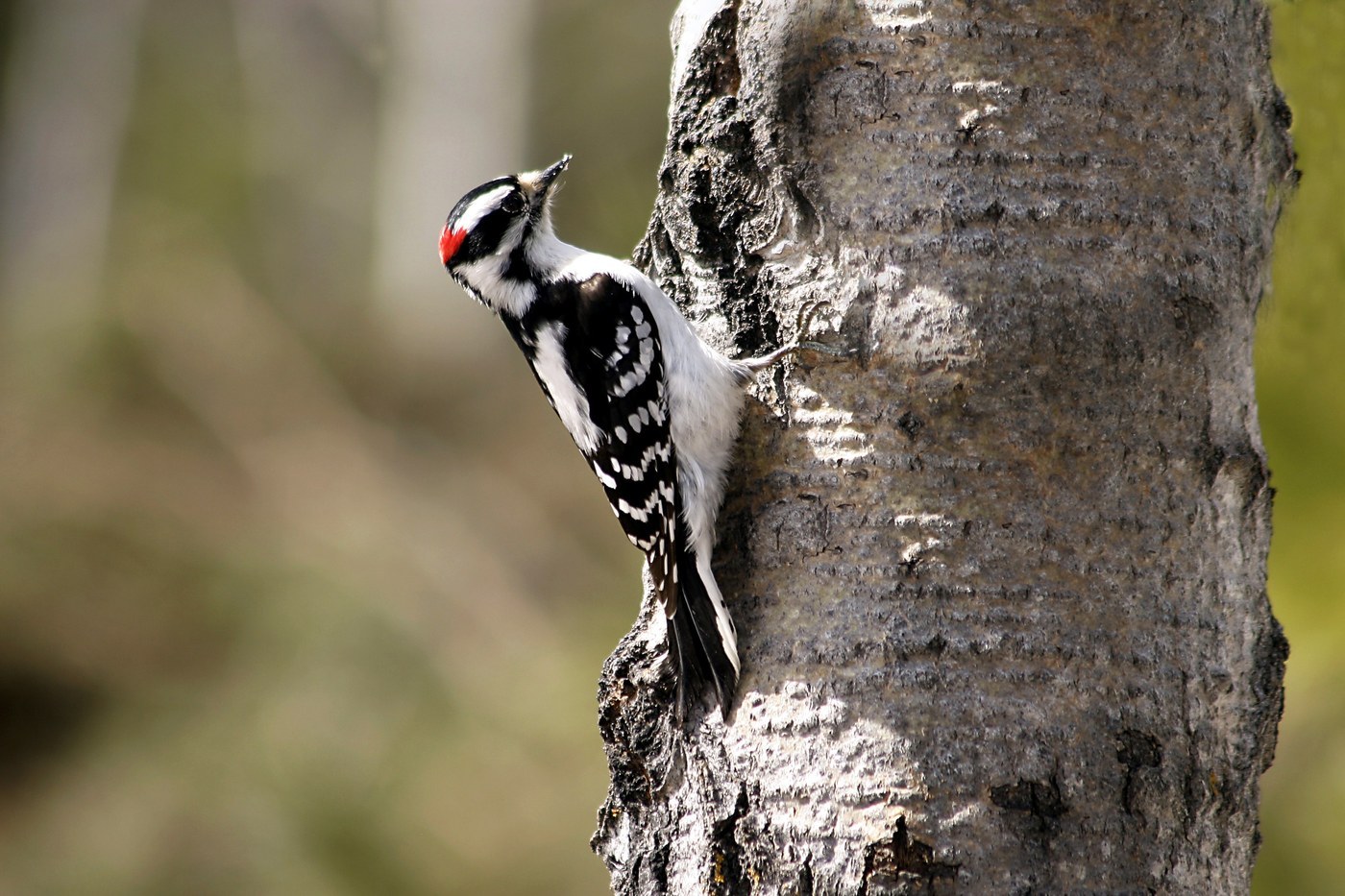
Key Field Marks
- Size & shape: Very small woodpecker, about 6-7 in (15-17 cm), with a compact body and a notably short, stubby bill — clearly shorter than the depth of the head.
- Plumage: Black-and-white checkered wings, a broad white stripe down the center of the back, white underparts, and a black-and-white striped face pattern.
- Sexes: Males show a small red patch on the back of the head (nape); females lack any red and have an all-black-and-white head.
- Tail: Outer white tail feathers usually show small black spots or bars — a useful supporting mark.
Separating It From Similar Species
- Hairy Woodpecker: Nearly identical plumage pattern but noticeably larger (about 9-9.5 in) with a proportionally much longer, heavier bill roughly as long as the head is deep, versus the Downy's stubby bill that is clearly shorter than the head. Hairy Woodpeckers also typically lack spots on the white outer tail feathers, which are usually clean white.
- Ladder-backed / Nuttall's Woodpecker (ranges don't overlap broadly with Downy in the East, but worth noting in the West): Show barred (ladder) backs rather than a solid white back stripe.
- Overall rule: Bill length relative to head size is the single most reliable mark separating Downy from Hairy Woodpecker when size is hard to judge.
Habitat, Range & Season
A widespread, non-migratory resident found year-round across most of the United States and Canada in deciduous and mixed woodlands, parks, orchards, and suburban and urban yards — it is one of the most frequent visitors to backyard suet feeders. It readily joins mixed-species foraging flocks with chickadees, nuthatches, and titmice, especially in winter.
Voice
A sharp, flat "pik" call note and a descending, whinnying rattle call. Drumming is relatively soft and short compared to the louder, longer drumming of the Hairy Woodpecker.
Frequently asked questions
What is the easiest way to tell a Downy Woodpecker from a Hairy Woodpecker?
Compare bill length to head size: the Downy's bill is short and stubby, clearly shorter than the depth of its head, while the Hairy's bill is much longer, roughly as long as its head. Size (Downy is smaller) can also help but is harder to judge without a direct comparison.
How can I tell a male from a female Downy Woodpecker?
Males have a small red patch on the back of the head (nape); females show no red and have an all-black-and-white head.
Do Downy Woodpeckers migrate?
No, they are non-migratory residents throughout their range and can be seen at the same location year-round, often visiting feeders more in winter.
What food attracts Downy Woodpeckers to backyard feeders?
Suet is especially attractive, along with sunflower seeds and peanut pieces offered in feeders.